Madeira food and the best restaurants in Funchal: what to eat and where
Maria Santos · 20 min read · Updated 27/Aug/2026
Where to eat in Funchal, from the market and the old town tascas to Michelin tables and the everyday cafés, with what each dish is, what it costs and when to go.
Madeira food and where to eat it in Funchal: the short answer
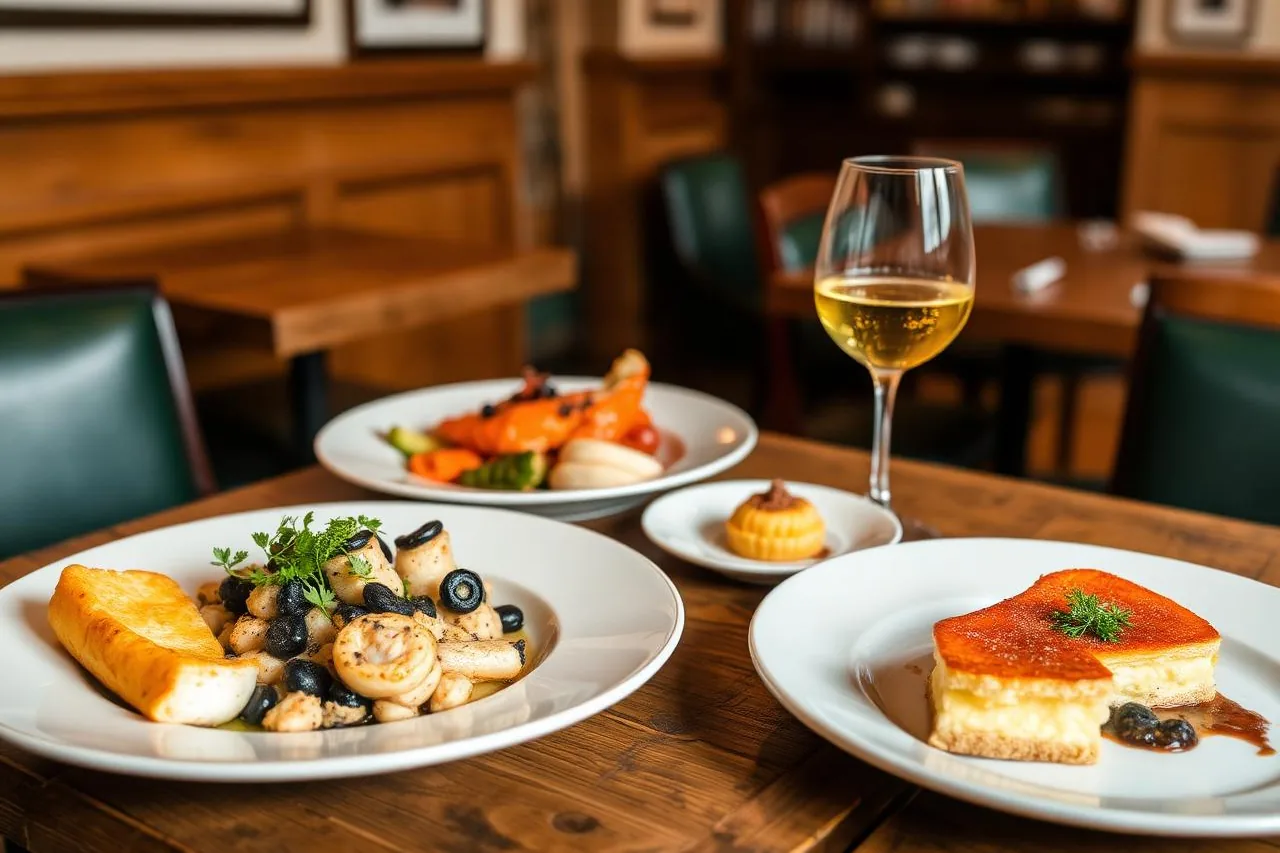
Madeira food is island food: fish landed hours before it reaches the plate, tropical fruit from terraces above the city, and beef grilled over wood on a laurel stick. Funchal has been feeding sailors and travellers for six centuries, and the repertoire that came out of it is short, confident and repeated everywhere, from a tasca with six tables to a dining room with two Michelin stars.
This guide covers each part once: the market, the dishes, where to eat in Funchal by what you want on the table, coffee, wine, festivals and costs. If you are still choosing a base, our where to stay in Madeira guide pairs with this one, and every address below is within reach of our Madeira homes.
- Espetada: As Vides, above Câmara de Lobos, or O Lagar in the village.
- Fresh fish and seafood: O Barqueiro, or Doca do Cavacas beside the volcanic pools.
- Poncha: Rei da Poncha in the centre, Venda Velha in the old town, Taberna da Poncha in Serra de Água.
- Lapas: Gavião Novo, on Rua de Santa Maria.
- A cheap lunch: a prego no bolo do caco from any café counter.
- Contemporary cooking: Kampo and Ákua, both by chef Júlio Pereira.
- Michelin stars: Il Gallo d'Oro, William and Desarma.
- Vegetarian and vegan: Coração Vegano, or Bioforma for lunch.
- Coffee and sweets: The Ritz Madeira, and Fábrica Santo António for bolo de mel.
- Madeira wine: Blandy's Wine Lodge, tours from €17.
Mercado dos Lavradores, and how to shop it
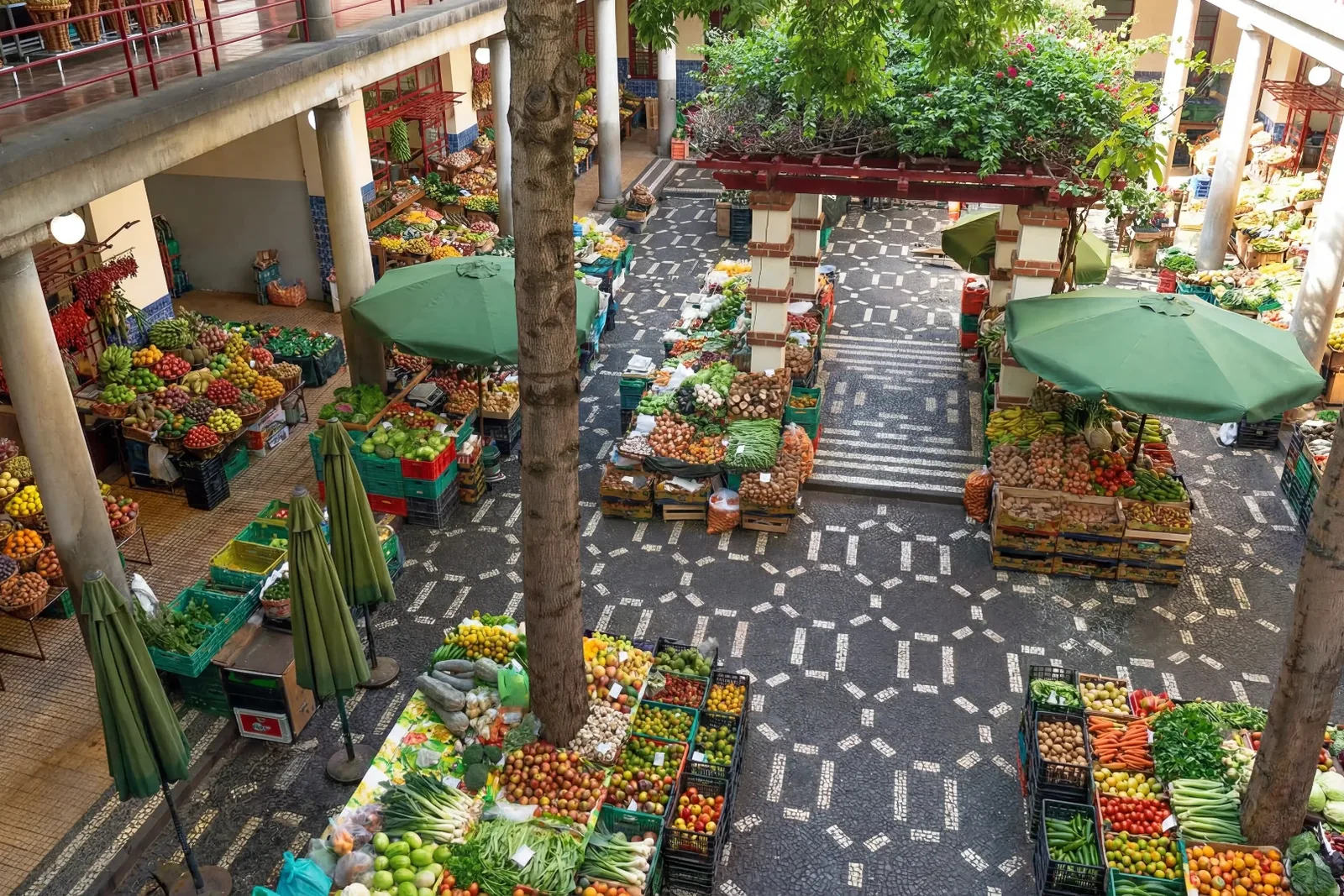
The mistake I correct most often here. People assume that everything in the Mercado dos Lavradores must be cheaper or more authentic simply because it is a traditional market. The building is beautiful, the fish hall is genuinely interesting and it remains one of the emblematic places in Funchal, but it is also an extremely popular attraction, and that shows in the price of some produce.
In the fruit section, above all at the stalls aimed at visitors, always ask the price per kilo before you accept a taste or buy anything. The exotic fruit is genuinely worth trying, but I would not assume the price resembles a normal greengrocer or supermarket. I would also not buy a large quantity from the first vendor who offers a sample: tasting several kinds of passion fruit is fun, and a small selection can turn into an expensive purchase very quickly if you are not watching the weight.
Go early if you want the fish hall at its best, which is also when I most enjoy the atmosphere. And keep the distinction clear: I come here to look, photograph, taste a few things and feel the place, not to do all my fruit and vegetable shopping. For that, a small greengrocer used by residents is often a far less touristy and more interesting experience.
My personal rule, in one line: go early, take your time, always ask the price before you buy, and feel no obligation to buy just because someone handed you a taste.
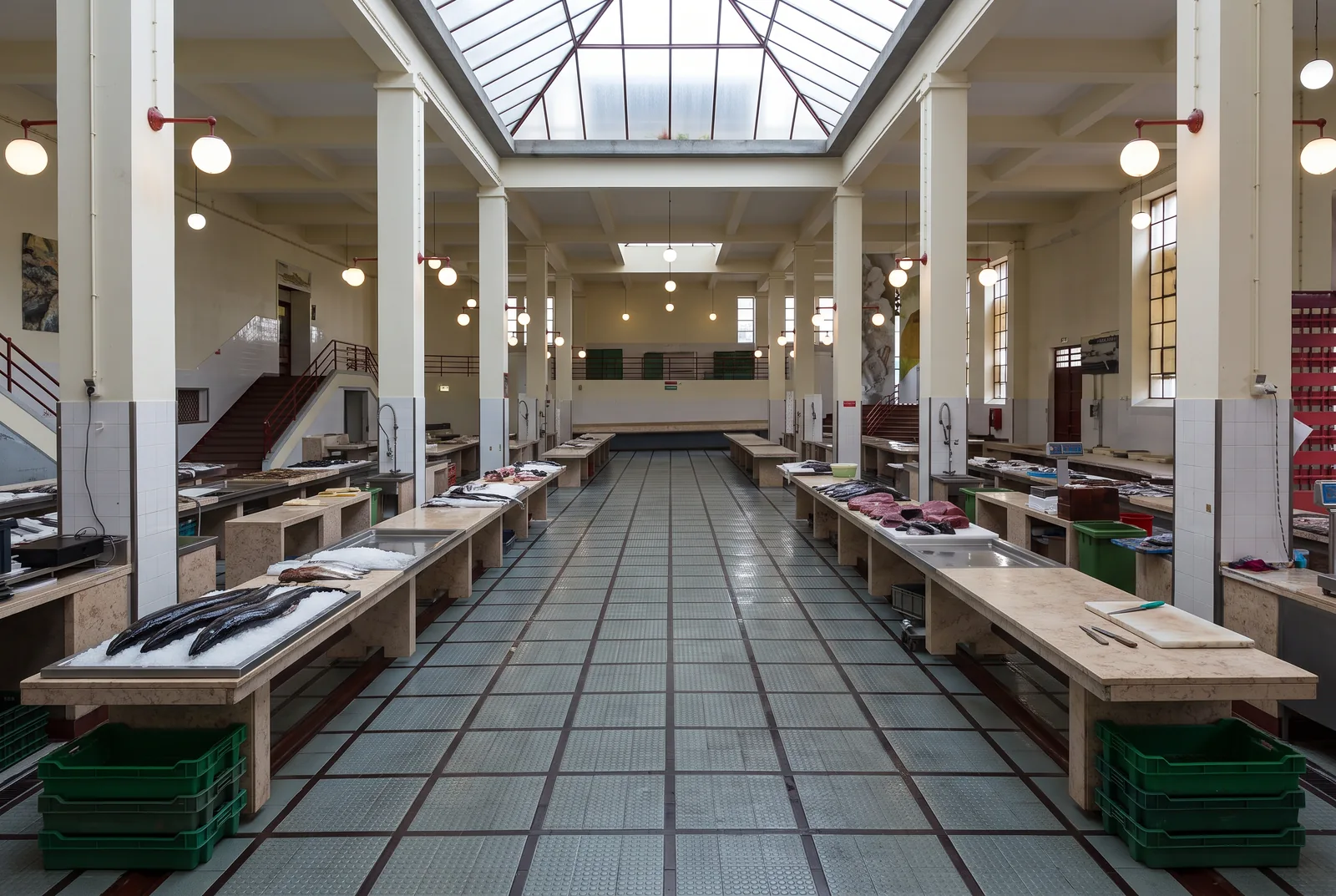
The Mercado dos Lavradores occupies a 1940 building by the architect Edmundo Tavares, fronted by painted azulejo panels and built around an open courtyard. Fruit fills the ground floor, including anona, the custard apple; the fish hall is downstairs; a third sells flowers, above all the strelitzia, or bird of paradise.
- Hours: Monday to Friday 7am to 7pm, Saturday 7am to 2pm, closed on Sundays and public holidays. Friday is liveliest, farmers spilling into the streets around it; Saturday morning feels most local. Friday is liveliest, farmers spilling into the streets around it; Saturday morning feels most local.
- Fish hall: downstairs, best before 10am, when the espada preta, the black scabbard fish, lies on ice beside tuna and parrotfish.
- Fruit: some visitor facing stalls price per 100 grams in small print, so a casual bag reaches €30 or €40 at the till. Confirm the price per kilo out loud before anything is cut.
- Rule: look, taste, buy little. Stalls deeper inside, and greengrocers around town, sell the same anonas for less.
- Where: the edge of the old town, minutes from the seafront (map).
Traditional Madeira food: the dishes to know, and where to try each one
Madeiran menus are repetitive in the best sense: the same handful of dishes runs from the humblest tasca to the hotel dining rooms, which makes what to eat in Madeira a question of where rather than what. Here is the repertoire, with the addresses that do each one well.
- Espetada: beef rubbed with garlic, salt and bay leaf, grilled over embers on a laurel stick, then hung vertically at the table so the juices baste the meat as you eat. Best at As Vides or O Lagar, both outside the city.
- Bolo do caco: a round, pillowy flatbread of wheat flour and sweet potato, baked on hot basalt and slathered with garlic butter. Filled with thin steak it becomes a prego no bolo do caco, and a padaria sells it fresher than any restaurant.
- Espada com banana: the black scabbard fish, caught at great depth off the coast, lightly fried and topped with sautéed banana and often passion fruit. O Barqueiro and Brisa do Mar.
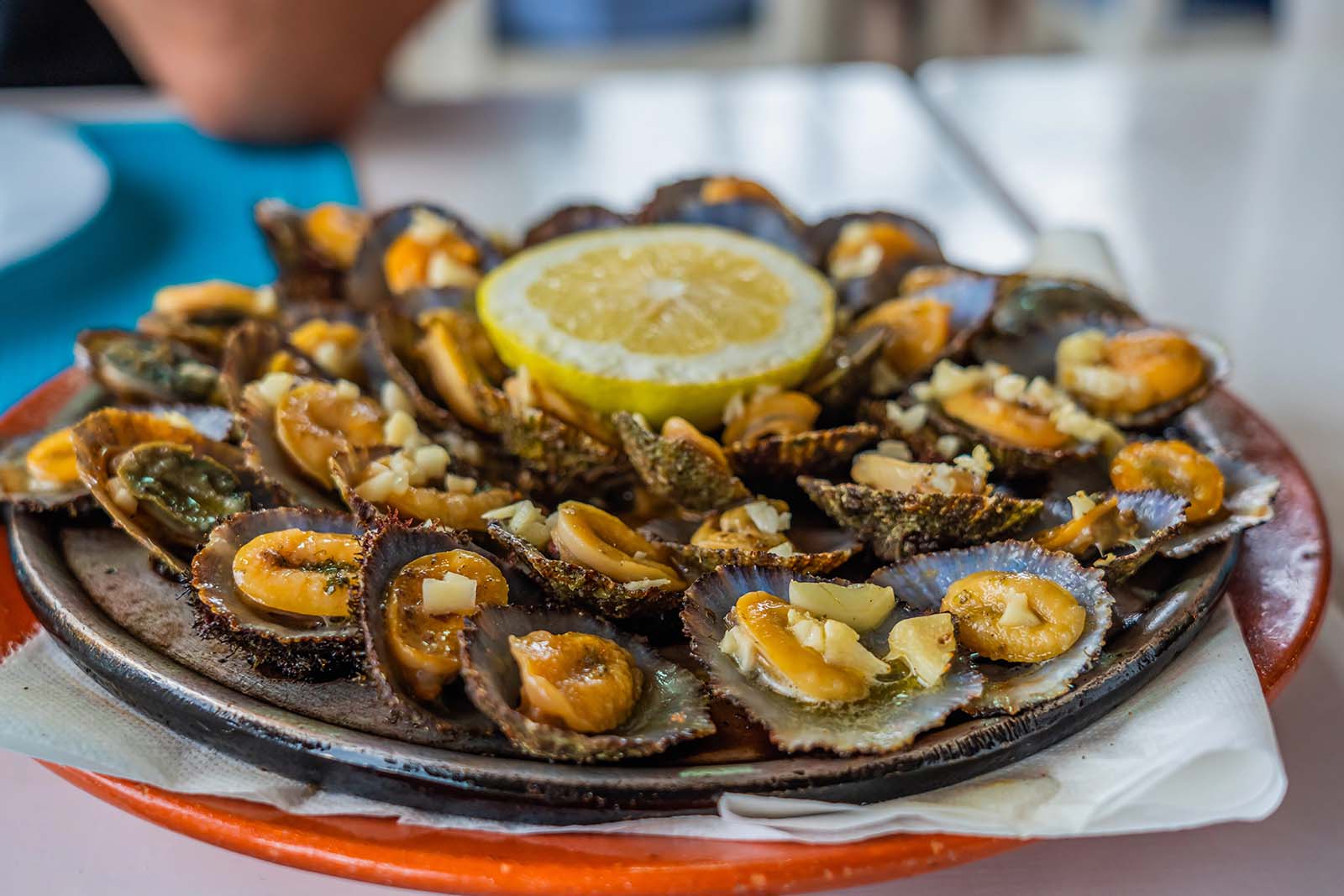
- Lapas: limpets grilled in their shells with garlic butter and lemon, with bolo do caco to mop up the juices. Gavião Novo is the old town address for grilled limpets.
- Milho frito: cubes of firm, herbed cornmeal fried until crisp, the classic partner to espetada. Ask first if you are vegetarian, since some kitchens use meat fat.
- Picado: cubed beef fried with garlic and chilli, served in the middle of the table under a pile of fries and eaten with toothpicks. A tasca dish.
- Carne de vinha d'alhos: pork marinated for days in wine, vinegar and garlic, then slowly fried. A Christmas tradition that many tascas serve year round, and the ancestor of vindaloo, carried to Goa by Portuguese sailors.
- Bolo de mel de cana: the dense, spiced molasses cake that is the island's oldest confection, traditionally baked or bought at Christmas. Break it with your hands, never a knife.
- Poncha: the island's sugar cane spirit cocktail, mixed to order with honey and citrus, and worth a section of its own below.
- Couvert: the bread, butter, olives and sometimes cheese placed on your table unasked. It is charged if you touch it, so wave it away politely if you do not want it.
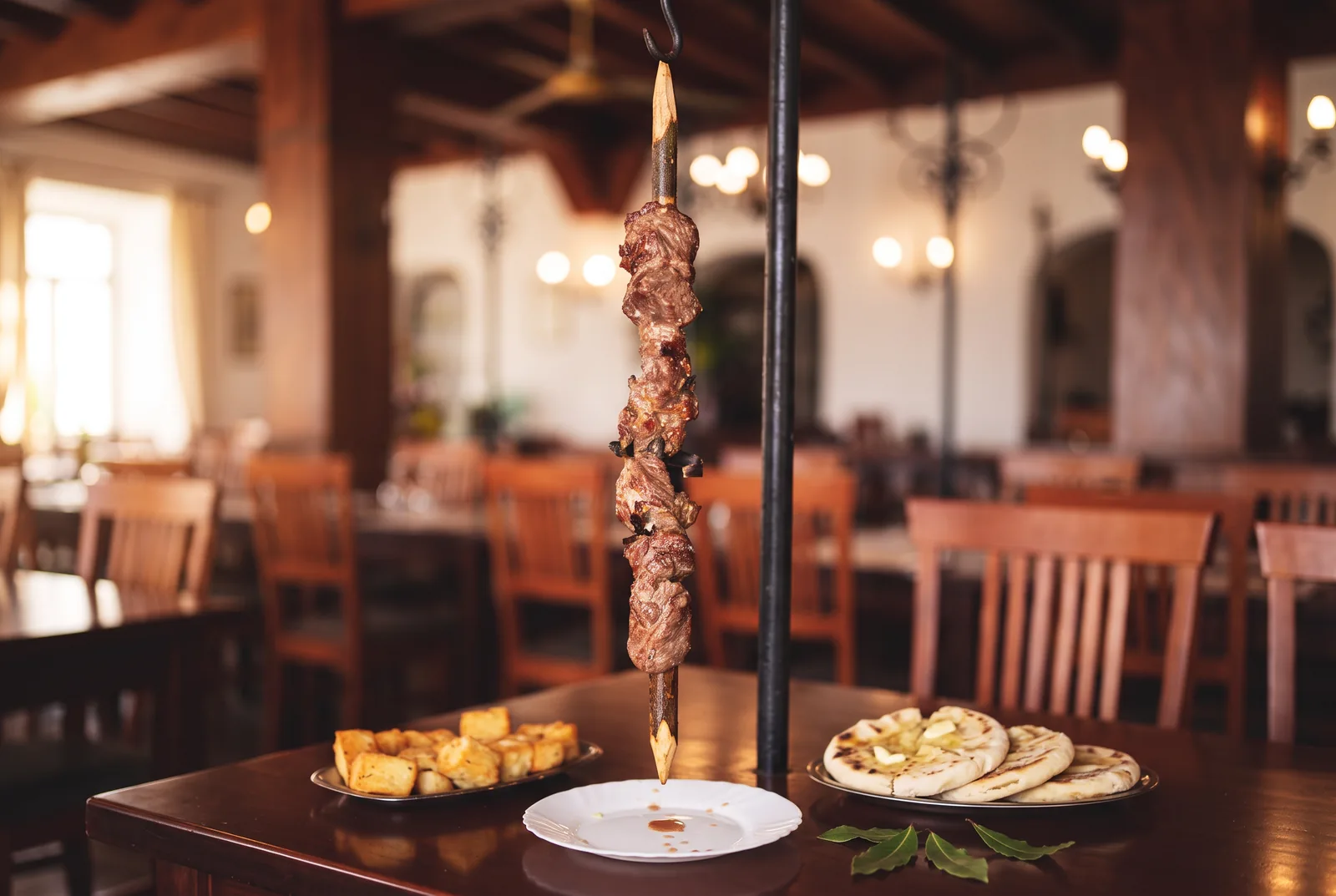
Laurel, not metal: the stick is half the seasoning.
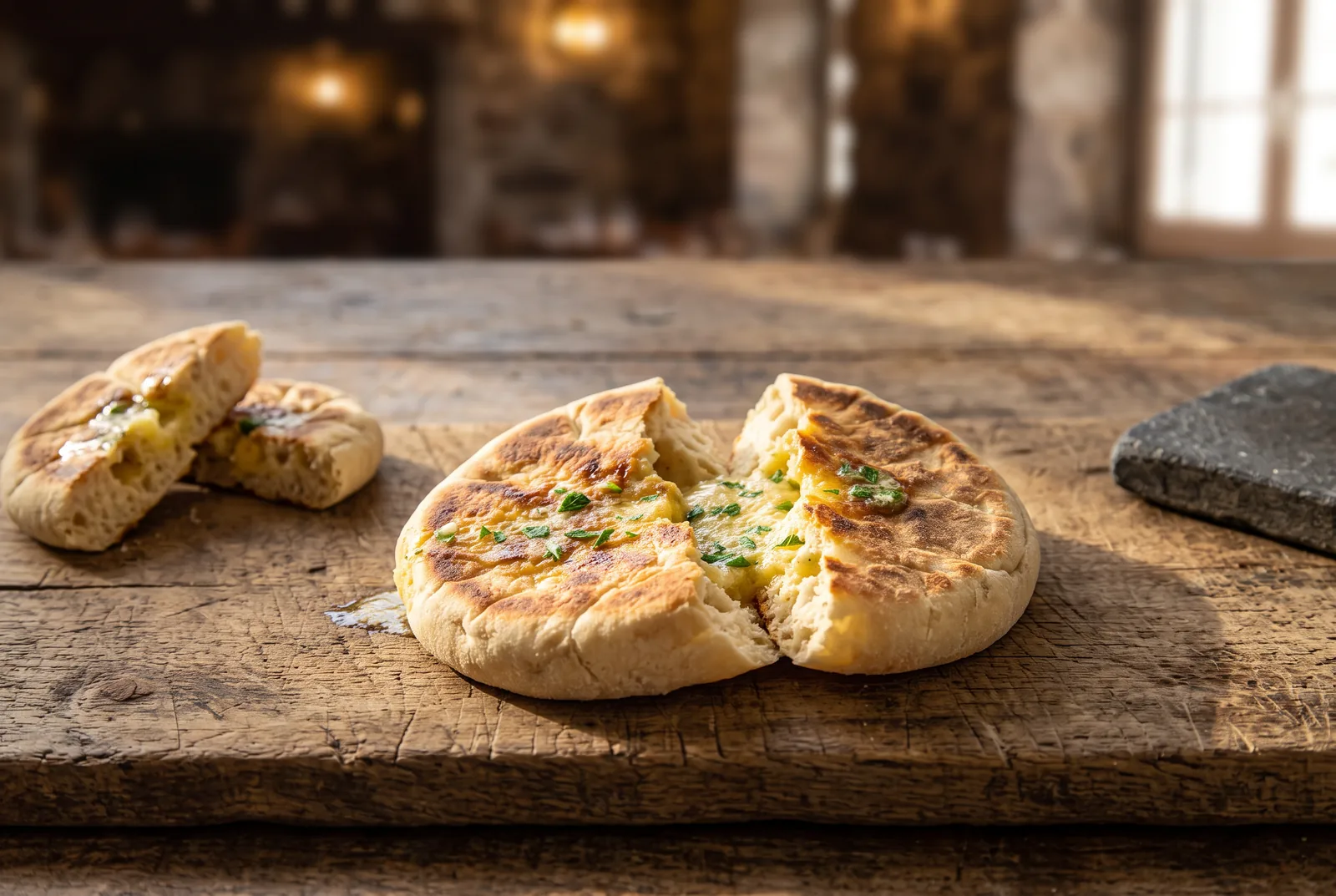
Best minutes off the stone, which is why a bakery beats a restaurant basket.
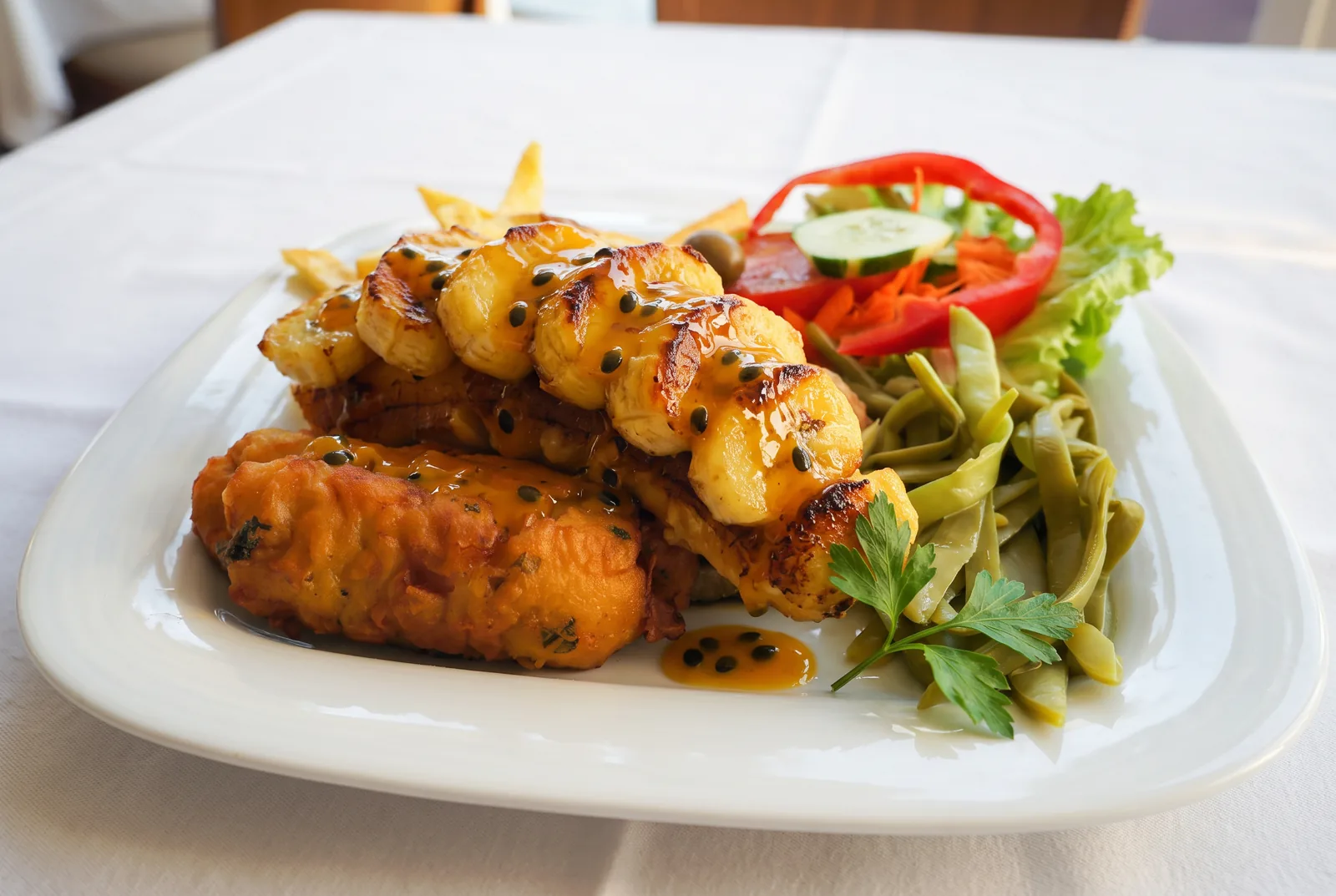
It reads wrong and eats well: mild fish, and the fruit doing a sauce's work.
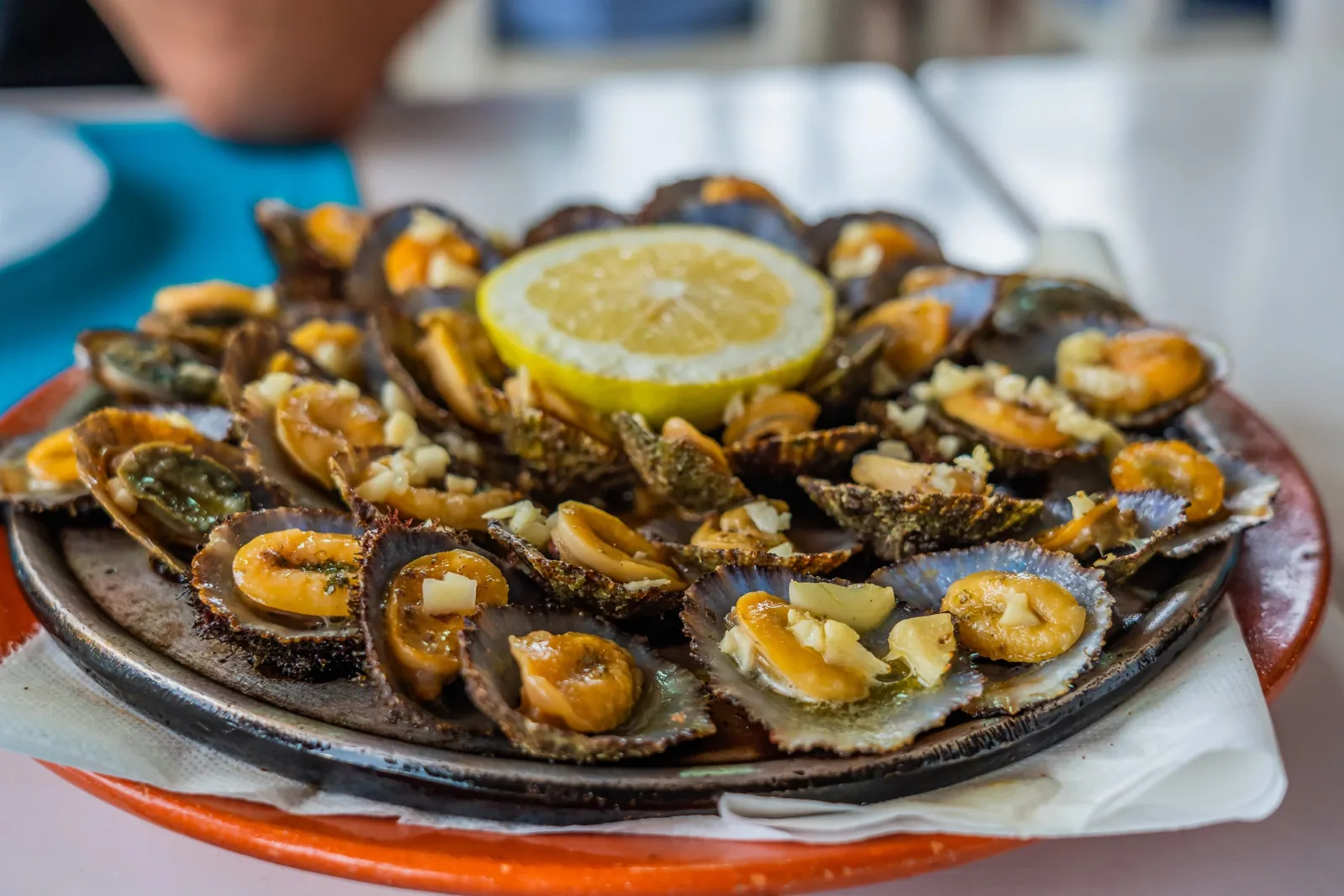
By the dozen, sizzling in the shell, and the lemon is not optional.
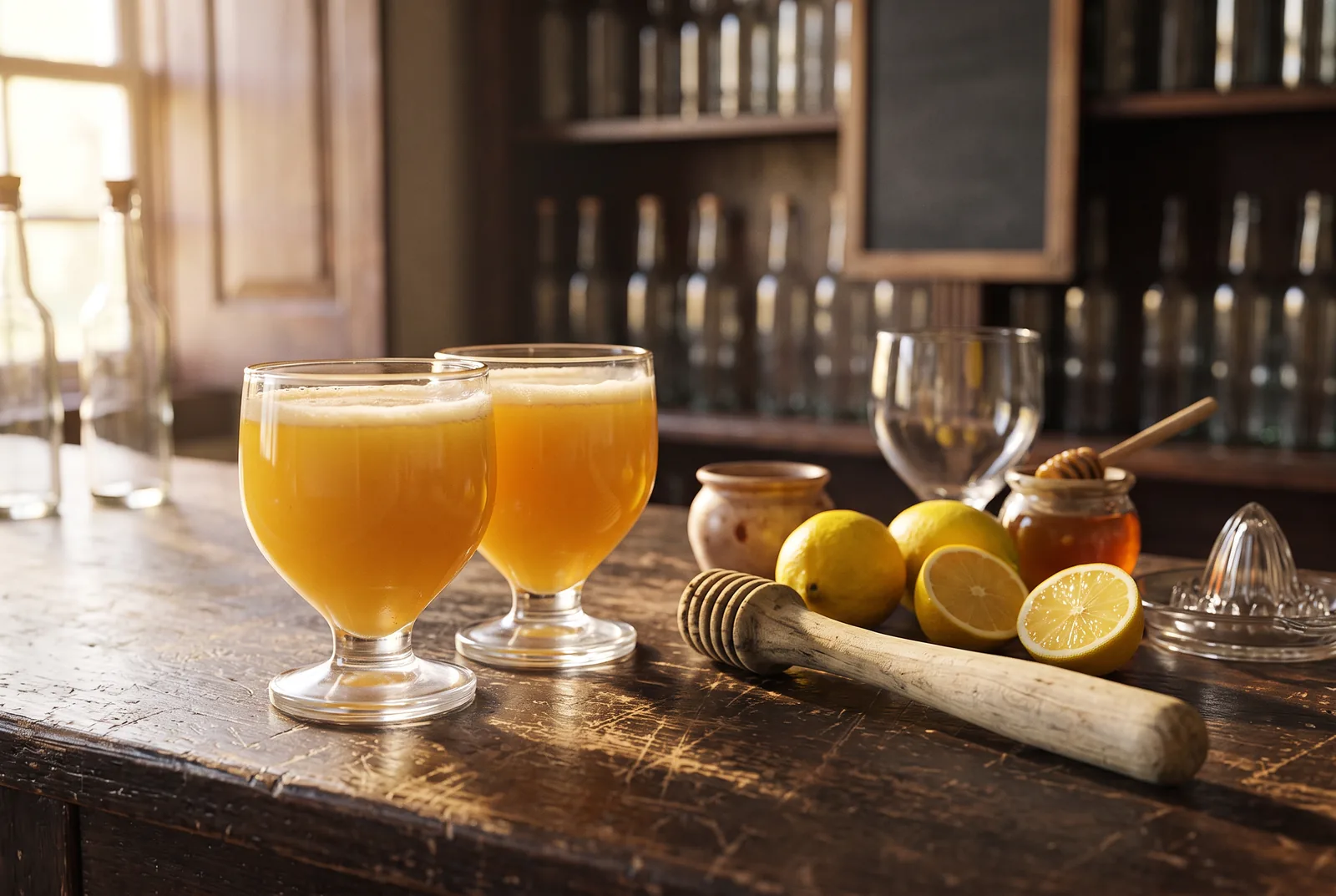
Stirred, not shaken, with the stick kept behind every serious counter.
One thing usually missed: beyond the fortified wine, the archipelago makes still wines too, under the Madeirense and Terras Madeirenses appellations, rarely seen off the island. Ask for one by name.
Poncha, Nikita and where locals drink them
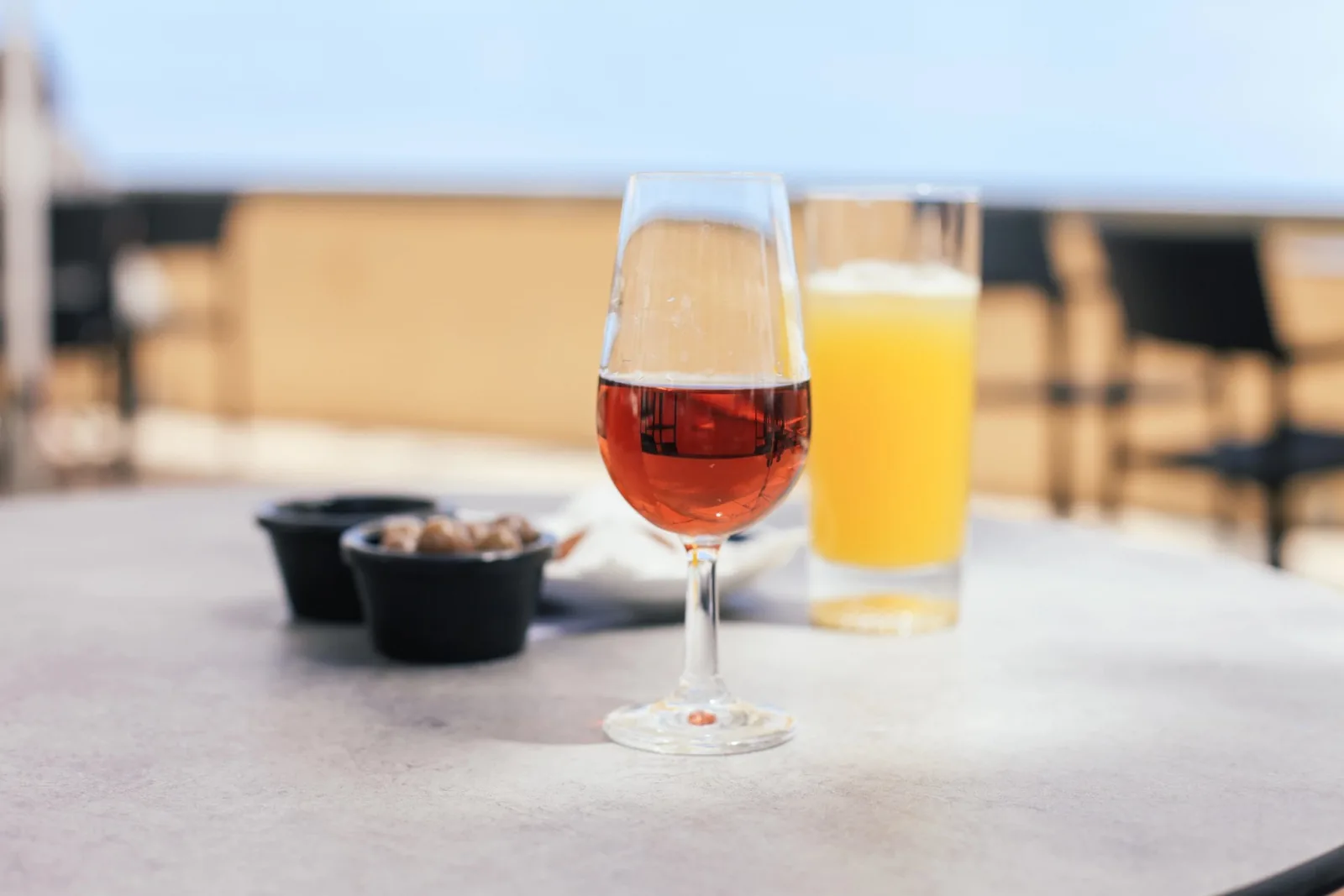
Ordering poncha properly is a small art. The base never changes: aguardente de cana, a rum like spirit distilled from Madeiran sugar cane, mixed energetically with honey and citrus. Only the fruit changes. Poncha à pescador, made with lemon, is the original, said to have fortified fishermen before cold mornings at sea; poncha regional swaps in orange for a rounder drink; tangerine and passion fruit are gentler and no less potent. A good poncha is mixed to order; from a premixed bottle, you are in the wrong bar.
One more drink belongs in the vocabulary: the Nikita, invented in Câmara de Lobos in 1985 by a barman who named it after the Elton John song. It blends ice cream and pineapple with beer, sometimes white wine, into a frosty island piña colada. Câmara de Lobos, a short bus ride west, is where to try one, after the bay that Winston Churchill painted, on a coastal day among the island's viewpoints.
- Rei da Poncha: Rua da Alfândega in the city centre, the most accessible of these, many fruit versions, lively and late, €3 to €5 a glass.
- Venda Velha: number 170 on Rua de Santa Maria, a tiny bar dressed as an early twentieth century grocery, spilling onto the street at weekends.
- Barreirinha Bar Café: Largo do Socorro, beyond the cable car, with a wide esplanade over the sea and the harbour.
- Taberna da Poncha: Serra de Água, a valley village well outside Funchal, worth the drive, everything mixed to order with fresh fruit, €2 to €4 a glass.
- Nikita: not a bar but a drink, best in Câmara de Lobos, where it was invented in 1985.
The best restaurants in Funchal, by what you want to eat
In Funchal the choice is rarely about neighbourhood and almost always about what you feel like eating.
1. Espetada houses
O Lagar is about fifteen minutes west of the city, As Vides another ten minutes up into the hills, and the fried corn and bolo do caco belong with the meat.
- O Lagar: on the main road through Câmara de Lobos, a rustic room for espetada grilled over wood, €15 to €25 a main, book at weekends.
- As Vides: a family house in the hills at Estreito de Câmara de Lobos, grilling on laurel skewers since 1950, less polished and more traditional, book.
2. Fish and seafood
Fish is usually priced by weight, so ask what a plate comes to, and what landed that morning.
- O Barqueiro: the CentroMar centre on Rua da Ponta da Cruz, for live shellfish, limpets by the dozen and espada com banana, €15 to €25 a main, book.
- Doca do Cavacas: number 66 on Rua da Ponta da Cruz, on a rock beside the volcanic pools, the day's catch with the Atlantic below, closed Mondays as of mid-2026.
- Brisa do Mar: at Reid's Palace, the open air seafood restaurant above the ocean in a relaxed setting, April to October only and closed Wednesdays and Thursdays outside high summer, book.
3. Contemporary tables
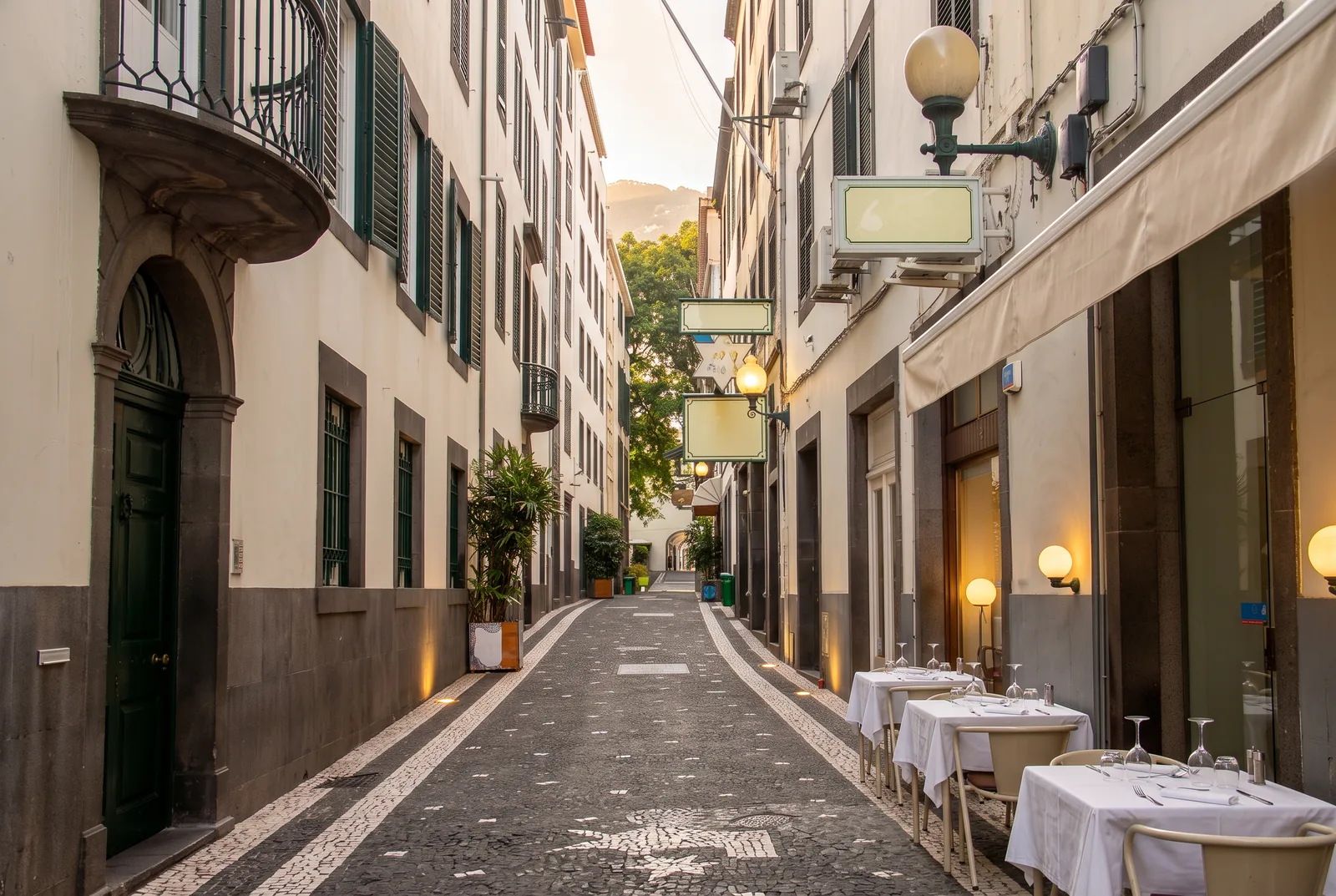
A generation of chefs cooks Madeiran ingredients in a modern register, two of them on Rua da Alfândega and the rest scattered between the centre and the headland. Starters €12 to €25, mains €25 to €50, tasting menus €70 to €150. Book days ahead in high season, weeks for the top tables.
- Kampo: Rua da Alfândega, chef Júlio Pereira's seasonal take on Madeiran cooking, built on produce from the island's farms, the city's most wanted table.
- Ákua: the same chef's fish and seafood room on Rua dos Murças, for what Madeiran seafood does in modern hands.
- Armazém do Sal: a few doors along Rua da Alfândega, refined contemporary Portuguese cooking, confident on seafood and grilled meat.
- Avista: at The Cliff Bay on the headland, a sharing menu across Mediterranean and Asian cooking, ocean views, an occasion restaurant.
- Cris's Place: Rua da Casa Branca above the Lido, fresh fish on a Mediterranean leaning menu, polished service in a relaxed room.
4. Michelin starred dining
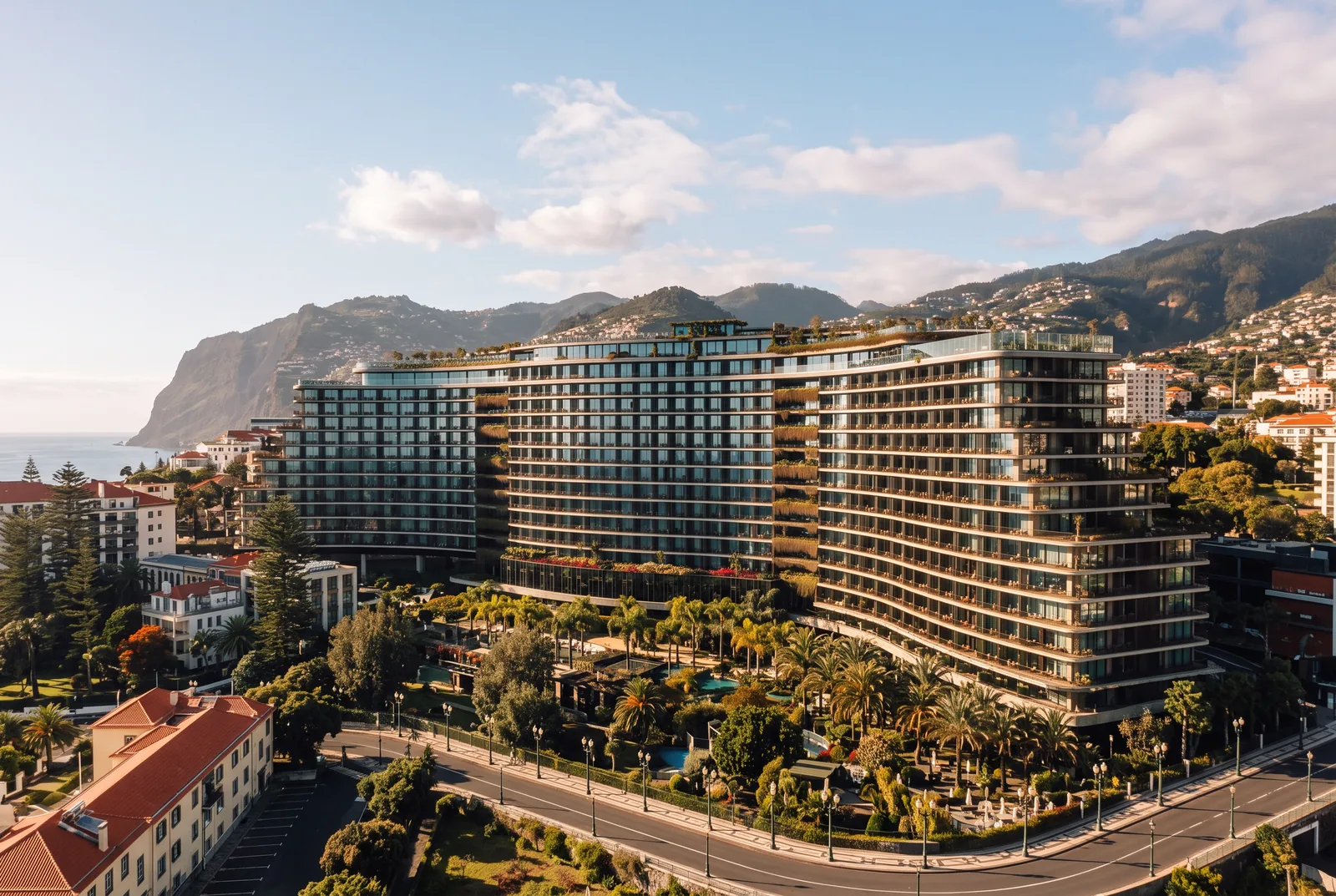
Funchal holds three Michelin starred restaurants in the 2026 guide, and the Portuguese Michelin gala was hosted at the Savoy Palace in Funchal in March 2026, the first time it left the mainland.
- Il Gallo d'Oro: two stars, chef Benoît Sinthon's flagship at The Cliff Bay, tasting menus that revive old Madeiran recipes with modern technique, and a serious cellar.
- William: one star, the fine dining room at Reid's Palace, views over Funchal bay, Portuguese tradition met with international technique.
- Desarma: one star, chef Octávio Freitas's bold, artistic rooftop at The Views Baía on Rua das Maravilhas, the most exciting modern Madeiran cooking on the island.
Reserve well ahead, especially December to March, and confirm dress codes, since Reid's Palace leans formal.
5. Old town tascas
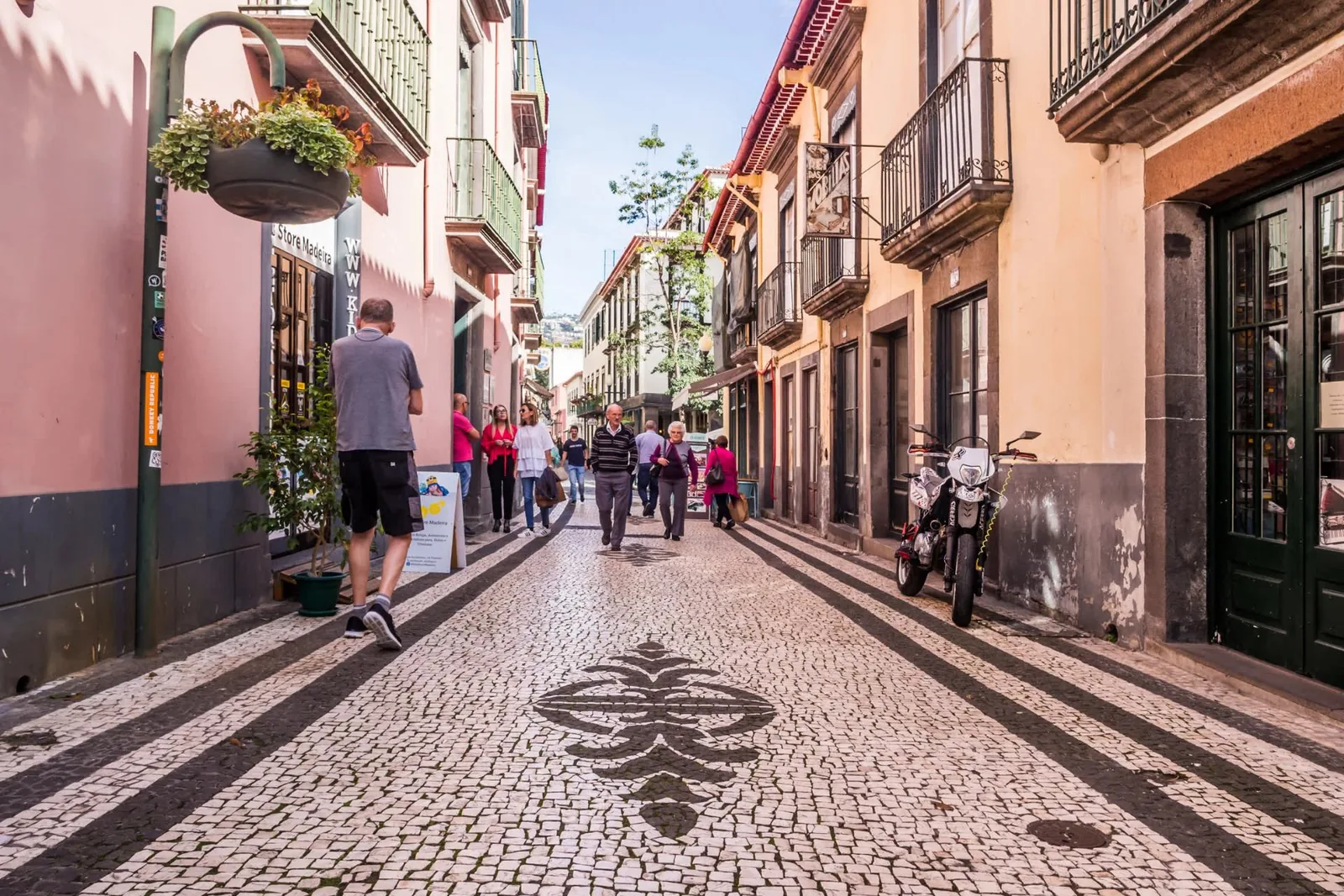
The Zona Velha is the island's most atmospheric place for an unhurried dinner. Along Rua de Santa Maria, a pedestrian lane whose doorways the Art of Open Doors project has been turning into painted artworks since 2011, small restaurants set tables under strings of lights. Quality varies, so guidance pays.
- Gavião Novo: number 131, some of the best lapas in town and simply grilled fish, honest cooking that keeps locals coming despite the address.
- Tasca da Maria: number 103 on the same street, typical Madeiran plates and economical set menus, an unfussy lunch near the market.
- Santa Maria: number 145, a former primary school, Madeiran and Portuguese classics alongside sushi and small plates, for a table that cannot agree.
On the busiest stretch, hosts with laminated menus will wave you in. A polite 'não, obrigado' works, and the restaurants that do not need to flag you down are the ones worth sitting in.
6. Vegetarian and vegan
Madeiran cooking is built around fish and meat, but Funchal now has a good plant based scene, and most kitchens mark vegetarian dishes.
- Fala Fala Vege Food: Rua de São Francisco, falafel and hummus, stuffed wraps, salads and lentil pie, with a covered courtyard.
- Bioforma: a health food institution on Rua dos Netos, trading since 1987, shop upstairs and a café serving cheap vegetarian and vegan lunches below.
- Olives: Rua da Carreira, evening only, modern Madeiran and Mediterranean cooking with a full vegetarian and vegan menu alongside the main one.
- Coração Vegano: a fully vegan kitchen near the top of most plant based lists for the city.
The traditional repertoire helps too: bolo do caco with garlic butter, tomato and onion soup with a poached egg. After a morning on the island's levada walks, that table with a cold Coral, Madeira's own lager, is its own reward.
Where I would actually eat, and what I order
I have eaten at nearly all of the places on this page, some of them far better known to me than others, so here is the honest ordering rather than a flat list.
For espetada, As Vides, in Estreito de Câmara de Lobos. I have been several times, most recently in 2025, and if you asked where I would go myself and I was willing to leave Funchal, that is where I would go. It is less polished than the alternatives and that is exactly what I like about it: it feels like the more traditional experience. It is hard to avoid the espetada there, because that is the reason to go, but do not treat the sides as an afterthought: freshly made fried corn, bolo do caco and a good salad are part of the meal. I would rather order few things, all traditional, than fill the table with variety.
O Lagar, in Câmara de Lobos, is the one I have been to most often, first years ago and again in the summer of 2023 and in July 2025. I still recommend it to anyone who wants espetada in a traditional setting.
For fish and seafood, O Barqueiro. I have eaten there many times, most recently in 2025, partly because it sits in a part of Funchal I pass through often. What I like is that you can take a group where not everybody wants the same thing and everyone eats well. Instead of going straight for the black scabbardfish with banana, I ask what came in fresh that day. If there are limpets, goose barnacles, castanhetas or clams, I would rather order several starters and share them: a much better way to taste the sea here than one main course each.
For something contemporary, Kampo. First visit in 2023, back again in 2024. I would not go looking for traditional Madeiran cooking in the classic sense: I go for the way local ingredients are used in a more modern register. The menu moves with the season, so I arrive with nothing decided and ask what is particularly good that day.
For an occasion, Avista, where I ate in 2024. The location and the view over the Atlantic are close to half the experience.
And one honest note. I ate at Cris's Place once, in 2022. It was not a bad experience and I would not tell anyone to avoid it, but it would not be among my first recommendations for someone with only three or four nights in Funchal. There are too many interesting alternatives, and I would rather repeat Kampo or pick somewhere more genuinely regional.
And the advice I give guests everywhere: ask for the fish of the day. In Madeira's fish restaurants the best choice is often not the one highlighted on the menu, it is whatever arrived fresh that morning.
Coffee, cafés and the sweet side of Funchal
As on the mainland, coffee here is a ritual rather than a purchase, and two words make the counter easier: an espresso is a bica, and a milky coffee is a chinesa, an island word you will not hear in Lisbon.
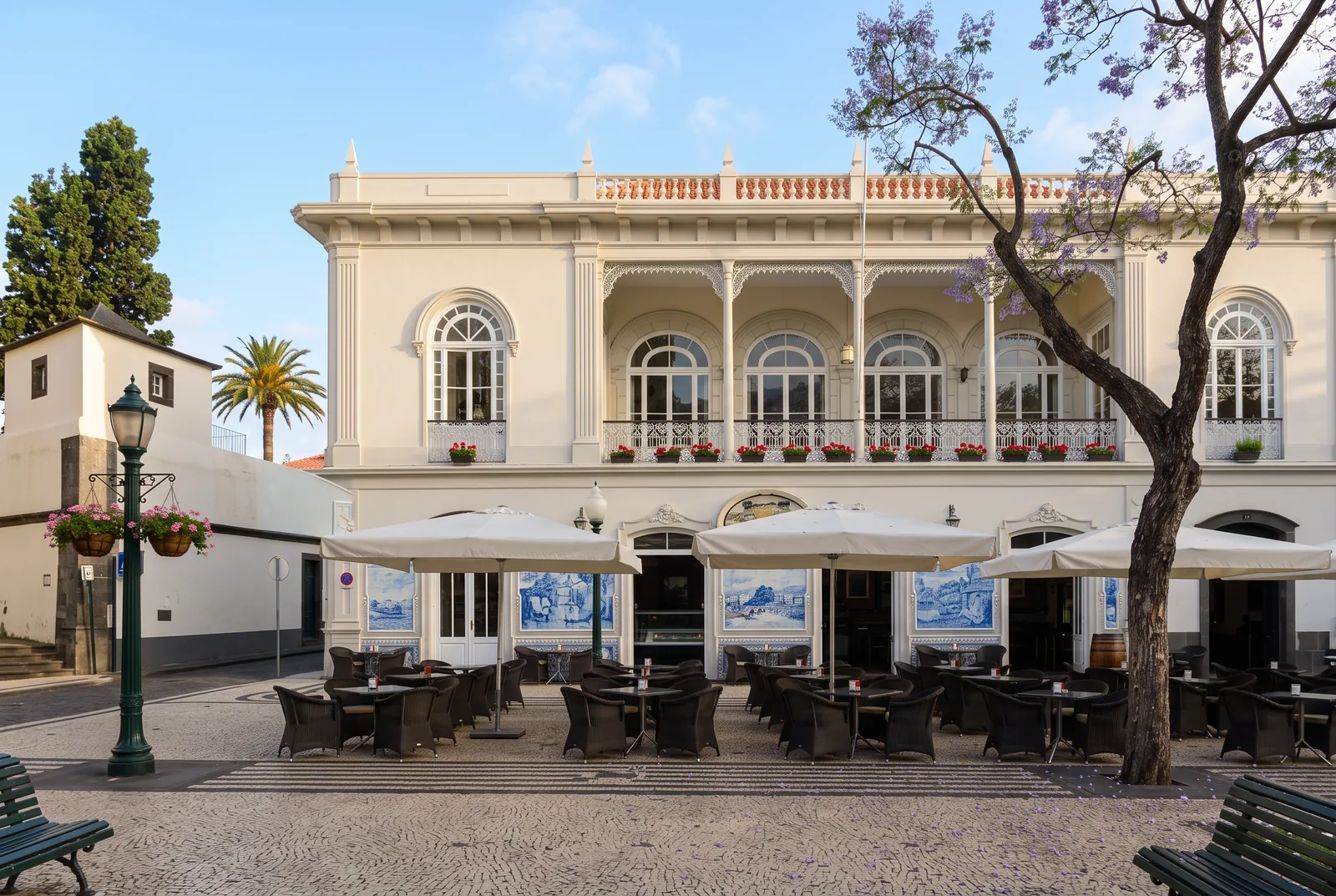
- The Ritz Madeira: one of the oldest grand cafés in Funchal, on Avenida Arriaga, azulejo panels of old island scenes across its walls and a terrace facing the municipal gardens, a century old.
- Bar O Avô: a quiet side street near Avenida do Mar, hung with football scarves, pouring coffee alongside Madeiran food at local prices.
- Pastelarias: the neighbourhood bakeries, where a bica costs €0.70 to €1.50 and the pastéis de nata and queijadas, sweet cheese pastries, come out warm.
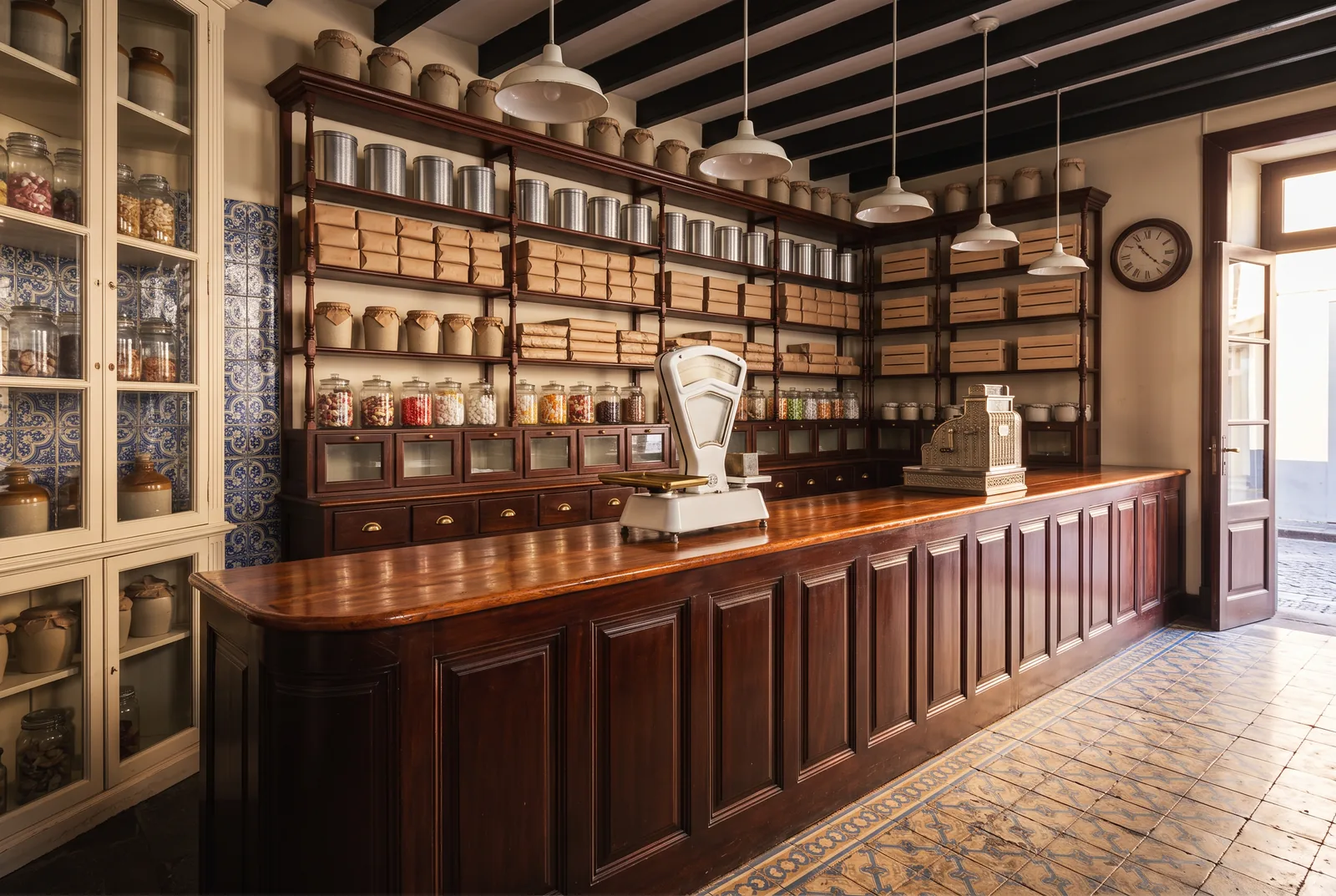
Fábrica Santo António, a family run factory and shop founded in 1893 by Francisco Roque Gomes da Silva, still makes the island's confectionery by hand on Travessa do Forno, a few streets from the market: bolo de mel de cana, crumbly broas, old fashioned rebuçados, quince paste and jams. The shop keeps its original counters, and a boxed bolo de mel keeps for months: the best edible souvenir here.
Madeira wine tasting at Blandy's Wine Lodge
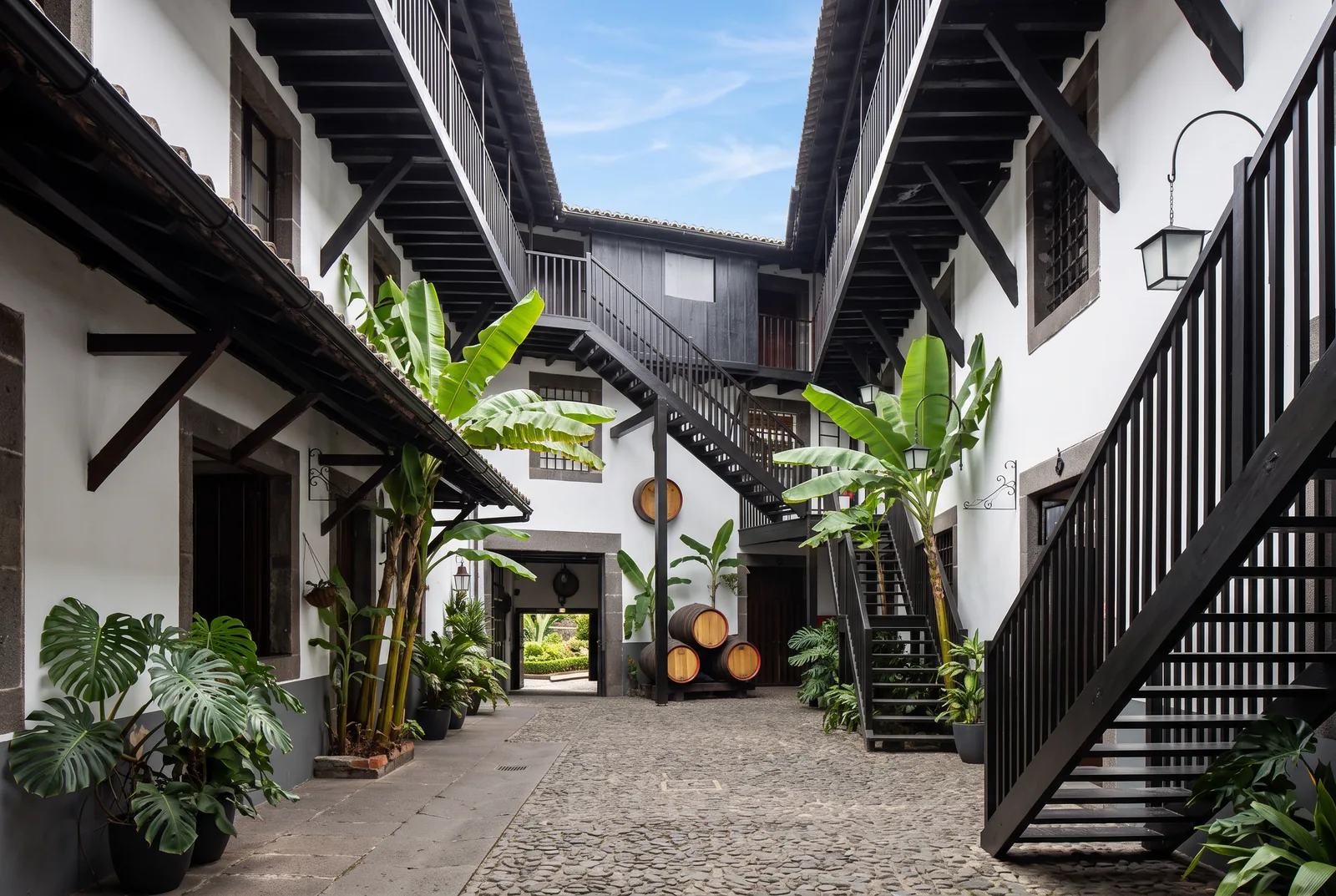
Blandy's Wine Lodge sits in the centre of Funchal and has been producing Madeira wine for over 200 years. A guided tour covers the family history, the volcanic terroir and the two ageing systems that make the wine, estufagem and canteiro, then ends in a tasting from dry Sercial to sweet Malmsey.
- Lodge Tour: 30 minutes with 2 tastings, €17.
- Premium Tour: 45 minutes with 3 tastings, €23.
- Vintage Premium Tour: 90 minutes, €59, adding the vintage room and five tastings including one true Frasqueira vintage.
- Private tours: €150 per person, up to four guests.
- Children: €8.40 for ages 6 to 17, free under 6.
- Booking: English tours run several times daily and fill in peak season, free cancellation up to 24 hours ahead.
A food festivals calendar, and when they fall
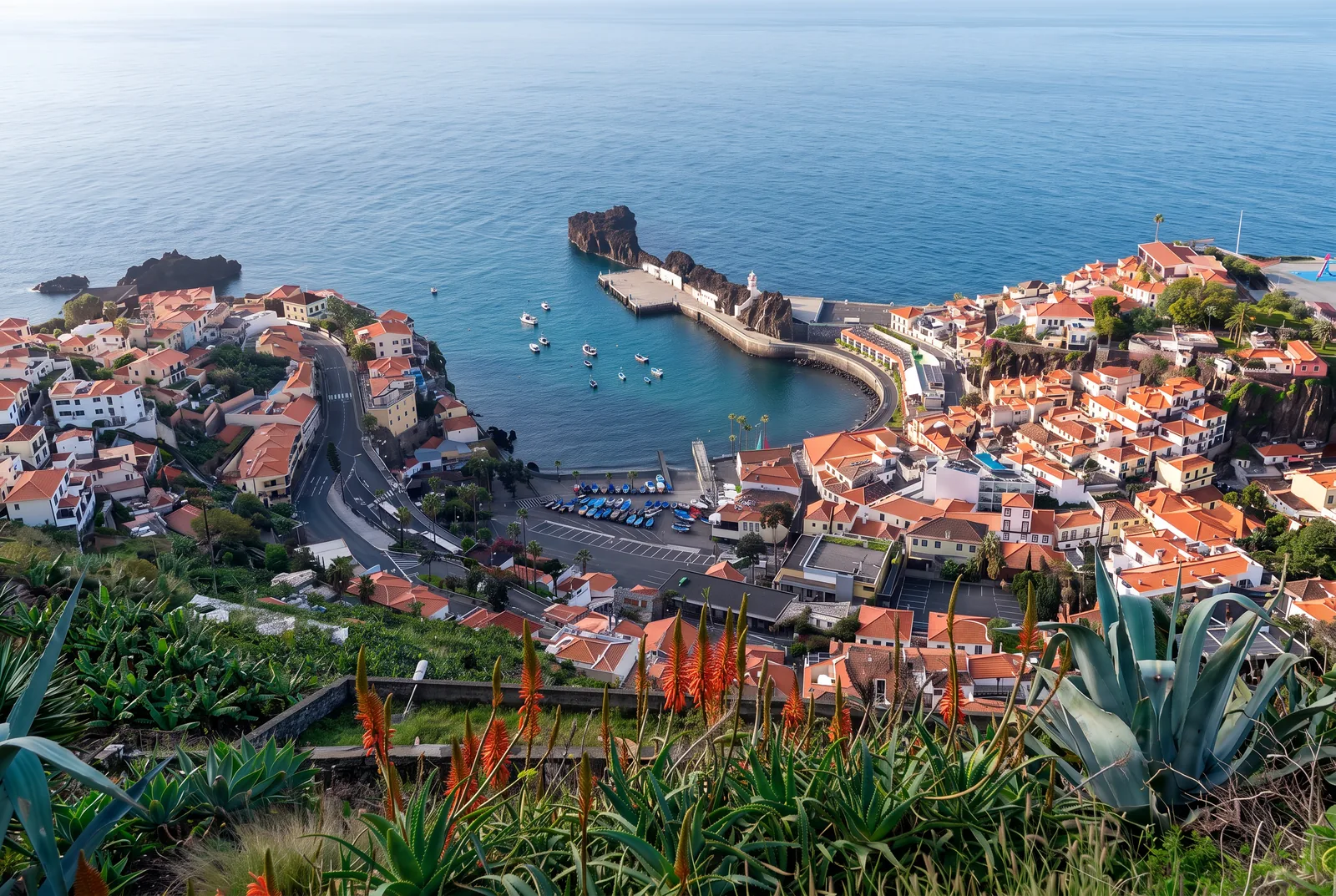
Madeirans celebrate their harvests with parades, folklore groups, grilled meat smoke and free flowing poncha. The dates below are the 2026 editions, and they move only slightly from year to year, so use them to place a future trip.
- Festa da Anona, late February: 28 February to 1 March in 2026, a weekend devoted to the custard apple in Faial, on the north coast, with tastings, liqueurs and music.
- Festa da Cereja, mid June: 19 to 21 June in 2026, the cherry harvest at Jardim da Serra, above Câmara de Lobos, with a parade and everything from cherry brandy to cherry cake.
- Madeira Wine Festival, late summer: 23 August to 13 September in 2026, the island's flagship food and wine event, with tastings on Praça do Povo and grape stomping in Estreito de Câmara de Lobos.
- Festa da Castanha, around 1 November: the chestnut festival at Curral das Freiras, in the Nuns Valley, with roasted chestnuts, cake and liqueur, a good reason for Madeira in November.
- Arraiais, July and August: almost every parish holds its saint's day street party, espetada over open fires and wine poured from jugs. Watch for posters, and see our top sights of Madeira guide for more reasons to leave the capital.
What eating out costs in Funchal in 2026
Prices have crept up with the island's popularity, but Funchal remains excellent value next to most western European capitals. Realistic expectations for mid-2026:
- Coffee and pastries: €0.70 to €1.50 for an espresso in a local pastelaria, more on a tourist terrace, a pastel de nata another euro or two.
- Street food: a prego no bolo do caco costs a few euros, the best cheap lunch on the island.
- Poncha: €2 to €4 a glass in village bars, €3 to €5 in central Funchal.
- Traditional restaurants: starters €5 to €12, mains €15 to €30, desserts €5 to €8, house wine €3 to €5, a beer €2 to €4.
- Seafood: fish is often priced by weight, so ask first; a generous platter for two runs around €50.
- Contemporary tasting menus: €70 to €150 per person without pairing, starters €12 to €25 and mains €25 to €50 à la carte.
- Fine dining: the Michelin starred rooms sit above that, plus pairings.
- Wine tours: €17 to €59 at Blandy's, depending on depth.
- A food day for two: a pastelaria breakfast, a casual lunch, a poncha and a traditional dinner with wine, around €80 to €110.
- Couvert: bread, olives and sometimes cheese arrive unasked and are charged if you eat them. 'Não, obrigado' sends them back.
- Tipping: appreciated, never mandatory. Five to ten per cent in a restaurant, rounding up in a café.
- Reservations: essential for contemporary and Michelin starred tables, days ahead in high season and weeks for the best rooms, sensible at the espetada houses on weekends. Arriving at 8.15pm for an 8pm booking is normal.
- The bill: it will not come until you ask. Catch the waiter's eye and mime writing, or say 'a conta, por favor'.
Eating along the seafront? See our guide to the Lido and the Estrada Monumental, Funchal's oceanfront quarter.
Frequently asked questions about eating in Funchal
What is Madeira's most famous food?
Espetada, beef grilled on a laurel stick over embers and served hanging at the table. Espada com banana and bolo do caco are the other two nobody leaves without.
Where is the best area in Funchal for restaurants?
The Zona Velha, and Rua de Santa Maria in particular, for tascas and atmosphere. Rua da Alfândega for the contemporary kitchens, Ponta da Cruz and the Lido for seafood above the Atlantic, and Câmara de Lobos for espetada.
Do I need to book restaurants in Funchal?
For the contemporary tables and the three Michelin starred rooms, yes: days ahead in high season, weeks for the most wanted. Tascas take walk ins, though the espetada houses fill on weekend evenings.
Is eating out in Funchal expensive?
Not by western European standards. A traditional main costs €15 to €30, a poncha €2 to €5, and a full day for two lands around €80 to €110. Fine dining is where it climbs, with tasting menus from €70 per person.
Where to stay to eat your way through Funchal
Every market counter and tasca in this guide sits within easy reach of a Funchal base. Superior Rentals keeps two very different homes in the city's best eating streets. The Downtown villa puts the Mercado dos Lavradores and the Zona Velha's restaurant row a short stroll from your door, and the Beachfront penthouse sits in the Lido quarter, where the seafront esplanades grill the day's catch a few minutes' walk away. For help picking your corner of the island, our where to stay in Madeira guide compares the areas, and the Madeira page shows both homes side by side.
Related topics: Restaurants, Markets