Things to do in Cascais: beaches, Boca do Inferno and the train from Lisbon
Ana Freitas · 19 min read · Updated 26/Oct/2026
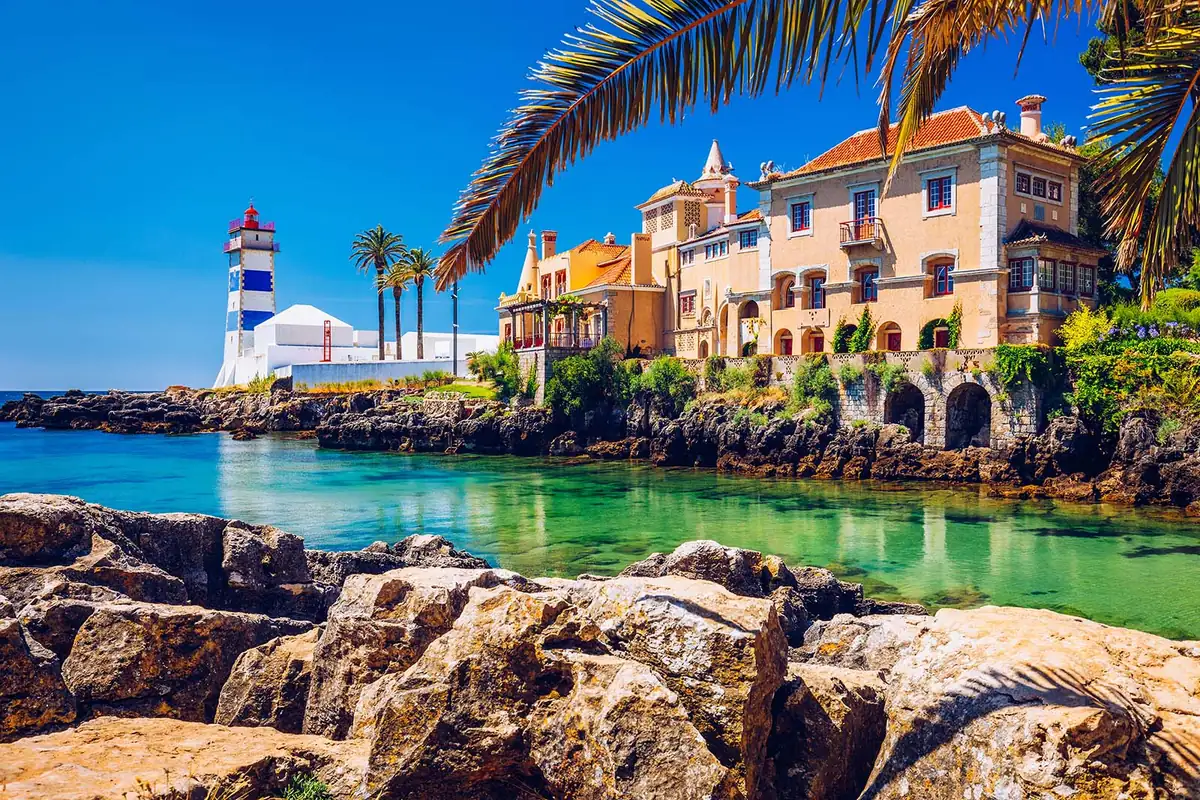
A day in Cascais from Lisbon: the train, the beaches, the historic centre and Boca do Inferno, and how long the trip really deserves.
Cascais from Lisbon: the short answer
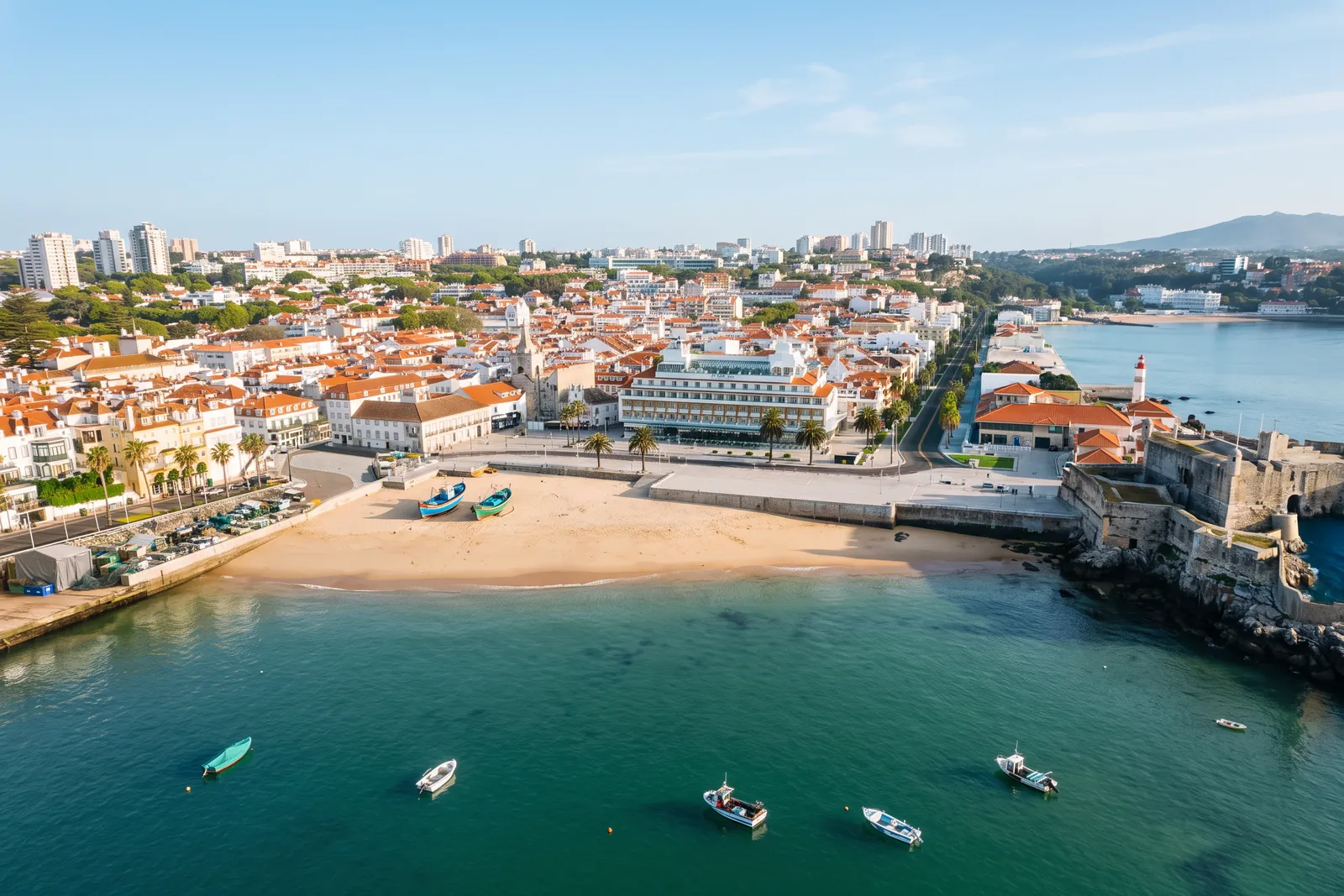
Cascais was a fishing town before it was anything else. The royal court began summering here in 1870 and the villas followed, but the fishermen kept working the bay in front of them, which is still the shape of the place: yachts on one side of the Cidadela, boats on the sand on the other. It sits at the end of the Estoril Coast, 35 to 40 minutes from Lisbon.
That distance is the whole argument. The train sets you down in the middle of town, so there is no second leg and no logistics, which is what makes a day by the sea so easy to slot into a Lisbon trip. Everything below appears once: the train, the beaches, the things to do in Cascais on foot, where to eat, and an honest verdict.
- Getting there: train from Cais do Sodré, €2.55, 35 to 40 minutes.
- Half a day: old town, marina, Santa Marta, Boca do Inferno, lunch.
- Full day: add Paula Rego and the park, then bike to Guincho or bus to Cabo da Roca.
- Best beach for a swim: Conceição or Duquesa, a short walk from the station.
- Best beach for a walk: Guincho, wild and windy, nine kilometres west.
- Best time: May, or September and October.
- With Sintra: better as two separate days, and the article's own loop is the one exception.
Lisbon to Cascais by train, and why I take it
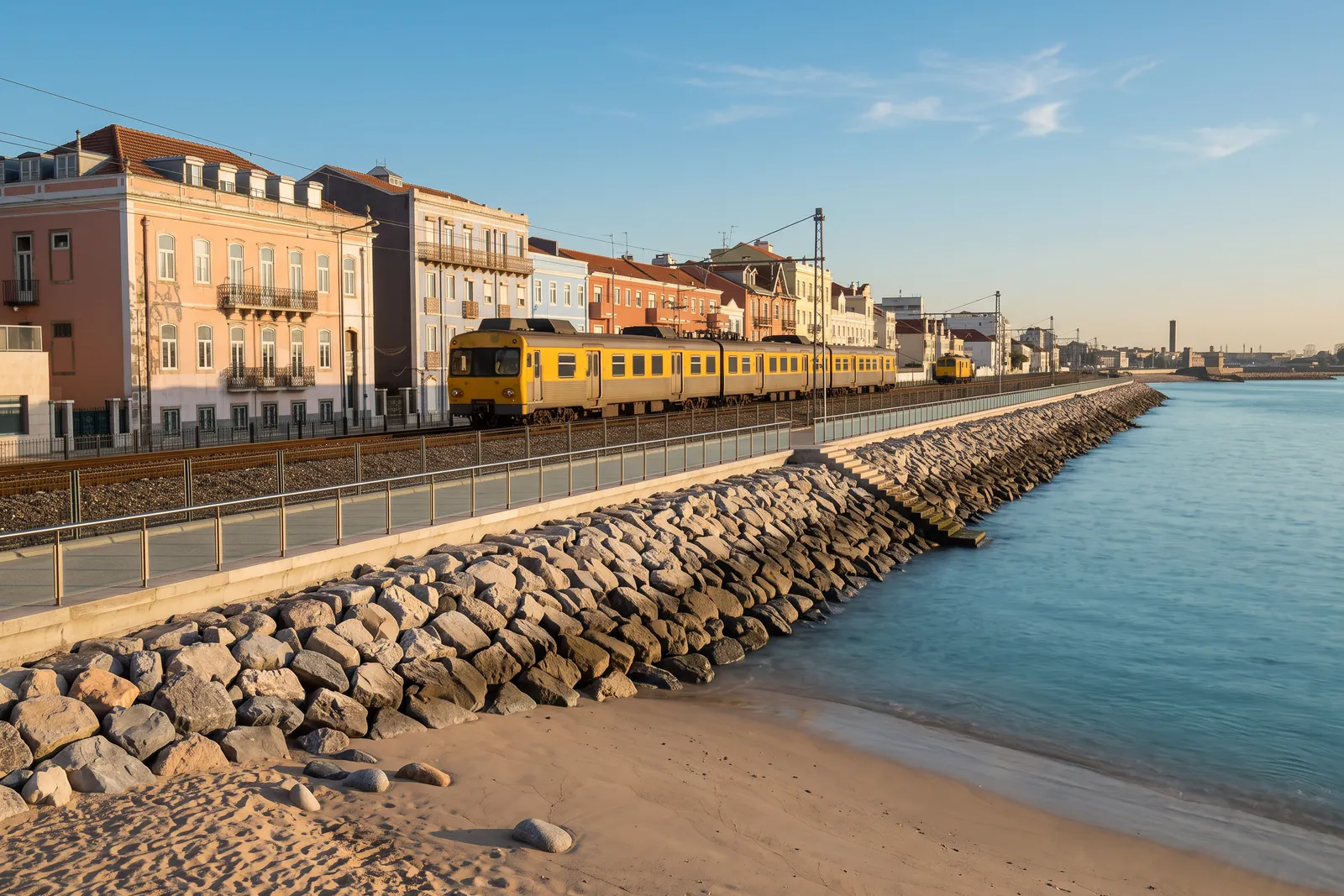
I take the train, and there is a reason beyond convenience. The train from Cais do Sodré is normally the best way to do it, whether for a few hours or for a whole day. From our Riverside apartment in Parque das Nações, Oriente station is five minutes on foot, and the metro to Cais do Sodré changes from the red to the green line at Alameda. Unlike Sintra, where getting between the monuments still needs planning once you arrive, in Cascais the train leaves you essentially in the centre of town, and most of the day can be done on foot from there.
The journey has its own charm, too. Much of the urban line follows the Tagus and then the coast, and I would rather sit and watch the river and the sea than drive and then think about parking. The one clear case for a car is when Cascais is part of a longer coastal route, continuing to Guincho, Cabo da Roca or other places less practical by train alone.
When I would avoid the busiest times: summer weekends in good weather, especially mid-morning and late afternoon, when the train fills up because it is not only used by visitors, it is one of the main ways people from Lisbon reach the beaches along the line. That would not push me into a car. It would only make me leave Lisbon earlier and come back before or after the crush.
One small tip changes the ride. Sit on the left leaving Lisbon, the sea side: from Belém onwards the window is a rolling postcard of the Tagus mouth, the São Julião da Barra fortress and the beaches at Carcavelos, Parede and Estoril. Cascais is the end of the line, so ride until everyone gets off. One note for any day trip: there is a return ticket, but at €5.10 it is exactly two singles and saves nothing. Zapping credit is the cheaper way, each validation taking €2.05 off the card whatever the distance.
- Station: Cais do Sodré in Lisbon, end of the line at Cascais.
- Fare 2026: €2.55 a single for adults, €1.30 for children.
- Journey: 35 to 40 minutes, depending on the stops.
- Frequency: roughly every 20 minutes, with extra services at peak times.
- Last trains: after 1am both ways, so a long dinner never strands you.
- Card: the reusable Navegante card costs €0.50, one per traveller, and zapping credit lets you break the journey at any beach.
- By car: 30 to 45 minutes, and parking in town is hard in season.
The best time to visit Cascais
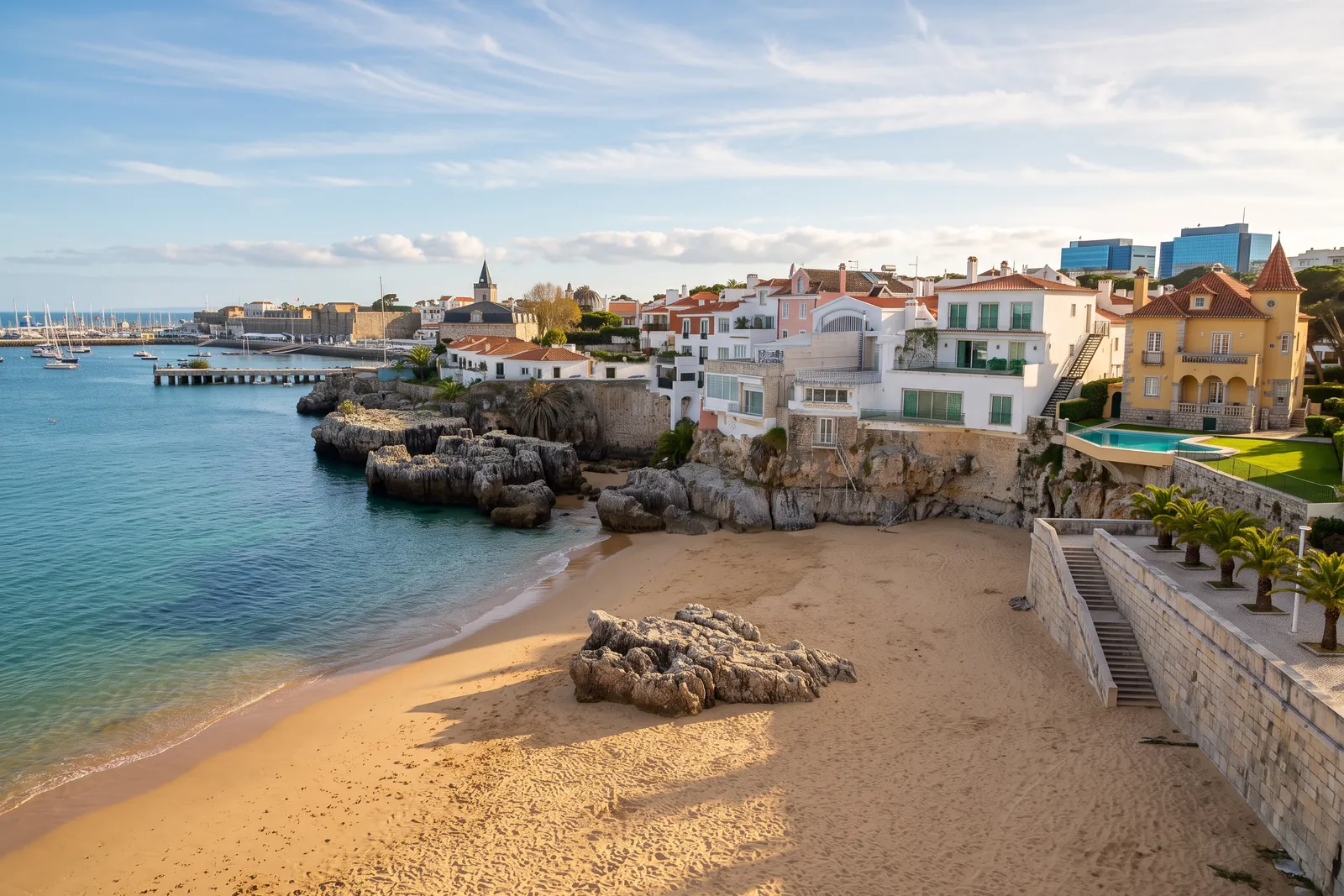
Whatever the season, remember which ocean this is. The Atlantic stays brisk even in August, and the nortada, the summer north wind, usually gets up after lunch. Mornings are the calmest and warmest part of a beach day, which is why locals arrive early, swim, and retreat to a shaded terrace when the breeze arrives.
- Spring and autumn: April to May and September to October, warm without heat, thinner crowds, better prices, the sea at its warmest in early autumn.
- Summer: June to August, long days, full beaches, the liveliest evenings, the highest prices.
- Winter: November to March, mild by European standards and often wet, but the sunny days belong to the promenade and the museums.
Cascais beaches, from Carcavelos to Guincho
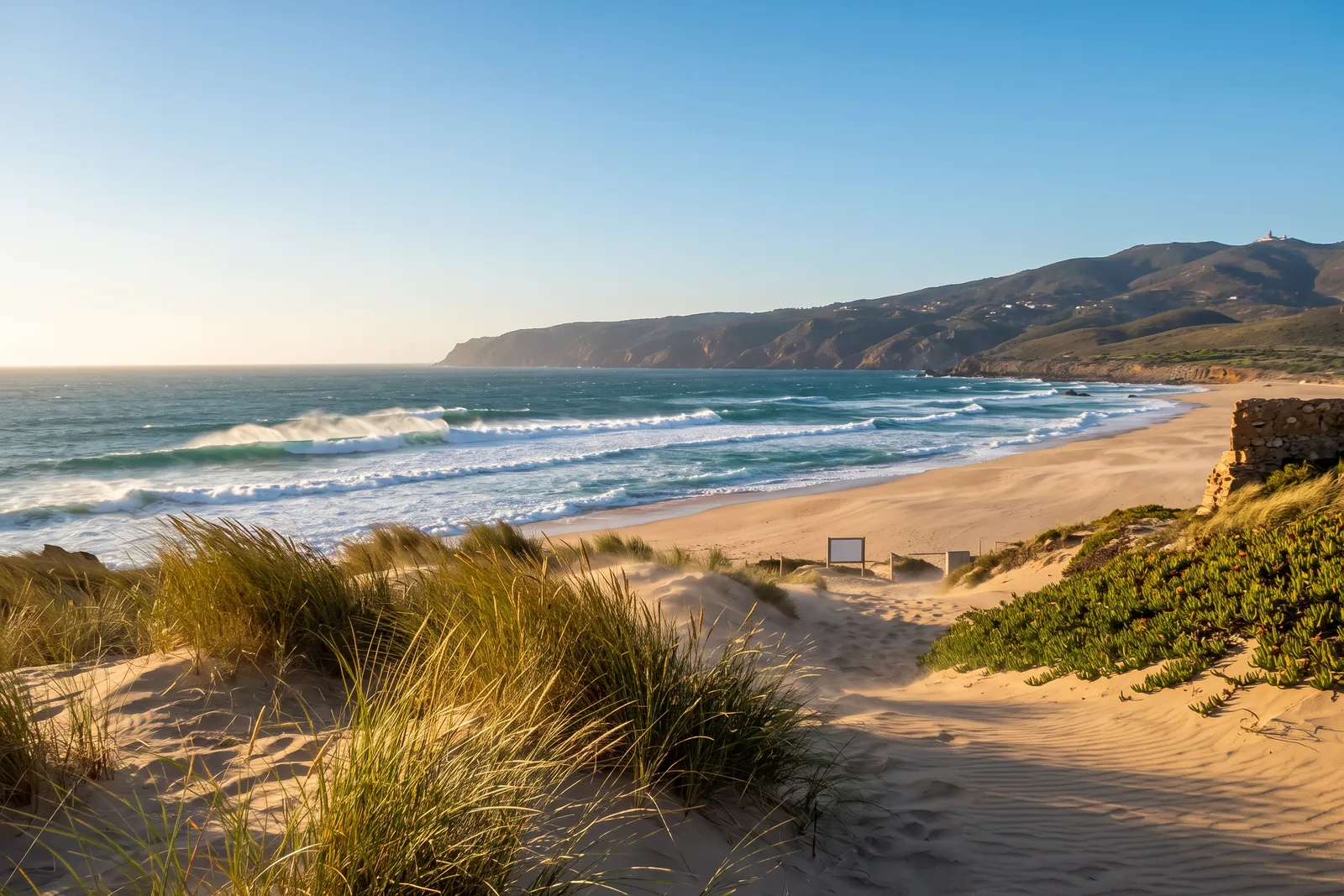
Because the train runs along the shore, the whole coast reads as one long menu of beaches, a different one each day and never a car. Travelling west from Lisbon, they unfold like this.
- Praia de Carcavelos: the biggest beach between Lisbon and Cascais, ten minutes on foot from its station. Families take the eastern half, surf schools the middle, and the fortress of São Julião da Barra, built from 1553 to guard the Tagus, closes the view (map).
- Praia das Avencas and Parede: smaller, rockier, quieter, these beaches keep rock pools at low tide and a local feel (map).
- Praia de São Pedro do Estoril: a sandy stretch under low cliffs, bodyboarders on a swell, families otherwise (map).
- Praia do Tamariz: Estoril's showpiece beach, palm gardens running up to the old casino, a seawater pool at the eastern end, the sand two minutes from the train (map).
- Praia da Poça and Praia das Moitas: two neighbourhood beaches on the paredão, Moitas at Monte Estoril just west of Tamariz and Poça one stop east at São João do Estoril, Poça and Moitas, both on the paredão, ideal for a swim mid-walk (map).
- Praia da Conceição and Praia da Duquesa: Conceição and Duquesa are the central pair, calm water, sunbeds and cafés, a short walk from the station and busy all summer (map).
- Praia da Rainha: a petite cove under cliffs and manor houses, sheltered, the most photographed in town and the first to fill (map).
- Praia da Ribeira: the tiny fishermen's beach below the old town, where the boats still come up on the sand (map).
- Praia de Santa Marta: a pocket-sized cove beside the lighthouse and the park, more a paddle and a photograph than a beach day (map).
- Praia do Guincho: the grand finale, nine kilometres west, a vast wild beach under the dunes of the Serra de Sintra natural park, seafood restaurants on the cliff above (map).
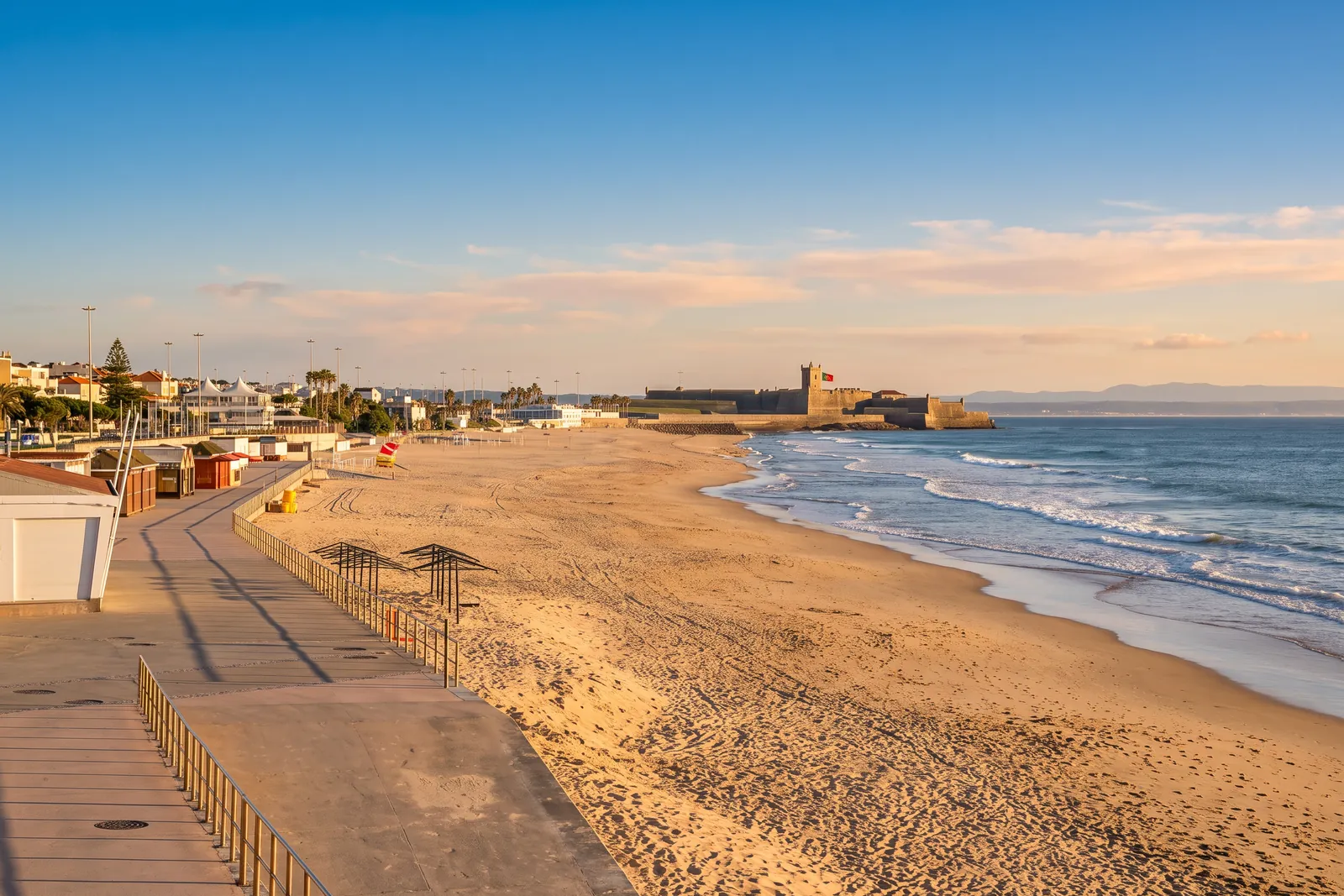
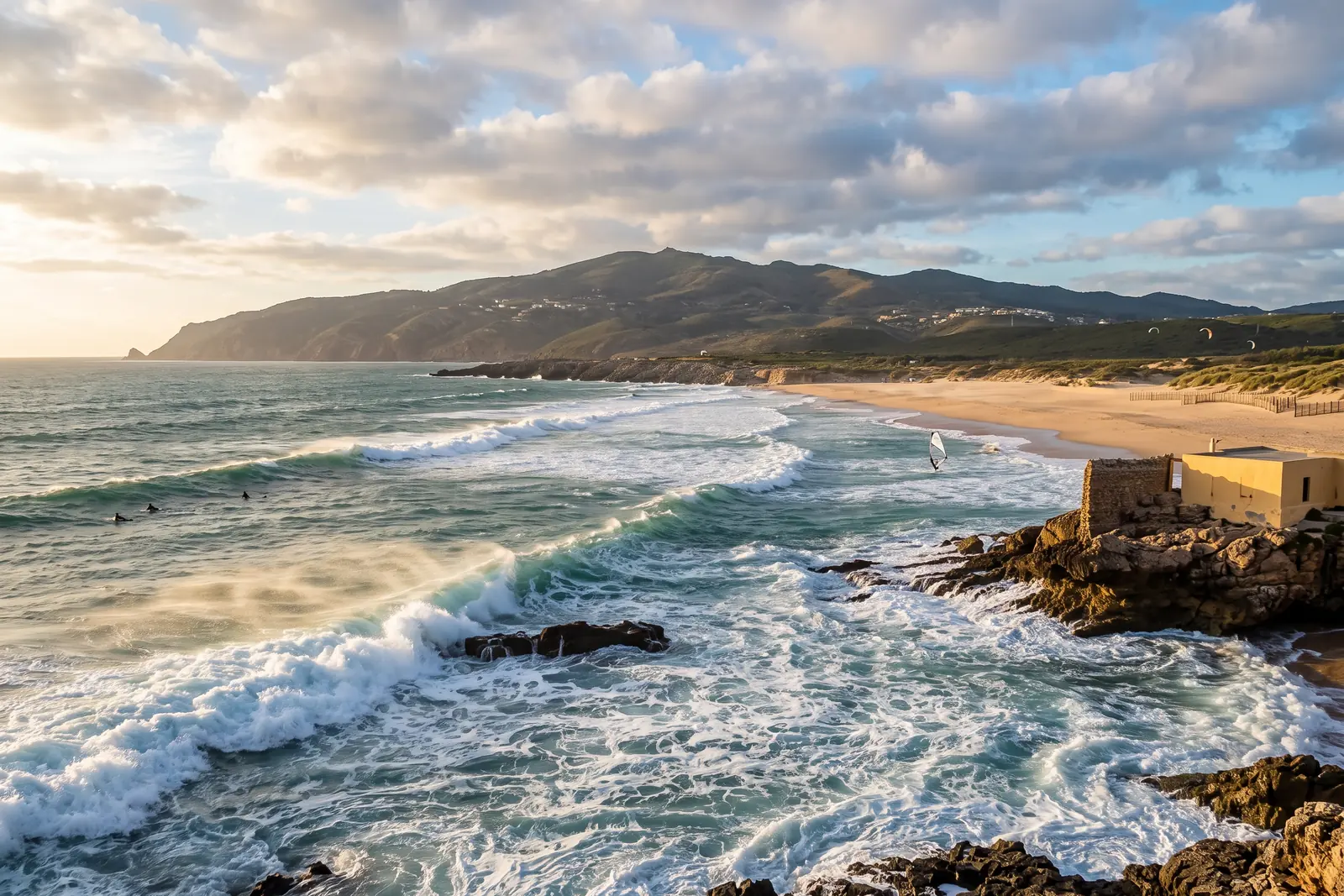
Guincho is one of Europe's legendary windsports arenas, and the same nortada that sends umbrellas cartwheeling elsewhere is what delivers the conditions: on a breezy July afternoon the bay fills with kites and sails, worth the ride even if you never touch the water. Guincho Wind Factory runs certified windsurf and kitesurf lessons from beginner upwards, and Moana Surf School teaches surfing on the beach breaks, with group surf lessons from around €40 including board and wetsuit as of mid-2026, while windsurf and kite tuition is priced per hour. Two honest warnings: the currents and the shore break deserve respect, so swim near the flags, and for a first ever lesson Carcavelos is the more forgiving classroom, where Carcavelos Surf School and Angels Surf School teach year-round. Surfers go out early; kiters wait for the afternoon.
For the beaches beyond this line, Costa da Caparica, the Arrábida, the Sintra coast and Ericeira, see our guide to the best beaches near Lisbon.
Things to do in Cascais: the old town, the museums and the lighthouse
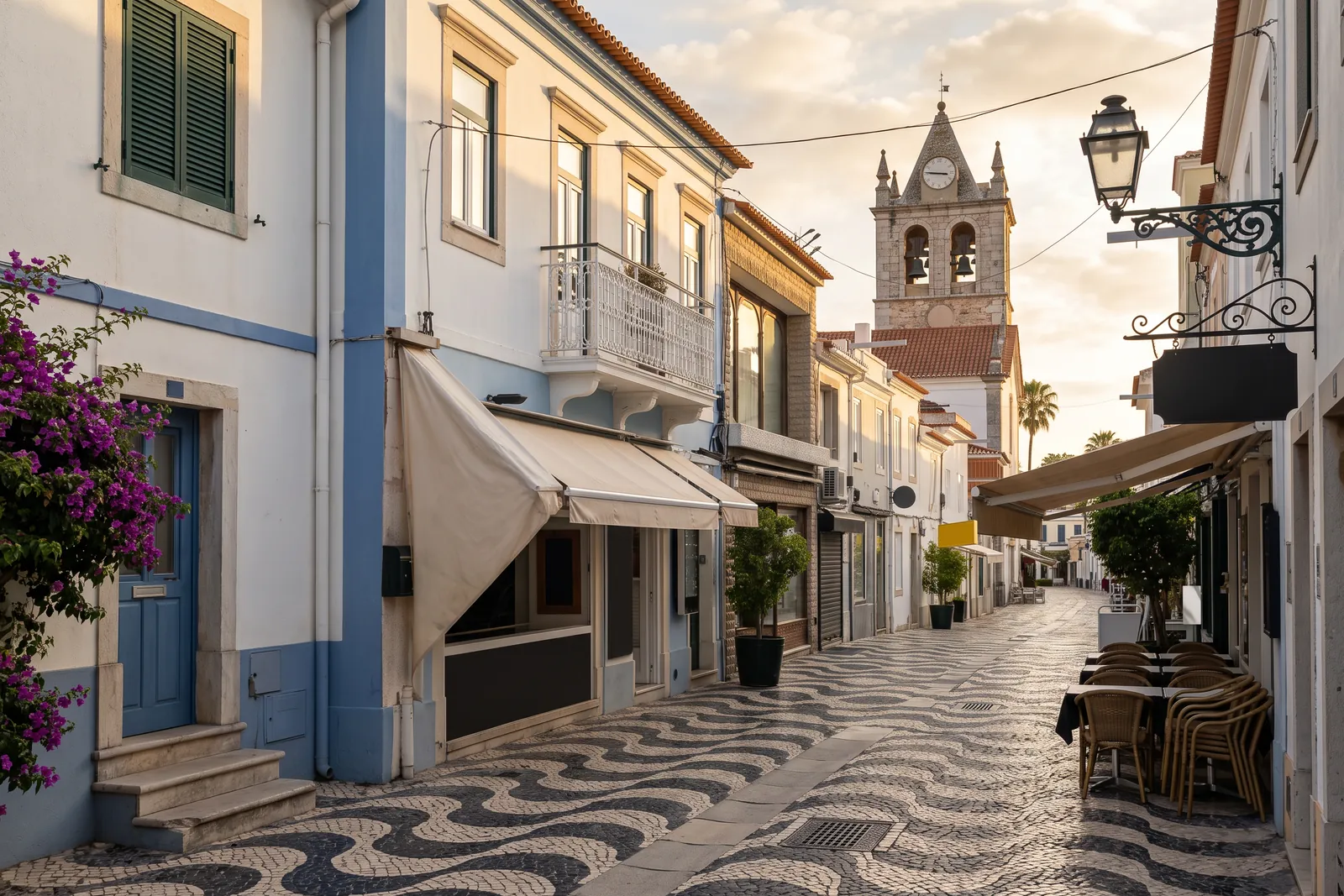
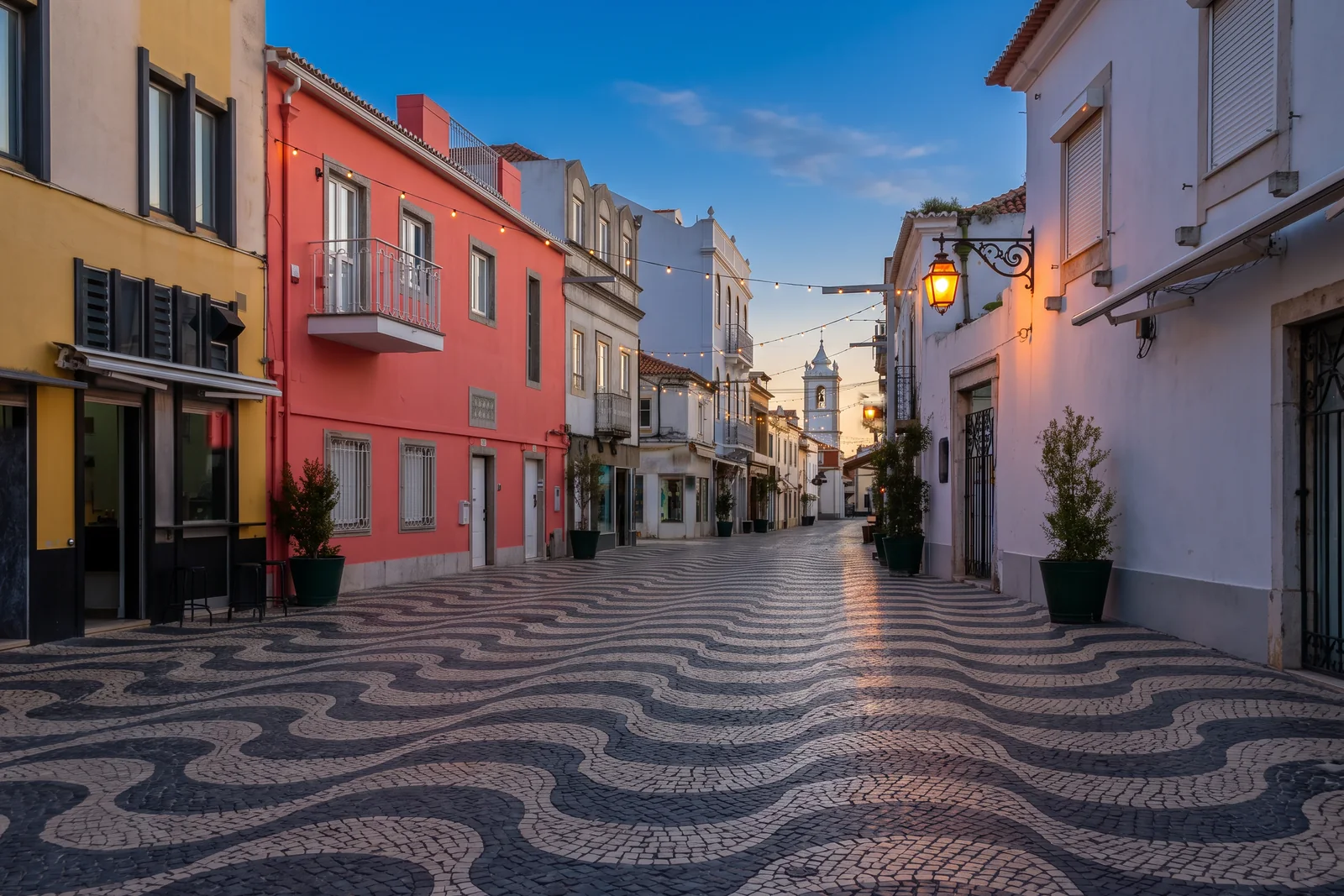
Give yourself time to get pleasantly lost in the casco antigo. Rua Frederico Arouca, the pedestrian artery, runs from the station down to the fishermen's beach over wave-patterned calçada, and the side lanes hide azulejo façades and grocers that have served the town for generations. Largo de Camões is the square everything drains into, terraces on all sides, busy from breakfast to late. Just west, the Cidadela, once a royal retreat and now a hotel with galleries and ramparts, looks over the marina, and beyond it the Marechal Carmona park spreads ponds, lawns and free-roaming peacocks.
Casa das Histórias Paula Rego
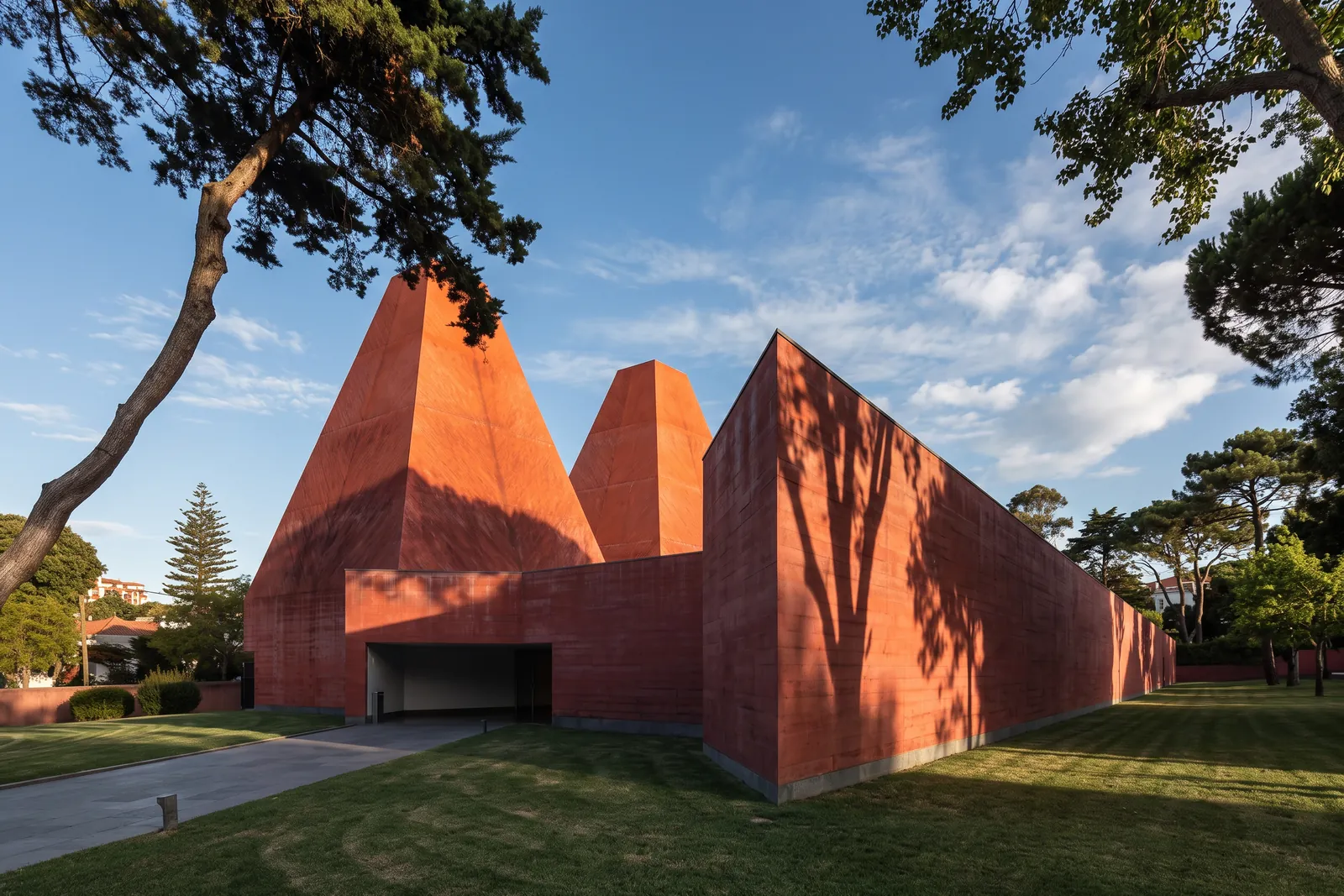
The Casa das Histórias Paula Rego is the museum not to skip. Eduardo Souto de Moura designed it, two red-ochre pyramid towers over low galleries, and the building holds its own against the collection, which is saying something: Paula Rego's work is folklore, feminism and psychoanalysis at once, and none of it decorative.
- Hours: Tuesday to Sunday, 10:00 to 18:00, last entry 17:40, as of mid-2026.
- Price: €5, €2.50 for students and over 65s, free under 18.
- Closed: Mondays, 1 January, Easter Sunday, 1 May, 24, 25 and 31 December.
- Time needed: about an hour, and it pairs with the park and the lighthouse.
The museum cluster and the Bairro dos Museus pass
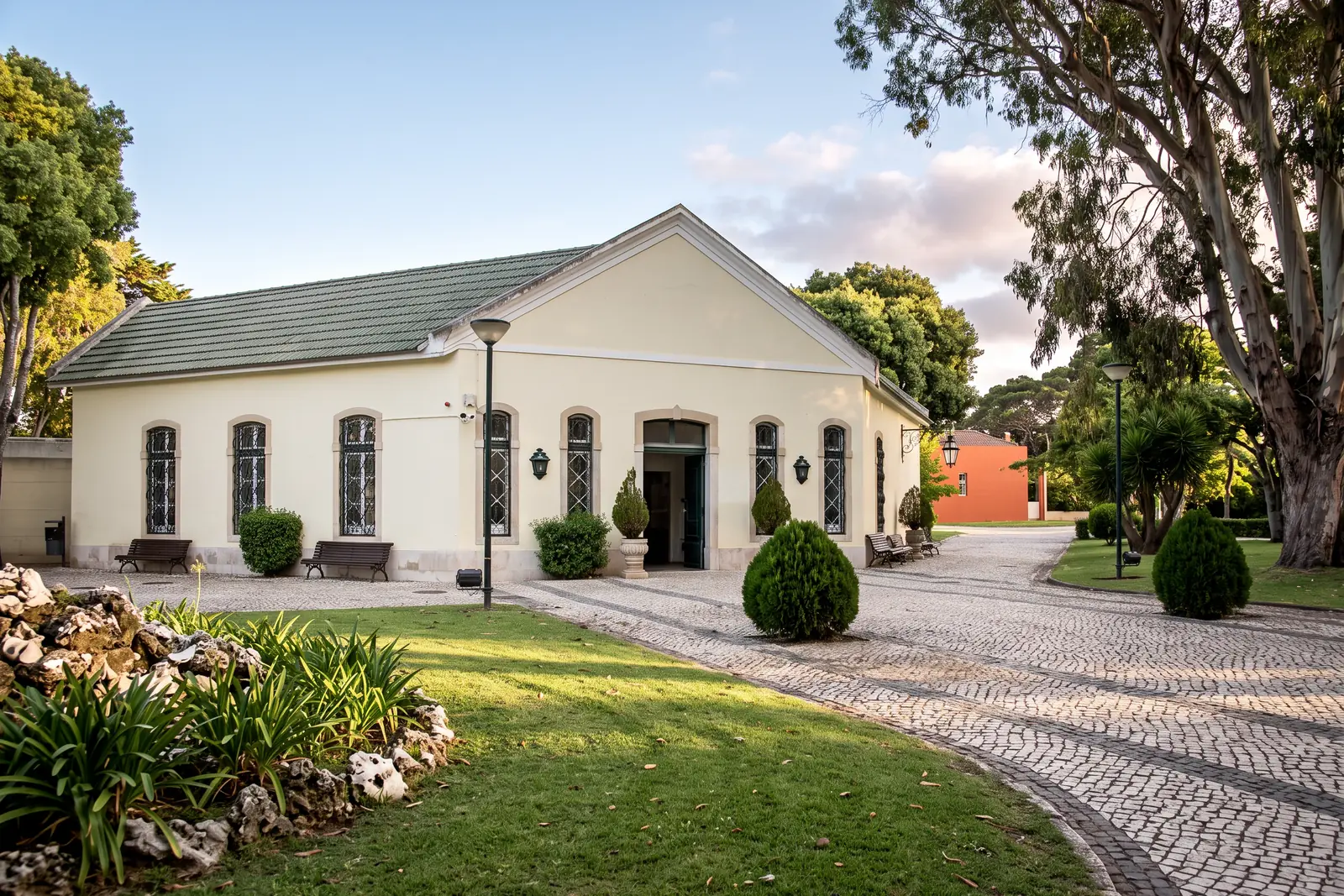
Paula Rego is the headline act, but Cascais quietly keeps one of the best small museum clusters on the coast, nearly all of it ten minutes on foot from the centre. Hours vary, so check first, and if you plan to open more than one door, ask about the Bairro dos Museus pass.
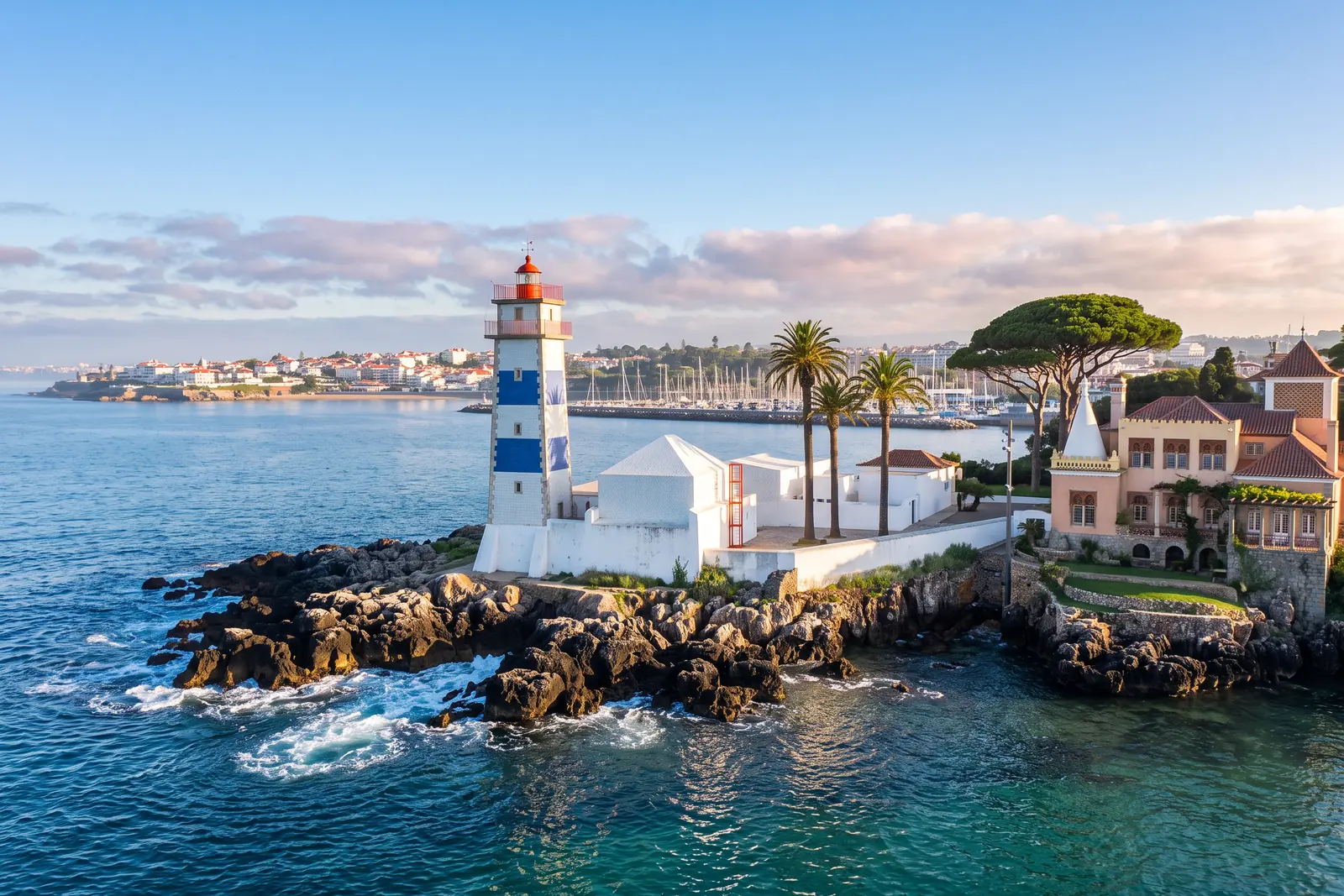
- Museu Condes de Castro Guimarães: a fairytale mansion built between 1897 and 1900 inside the park, over the cove of Santa Marta, with turret, cloister, painted ceilings and rare books. A museum since 1931, and a window into the Riviera lifestyle of a century ago.
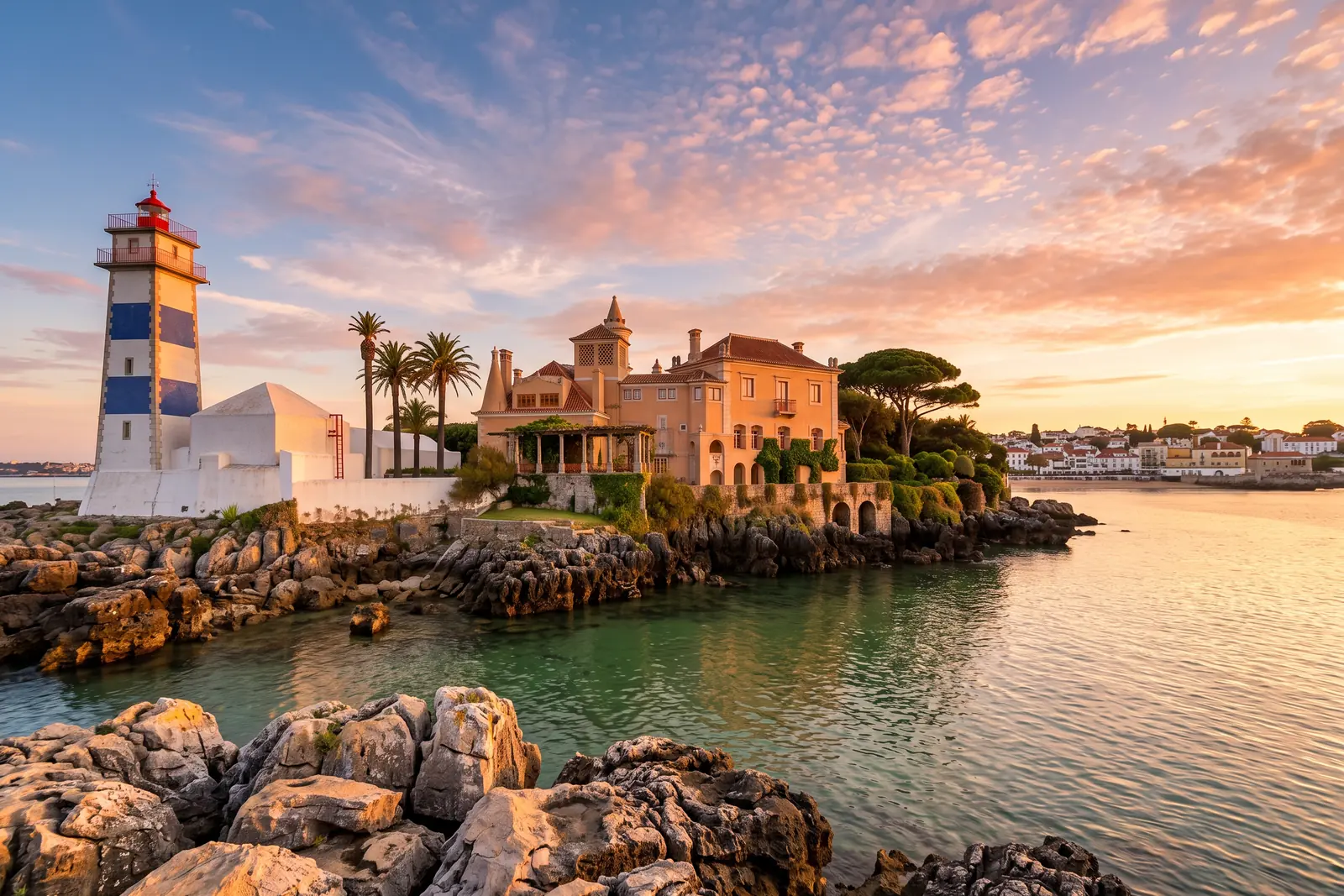
- Farol Museu de Santa Marta: the blue and white striped lighthouse is a working light and a museum since 2007, in a crisp conversion by the Aires Mateus architects, its forecourt one of the best sunset spots in town.
- Museu do Mar Rei D. Carlos: a compact maritime museum on the town's fishing heritage and on King Carlos I, whose oceanographic expeditions sailed from this bay.
- Pass: the paying doors are €5 each, the Casa das Histórias among them, and a 24 hour ticket to the whole municipal network is €7.50. Several of the smaller museums are free, so ask at the first desk before you buy.
- With train: CP sells a combined 24 hour ticket at €10 that adds the Cascais line train to the museum network.
Boca do Inferno
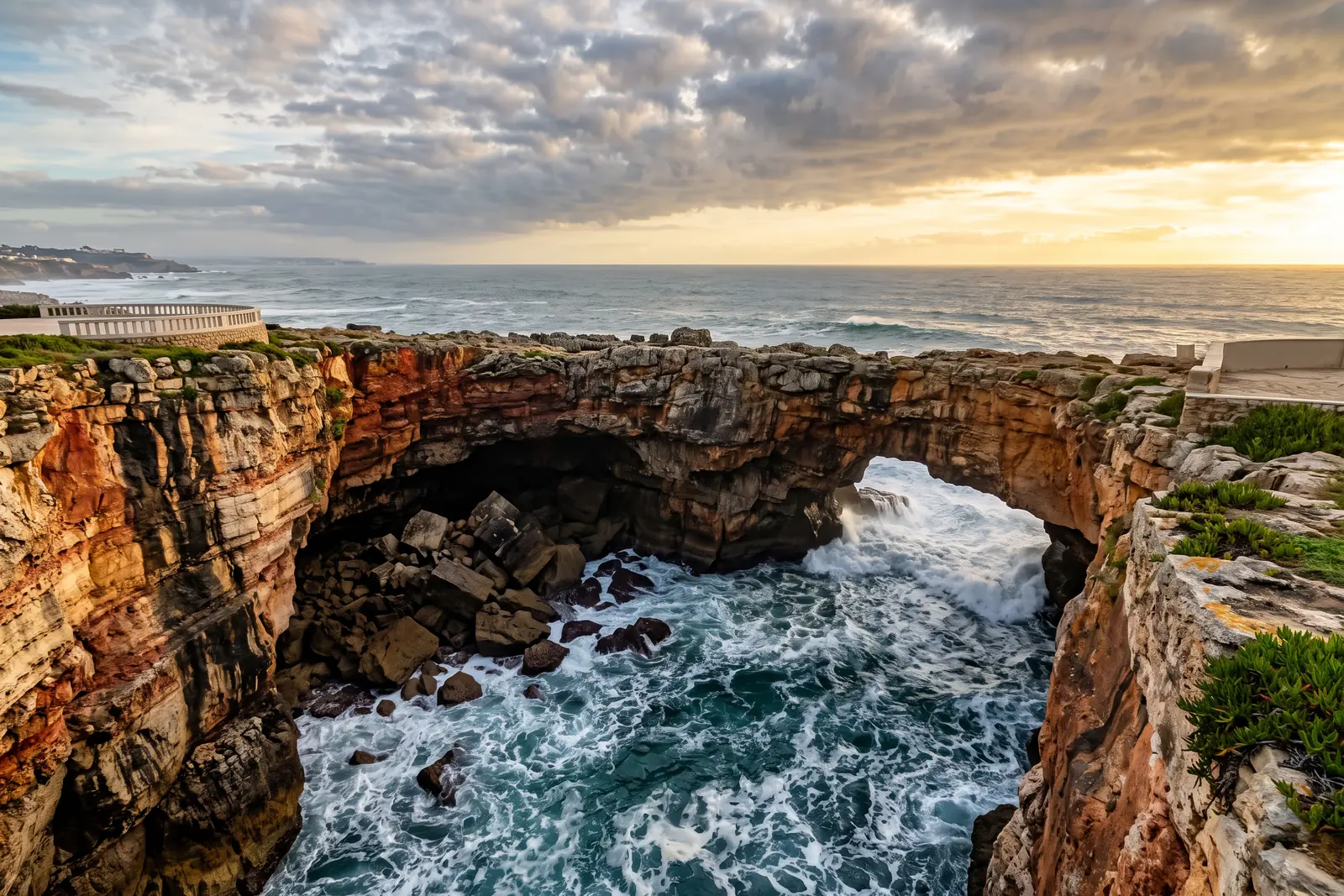
The walk I like best is leaving the centre towards Boca do Inferno and carrying on along the coast. The further you get from the station and the main shopping streets, the more you feel the Atlantic side of Cascais.
Boca do Inferno is a chasm where the ocean has cut an arch and a cavern into the cliff, and the name earns itself on the right day. Timing matters more than most guides admit: at low tide on a calm August morning the mouth of hell looks tame, while a rising tide with a winter swell sends columns of spray out of the hole and makes a noise you feel through the rock.
- Where: twenty minutes on foot from the marina along Avenida Rei Humberto II de Itália, or a stop on the bike ride to Guincho (map).
- Cost: free, open at every hour.
- Time: fifteen to thirty minutes, longer when the sea is working.
- Best time: the last hour of daylight, when the cliffs glow orange and the crowds thin.
- Watch out: stay behind the railings, the rocks are slippery.
Cabo da Roca, the edge of Europe
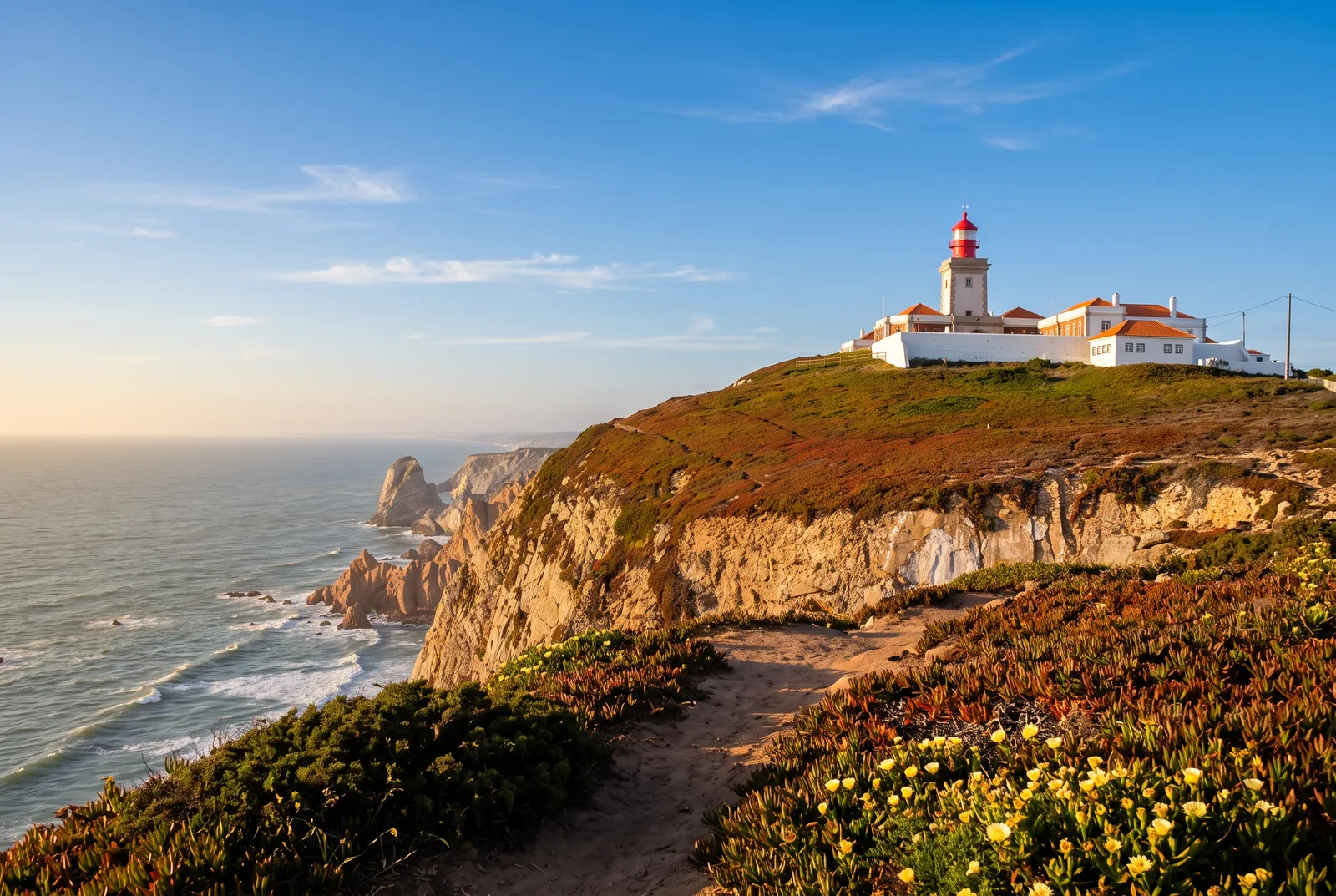
Sixteen kilometres northwest of Cascais the continent simply runs out. Cabo da Roca is the westernmost point of mainland Europe, a wind-scoured headland where the cliffs plunge more than 100 metres into the Atlantic beneath a lighthouse first lit in 1772, the first purpose-built lighthouse in Portugal. The poet Camões called it the place where the land ends and the sea begins, and standing at the monument that carries his words, nothing but ocean between you and North America, is one of the great free experiences of the region. The tourist office sells an old-fashioned certificate to prove you were there.
- Distance: 16 kilometres northwest of Cascais, past Guincho (map).
- Bus 1624: Carris Metropolitana runs it from the terminal beside the station, 30 to 40 minutes, roughly every half hour, paid on board or with a Navegante card.
- Time there: 30 to 45 minutes covers the monument, the lighthouse and the views.
- Weather: colder and far windier than the beach you left, so bring a windproof layer even in August, and stay back from the unfenced edges.
- Loop with Sintra: the same bus carries on over the mountain, so Cascais in the morning, the cape at midday and palaces in the afternoon works, and our Sintra day trip guide covers that side.
The coast on two wheels or on foot
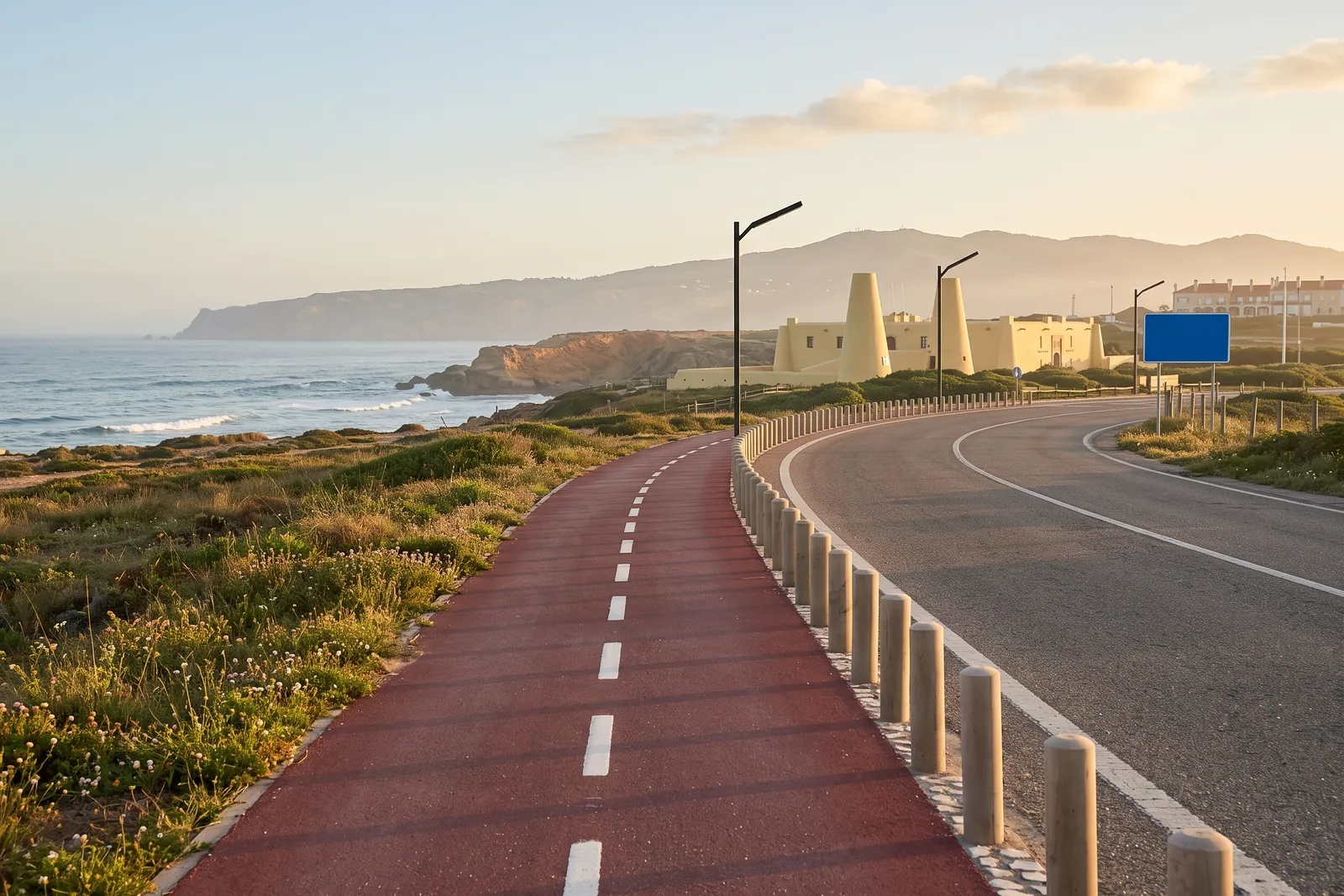
A dedicated cycle path runs the nine kilometres from town to Guincho, flat almost the whole way, past low cliffs, Boca do Inferno and one beach after another. Ride out in the morning while the air is still, 40 minutes each way, because the afternoon nortada turns the return leg into a push from behind.
- Rental: MobiCascais, the municipal service, with kiosks at Largo da Estação, Estoril, Carcavelos and Guia.
- Bike: around €2 an hour or €6 for the day, as of mid-2026.
- E-bike: around €4 an hour or €10 for the day, worth it to climb past Guincho towards Cabo da Roca.
- Extras: a helmet or a lock, a euro each.
- Kiosk hours: 8:00 to 20:00 in high season.
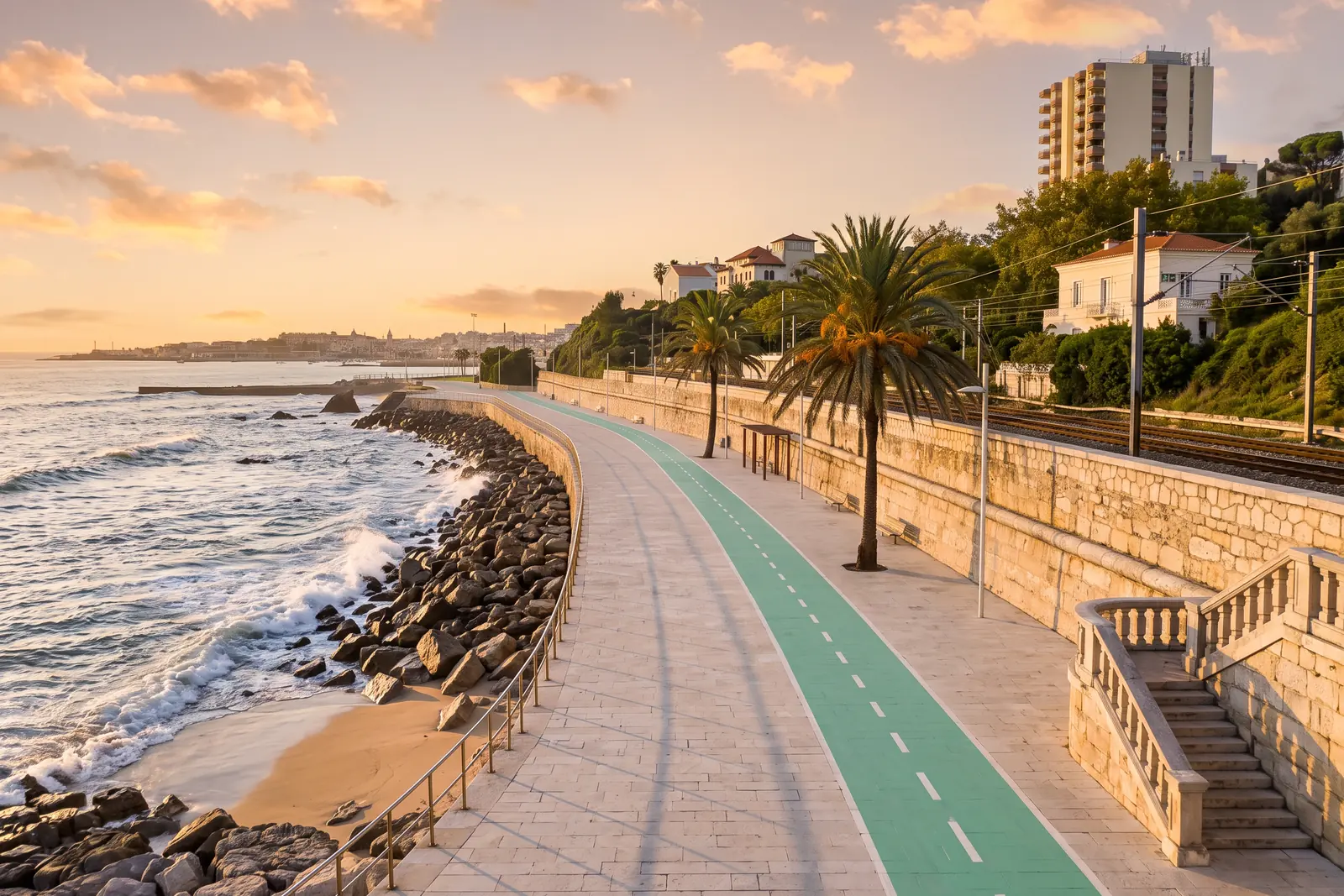
If cycling is not your thing, the paredão does the same job at walking pace. This seafront promenade runs around three kilometres to Estoril, flat, traffic-free and lined with kiosks, past Conceição, Duquesa and Moitas before it reaches Tamariz, and on to Poça at the far end. Half the town uses it every morning: joggers, dog walkers, holidaymakers nursing a galão with the ocean two metres away. The clever way to do it is one way on foot and back by train, 40 unhurried minutes to Estoril, a swim at Tamariz, then two stops home. In winter, when storms thump waves into the seawall, it is a front row seat to the Atlantic's temper.
Where to eat in Cascais: seafood first
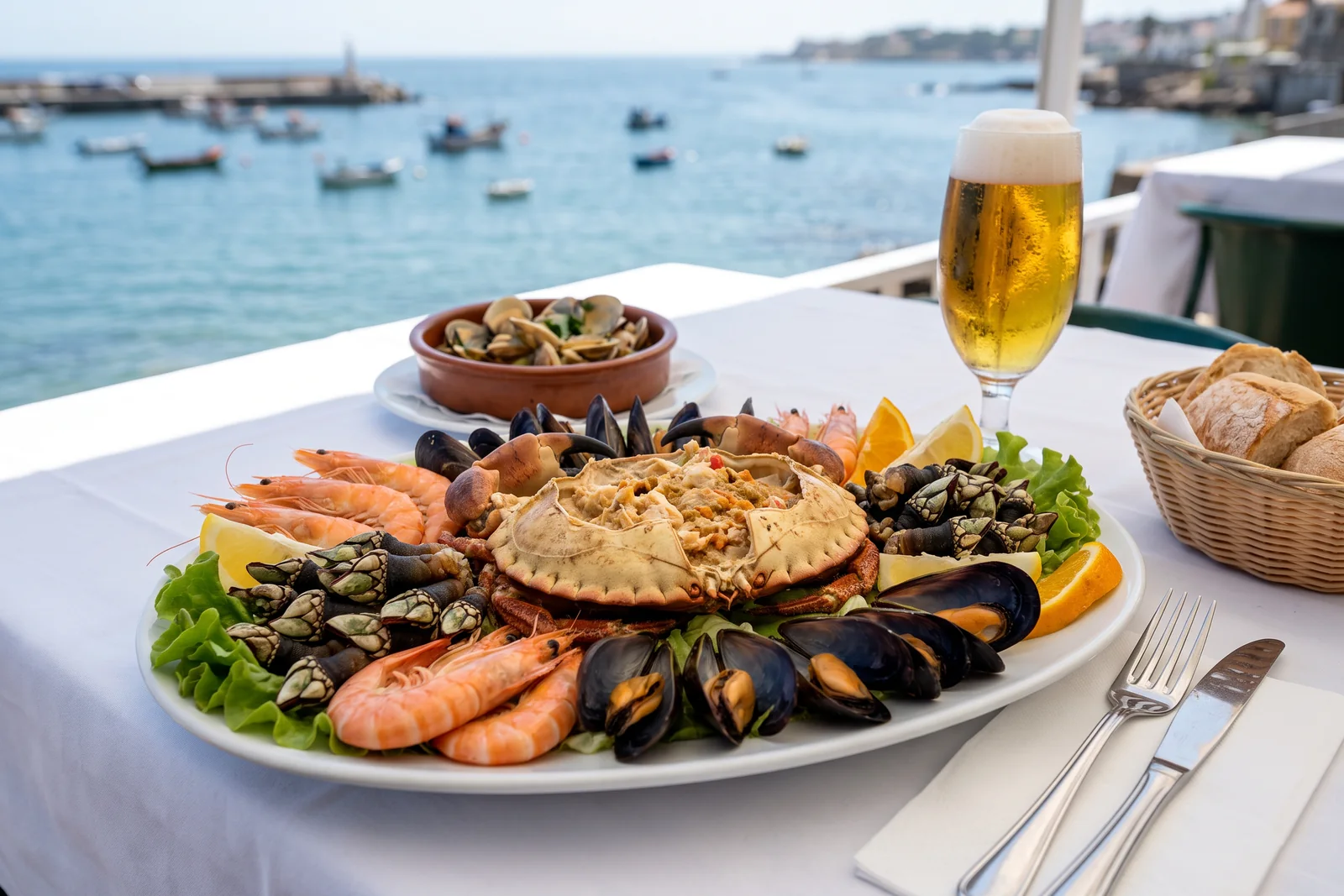
The town started as a fishing port and still eats like one: arroz de marisco, cataplana de marisco, percebes when they are in, whole fish simply grilled. One rule of thumb sorts the good tables from the tourist traps: if the fish is priced by the kilo and displayed on ice, you are in the right place. Ask what came in that morning and drink a chilled white from nearby Colares or Bucelas. Book ahead from June to September, the tables by the water go early.
- Mar do Inferno: beside Boca do Inferno on Avenida Rei Humberto II de Itália, a family house with a terrace over the rocks and very fresh grilled fish, at a price. Closed on Wednesdays.
- O Pescador: an old fisherman's tavern on Rua das Flores, fish and seafood since 1964, with a cellar of 4,000 bottles for a long, wine-led dinner.
- Baía do Peixe: on Avenida Dom Carlos I, a bustling rodízio of seafood and Portuguese classics over the bay.
- Marisco na Praça: inside the Mercado da Vila, where you choose straight from the ice and pay by weight. Seafood rice with lobster is the signature; a second house sits at the marina.
- Hífen: a modern bar and restaurant above the bay, sharing plates with a contemporary spin, a local favourite for a sunset dinner that drifts into cocktails.
- Furnas do Guincho: on the coast road, perched over the wave-battered rocks, a classic fish and shellfish house, the reward after the bike ride.
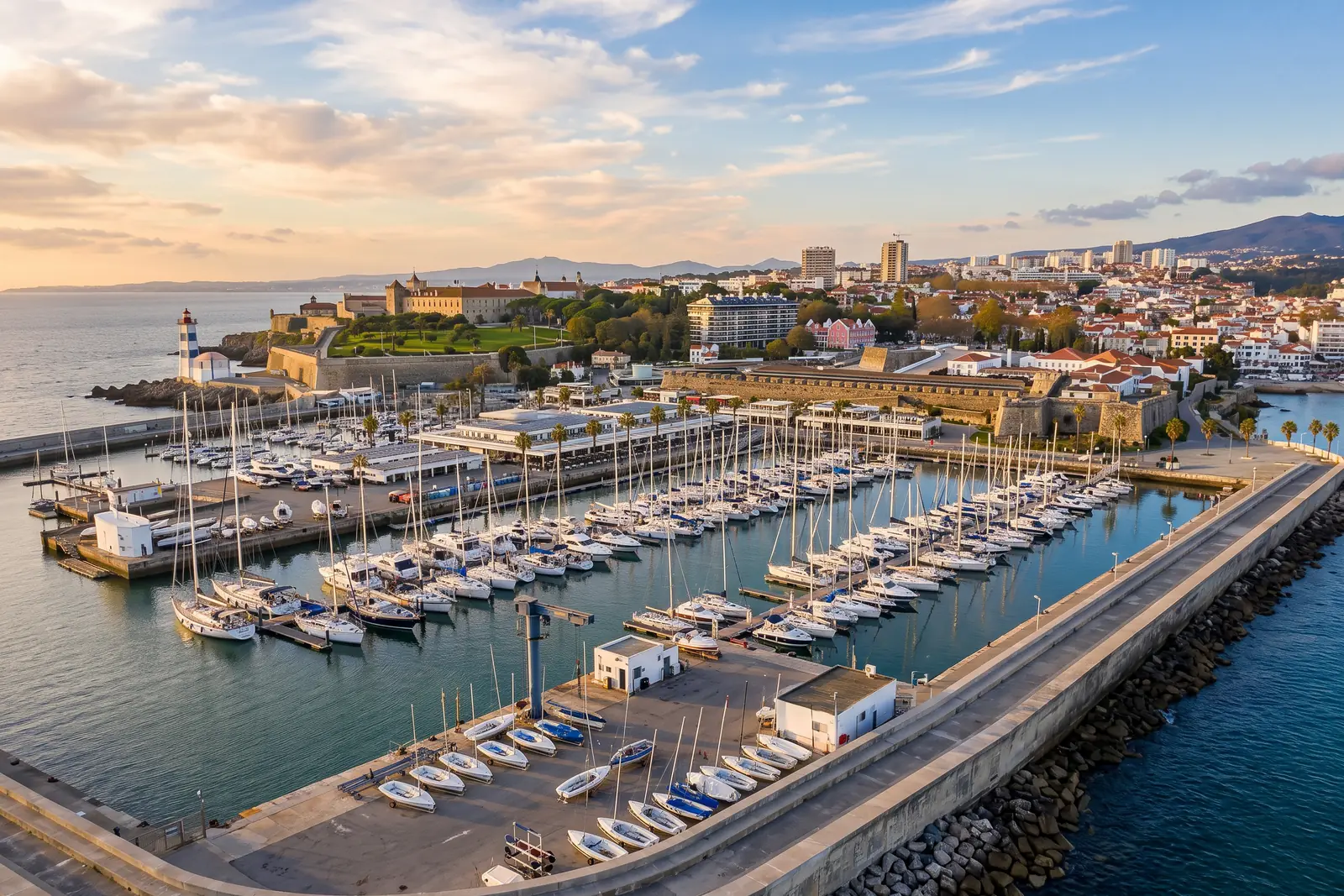
Between the old town and Boca do Inferno, the Cascais marina is twenty pleasant minutes of pontoons, yachts and regattas, and it is where the evening starts. Cascais after dark is not Lisbon and does not try to be: the action gathers around Largo de Camões and the marina, wine bars, tascas with live fado, cocktail terraces and a couple of clubs, busiest from June to September. Estoril, two stops up the line, adds its casino, long associated with wartime spies and said to have inspired Ian Fleming's Casino Royale, plus open-air summer concerts above the sea.
Half a day, a full day or two days: three itineraries
Half a day
Catch a mid-morning train and you are walking Cascais by 11:00. Go through the old town to the fishermen's beach and Largo de Camões, then loop west past the Cidadela and the marina to the Santa Marta lighthouse and the Castro Guimarães mansion, photogenic even from outside. Twenty minutes along the clifftop avenue brings Boca do Inferno, and then it is back for a late seafood lunch and a return train by 15:30. Choose this if you are pairing Cascais with an afternoon elsewhere. It works in any weather short of a full Atlantic storm.
A full day
Start the same way and slow everything down. Add the Casa das Histórias and an hour in the park before lunch. In the afternoon, choose by wind and inclination: a bike to Guincho for the kitesurf spectacle, bus 1624 to Cabo da Roca, or a sunbed on Conceição and absolutely nothing, a respected local tradition. Be at Boca do Inferno or on the paredão for sunset, then eat at the market or by the marina. The trains run late, so nobody rushes dessert.
Two days on the coast
Staying overnight changes the trip entirely: you get the town after the day-trippers leave, when the old streets go quiet and dinner stretches long. Use day one for the full day above, then day two for the grand loop, bus past Guincho to Cabo da Roca, on to Sintra for the afternoon, and the train back to Lisbon from there. If you would rather keep one base, Lisbon works too: its restaurants fill the evenings while the coast fills the days, and our Riverside apartment in Parque das Nações is a calm base with the airport, the metro and the waterfront close by. Our Lisbon pages cover the city side, and the neighbourhood guide helps you pick a district.
Is Cascais worth a whole day? What I tell our guests
Cascais is close enough to Lisbon that three or four hours can look like enough. My answer is that it depends what you are after, but I would set aside at least a long half day, and in good weather I would happily give it the whole day.
If the plan is to arrive, walk the centre, see the marina and have lunch, half a day is fine. If you want to walk along the sea, take in Boca do Inferno, stop at a beach, eat without hurrying and enjoy the atmosphere, then it is worth making a full day of it.
The mistake is treating Cascais like a monument city: arriving, ticking off five points on a map and heading back. Cascais is worth more for the experience than for the number of attractions. It is walking beside the Atlantic, wandering the small streets of the centre, sitting on a terrace, eating fish or seafood, and enjoying a rhythm quite different from central Lisbon. I normally do not arrive with a long list at all: I walk the centre, follow the sea, and decide the rest according to the weather.
For guests staying several days in Lisbon, I think Cascais is an excellent way to break up the more intense sightseeing days. After Belém, Alfama, Baixa, Chiado and the main monuments, a day by the sea lands particularly well. With only two or three days in Lisbon, I probably would not give a whole day to Cascais on a first trip. With four, five or more, the trip clearly earns its place.
And if you ask whether to combine Cascais and Sintra in one day, I usually say no. It is possible, but they are such different experiences that I would rather give one day to Sintra and a second, more relaxed one, to Cascais. Take the morning train, keep the schedule loose, and decide when to head back depending on how the day is going.
Frequently asked questions about Cascais
How do I get from Lisbon to Cascais?
The Lisbon to Cascais train leaves Cais do Sodré every 20 minutes or so and takes 35 to 40 minutes, at €2.55 a single as of mid-2026. A return ticket exists at €5.10, exactly two singles, and zapping credit at €2.05 a ride is cheaper. Cascais is the end of the line, and the station is in the centre of town.
Is Cascais worth visiting?
Yes, if you go for the experience rather than a checklist. There is no unmissable monument, but there is the Atlantic, a walkable old town, very good seafood and a rhythm quite unlike Lisbon's. With two or three days in Lisbon it can wait. With four or more, it earns its day.
Which is the best beach in Cascais?
For a swim, Conceição or Duquesa, sheltered and a short walk from the station. For a first surf lesson, Carcavelos. For drama and a long windy walk, Guincho. Praia da Rainha is the prettiest and the first to fill.
Cascais or Sintra, which one first?
Sintra first if you only have one day for either: the palaces are the rarer thing and need the earlier start, as our Sintra day trip guide explains. Cascais rewards a looser day, so it fits better once the sightseeing pressure is off.
Can you do Cascais and Cabo da Roca in one day?
Comfortably. Bus 1624 leaves the terminal beside Cascais station every half hour and takes 30 to 40 minutes, so a morning in town and a midday hour at the cape fit together easily, with the option of carrying on to Sintra.
Related topics: Restaurants, Beaches, Hikes, Day trips