Where to stay in Lisbon: the best neighbourhoods compared
Ana Freitas · 18 min read · Updated 26/Aug/2026

Lisbon neighbourhood by neighbourhood, from Alfama to Parque das Nações: who each one suits, what a night costs, and the mistakes first-timers make when choosing where to sleep.
Best areas to stay in Lisbon at a glance
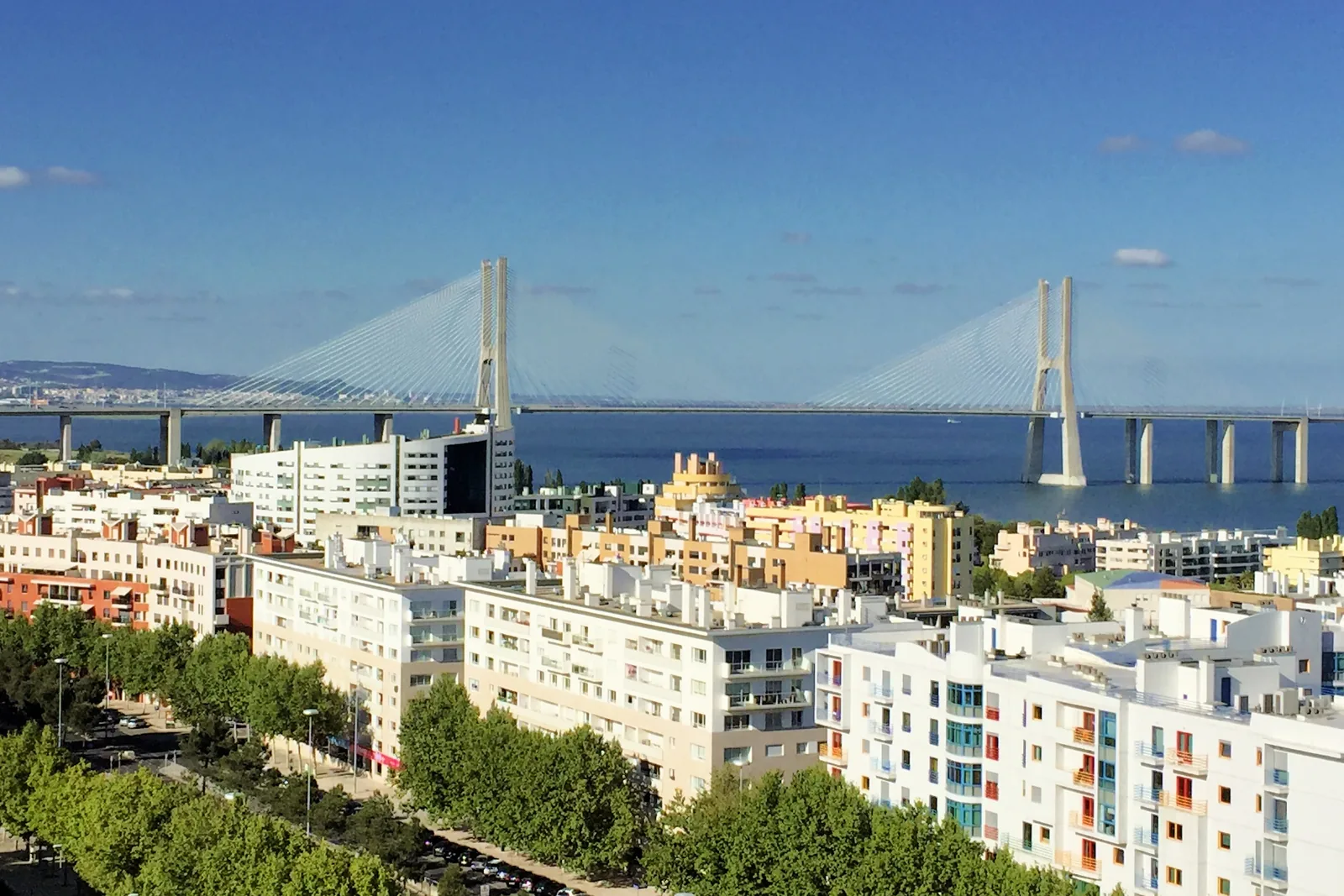
Lisbon is compact, but it is not flat, and that changes everything about where to stay. A room that looks 800 metres from the sights on a map can be 800 metres and a serious climb. This guide compares the ten neighbourhoods our guests actually choose between, from Alfama to Parque das Nações: who each one suits, how you get around, what a night costs in 2026, and the mistakes first-timers make. It has grown out of years of the same questions from our guests, so it says the honest things too, about noise, stairs and which famous quarter is better visited than slept in.
The shortcut, matched to how you travel. Each neighbourhood is compared in detail below.
- First visit: Baixa or Chiado. Flat, central, the best metro connections in the city, zero navigation stress.
- Romantic break: Alfama or Graça, for lantern-lit lanes, Fado drifting from doorways and a sunset viewpoint two minutes from your pillow.
- Families: Parque das Nações for space, playgrounds, elevators and the Oceanário; Belém for monuments and riverside lawns.
- Nightlife first: Bairro Alto or Cais do Sodré, with the noise warnings below taken seriously.
- Food and design: Príncipe Real or Santos, where Lisbon's most creative kitchens and boutiques cluster.
- A week or longer: Santos, Madragoa or Graça: real neighbourhoods with bakeries, laundrettes and neighbours who nod hello by day three.
- Day trips: Baixa near Rossio station for Sintra, or Cais do Sodré for the coastal line to Cascais.
Lisbon neighbourhood by neighbourhood
Alfama: where Lisbon's soul resides
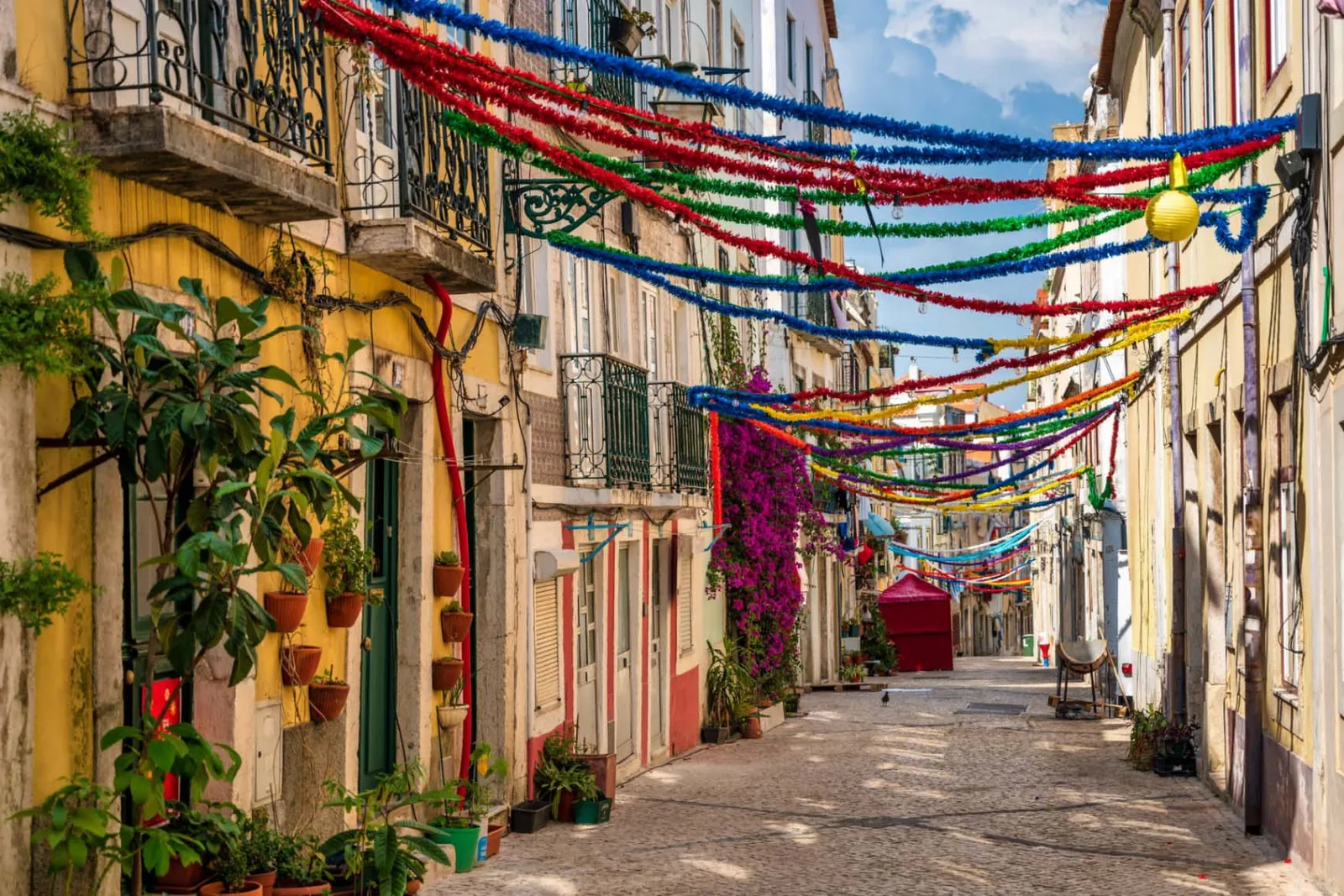
Lisbon's oldest district is a labyrinth of stepped lanes, hidden courtyards and whitewashed houses under the castle, and the one place in the city where time genuinely seems to stand still. Fado still drifts out of the tascas at night. It is also the quarter most often romanticised as the perfect base for everyone, and it is not: there is no metro, few shops, and the same steep lanes that make it beautiful make a suitcase a workout. Nights are quiet, until the Santo António festivities in June, when the streets party for weeks and sleep becomes optional.
- Best for: Romantics, photographers, Fado enthusiasts, anyone who wants to walk to the castle before the crowds. Skip it with heavy luggage or mobility concerns.
- Getting there: Trams 28 and 12 climb through the district, bus 737 runs up to the castle gate, and Santa Apolónia station (blue line) sits at the riverside edge. Count on walking.
- Noise and hills: Very quiet after midnight, very steep in every direction. Ask your host about street access before booking.
- Worth knowing: São Jorge Castle costs €17 as of mid-2026, same price online and at the gate, open until 9 PM from March to October; buy ahead.
Baixa & Chiado: the elegant heart of the city
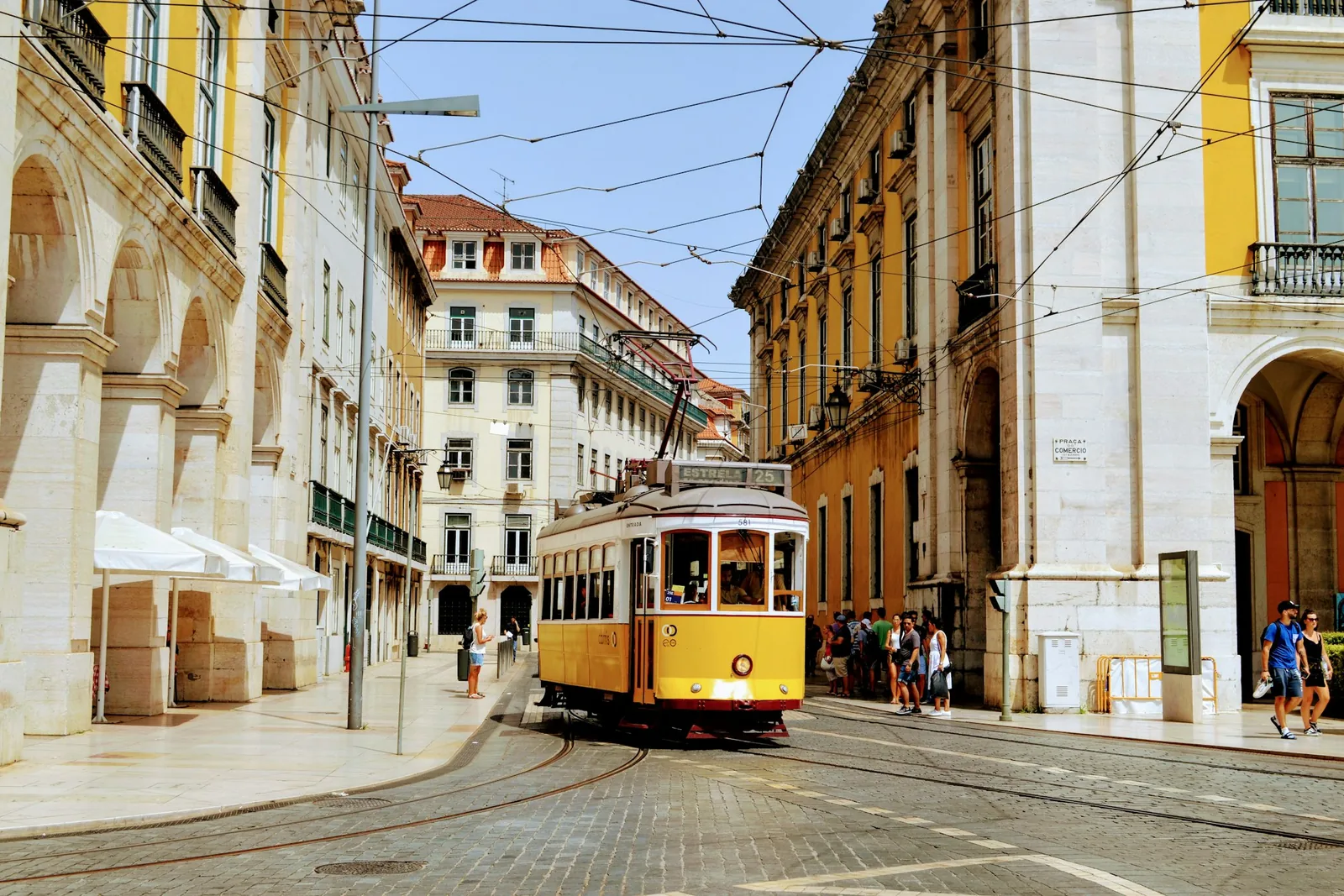
Rebuilt on a grid after the 1755 earthquake, Baixa is Lisbon's flat, grand downtown: Praça do Comércio, Rua Augusta and the Santa Justa lift. Chiado, one slope up, keeps the theatres, the historic cafés and far more genuine city life after dark. Together they are the best-connected patch of Lisbon and the obvious first-visit base. The honest note is that Baixa is also the most touristic part of the city to sleep in: souvenir shops and menu-in-five-languages restaurants on the ground floors, few actual residents on the blocks. For a night or two the convenience wins; for a week, see "the overrated choice" below.
- Best for: First-time visitors, day-trippers, anyone who wants everything walkable and flat.
- Getting there: Baixa-Chiado station links the blue and green lines, Rossio station sends trains straight to Sintra, most tram and bus routes cross Praça da Figueira.
- Noise and hills: Flat. Moderate noise; rooms over the pedestrian streets hear foot traffic late, so ask for upper floors or a courtyard.
- Nightly rate 2026: €140 to €220 for a decent mid-range room, the premium for stepping out into the centre of everything.
Bairro Alto: Lisbon's nightlife hub
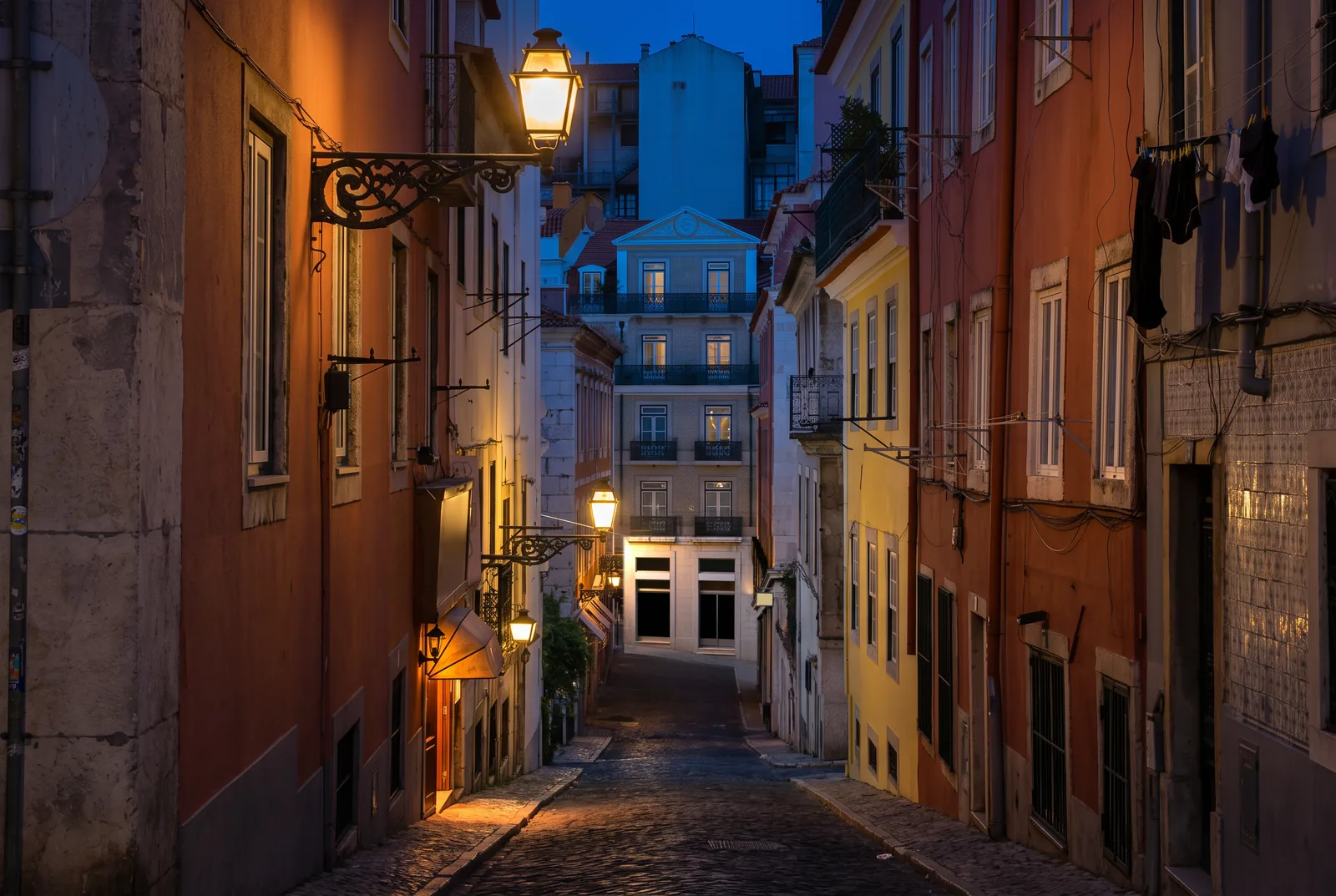
By day a quiet residential grid of narrow streets and a superb viewpoint at São Pedro de Alcântara; from dusk, Lisbon's pulsating bar district, the crowd noise running well past 2 AM from Thursday to Saturday. We will say it plainly: do not book a room on a bar street unless you plan to be out until closing time yourself. The sleep-friendly compromise is the quieter upper streets towards Príncipe Real, where you keep the location and lose the soundtrack. Earplugs are not a joke here, they are packing advice.
- Best for: Night owls, younger travellers, anyone who wants the bars downstairs rather than a taxi away.
- Getting there: A ten-minute walk up from Baixa-Chiado, or bus 758 to Príncipe Real and down. The Glória funicular from Restauradores has been out of service since the 2025 accident, with no reopening date. Inside, everything is on foot along streets barely wide enough for two umbrellas.
- Noise and hills: Loud until sunrise on weekends in the core; hilly but short distances.
- Skip if: Quiet nights matter. Stay in Chiado or Príncipe Real and walk over.
Belém: echoes of the Age of Discoveries

West along the river, Belém is monumental Lisbon: the Jerónimos Monastery, the Tower, the Monument to the Discoveries, the MAAT on the waterfront and the queue outside Pastéis de Belém. Staying here means calm evenings and having the monuments nearly to yourself at 8 AM, a genuine pleasure. The trade-off is distance: 20 to 30 minutes from the centre's dinner and Fado scene, and a district that winds down early. Most visitors do better basing centrally and giving Belém one full, unhurried day.
- Best for: Families and history lovers who want calm; anyone happy to commute to the centre for dinner.
- Getting there: Tram 15E from Praça da Figueira or Cais do Sodré, or the Cascais line train from Cais do Sodré to Belém station in under ten minutes, usually faster and emptier.
- Worth knowing: As of mid-2026 adult entry is €15 for Belém Tower and €18 for Jerónimos, both sold at the kiosk in front of the monastery; book ahead: since it reopened from restoration in May 2026 the Tower runs on timed half-hour slots capped at 900 visitors a day, sold online and at the Jerónimos ticket office.
- Skip if: You want Lisbon's nightlife or Fado on your doorstep.
Parque das Nações: modern Lisbon reinvented
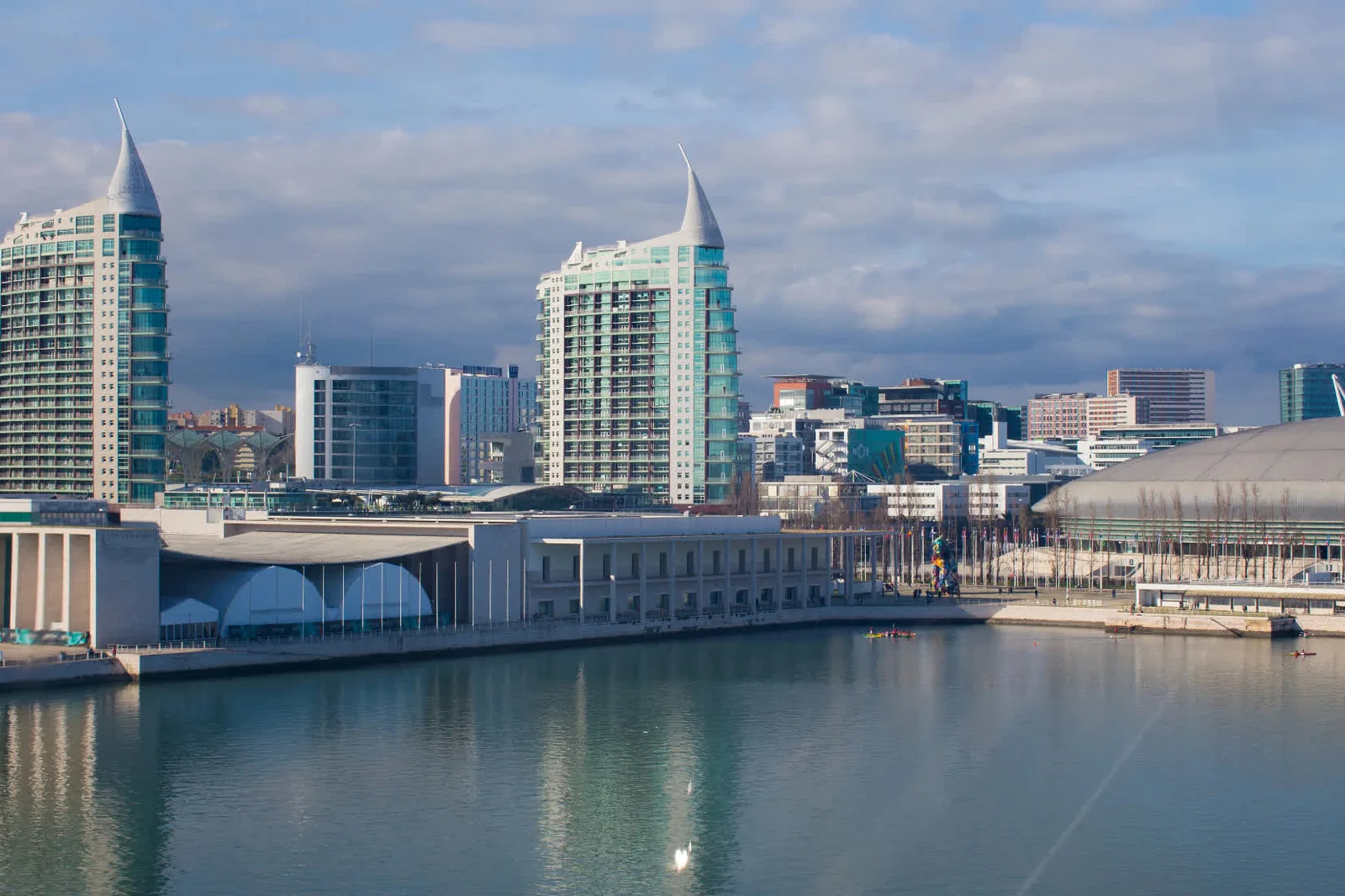
What I would say about Parque das Nações that most guides do not. Articles describe it as "the modern part of Lisbon", with the Oceanário, the cable car and the Expo 98 architecture. All true, and none of it is the main advantage of staying here. This is one of the few areas of Lisbon where you can live the city without feeling you are standing inside an attraction: wide walkways along the Tagus, gardens, supermarkets, residential streets, people going about their day rather than tour groups behind a raised flag. It is also much flatter than the historic centre, which sounds like a detail until you have spent two days climbing hills; for families, older visitors, or anyone who would rather not end every day exhausted, it makes an enormous difference.
The trade-off is real. If your dream is to open the window onto yellow trams and tiled façades, you will not find that here; it is a completely different Lisbon. But that is precisely the point most guides miss: you do not have to sleep in the historic centre to experience it. Visiting the busiest part of the city by day and coming back to somewhere calmer is often the better arrangement.
- Best for: Families with pushchairs, conference travellers, early flights, longer stays. Less so for a romantic city break.
- Getting there: The red line links Oriente to the airport in three stops, about ten minutes, the most painless arrival in the city. Baixa is 20 to 25 minutes with one change; Gare do Oriente makes trips out of Lisbon simple.
- Noise and hills: Flat, safe, stroller-friendly. Evenings are calm to the point of feeling corporate.
- Worth knowing: Book the Oceanário online with a timed slot; as of mid-2026 adult tickets run €25 to €29, cheapest in the late afternoon.
Príncipe Real: boutiques and gardens
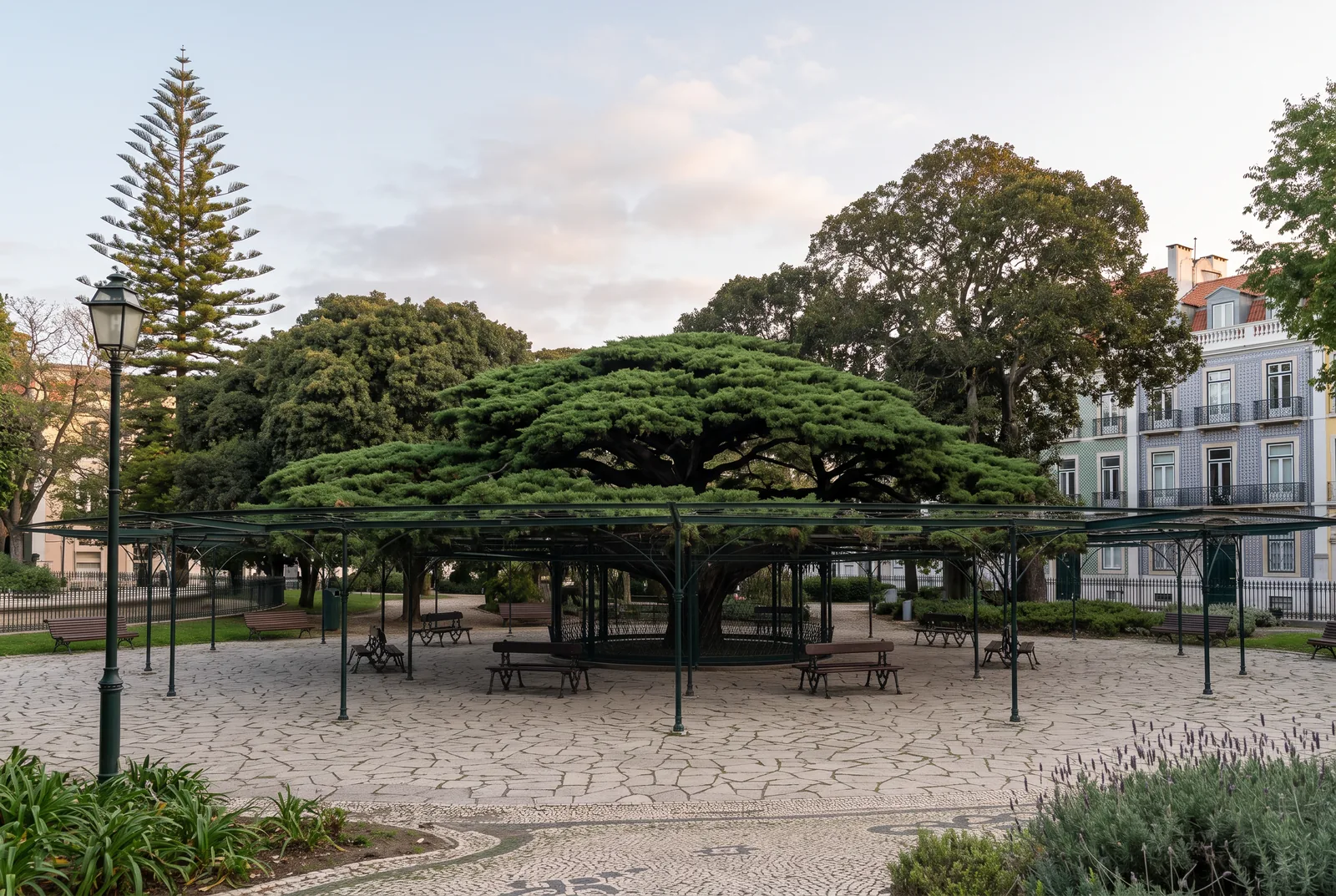
Elegant 19th-century mansions, a garden with a giant cypress and a kiosk café, antique shops and independent designers in renovated palaces such as Embaixada: Príncipe Real is Lisbon's upscale, quietly fashionable corner, and one of its most expensive to sleep in. Worth it if boutique shopping and destination restaurants (A Cevicheria, Tapisco) are your priorities. Nights are peaceful on the residential streets, with only mild spillover from the garden kiosks on warm evenings.
- Best for: Design lovers, food-led travellers, couples who want refined and lively without the crowds.
- Getting there: Rato station (yellow line) at the top of the neighbourhood, Avenida station a downhill walk, Chiado and Bairro Alto ten pleasant minutes on foot.
- Noise and hills: Quiet. Hilly, but noticeably gentler than Alfama or Graça.
- Nightly rate 2026: €110 to €180 mid-range, boutique-heavy; the small design-led guesthouses fill months ahead for spring and autumn.
Santos and Madragoa: authentic local life
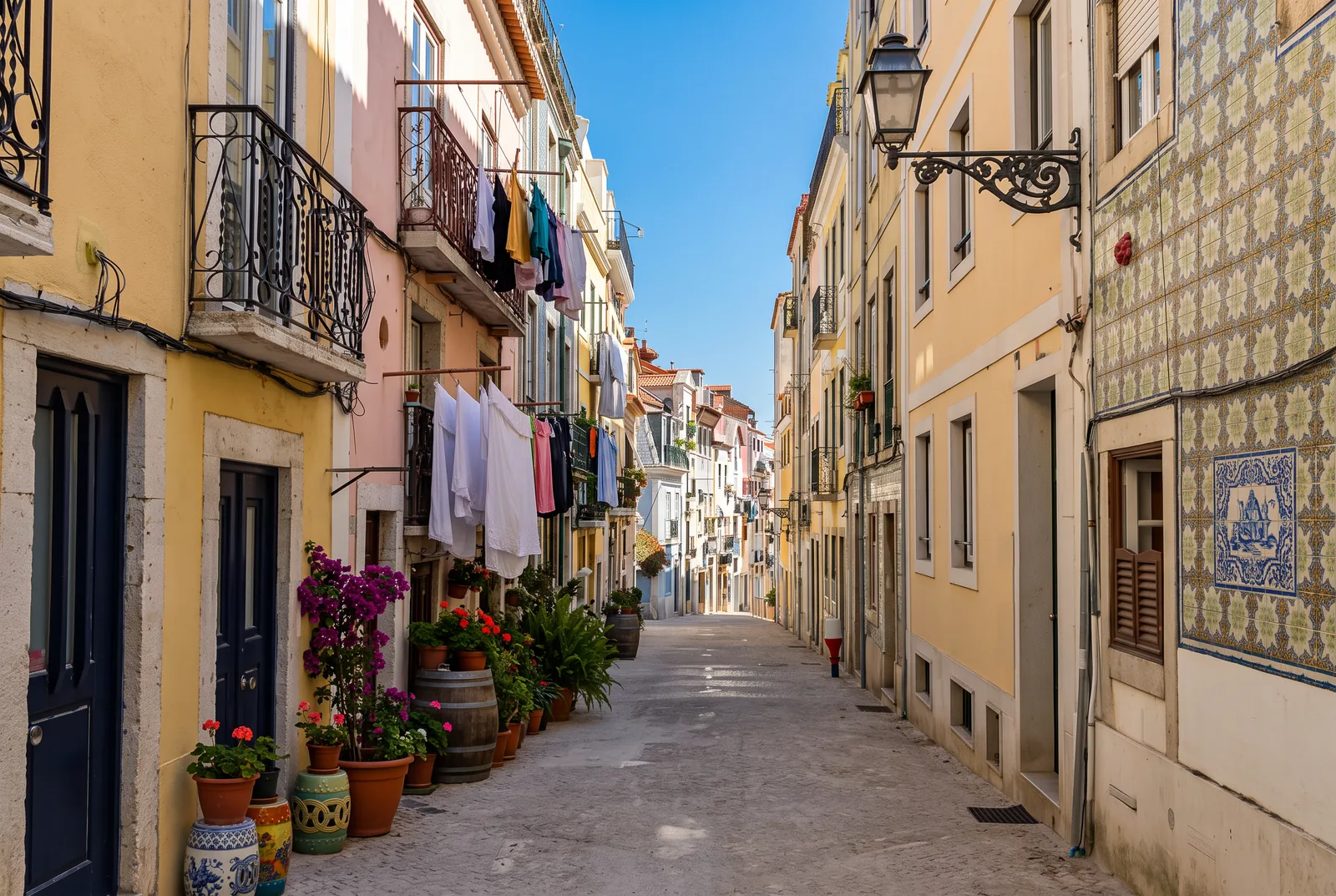
South of Bairro Alto and Estrela, two adjacent working-class quarters that have kept their bakeries and laundry lines while Santos grew into the design district of galleries, studios and furniture shops. A Travessa, inside the former Convento das Bernardas, is the neighbourhood's destination dining room. Madragoa's streets are genuinely quiet at night; the exception is the lower edge along Avenida 24 de Julho, a weekend nightlife strip, so check the exact address. Grocers and laundrettes everywhere make this one of the best-value bases for a week or more.
- Best for: Stays of a week or more, design enthusiasts, travellers who want a residential feel ten minutes from the centre.
- Getting there: Tram 25 crosses the district; Santos station on the Cascais line is one stop from Cais do Sodré and puts Cascais and the beaches within direct reach.
- Noise and hills: Quiet inland, loud on 24 de Julho at weekends. Gentle slopes down to the river.
- Worth knowing: The National Museum of Ancient Art has been closed since September 2025 for a major refurbishment, with reopening expected in the last quarter of 2026, so check before you plan a visit.
Graça and São Vicente: village life above the castle
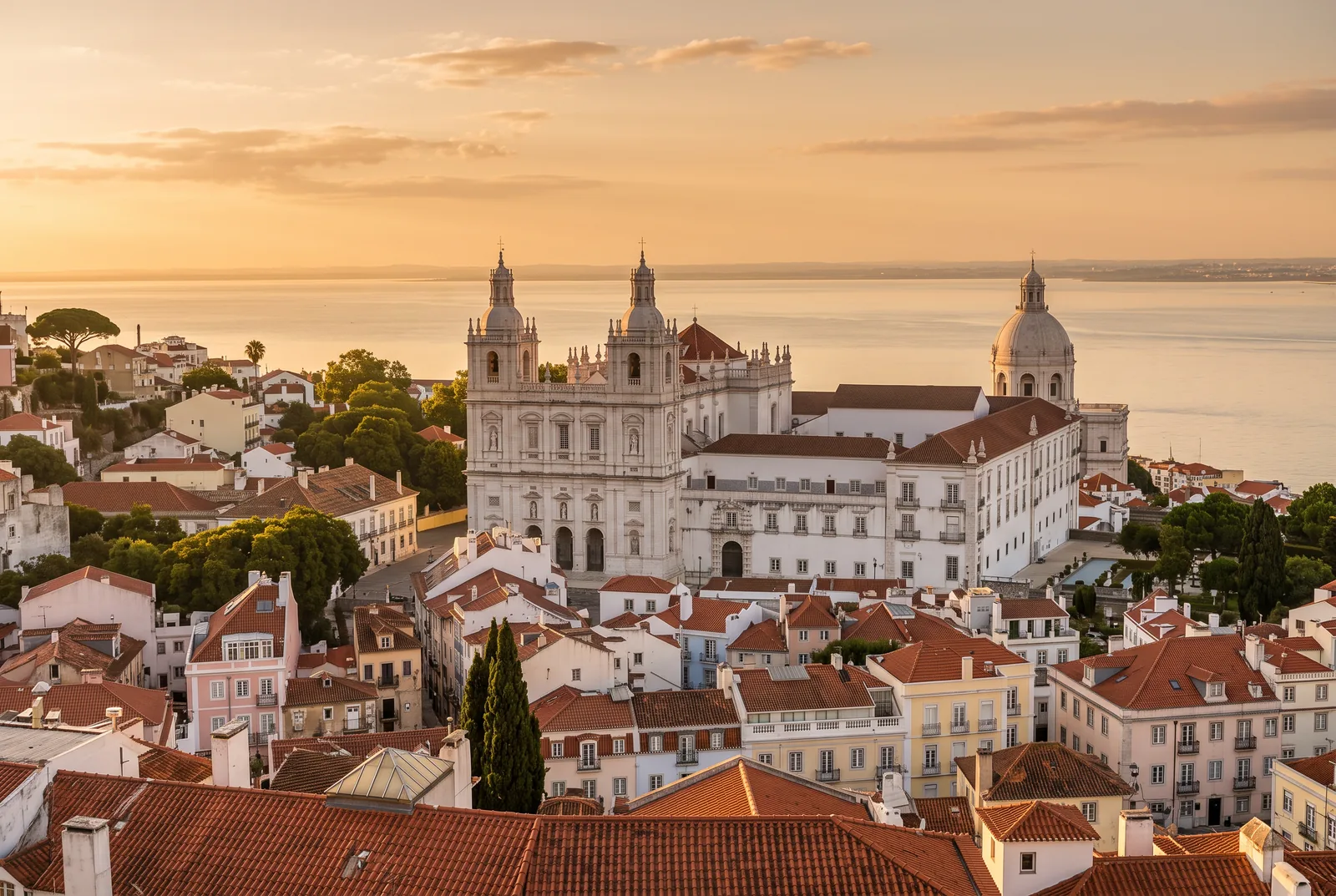
Climb past Alfama and the crowds thin, the laundry lines multiply and Lisbon feels like a village again: grocers, tascas, tiled façades, and two of the city's finest viewpoints, Graça and Senhora do Monte, at their best at sunset. São Vicente adds the monastery with its azulejo panels and the Feira da Ladra flea market every Tuesday and Saturday. There are few hotels, so most stays are apartments and the good ones book out early. The viewpoints buzz with tuk-tuks until dark, then the neighbourhood falls properly silent.
- Best for: Return visitors, photographers, slow travellers who want to live like a local 20 minutes on foot from everything.
- Getting there: Tram 28 through the heart of it, bus 734 to Martim Moniz and Santa Apolónia; 20 minutes downhill to Baixa, and a cheap Bolt ride back up.
- Noise and hills: Silent at night. Steep streets in every direction.
- Nightly rate 2026: €100 to €160 for characterful stays 20 minutes on foot from downtown.
Cais do Sodré: market mornings and the latest nights
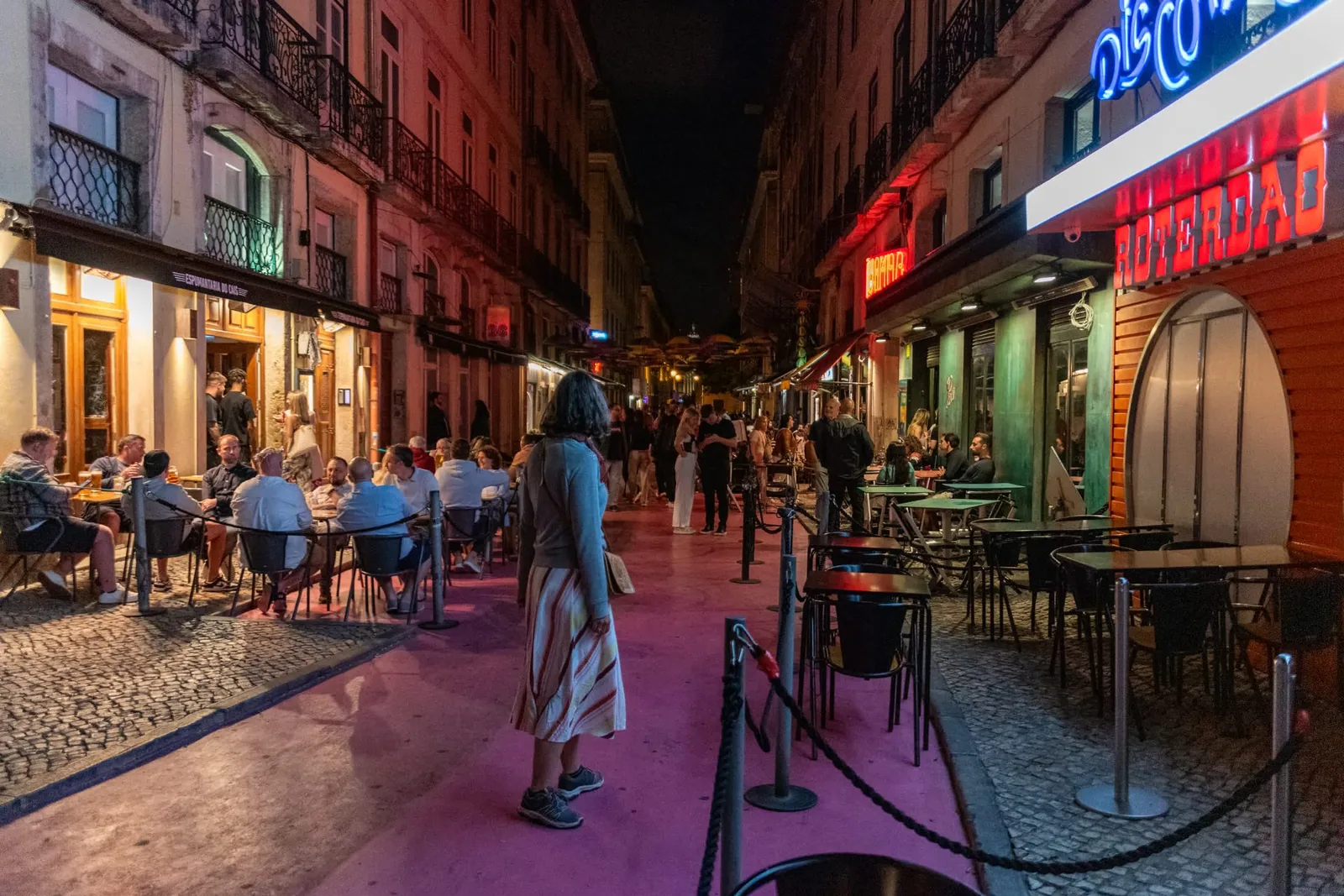
A former sailors' quarter reinvented as one of Europe's great eating and drinking districts, with a pleasingly rough edge left in. By day it belongs to the Time Out Market inside the old Mercado da Ribeira and to the flat riverside promenade; by night to Pink Street, whose bars only warm up after midnight. Sleeping within a block of Pink Street on a weekend means noise until sunrise; book on the upper streets towards Chiado or facing the river and the problem largely disappears.
- Best for: Night owls, food obsessives, and day-trippers who want trains, ferries and the metro within a two-minute walk.
- Getting there: A transport trifecta: terminus of the green line, departure point of the Cascais line to Belém, Estoril and Cascais, and the pier for the ferries to Cacilhas. Chiado is ten minutes uphill.
- Noise and hills: Loud around Pink Street at weekends, quiet on the upper streets. Flat along the river.
- Worth knowing: Cross to Cacilhas by ferry for grilled fish and the single best view back over Lisbon's skyline.
Alcântara and LX Factory: creative Lisbon under the bridge

Beneath the red span of the 25 de Abril bridge, nineteenth-century factories have been reborn as studios, breweries, bookshops and restaurants, with a creative energy closer to Berlin than to the azulejo postcard: LX Factory and its Ler Devagar bookshop, Village Underground's stacked shipping containers, the Pilar 7 lookout inside the bridge itself. Alcântara is patchier than it looks on Instagram, wide avenues and railway lines carve it up, and the dockside bars can be loud on Friday and Saturday nights. Come for the creative scene and the value, not for cobblestone romance.
- Best for: Second-time visitors, creatives, travellers who prefer warehouse conversions and craft beer to tile museums.
- Getting there: The Cascais line from Cais do Sodré reaches Alcântara-Mar in about five minutes; tram 15E stops on its way to Belém. No metro, the district's main drawback.
- Noise and hills: Flat. Loud at the docks at weekends, quiet inland.
- Worth knowing: The riverfront path runs flat all the way to the MAAT and Belém, a fine walk or cycle.
Getting around Lisbon: fares, hills and honest travel times
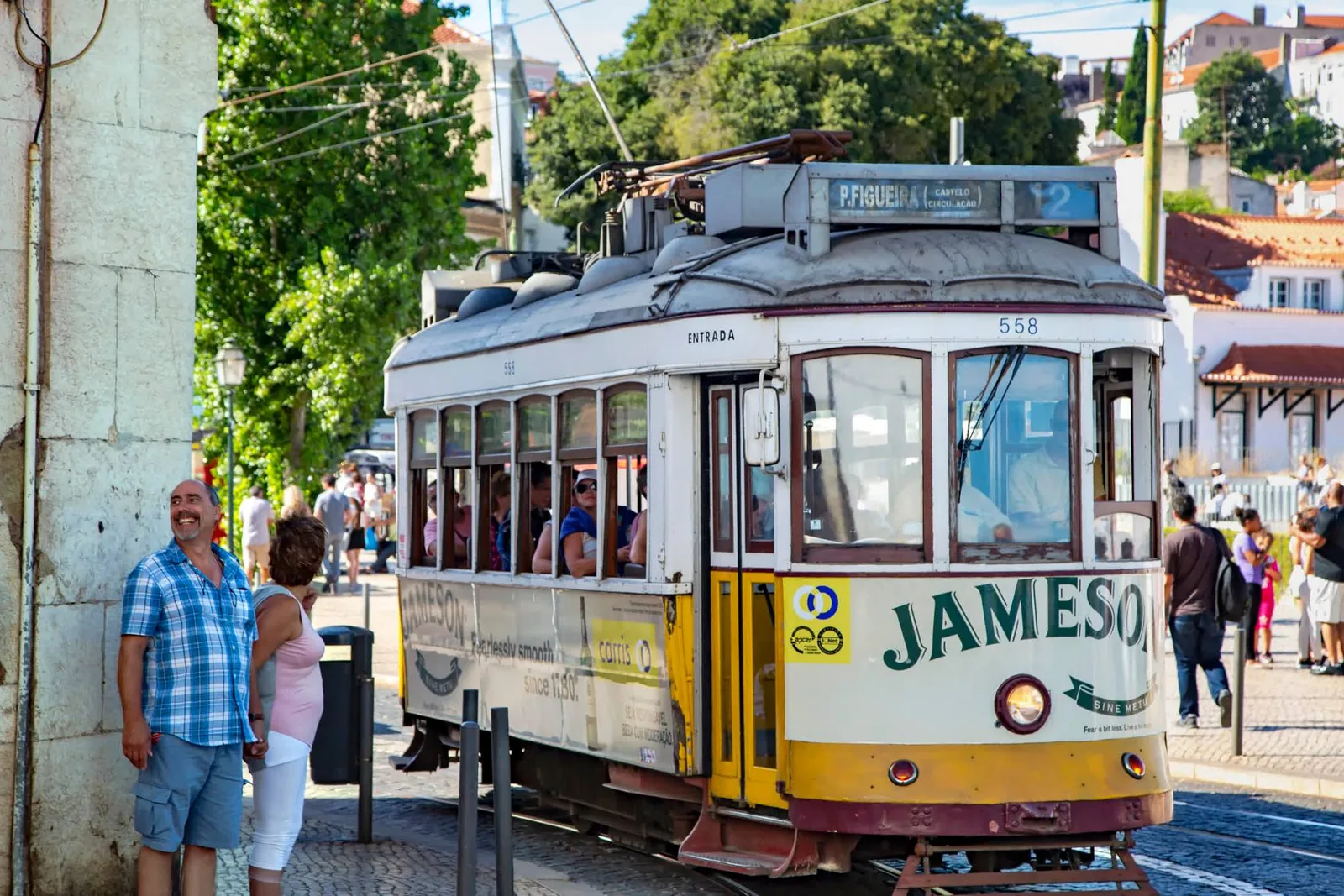
Cheap, extensive and occasionally chaotic. Four colour-coded metro lines run from 6:30 AM to 1 AM, trams and buses are run by Carris, and the trains to Belém, Cascais and Sintra leave from Cais do Sodré and Rossio. The red line runs straight from the airport, reaching Oriente in about ten minutes and the centre in 25 to 35 with one change. Ride tram 28 once, early, for the joy of it, and never as daily transport: peak queues stretch past an hour and the packed cars are the busiest pickpocket environment in the city. And respect the hills: map apps chronically underestimate walking times here, which is what the funiculars and the Santa Justa lift are for, all covered by the day pass, when they are running: since the 2025 Glória accident most of Lisbon's lifts have been suspended for safety works, and only the Graça funicular is back, so check Carris before counting on one.
- Card: A reusable navegante occasional card costs €0.50, one per traveller.
- Single ride: €1.90 on metro or Carris, or €1.72 with pre-loaded zapping credit. A tram ticket bought on board is €3.30.
- 24-hour pass: €7.25 for Carris and metro, €10.35 with the Cacilhas ferry, €11.40 with the CP trains to Sintra and Cascais. Ride more than three times in a day and the pass wins.
What a night's stay really costs in 2026
Typical nightly rates outside the December holidays and the June festival peak. The days of bargain central rooms are largely gone, but value survives if you pick the right hill.
- Hostel dorms: €18 to €30 per bed, best around Baixa and Intendente.
- Budget guesthouses: €60 to €100, often in Mouraria, Anjos or Arroios, well connected and noticeably cheaper than downtown.
- Mid-range, Baixa and Chiado: €140 to €220.
- Mid-range, Príncipe Real: €110 to €180, boutique-heavy.
- Graça and Mouraria: €100 to €160, characterful, 10 to 15 minutes from downtown.
- Estrela and Campo de Ourique: €90 to €140, residential calm at a real discount.
- Premium apartments and five-star: €250 and well upwards, concentrated in Chiado, Príncipe Real and along the riverfront.
Book two to three months ahead for April to October, earlier for the Santo António festival in mid-June, when the whole city sells out. November to February brings the best rates, uncrowded viewpoints and milder weather than most visitors expect. For a premium base sorted in advance, our own Riverside apartment in Parque das Nações pairs river views with exactly the kind of well-connected location this guide keeps recommending.
The overrated choice, if you are staying more than two days
I would say Baixa, and only as a place to sleep, not as a place to see. A first-time visitor should absolutely walk Praça do Comércio, Rua Augusta, Rossio and on into Chiado; but visiting Baixa and staying in Baixa are different things. For one night the location is obviously excellent. For four, five or six days I see no need to sleep in the part of the city with the highest concentration of visitors, where by day it can be extremely busy and some streets are heavily oriented to tourists. After two or three days I would rather be able to step out of that. Bairro Alto I enjoy a great deal in the evening, and it would not be my first choice for sleeping if quiet nights matter. And Alfama is sometimes over-romanticised as the perfect base for everyone: it is one of the most special neighbourhoods in Lisbon, and its stairs, access and the business of getting luggage there do not suit every traveller. When people ask me which is "the best neighbourhood in Lisbon", I find the question misleading. It depends far more on how you want to live the trip than on any universal ranking.
Common first-timer mistakes when choosing where to stay
- Booking a bargain on a bar street. That suspiciously cheap room in Bairro Alto or beside Pink Street is cheap because locals know what Friday night sounds like there. Check the exact street, not just the neighbourhood name.
- Ignoring the hills and the stairs. A fourth-floor walk-up in Alfama looks charming online and feels very different with two suitcases after a red-eye flight. Ask about elevators and street access before you commit.
- Staying far out to save money without doing the transport maths. Saving €30 a night but spending 90 minutes a day commuting is a bad trade on a three-day trip. Central beats cheap for short stays.
- Overlooking festival dates. Around June 12 and 13, Santo António turns Alfama, Graça and Mouraria into an open-air party until dawn. Glorious to join, brutal to sleep through unaware.
- Relaxing completely about pickpockets. Lisbon is very safe for violent crime, but crowded trams, metro carriages and busy viewpoints are prime territory for skilled teams. Front pockets, zipped bags, phones off the café table edge.
Frequently asked questions about where to stay in Lisbon
Where should first-time visitors stay in Lisbon?
Baixa or Chiado, without much hesitation: manageable terrain, the best metro connections in the city, every classic sight walkable. You pay a premium, €140 to €220 for a decent mid-range room as of 2026, but on a first visit the saved time is worth more than the saved money.
Is Parque das Nações a good place to stay?
Yes, for the right trip. "Is it too far from the centre?" is the question we hear most, and on a map it can look detached; in practice Baixa is 20 to 25 minutes by metro and the airport ten, and the more useful question is not how many kilometres separate you from Praça do Comércio but how much effort it takes to get back after ten hours of exploring. Flat, spacious and calm, it is the easy winner for families with a pushchair and for early flights, and a deliberate trade-off for anyone who wants trams and tiled façades outside the window.
What is the best area in Lisbon for families with children?
Parque das Nações for younger children: flat riverside promenades, playgrounds, the Oceanário, modern apartments with elevators, and a ten-minute metro hop from the airport. Belém suits families who prioritise sightseeing.
Is Alfama a good place to stay or just to visit?
A wonderful place to stay if you accept its terms: stairs, steep lanes, few shops, no metro and near-total silence after midnight. If in doubt, stay in Baixa and wander into Alfama every day; it is never more than 15 minutes away.
Which Lisbon neighbourhoods should light sleepers avoid?
The core of Bairro Alto, anywhere within a block of Pink Street in Cais do Sodré, and the stretch of Avenida 24 de Julho below Santos. Everywhere else in this guide, a quiet night is the norm.
Is Lisbon safe for tourists?
Yes, among the safest capitals in Europe for visitors; violent crime against tourists is rare. The real risk is pickpocketing on crowded transport, above all tram 28, and at busy viewpoints. Late at night, empty medieval alleys are better crossed by Uber or Bolt than on foot.
How many nights do I need in Lisbon?
Three full days covers the essentials at a civilised pace: one for Alfama, the castle and Graça, one for Baixa, Chiado and Bairro Alto, one for Belém. Add a fourth for Sintra and a fifth for Cascais for a complete week around the capital.
Wherever you land, choose your neighbourhood deliberately: it is the single decision that shapes every day of the trip. When you are ready, browse our Lisbon collection for a premium base, and if Madeira is on the itinerary too, direct flights take under two hours and our guide to where to stay in Madeira applies the same honest approach to the island.
Related topics: Viewpoints, Restaurants, Hikes, Markets, Museums