Sintra day trip from Lisbon: the train, the palaces and how many to see in a day
Ana Freitas · 20 min read · Updated 26/Oct/2026
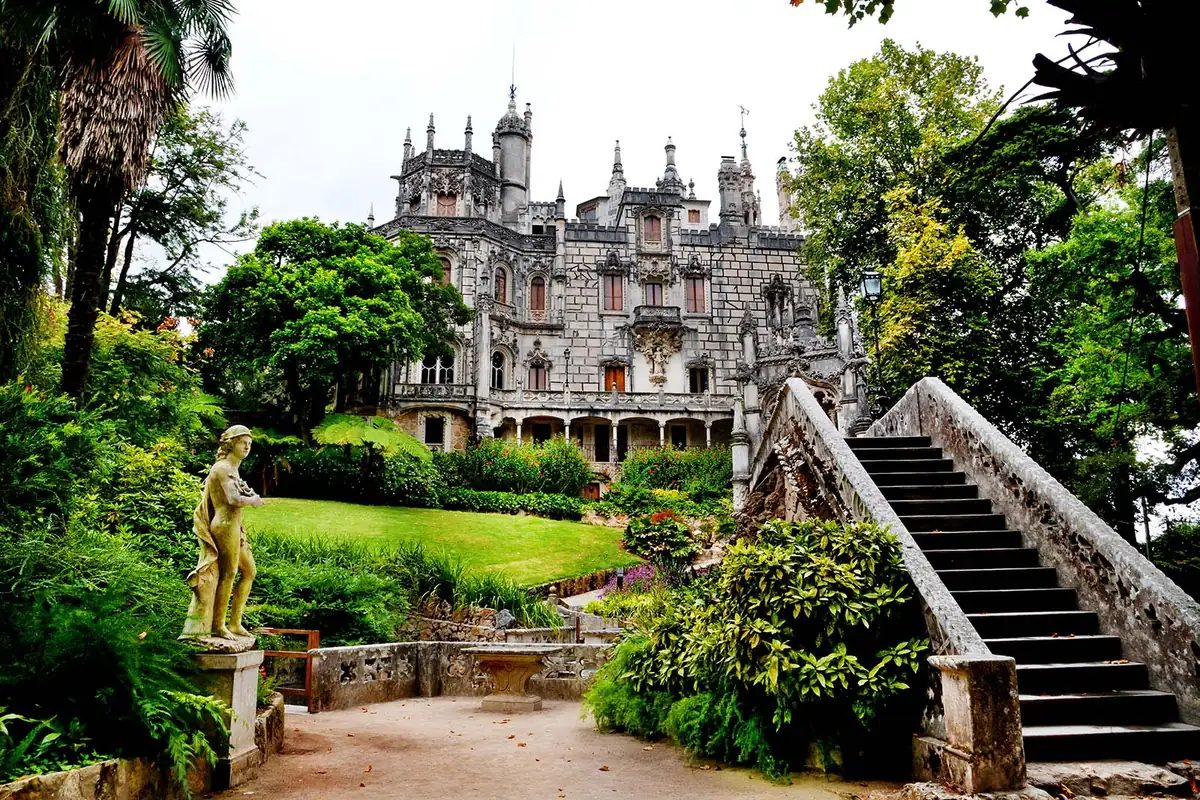
A day in Sintra from Lisbon: train or car, which palaces to choose when you cannot see them all, when to book tickets, and how long it really takes.
Sintra day trip from Lisbon: the short answer
Sintra is a town of palaces in wooded hills half an hour west of Lisbon, a UNESCO World Heritage site whose microclimate keeps the slopes green and the air cool. Kings, an eccentric millionaire and a run of romantics each built a fantasy up here, which is how a small town ended up with six ticketed monuments.
The practical answer for a Sintra day trip from Lisbon is short: take the train, not the car, and pick two palaces, not five. Two monuments plus lunch and an unhurried walk fills the hours honestly, three is possible if you start early, and five is a checklist rather than a day.
- Getting there: train from Rossio, €2.55 a single, about 40 minutes.
- First palace: Pena, the first slot of the morning, booked several days ahead in high season and a week ahead in August.
- Second: Quinta da Regaleira, an afternoon slot.
- If you hate crowds: Monserrate, or the Convent of the Capuchos.
- Getting around: the 434 loop, €13.50 for 24 hours, or a tuk-tuk up and your legs down.
- Pastry: a travesseiro, eaten warm, at Piriquita.
- With Cascais: separate days, or one palace plus the 1253 to Cabo da Roca and the 1624 on.
Lisbon to Sintra by train, and why I no longer drive
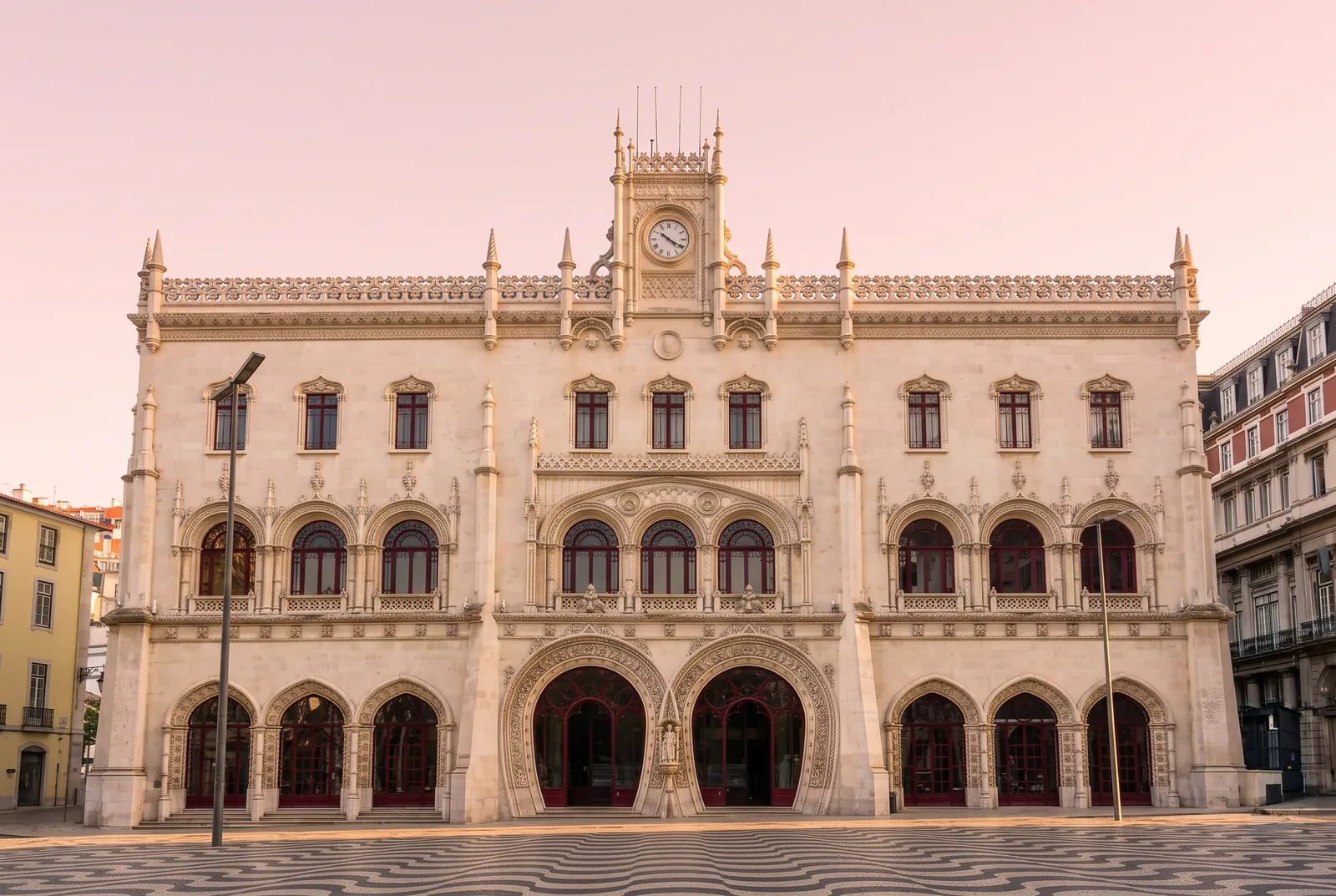
Train or car? I have done both, and I no longer hesitate. For anyone staying in Lisbon who simply wants to see the main monuments, I prefer the train.
The car looks more convenient when you glance at the map. The problem starts when you arrive. Parking becomes a constant background worry, and near the busiest monuments your own car is no advantage at all. The historic centre is a knot of narrow one way lanes, summer gridlock turns five minutes of road into a forty five minute crawl, and the hilltop palace road is restricted at busy times. The train drops you in the centre with none of that.
Rossio station is the departure I would choose: its horseshoe shaped neo-Manueline facade is an attraction in itself. Guests at our Riverside apartment in Parque das Nações reach it by metro in about 20 minutes, or skip Rossio altogether, because trains to Sintra also leave from Oriente, five minutes on foot from the apartment.
- Station: Rossio, with trains also leaving from Oriente and Entrecampos.
- Fare 2026: €2.55 a single, or €2.05 if you pay with zapping, so a return is €5.10 at the machine and 4.10 with zapping.
- Journey: 40 minutes.
- Frequency: every 10 to 20 minutes, so no timetable planning.
- Card: the reusable Navegante card costs €0.50 on first purchase, one per traveller, and zapping credit covers train and metro alike.
- By car: 40 minutes on a good day, then the parking hunt.
Getting around Sintra: the 434 bus, walking or a tuk-tuk
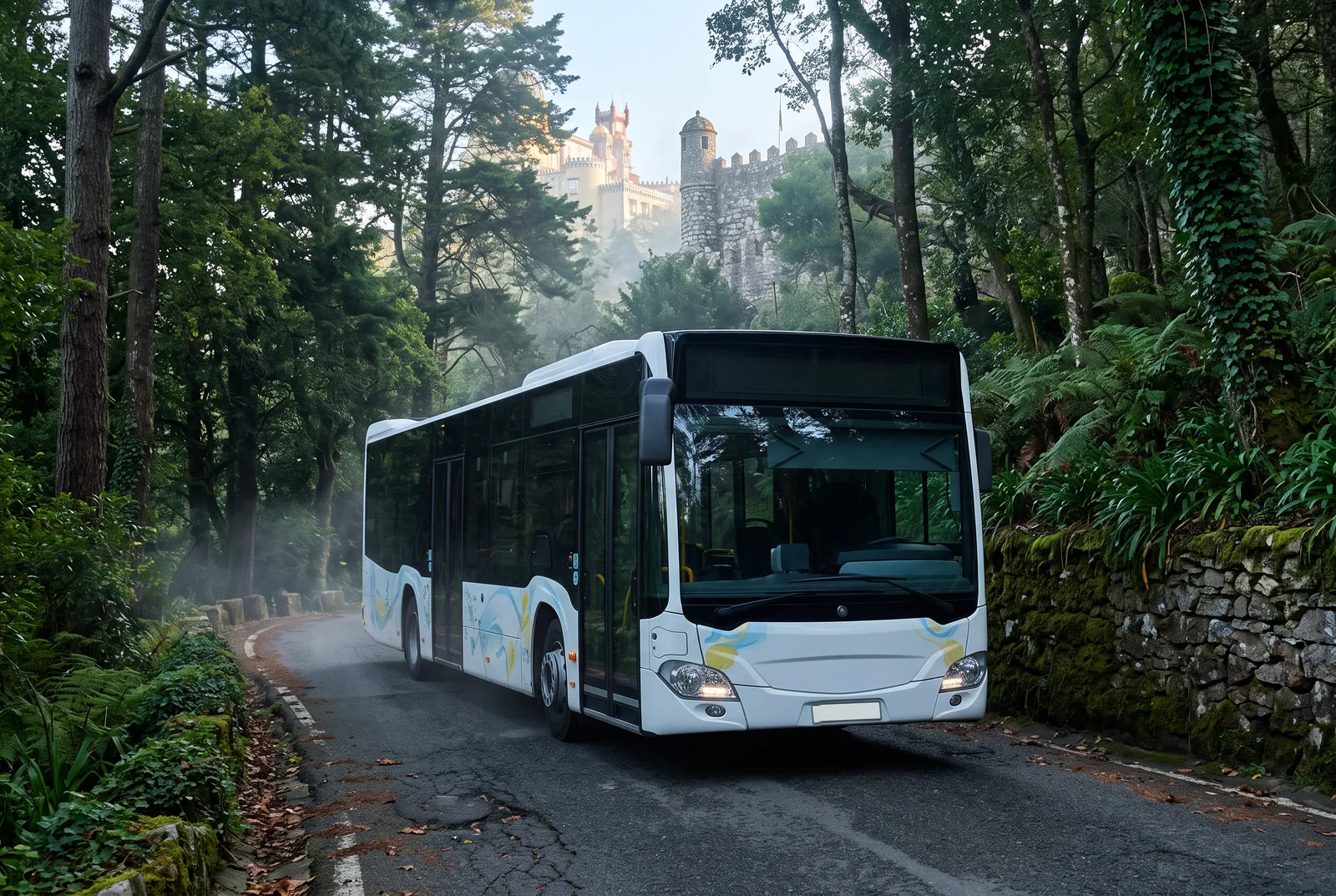
The station is not the town and the town is not the hill, which is what catches first timers out. The 434 runs as a one way loop, from the station through the historic centre up to the Moorish Castle, on to Pena and back down. You cannot ride it in reverse, so plan your palaces around the loop. The catch is the queue: by mid morning in summer the station stop can swallow half an hour, precisely the time you were trying to save.

Tuk-tuks fill the middle ground, faster than the bus queue and more flexible, though quotes vary with demand, so agree the price before you climb aboard. Walking is more realistic than most visitors assume, at least in part: the centre and Quinta da Regaleira are gentle strolls, while the climb to Pena is a different animal. Our formula is to ride up first thing and let gravity do the rest, since downhill costs nothing and shows you corners the buses never reach.
- Bus 434: the Pena circuit, a one way loop roughly every 10 minutes, €13.50 for a 24 hour hop on hop off ticket covering the 434 and the 435.
- Bus 435 and 1253: the 435 leaves Sintra station too and serves Quinta da Regaleira, Seteais and Monserrate, while Carris Metropolitana line 1253 calls at all three from the station itself.
- Tuk-tuk: quick, flexible and priced by negotiation, so fix the fare on the pavement.
- Walking: 10 to 15 minutes station to centre, another 10 to Quinta da Regaleira, and a steep 45 to 60 minutes up to Pena on the woodland trail past Villa Sassetti.
- Ride apps: Uber and Bolt work in Sintra, though coverage thins on the hills.
- Our formula: up by bus or tuk-tuk, down on foot.
The best time to visit Sintra, and how the crowds move
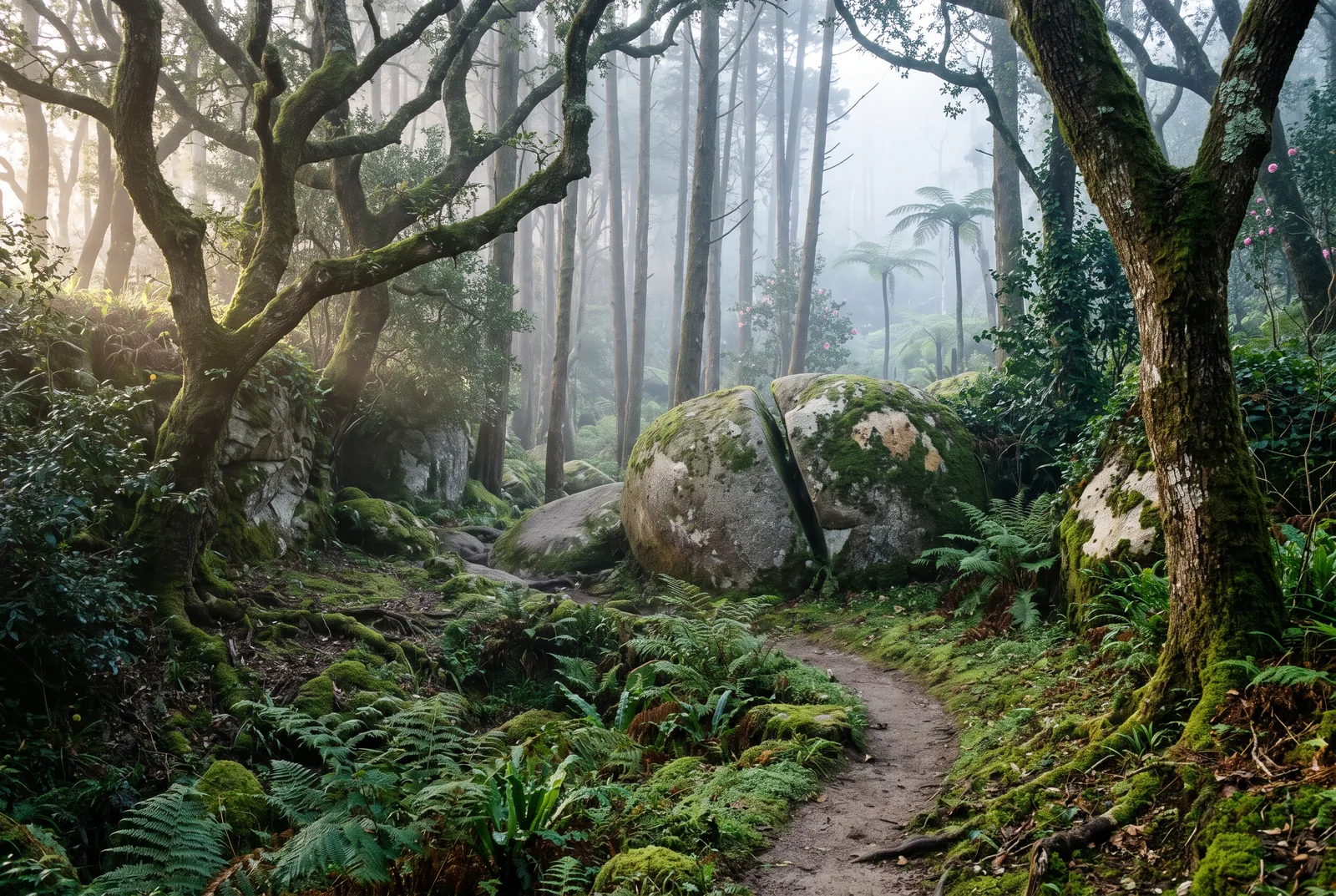
My own preference is spring and early autumn. The gardens are beautiful in summer too, but there are far more visitors and the queues change the rhythm of the whole day. Winter has a particular atmosphere, especially with fog, as long as you accept that rain can spoil the plan.
Within a single day, Sintra fills from the middle outwards. The 10:30 to 15:30 window is when day trippers, cruise excursions and coach tours all overlap, and Pena bears the brunt. Arrive for the first slots and you will walk terraces that feel almost private; come at midday in August and you will shuffle single file. The last entry slots are the sleeper pick, thinner crowds and low light on Pena's walls. Weekdays beat weekends.
The other trick is to run the day in reverse. Most people storm Pena first, so opening at Quinta da Regaleira at 10:00 and saving Pena for a 15:00 slot leaves you behind the wave instead of inside it.
Things to do in Sintra: the palaces, one by one
Six ticketed monuments, and no honest way to see them all in a day. Here they are in the order most visitors should consider them, with what each costs in 2026 and in time.
1. Pena Palace

The Palácio da Pena is the postcard, and it earns the status: a 19th century fantasy of neo-Gothic, neo-Manueline, neo-Islamic and neo-Renaissance parts painted red, yellow and lilac, raised by King Ferdinand II over a ruined monastery on the highest ridge. The state rooms are preserved as the royal family left them, but the terraces are why people come. In the park, the Chalet da Condessa d'Edla sits in a far corner and almost nobody finds it, which is exactly why you should.
- Ticket 2026: €20 palace and park, €12 park only, 18 and €10 for ages 6 to 17 and over 65s.
- Hours: park 9:00 to 19:00, palace 9:30 to 18:30, last tickets 17:30, last admission 18:00.
- Time needed: two to three hours, with about 30 minutes of it walking from the park gate to the palace door.
- Getting there: bus 434, then a 10 to 15 minute walk up or the shuttle at €4.50 return, cards only (map).
- Book: online, with a timed slot for the interior, several days ahead in high season and a full week in August.
- Skip if: the forecast is heavy rain, because cloud swallows the terraces.
2. Quinta da Regaleira
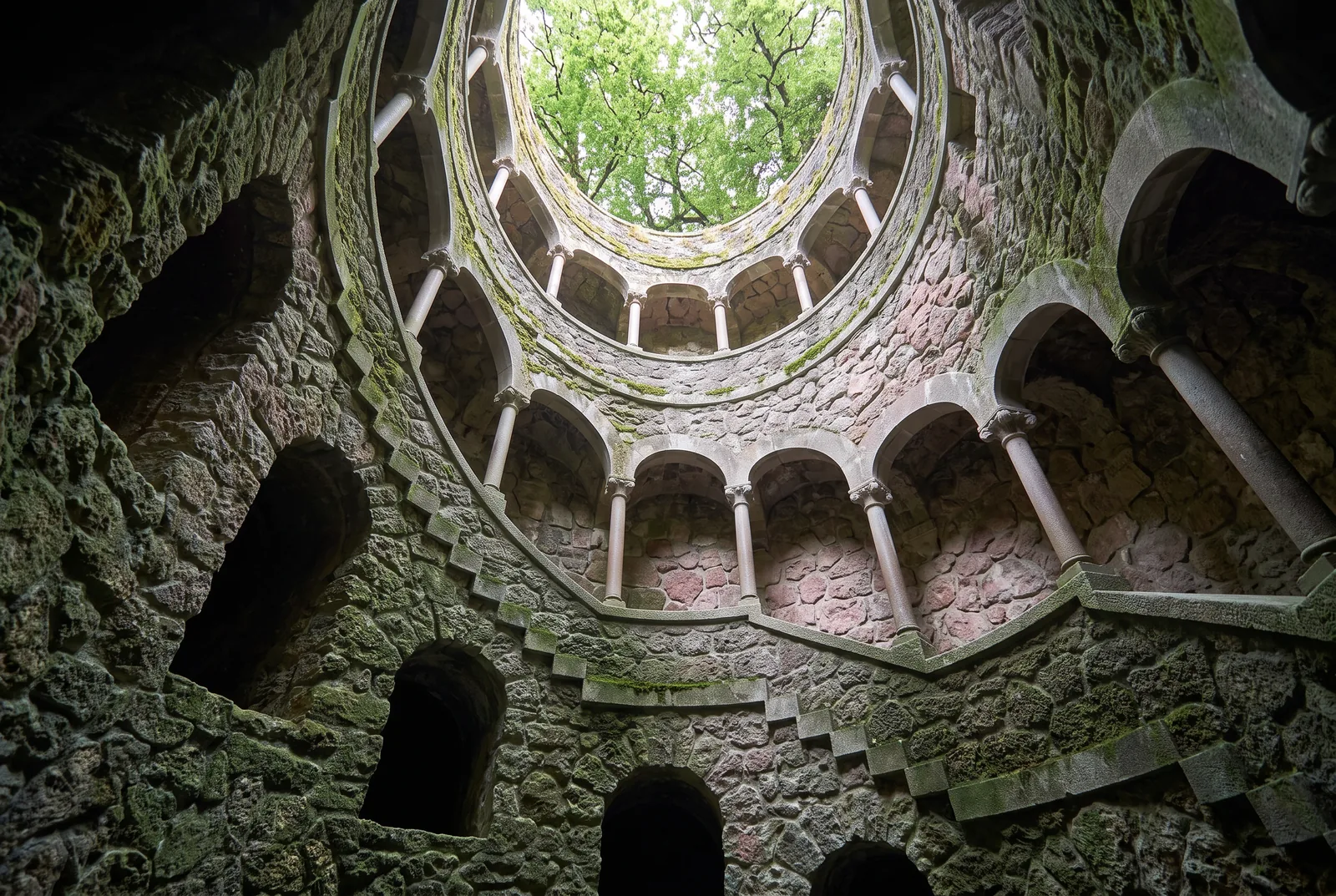
Quinta da Regaleira is the opposite of a palace visit: you spend most of it outdoors and a good part underground. António Augusto Carvalho Monteiro, a millionaire with a taste for symbolism, filled the estate with grottoes, tunnels, towers and the Initiation Well, a moss lined spiral staircase sunk into the ground. Masonic, Templar and Rosicrucian references turn up everywhere, and a phone torch is enough for the tunnels.
- Ticket 2026: €20 self guided since January 2026, €15 for ages 6 to 17 and over 65s, free under 6.
- Hours: gardens from 9:00 and the palace from 10:00 until 30 September 2026, otherwise from 10:00; last entry 17:30, last bookable slot 16:30, closing 19:30 April to September and 18:30 October to March.
- Time needed: two to three hours to do the estate justice.
- Getting there: 10 minutes on foot from the town square, or bus 435 or line 1253 (map).
- Book: online, in half hour slots chosen at checkout, before you board the train.
- Skip if: uneven steps and dark, damp passages are not for you.
3. The Moorish Castle
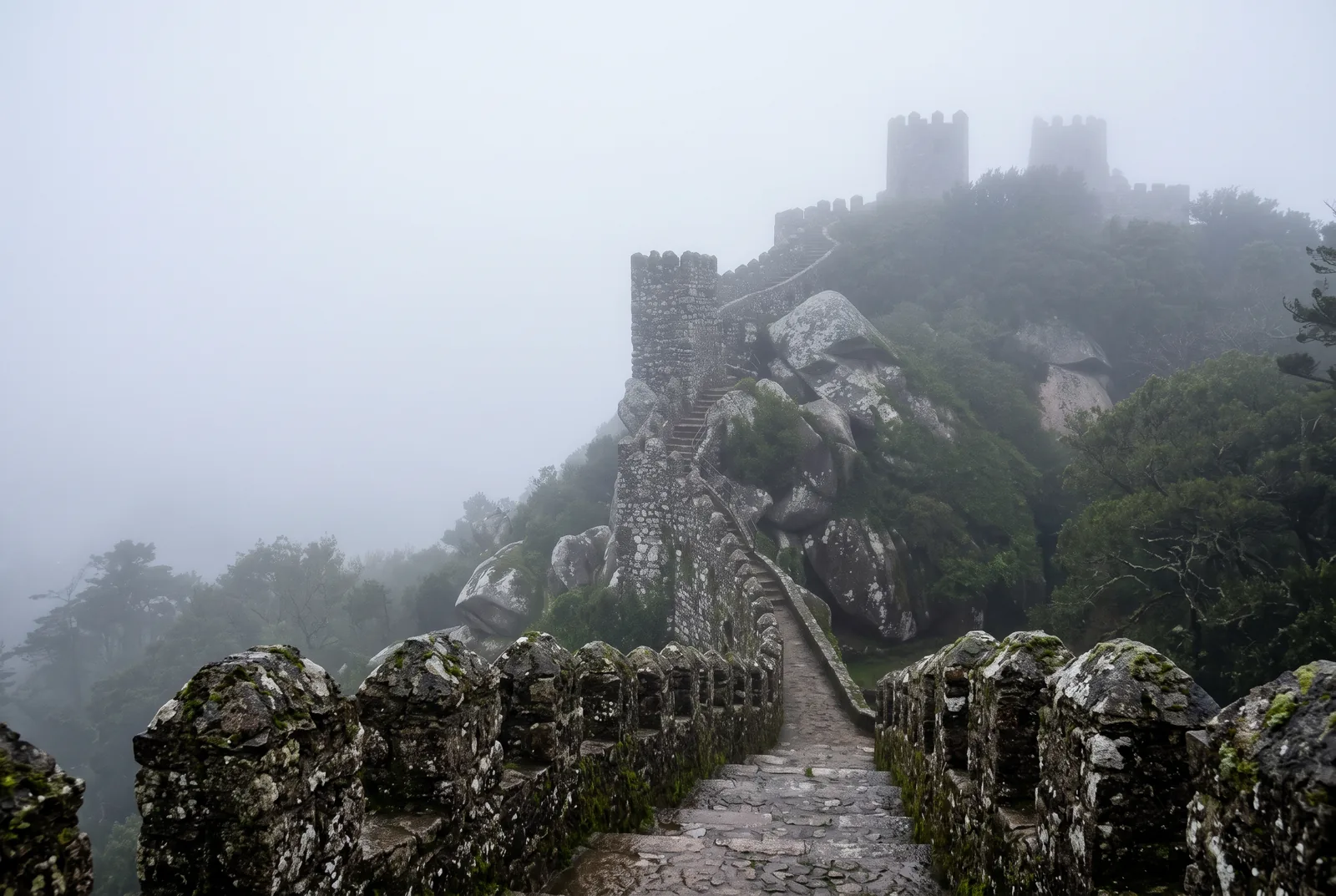
Older than every palace around it, the Castelo dos Mouros was founded in the 10th century, when the Moors held this corner of the Iberian Peninsula, and its battlements still snake along the ridge. There is almost nothing indoors, which is the point: you walk the walls, climb the watchtowers and look at Pena on one side and the Atlantic on the other. One practical note, the ramparts are entirely exposed, glorious on a clear day and grim in wind or rain.
- Ticket 2026: €12, and €10 for ages 6 to 17 and over 65s.
- Hours: 9:30 to 18:00, last admission 17:30.
- Time needed: an hour, an hour and a half for the full circuit.
- Getting there: bus 434, one stop below Pena, fifteen to twenty minutes on foot between entrances (map).
- Book: online and together with Pena, which spares a second queue on the same hilltop.
- Skip if: heights or high wind bother you.
4. Sintra National Palace

The two conical chimneys over the town square belong to the kitchen of the Palácio Nacional de Sintra, the best preserved medieval royal palace in Portugal, lived in by royalty from the 15th to the 19th century. Inside are some of the oldest Mudejar tiles in the country and two painted ceilings worth the ticket alone, the Swan Room and the Magpie Room. Sitting at the foot of the hills rather than on top, it is the easiest of the six to slot into a spare hour.
- Ticket 2026: €13, and €10 for ages 6 to 17 and over 65s.
- Hours: 9:30 to 18:30, last admission 17:30, with the gardens outside free to wander.
- Time needed: an hour, an hour and a half if you read every room.
- Getting there: in the town square, 10 to 15 minutes on foot from the station (map).
- Book: online, though this is the one palace where the desk queue is usually short.
5. Monserrate Palace and the Convent of the Capuchos
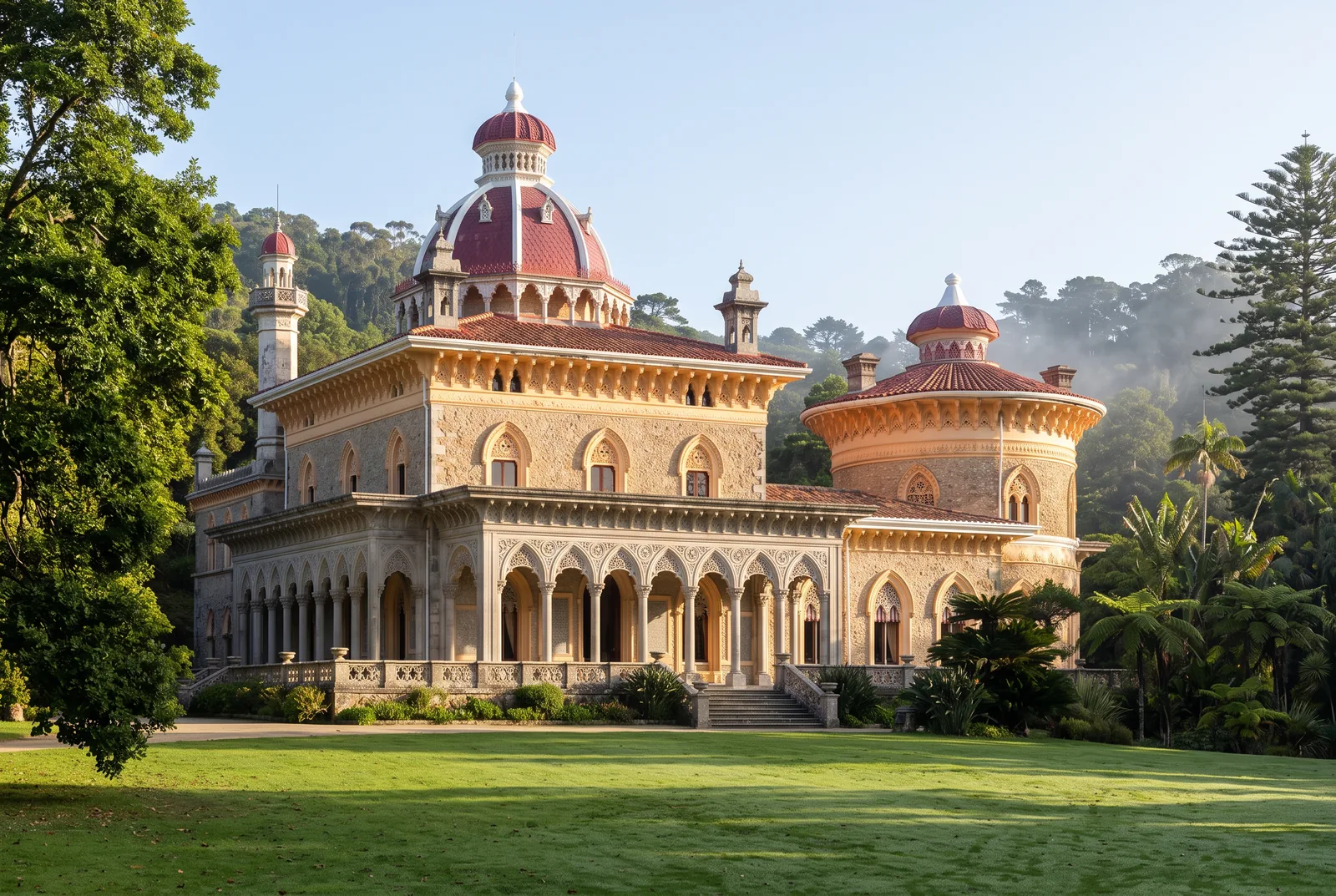
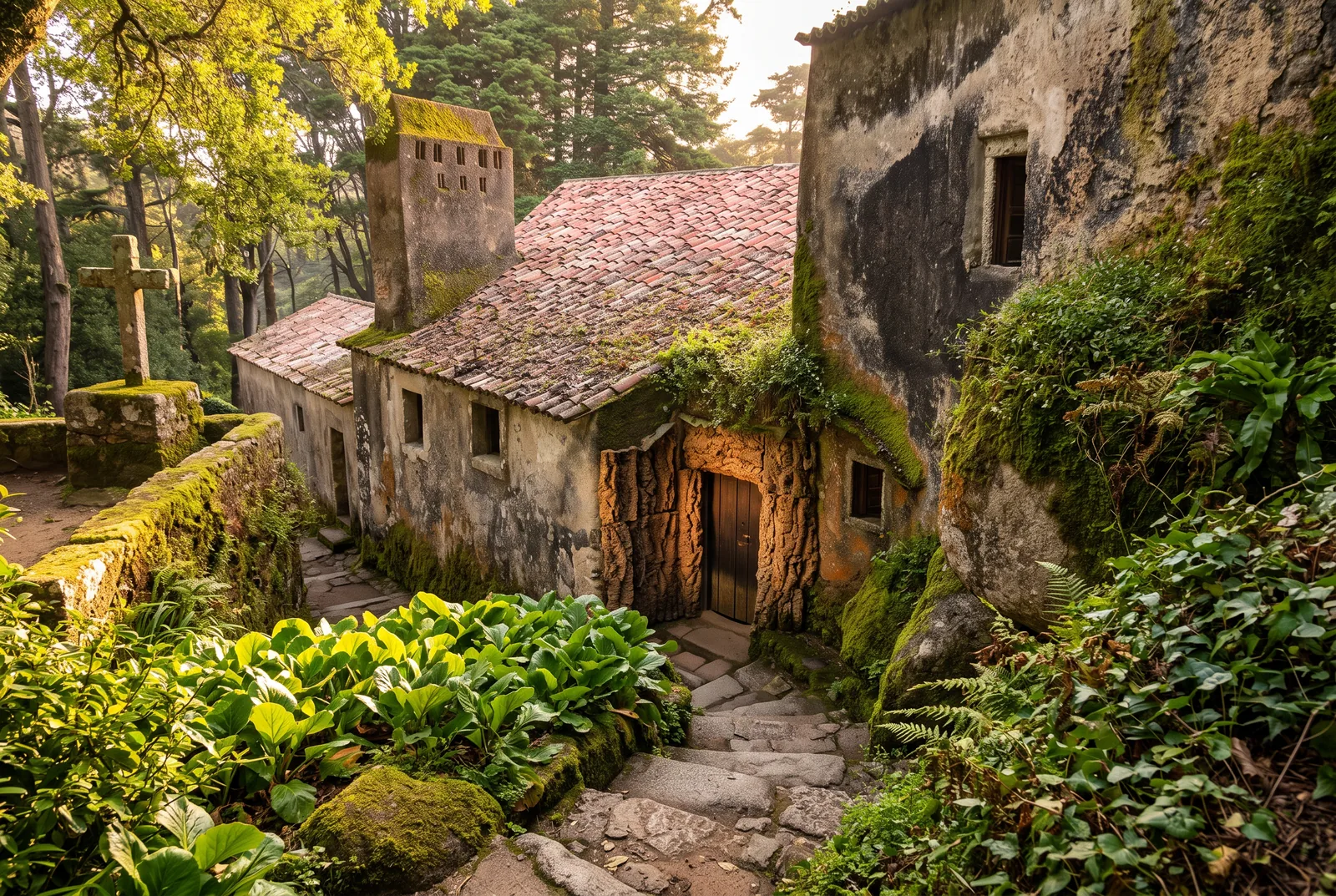
Monserrate is where the crowds are not: a Romantic villa with Moorish and Indian detailing in botanical gardens running from a Mexican garden to a fern valley, and even in August you can be alone under the lace like arches of the central gallery. Serious peace seekers push on to the Convent of the Capuchos, a tiny monastery founded in 1560 whose cells are lined with cork, hidden in the forest and the least visited corner of these hills.
- Ticket 2026: Monserrate €12, the Convent of the Capuchos €11.
- Hours: Monserrate park 9:00 to 19:00, palace 9:30 to 18:00.
- Time needed: an hour and a half to two hours at Monserrate, about an hour at Capuchos.
- Getting there: bus 435 or line 1253 for Monserrate, while Capuchos is realistically a taxi or a tuk-tuk, since the nearest 1253 stop leaves a long walk (map).
- Book: online, though slots here rarely sell out.
- Note: the palace roofs are under restoration until early 2027, so expect scaffolding on the exterior; the gardens and interiors are unaffected.
Sintra ticket prices in 2026 and how to skip the lines
Adult rates as of mid-2026, worth checking on the official Parques de Sintra site.
- Pena Palace and park: €20, or €12 for the park alone.
- Quinta da Regaleira: €20 self guided.
- Moorish Castle: €12.
- Sintra National Palace: €13.
- Monserrate Palace and park: €12.
- Convent of the Capuchos: €11.
- Train from Rossio: €2.55 each way, 2.05 with zapping.
- Bus 434 and 435: €13.50 for 24 hours, a little less online.
- Train and bus combined: €14.00 a day, valid on the CP Sintra line and buses 434 and 435, which beats buying them separately.
- A two palace day: around €60 a person including transport.
- Rule 1: buy everything online. Desk queues at Pena are punishing in July and August; online buyers walk straight through.
- Rule 2: book the Pena interior slot several days ahead in high season, a full week in August, because the timed windows genuinely sell out.
- Rule 3: save the tickets offline, since signal on the hilltops is unreliable and the gate scanners do not care.
- Rule 4: a skip the line ticket skips the ticket office, not the queue at the palace door, one more argument for the first slot.
- Rule 5: if everything is sold out, check the official guided visits, sold separately, which sometimes have space.
What I got wrong on my first visits
Thinking I could see almost everything in one day. On the map, Pena, Regaleira, the Moorish Castle and the historic centre look close together. In practice, between getting around, the climbs, the queues and the time you naturally spend inside each place, the day disappears very quickly.
Taking the car. Driving to Sintra does not necessarily buy you freedom: traffic and parking can end up dictating the whole day.
Underestimating the queue at Pena. This is the place I now plan for most. I do not like arriving in Sintra and deciding on the spot what to see first: if Pena is on the list, I organise it in advance and normally give it priority.
Misjudging how long it takes to move between monuments. It is very easy to look at a short distance on a map and forget how steep Sintra is. Walking one or two kilometres here is not the same as walking that distance in central Lisbon.
Ignoring the microclimate. I have left Lisbon under blue sky and arrived to low cloud and a noticeably different temperature. It is exactly what makes the hills so green, and it means I always carry an extra layer even when Lisbon is warm.
If I were planning a day for a friend now, I would put Pena in the first part of the day and leave Quinta da Regaleira for later. They are very different experiences and together they already give an excellent introduction. And I no longer try to control every minute: Sintra is one of those places where it is worth leaving time to wander into a side street, have a coffee or stop in a garden. Cut the day into 30 minute blocks and you lose part of the charm.
Sintra itineraries: one palace, two palaces or the coast
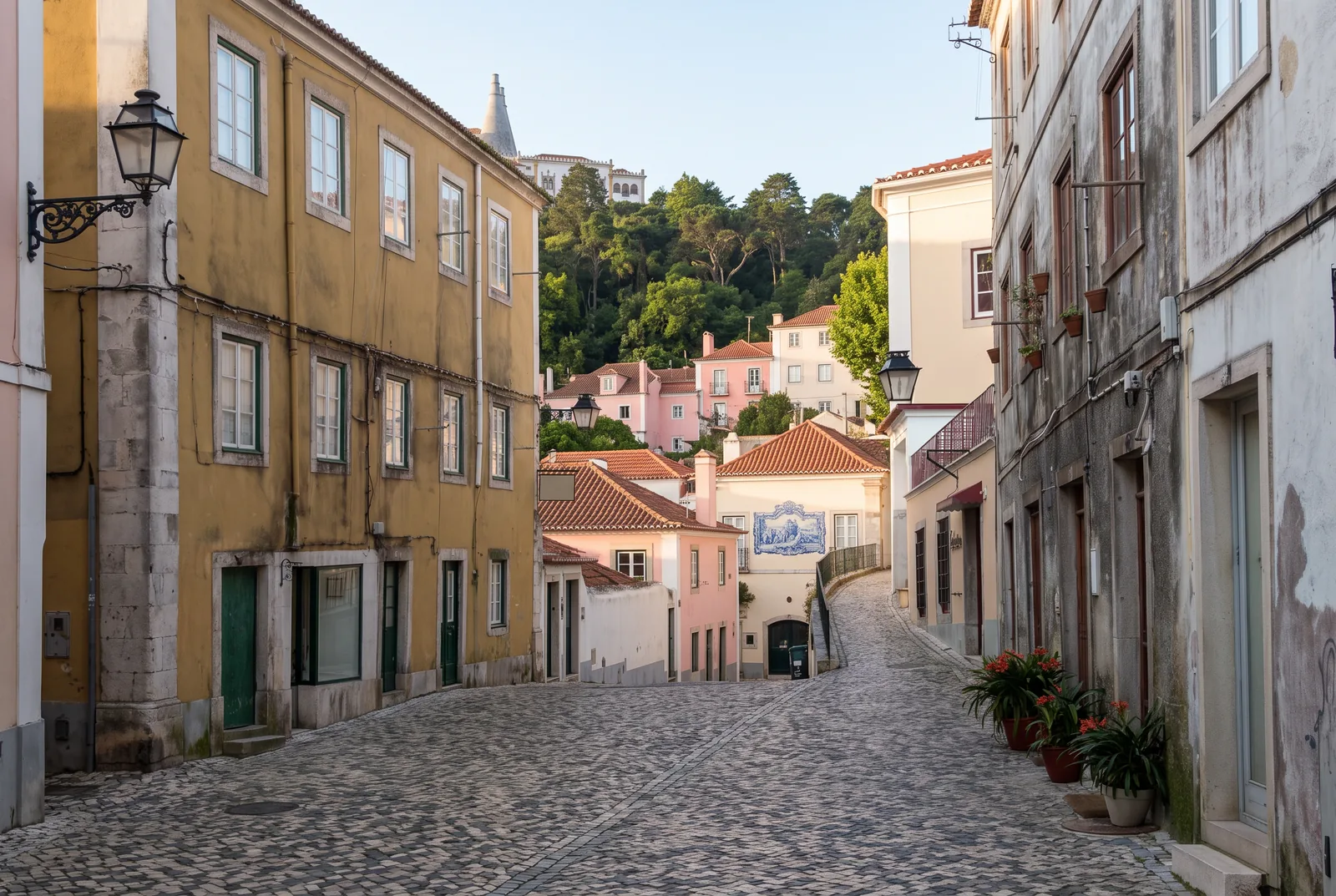
Three shapes of Sintra day trip from Lisbon, in descending order of ambition, all assuming the train.
Full day
Pena park gate at 9:00 and the first palace slot at 9:30, two to three hours for the state rooms, the terraces and part of the park. Down to the Moorish Castle by 11:30, twenty minutes on foot or one stop on the 434, an hour on the walls. Lunch in town at 13:00, Quinta da Regaleira from 14:30 for a full two and a half hours, the Palácio Nacional by 17:15, since last admission is 17:30, if your legs cooperate, then a warm travesseiro and the train home. Eight to ten hours, intense but coherent.
Half day
Pena park gate at 9:00 and the first palace slot at 9:30, two hours, terraces before state rooms, then the 434 down to the centre at 11:30 for a quick lunch and a pastry. Quinta da Regaleira from 13:00 for two hours, back in Lisbon by late afternoon. If Pena does not appeal, swap in the Moorish Castle and the Palácio Nacional.
One palace day
Not everyone wants to march. Arrive mid morning, give Quinta da Regaleira a leisurely two and a half hours, take a long lunch in the old town, tour the Palácio Nacional, then close with a travesseiro and a wander through the lanes before an early evening train. You will see less, but you will taste Sintra rather than sprint through it.
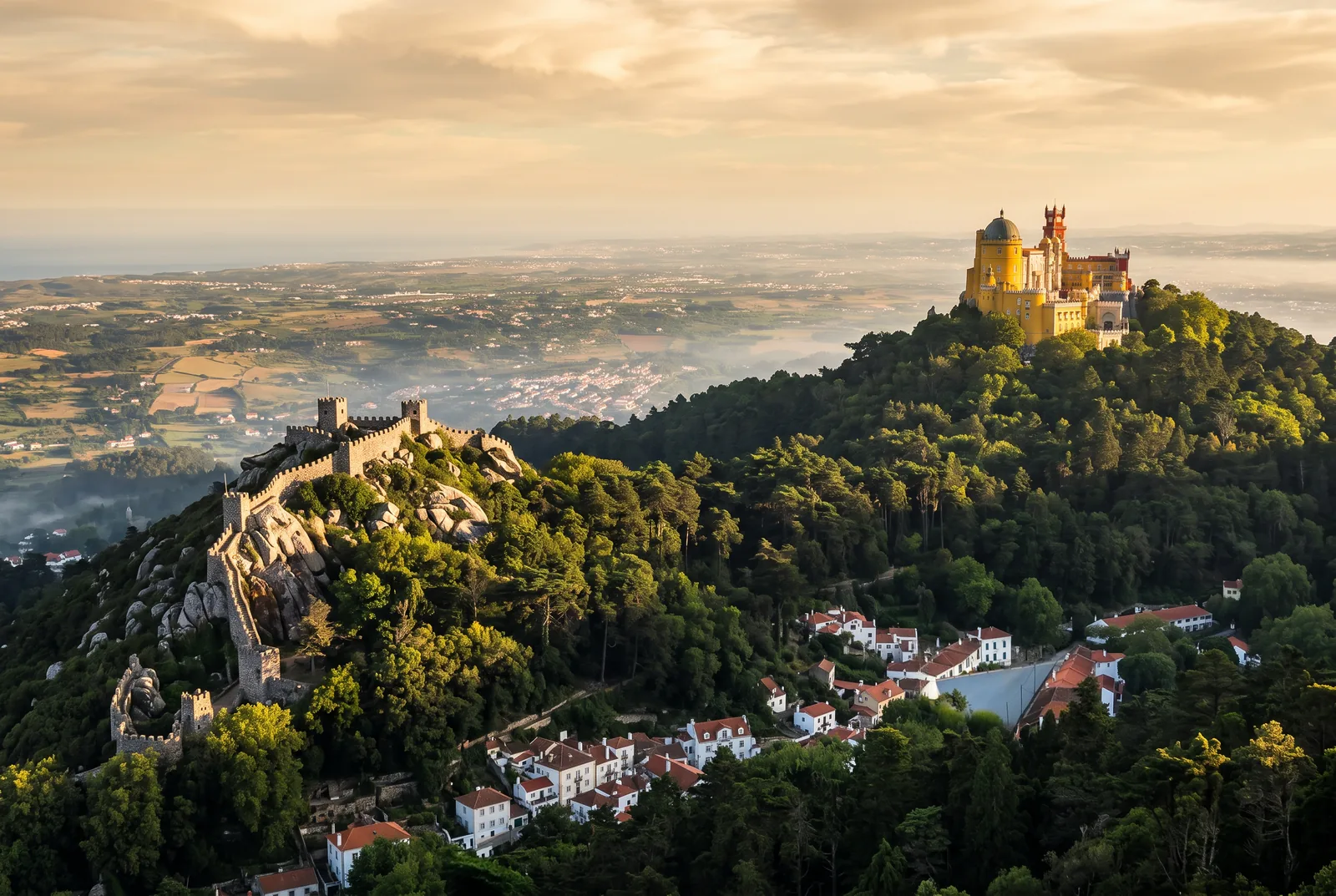
Choosing the pairing shapes everything else. Pena plus Quinta da Regaleira is the classic, fantasy architecture in the morning and mystical gardens in the afternoon. Pena plus the Moorish Castle is the easiest logistically, fifteen minutes apart on the same ridge and the same 434 loop. Quinta da Regaleira plus Monserrate suits garden lovers and anyone allergic to crowds. Whichever you choose, resist the third palace: three is where wonder turns into checklist fatigue.
Cabo da Roca and Azenhas do Mar: stretching the day to the coast
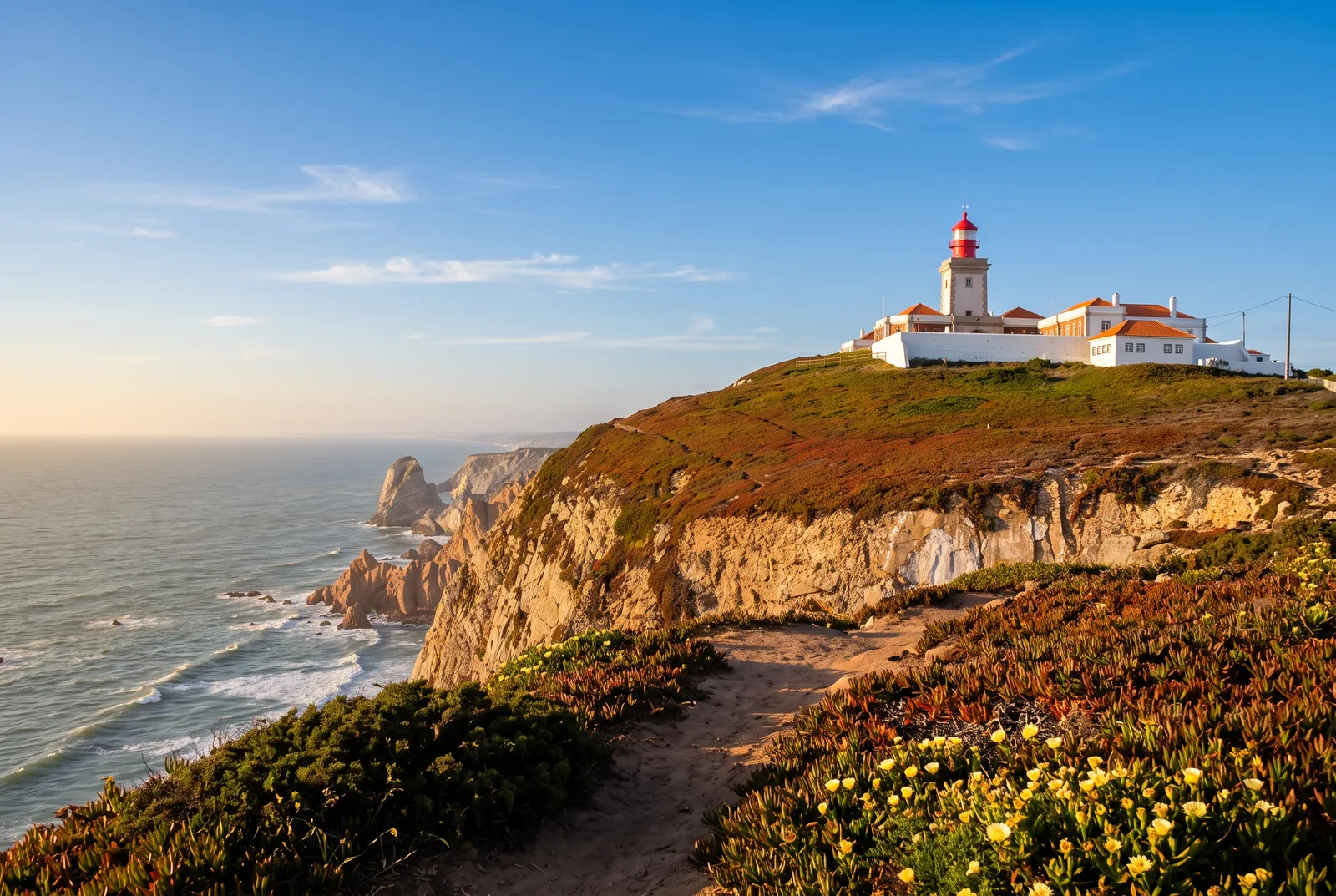
If palaces are only half your reason for coming, the Atlantic coast delivers the other half. Cabo da Roca is the westernmost point of mainland Europe, a windswept headland of cliffs, a lonely lighthouse and a stone monument quoting Camões, here is where the land ends and the sea begins. The classic move is to turn the day trip into a loop: a morning palace, a bus to the cape, then Cascais for dinner and the flat train back to Cais do Sodré, a leg our Cascais travel guide covers in detail.
- Getting there: line 1253 from outside Sintra station, about 40 minutes, calling at Quinta da Regaleira, Seteais and Monserrate (map).
- Fare: €2.70 on board, or €1.55 with zapping on a Navegante card.
- Time there: 45 minutes to an hour covers the monument, the lighthouse first lit in 1772, and the views.
- Weather: windier and colder than Sintra in any season, so bring a windproof layer and stay back from the edges, where the paths beyond the barriers are dangerous.
- Onward: line 1624 carries on to Cascais, and the train home from there.
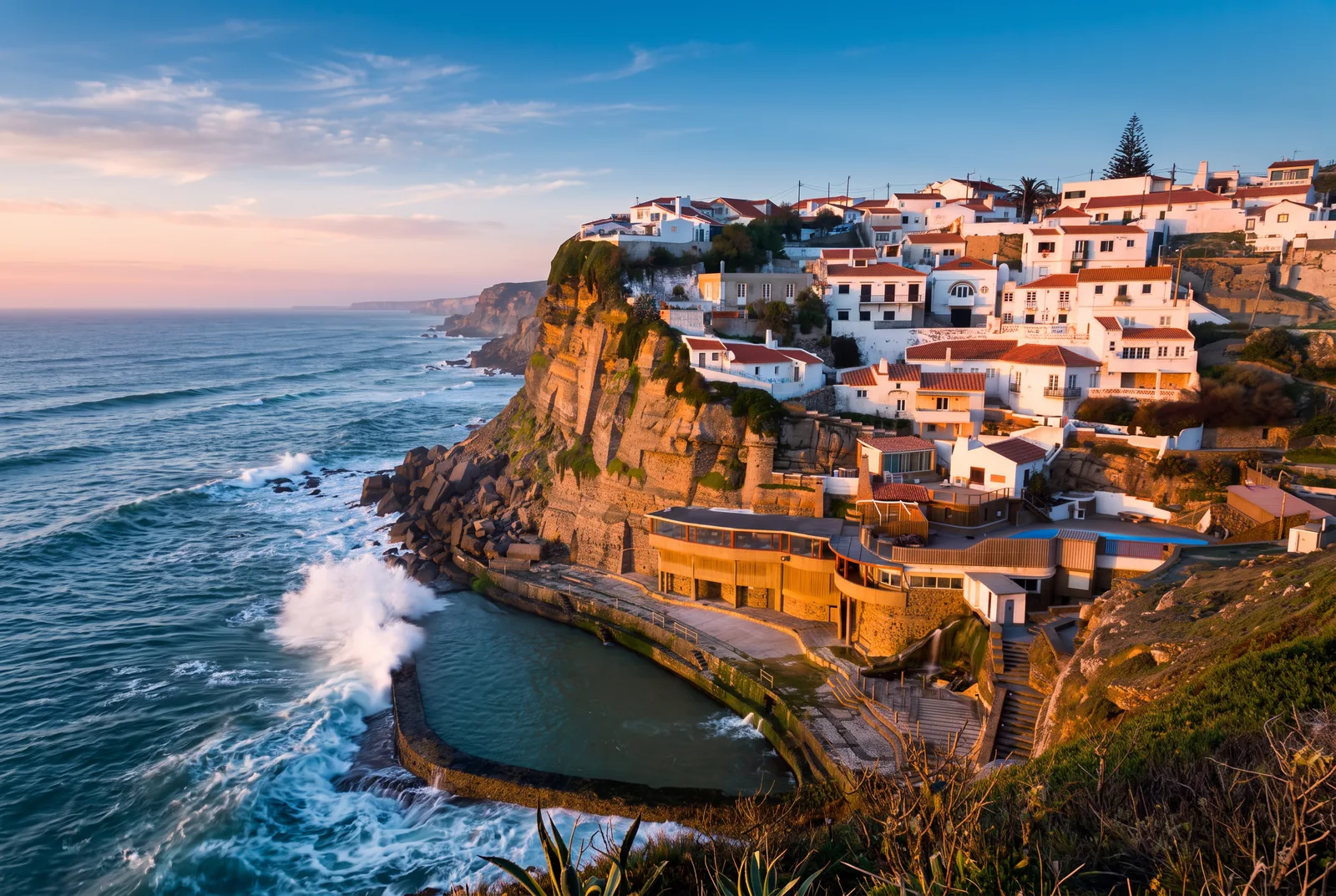
Azenhas do Mar is the quieter alternative, a whitewashed village spilling down a cliff face above a small beach and a natural seawater pool, one of the most photographed views on the Portuguese coast. It is a less monumental afternoon than the cape, more lived in, with a few terraces above the water and almost no coaches. Either way, the coast only fits a day with one palace in it, not two.
- Getting there: line 1254 from Portela de Sintra out to Praia das Maçãs and on past the village (map).
- By tram: in season the Sintra tram, running since 1904, rattles eleven kilometres from Estefânia to Praia das Maçãs in about 45 minutes, and Azenhas do Mar is a short walk or bus hop on from there.
- Time there: an hour, longer if you swim in the pool below.
- Best time: late afternoon, when low sun sets the white houses glowing.
- Fits with: one palace, never two.
Where to eat in Sintra: travesseiros first

A little history makes the pastries taste better. Piriquita has been baking in Sintra since 1862, its travesseiro, a flaky pillow of puff pastry filled with almond and egg custard, was created there in the 1940s, and the recipe is still secret. Order them warm, the difference is night and day. The queijada is older, a small cheese pastry with cinnamon and lemon, in the records since medieval times and still sold in paper wrapped batches of six. If the queue at the original Piriquita is daunting, its second shop a few lanes uphill moves faster.
For lunch, timing is the weapon. Sit down at noon or after 14:30 and you will eat calmly; arrive at 13:00 in August and you will wait everywhere. Grilled fish or bacalhau à Brás are the safe orders in the centre. On a packed day, take the picnic route: bread, cheese and fruit bought before you set out, eaten on a bench in Pena Park, which has one of the best dining views in Portugal.
Practical tips
- Tickets: buy online for Pena and Regaleira, and check current hours.
- Shoes: cobbles, steps and steep gradients all day, nothing new and nothing smooth.
- Layers: the microclimate runs cooler and foggier than Lisbon, even in summer.
- Water: the parks are large and the fountains few.
- Offline maps: signal is patchy on the hills, so download the area first.
- Mist: fog is part of Sintra, not a ruined day, and the Moorish Castle in cloud is unforgettable.
- Backpacks: large ones are usually turned away at the palace state rooms, so travel light.
- Cash: cards work at every official monument, but tuk-tuks and the coastal buses prefer coins.
- Late trains: services back to Lisbon run until late, so no need to bolt at 17:00 with the stampede.
- Tourist office: there is one near the train station for maps and current opening hours.
Frequently asked questions about a Sintra day trip
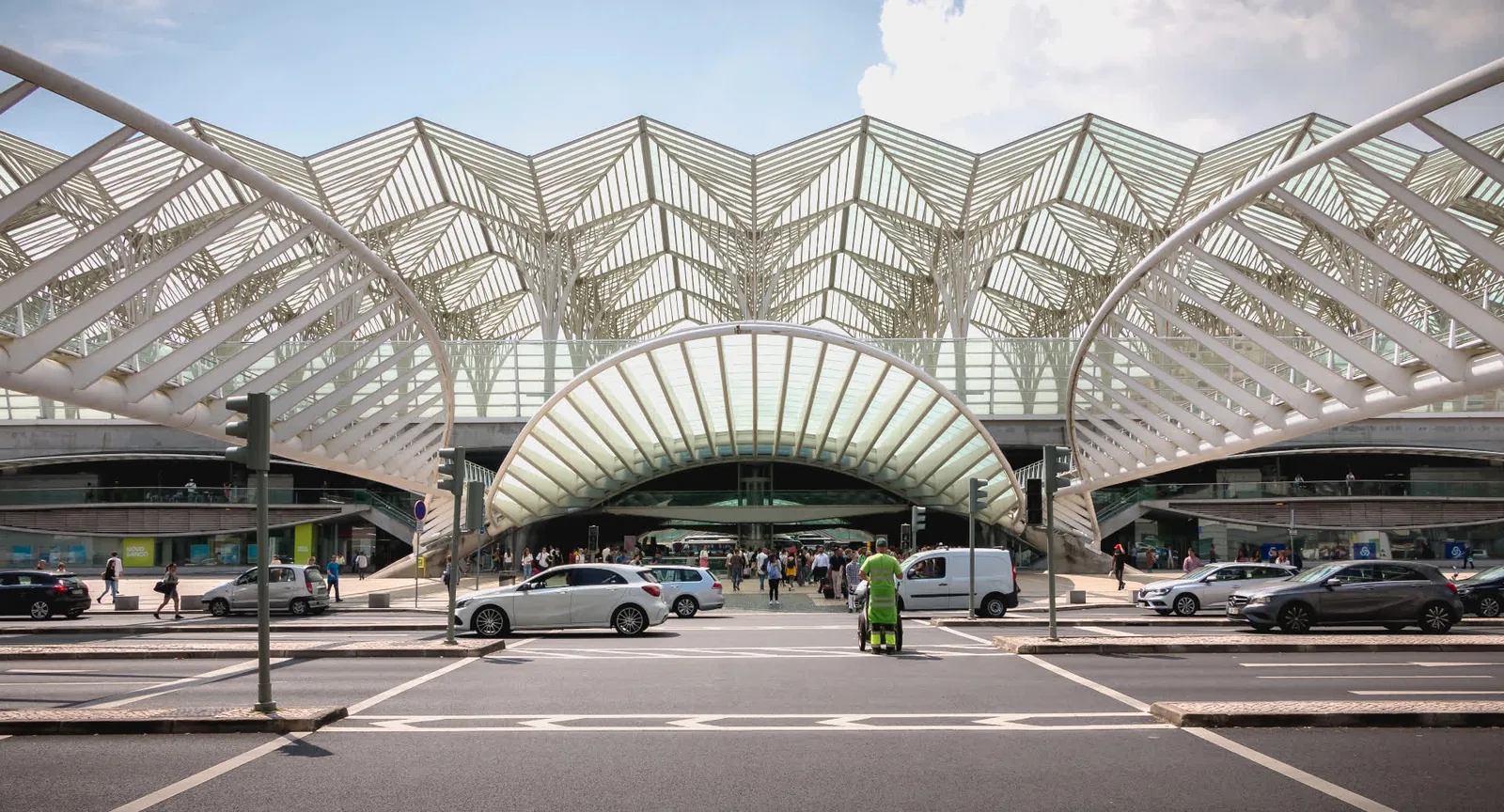
Should we drive or take the train?
Far the most common question, and for most people the answer is the train. It leaves you in the centre of town, costs a couple of euros, and removes the two things that ruin Sintra days.
Is one day enough?
Yes for an excellent first experience of Sintra, no for seeing everything, and it helps to know that from the start. Asked how many palaces in one day are realistic, I say two, at most three, rather than turning the day into a checklist. And to the question behind the question, is Sintra worth visiting, the answer is an easy yes: nowhere else near Lisbon puts this much architecture inside this much forest.
Pena or Regaleira, if we can only do one?
A hard question, because they are completely different. Pena is the fairytale scene everyone associates with Sintra; Regaleira is gardens, tunnels, grottoes and the famous initiation well. For a first visit I would try to do both.
How long does the trip really take?
Treat Sintra as a full day programme. Even though the journey is short, between leaving the apartment, arriving, visiting, having lunch and coming back, it easily fills most of the day.
Can we add Cascais and Cabo da Roca?
You can, but I would not on a first visit. Sintra deserves the time, and fitting Pena, Regaleira, the centre, Cabo da Roca and Cascais into one day means spending too much of it in transit. If the choice is Sintra or Cascais on a single free day, take Sintra: the palaces need the early start, while Cascais rewards a looser one, as our Cascais guide explains.
Will the weather be like Lisbon?
Not necessarily. You can leave Parque das Nações in sunshine and find fog and a much lower temperature in the hills, so a light jumper in the bag is nearly always a good idea. And do not leave tickets for the busiest monuments until you arrive: a little planning before you leave Lisbon saves a lot of time. If you are still choosing a base, our Lisbon neighbourhood guide compares the districts, and if the trip continues beyond the mainland, Madeira makes a spectacular second act, swapping palaces for cliff top viewpoints, the top sights of the island and its best levada walks.
If I had to reduce the advice to one line: go early, take the train, choose few places, and enjoy them slowly. Sintra is much more pleasant once you stop trying to see it all, and that is the day we plan for guests staying with Superior Rentals in Lisbon.
Where to stay for an easy Sintra day
A Sintra day starts and ends with the train, so it pays to stay where the stations are simple. The Riverside apartment in Parque das Nações, by Superior Rentals, puts Oriente station, one of the departure points for Sintra, five minutes on foot from your door, and Rossio's atmospheric platforms are a quick metro ride away. After a day of palaces you come home to river views and dinner along the waterfront. Our Lisbon neighbourhood guide compares the city's areas, and the Lisbon page has the full details.
Related topics: Viewpoints, Hikes, Museums, Day trips