Madeira beaches: the best beaches, natural pools and Porto Santo
Pedro Silva · 12 min read · Updated 11/Oct/2026
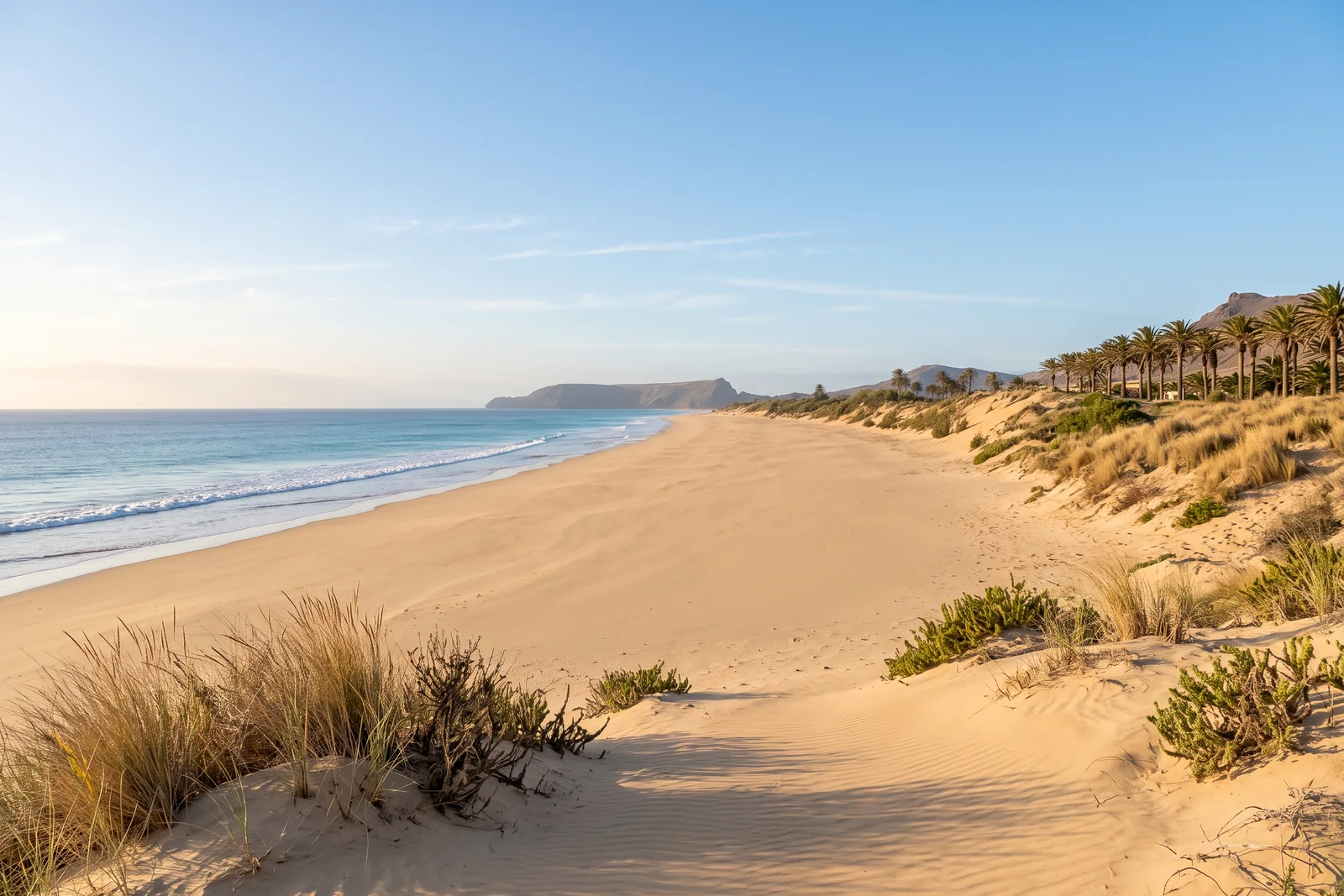
Madeira has few sand beaches and a lot of sea: ten places to swim, from Funchal's bathing complexes to the natural pools of Porto Moniz and the long golden beach on Porto Santo, with prices, lifeguards and the honest catches.
Does Madeira have beaches? The short answer
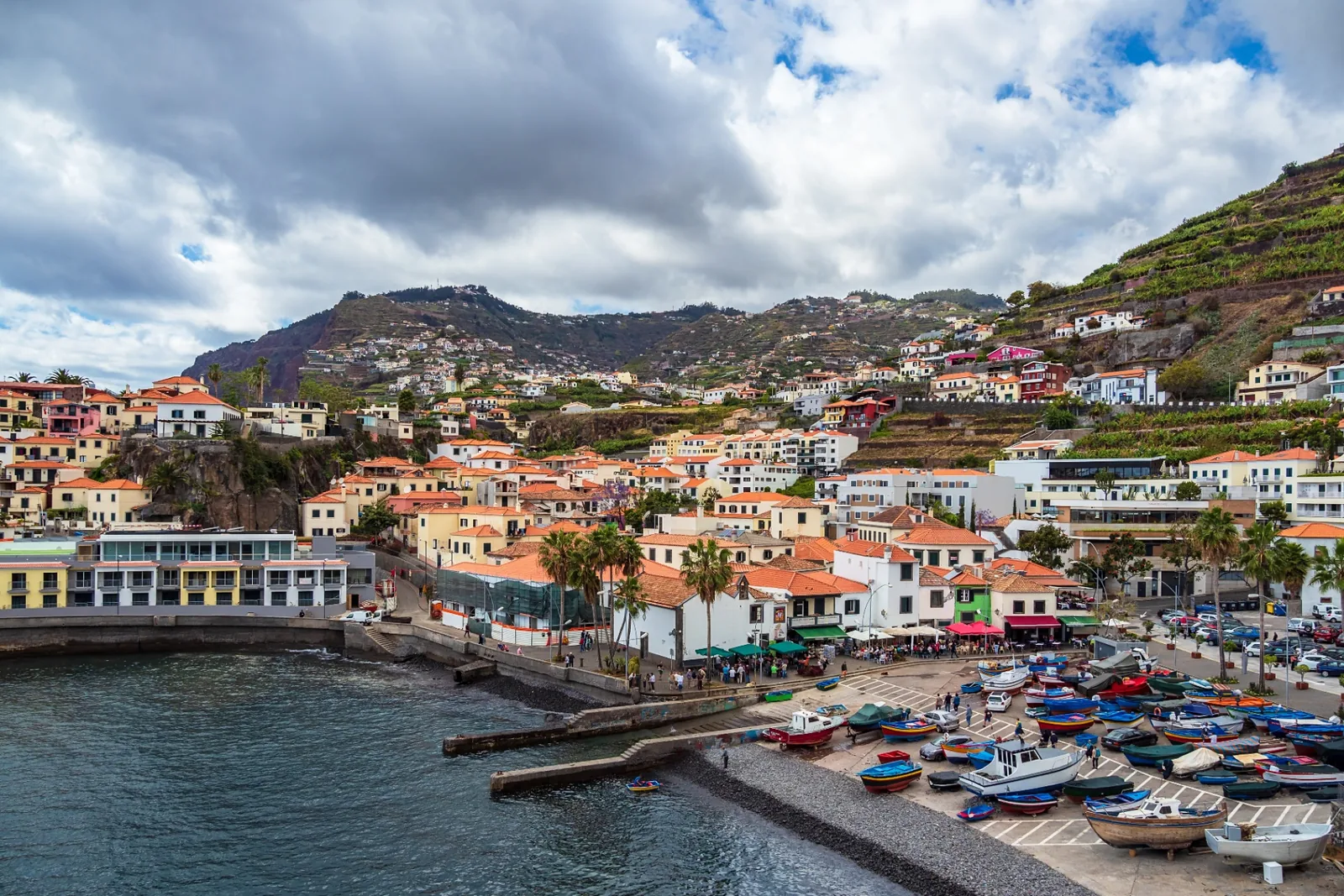
Yes, but not the kind most people picture. Madeira is a volcanic island with a steep, rocky coast. Most of its beaches are pebble or black sand. Natural sand is rare: Visit Madeira lists Prainha (natural volcanic sand) and Seixal and Alagoa (black sand) among its sand beaches, and the golden beaches at Calheta and Machico are imported. The long sand beach is on Porto Santo, the neighbouring island, two hours away by ferry.
What Madeira does have is sea access: bathing complexes and natural rock pools all round the coast, with ladders and platforms straight into the Atlantic. That is how most people here swim.
- Swim in Funchal: the Lido and Ponta Gorda complexes, €6 entry in 2026, lifeguards all year.
- Free beach in Funchal: Praia Formosa, about 2 km of pebble.
- Golden sand on Madeira: Calheta in the west, Machico in the east, both imported.
- Natural sand: Prainha, near Caniçal, and the black sand at Seixal.
- Natural pools: Porto Moniz, €3, open all year.
- A real sand beach: Porto Santo, about 9 km of it.
Sand, pebble or pool: how swimming works in Madeira
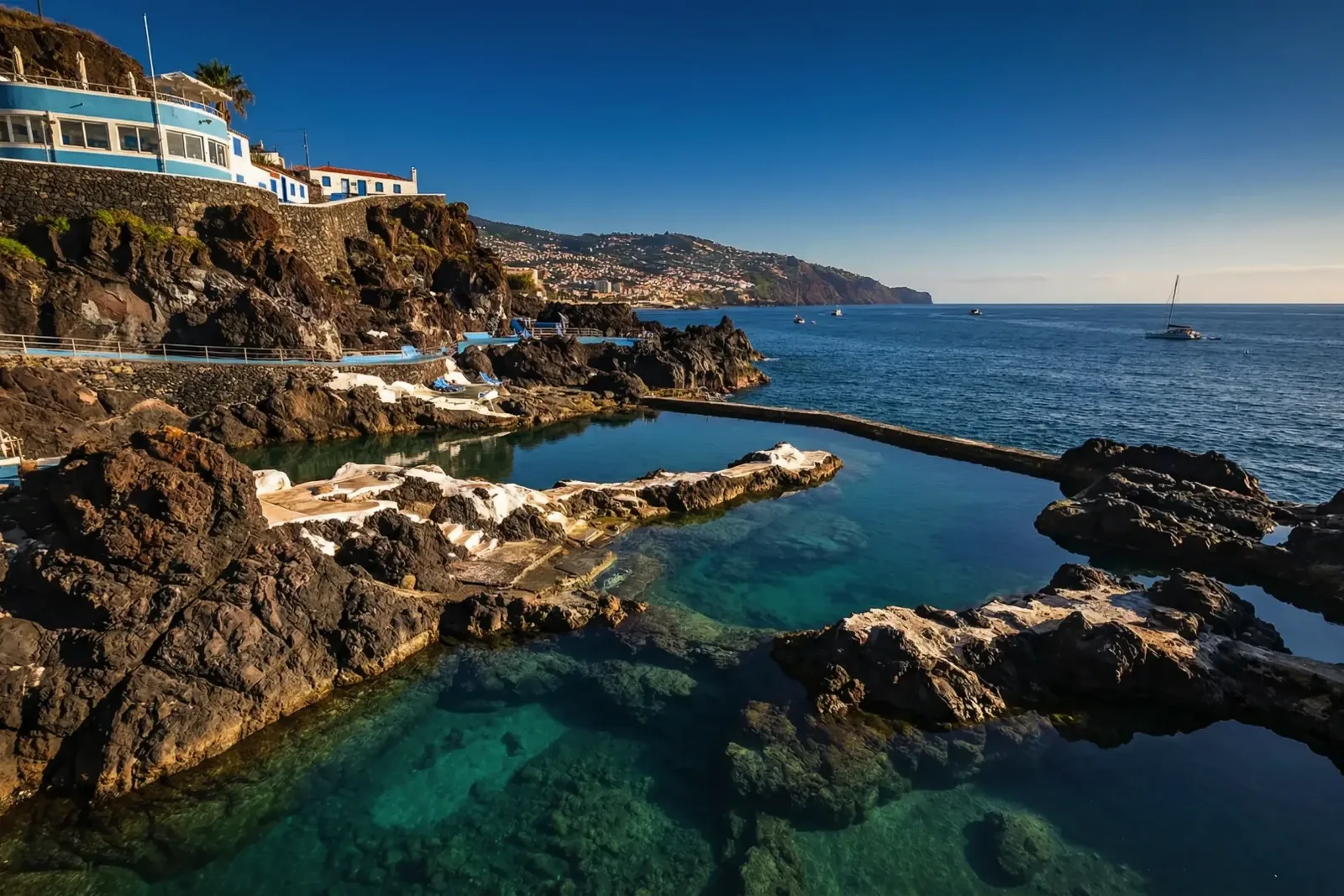
Guests ask me one question more than any other: what is the best sand beach near Funchal? My answer starts somewhere else. The typical swim in Madeira is not on a beach. At the Lido, Ponta Gorda or Doca do Cavacas you get an excellent day in the sea without a traditional beach at all. Some of the best swims I have had were at bathing complexes and natural pools, going straight into the Atlantic from the rock. Do not come to Madeira only looking for sand.
Three types, three sets of rules:
- Bathing complexes: pools filled with seawater, sun decks and steps into the sea. Paid, staffed, lifeguarded. The safest option.
- Pebble and black sand beaches: free, open, and steep. The water gets deep fast and the stones are hard on bare feet. Water shoes help.
- Natural rock pools: lava pools filled by the tide. Spectacular, but exposed to the swell, and some are closed or unsafe on rough days.
The other rule is about the weather. Do not choose a beach by looking at the sky in Funchal. The north coast can be under cloud while the south is perfect, or the other way round. Decide in the morning, and check the wind, the swell and the forecast for that part of the island. The most common mistake I see is driving an hour to one particular beach without checking any of it.
The best beaches in Madeira
Ten places to swim, from Funchal outwards, then the north coast, then Porto Santo. Blue Flag status is the 2026 list; it is reviewed every year.
1. Funchal's bathing complexes: Lido, Ponta Gorda, Barreirinha and Doca do Cavacas
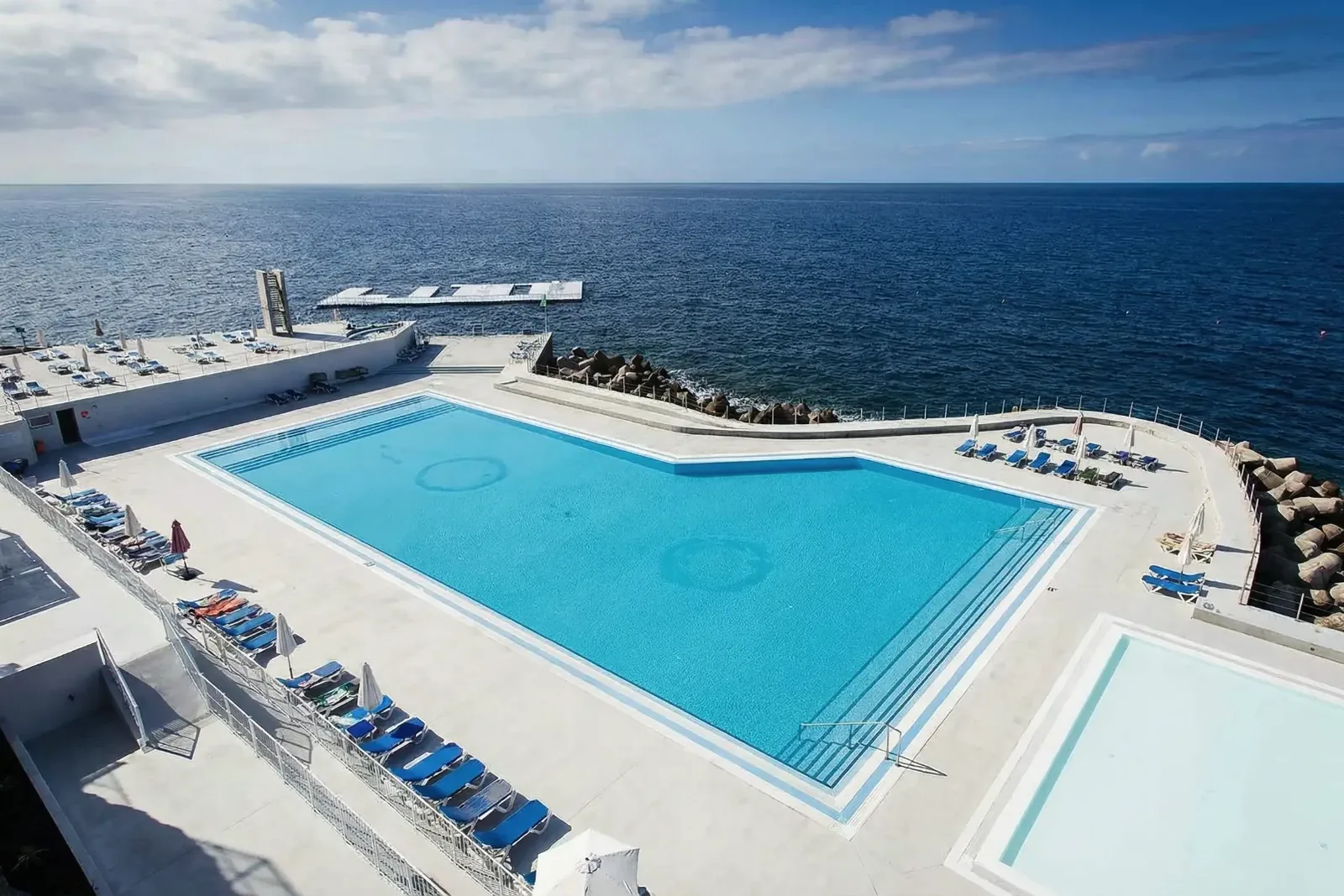
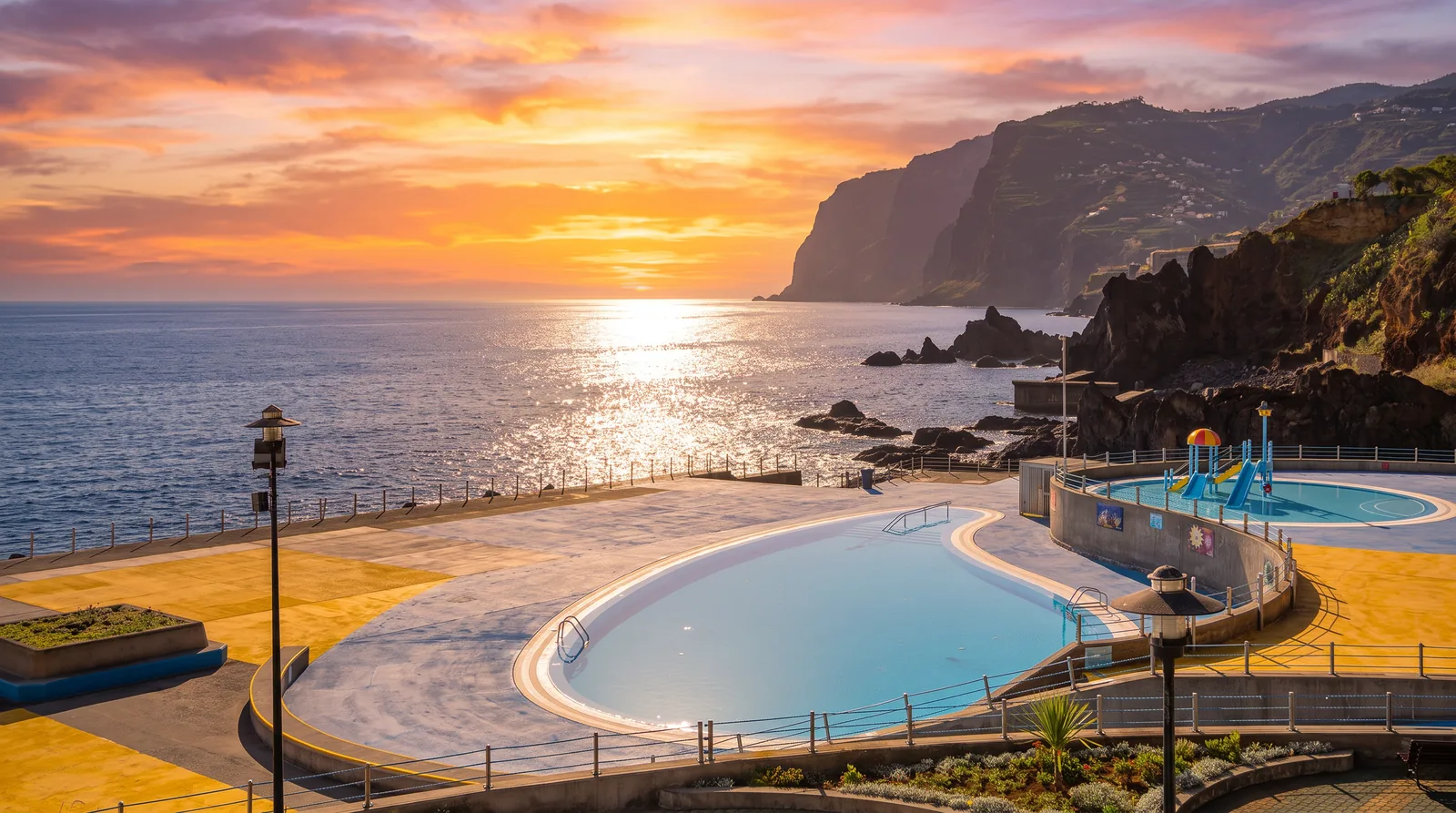
Funchal's swimming is run by the municipal company Frente MarFunchal. The Lido is the main complex: three seawater pools (two of them for children) and ladders straight into the sea at several points. Ponta Gorda, to the west, has two saltwater pools, a natural tidal pool and a solarium of about 5,700 m². Barreirinha, in the old town, is smaller and calmer, good for snorkelling. Doca do Cavacas is a set of natural lava pools under a cliff, with a view to Cabo Girão.
I swam at the Lido in July 2022, at Ponta Gorda in August 2023 and at Doca do Cavacas in September 2023. One ticket covers all four. The Lido guide has the detail on each. Our Beachfront penthouse is five minutes on foot from Ponta Gorda and about fifteen from the Lido complex, so for guests a swim here is a morning habit, not an outing.
- Cost: €6 adult, €2 ages 7 to 17 (2026 tariff).
- Hours: seasonal; from 1 to 24 October 2026 the Lido, Ponta Gorda and Barreirinha open 9:00 to 18:30.
- Lifeguards: yes, including outside the summer season.
- Blue Flag 2026: Lido, Ponta Gorda and Barreirinha yes; Doca do Cavacas no.
- Best for: a safe sea swim any month of the year.
2. Praia Formosa
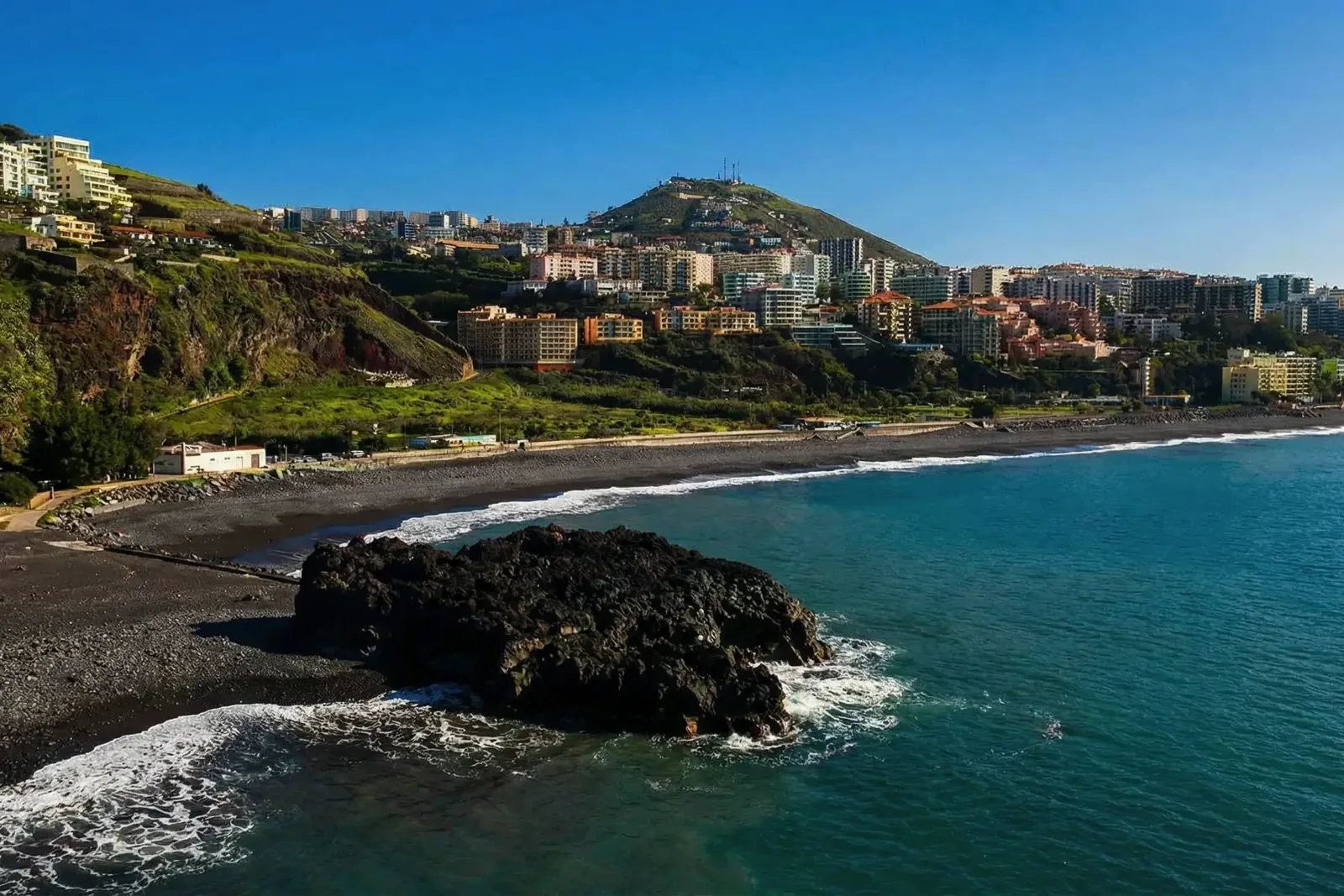
Praia Formosa is Funchal's free beach: about 2 km of rolled pebble west of the Lido, with patches of black sand in the bathing season. There are showers, toilets, bars and parking, and lifeguards in season. The shoreline shelves quickly. I went in August 2023. Wear water shoes; the entry is stonier than it looks.
- Cost: free.
- Type: pebble with some black sand.
- Getting there: on foot along the promenade from the Lido.
- Blue Flag 2026: yes.
- Skip if: you want soft sand.
3. Caniço: Garajau and Reis Magos
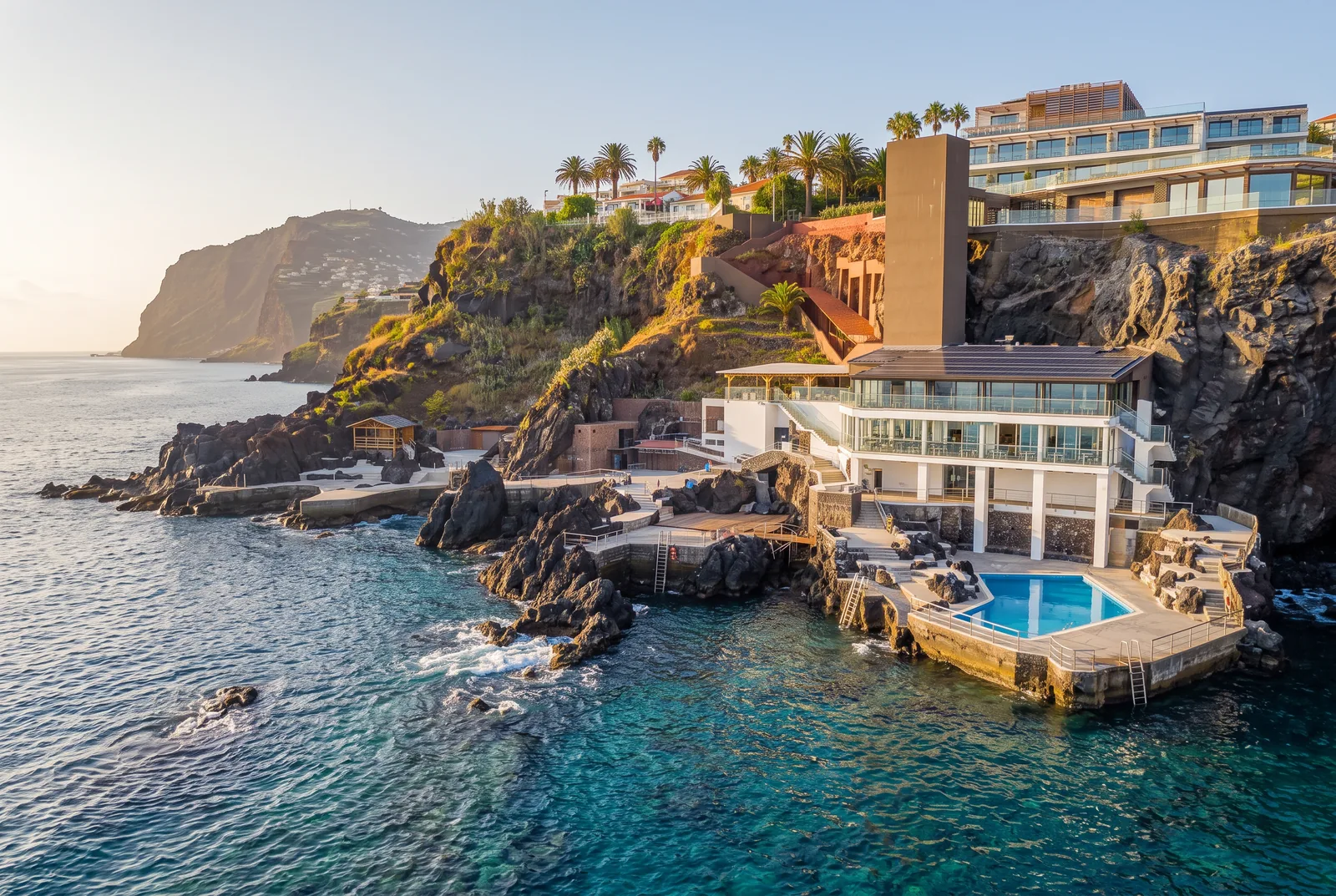
East of Funchal, Caniço has two options. Garajau is a pebble beach inside the Garajau partial marine reserve, below the Cristo Rei statue, reached by a cable car or a steep road. The water is clear and the reserve makes it one of the better places on the island for snorkelling from the shore. Reis Magos is a small beach by an old fort in Caniço de Baixo, with a Blue Flag in 2026. Neither is a sand beach.
- Getting there: about 10 minutes from central Funchal by car, according to Visit Madeira; the cable car runs 10:00 to 20:00 in summer, 10:00 to 18:00 in winter.
- Type: pebble.
- Blue Flag 2026: Reis Magos yes; Garajau no.
- Best for: snorkelling, a short trip from Funchal.
4. Machico
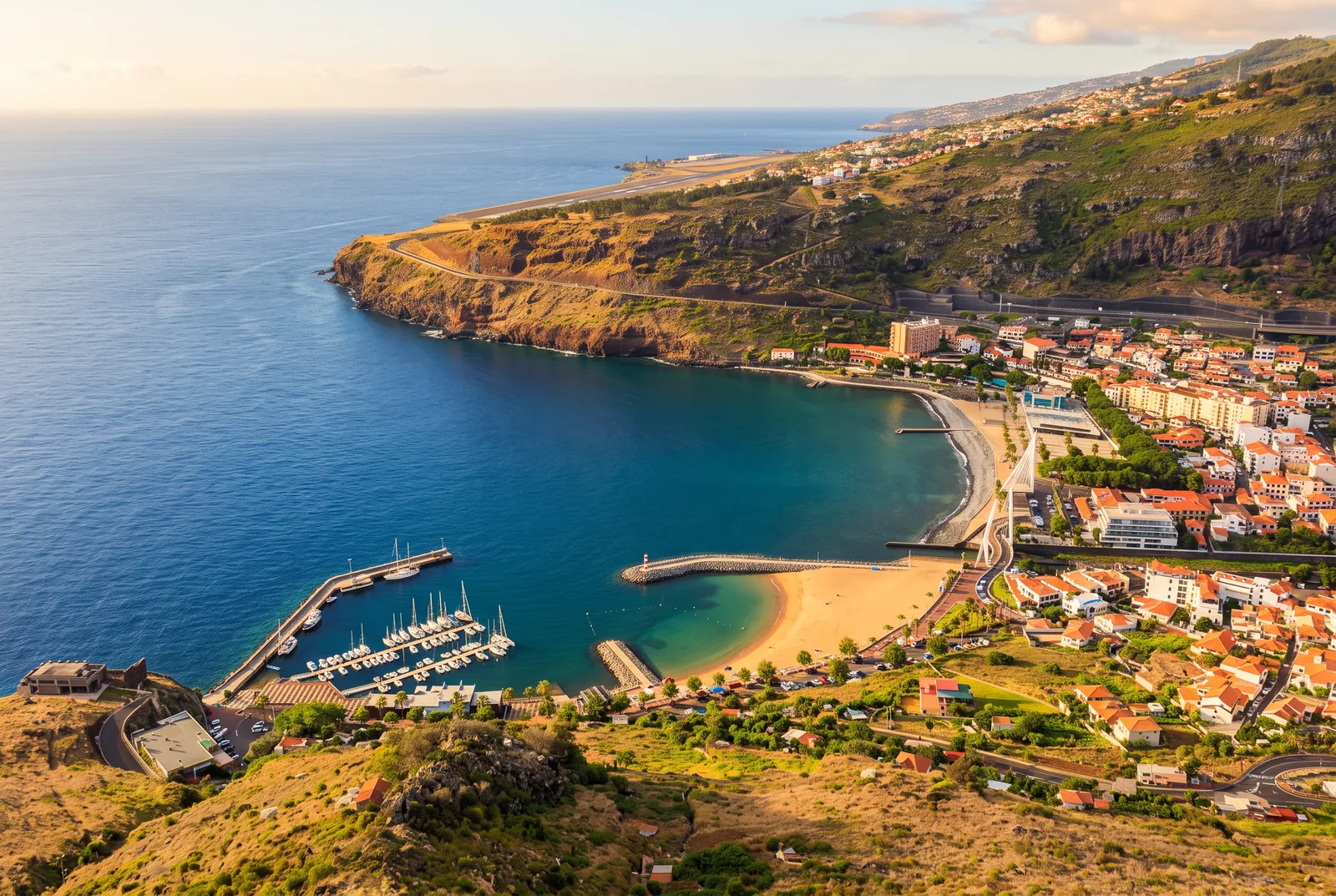
Machico has a golden sand beach at Banda d'Além, on a sheltered bay on the east coast. The sand is imported. The water is calm, the beach is free, and the town has places to eat a short walk away. It is the closest golden sand to Funchal and to the airport.
- Type: imported golden sand.
- Water: sheltered bay, usually calm; lifeguards in season (16 June to 27 September in 2026).
- Blue Flag 2026: yes.
- Best for: sand with no long drive.
5. Prainha
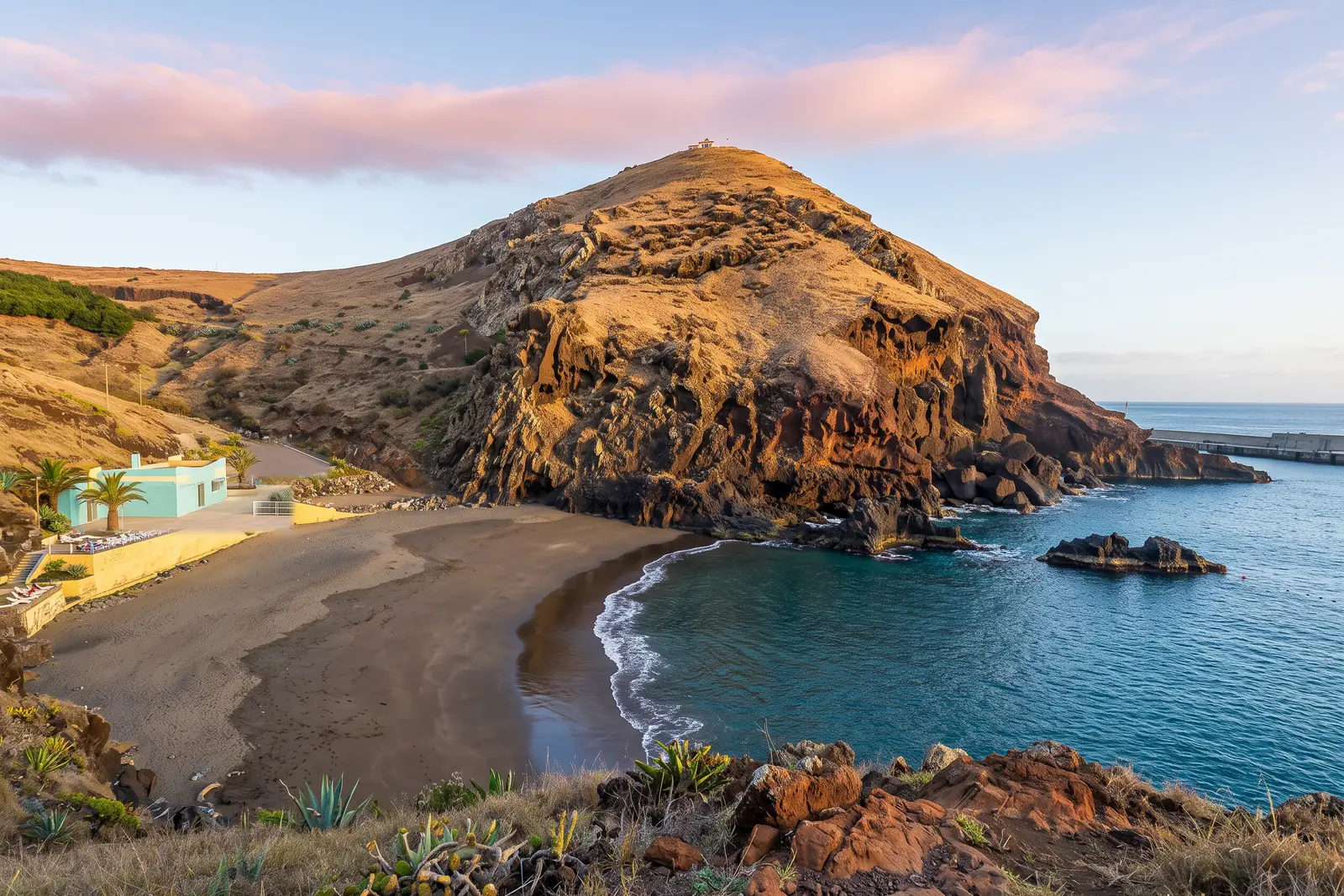
Prainha, near Caniçal, is one of the few natural sand beaches on the island: dark, copper coloured volcanic sand in a small cove, close to the start of the Ponta de São Lourenço peninsula. The landscape is dry and bare, unlike the rest of Madeira. There is a restaurant and basic facilities. I went in September 2024. It is close to the start of the PR8 walk on Ponta de São Lourenço, so the two fit in one morning.
- Type: natural volcanic sand.
- Water: lifeguards in season (30 June to 27 September in 2026); classed as limited use.
- Blue Flag 2026: yes.
- Skip if: you want a long beach; the cove is small.
6. Calheta
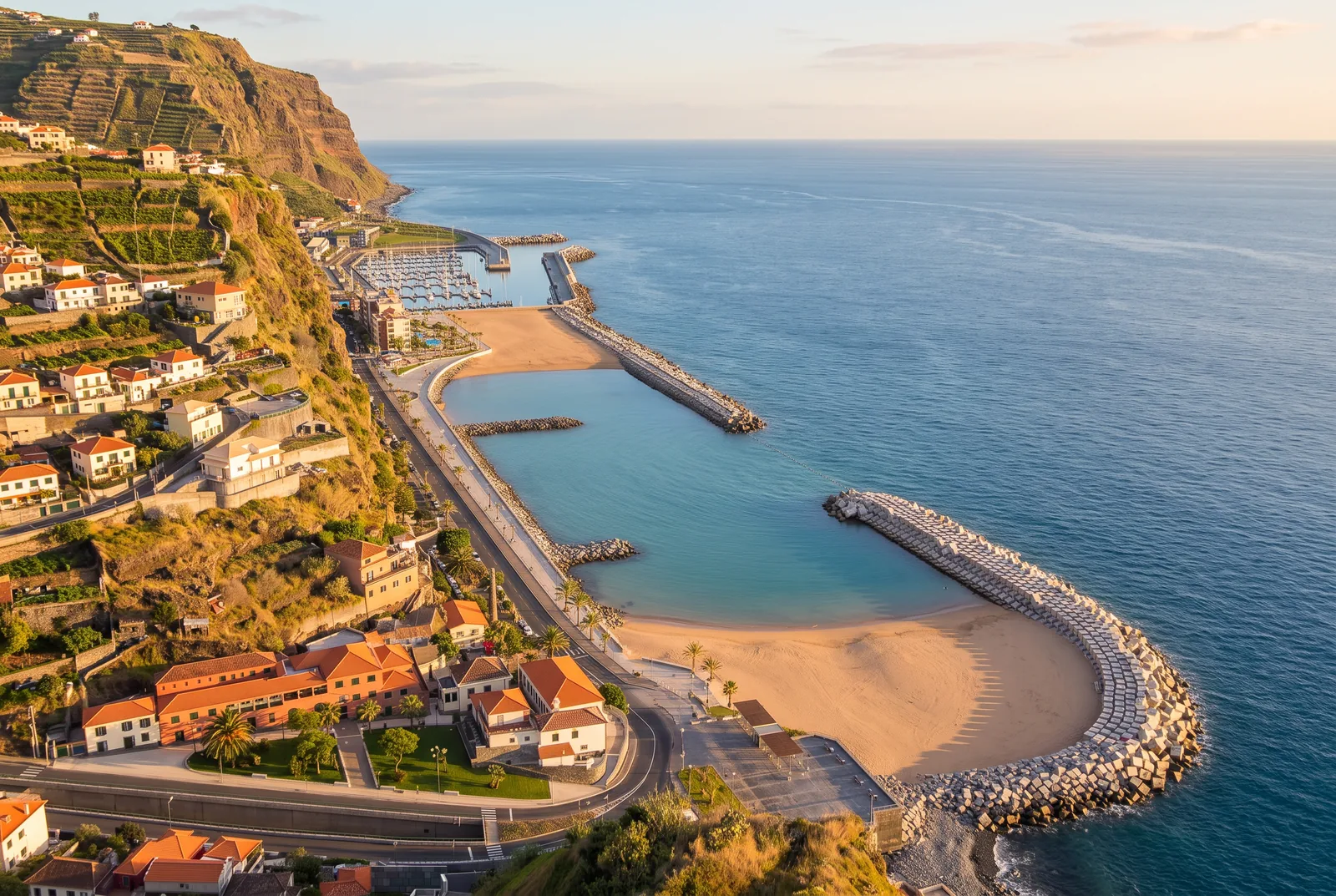
Calheta was the first artificial beach on the island, opened in 2004 with golden sand brought from Morocco. It is about 100 metres long, held between two breakwaters beside the marina, so the water is calm. Entry is free; sunbeds and parasols are available. I went in June 2025. It is a good beach. It is also an engineered one, and it is a long way to drive only for that. Combine it with the west coast.
- Type: imported golden sand.
- Water: calm, sheltered by breakwaters; lifeguards in season (29 June to 30 September in 2026).
- Blue Flag 2026: yes.
- Skip if: you came for wild coastline.
7. Porto Moniz natural pools
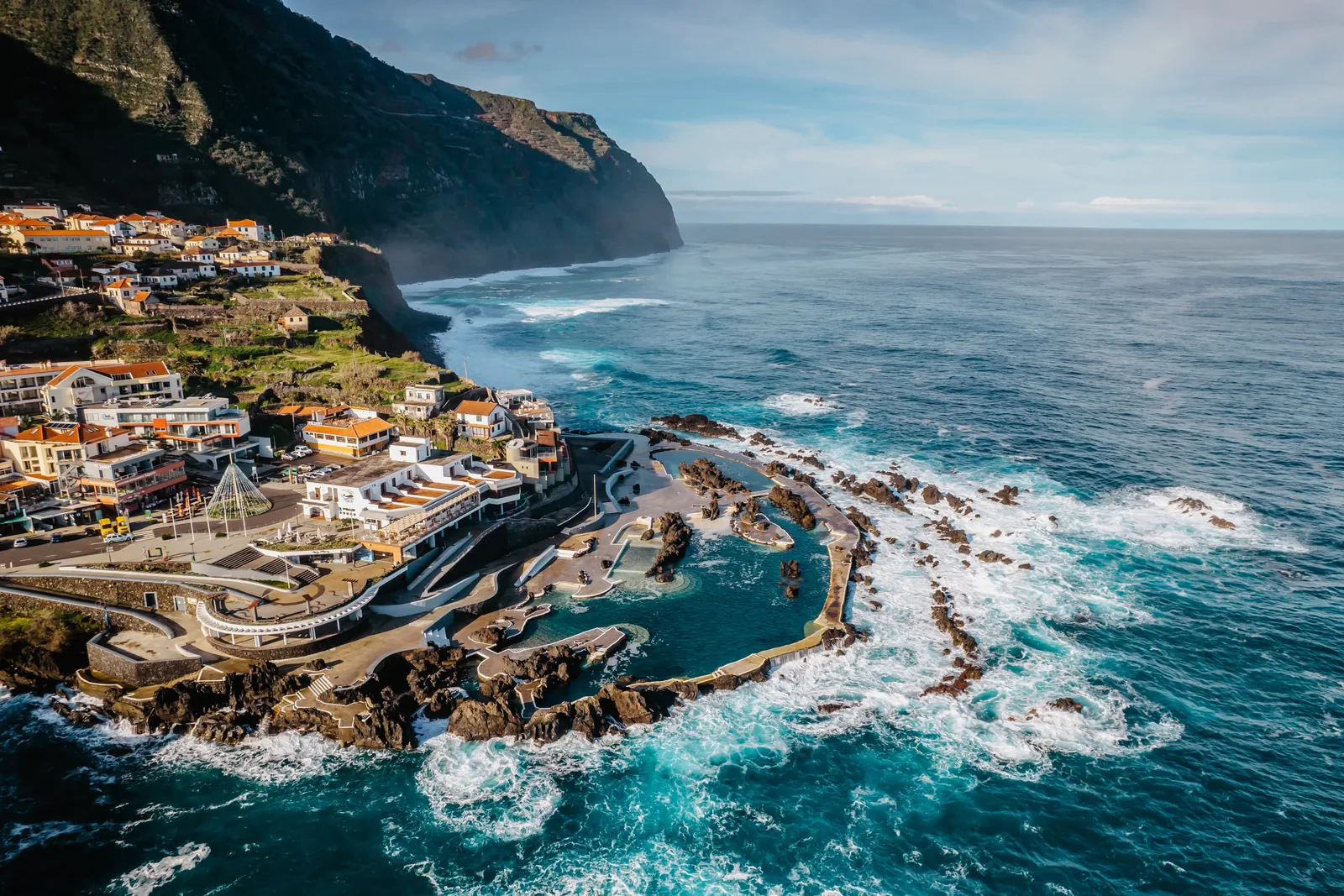
On the north-west tip of the island, Porto Moniz has some of the best-known lava pools in Madeira. The municipal complex is about 3,800 square metres of seawater pools in the volcanic rock, around 2 metres deep, with lifeguards, changing rooms and a bar, open all year. Next to it, the Cachalote pools are free and unsupervised, with rougher rock. I swam here in May 2024. Arrive early. The difference between the pools before the crowd and the pools at midday is enormous.
- Cost: €3 for the municipal pools; the Cachalote pools are free.
- Hours: 9:00 to 17:00 in winter, 9:00 to 19:00 in summer.
- Blue Flag 2026: yes (municipal pools).
- Watch out: heavy swell can make the pools unusable; check before driving.
8. Seixal
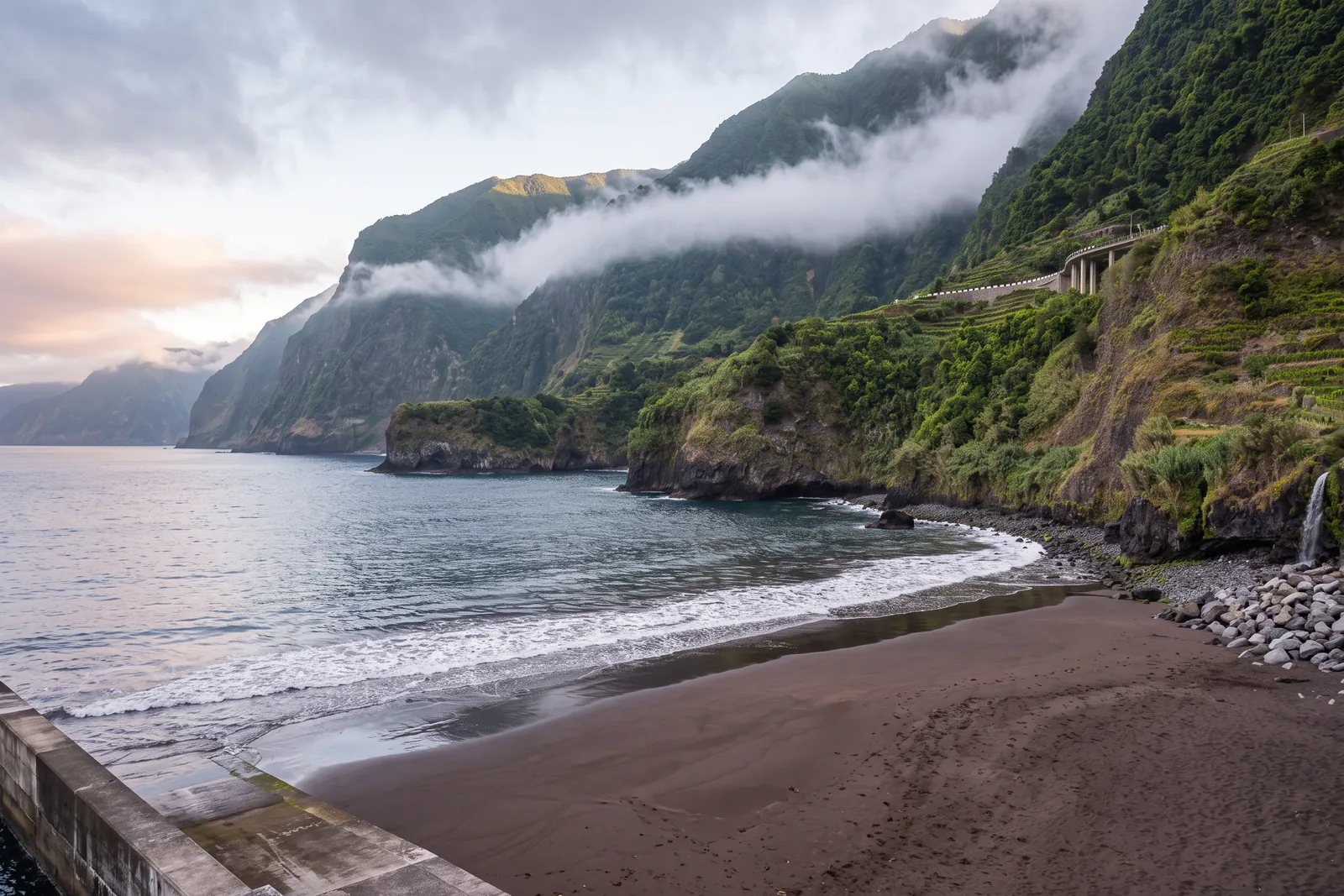
A few kilometres east of Porto Moniz, Seixal has a small black sand beach beside the harbour, with green cliffs and waterfalls behind it. The beach is free, and so are the pools at the Seixal Clube Naval nearby. I was here in May 2024, on the same trip as Porto Moniz. The north coast takes the swell first and hardest, and parking is limited. It has no Blue Flag.
- Type: natural black sand.
- Cost: free.
- Lifeguards: on the beach in season (1 June to 30 September in 2026); not assured at the club pools.
- Best for: combining with Porto Moniz in one day.
9. Porto da Cruz
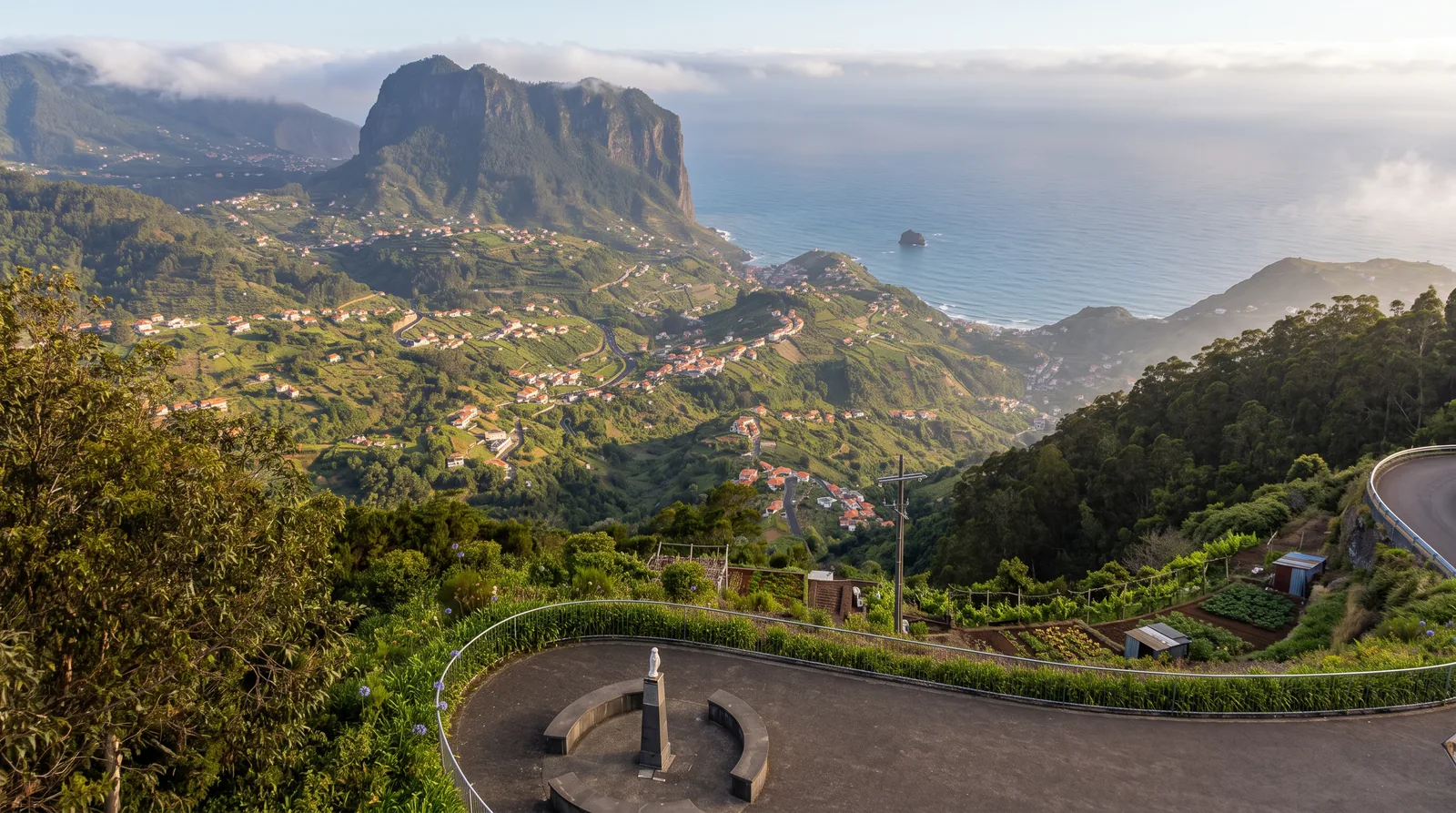
On the north-east coast, under the Penha d'Águia rock, Porto da Cruz has a black sand beach at Alagoa, a surf beach at Maiata and a small bathing complex with seawater pools on the seafront. It is very exposed to the Atlantic swell. Treat it as a stop on a north-east drive, not a destination for a swim, and check the conditions first. None of its beaches had a Blue Flag in 2026.
- Type: black sand, pebble, seawater pools.
- Lifeguards: not assured at Alagoa or Maiata.
- Best for: surfers, and, in the bathing season, a swim in the pools on a calm day (works on the pools were planned after the 2026 season).
10. Porto Santo
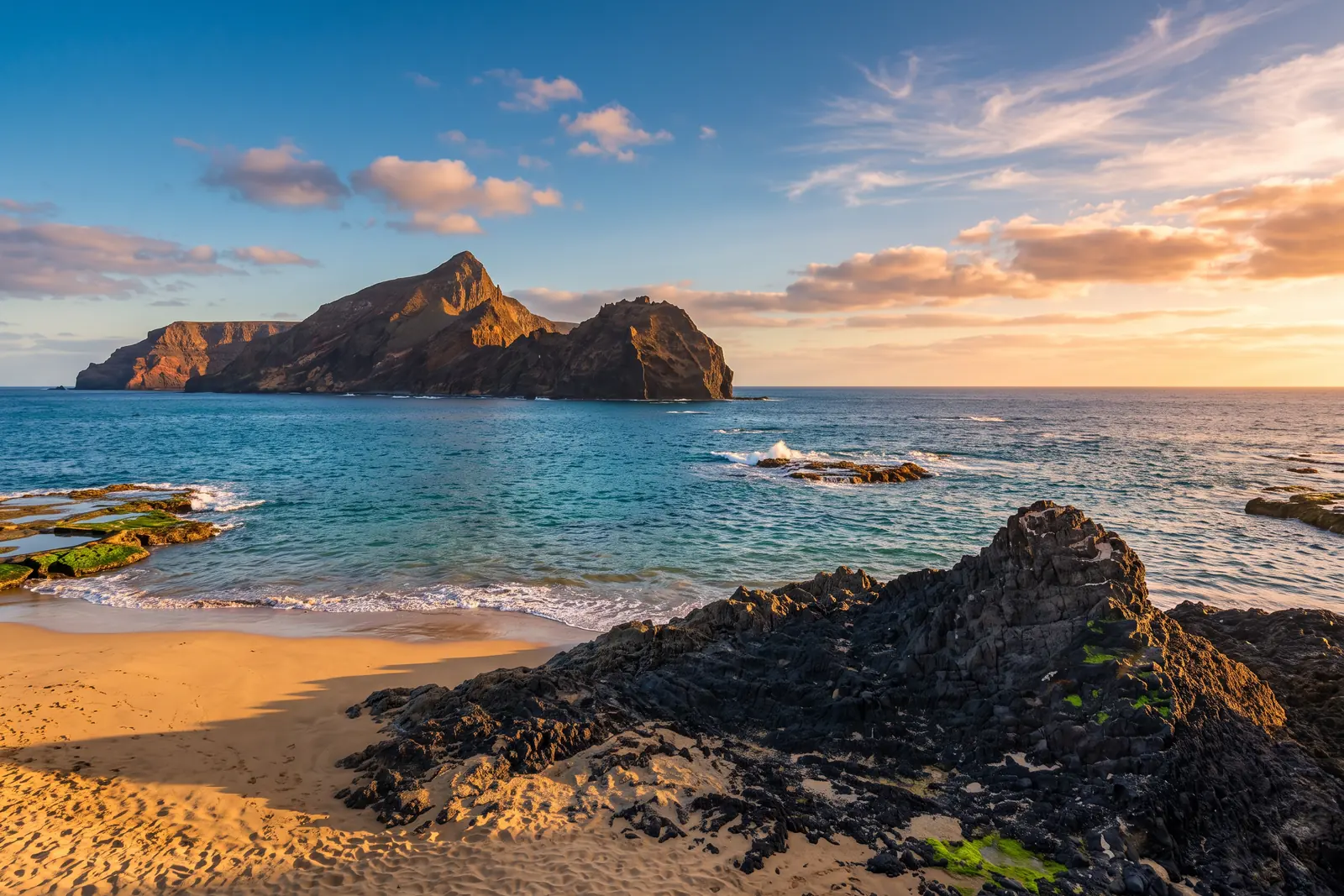
Porto Santo is the island with the beach Madeira does not have: about 9 kilometres of golden sand along its south coast, calm water and a low, dry landscape. The tourist board says the sand has therapeutic properties; locals have used it for sand baths for a long time. I spent a few days there in July 2024 and walked different parts of the beach. It is not another Madeira beach. Treat it as its own trip, ideally a short stay, not a quick swim.
- Ferry: Porto Santo Line from Funchal, about 2 hours 15 minutes; out in the morning, back in the evening.
- Cost: adult return €72.02 April to September, €58.90 the rest of the year (2026), plus a monthly fuel surcharge.
- Lifeguards: at Fontinha and Cabeço da Ponta, 15 May to 31 October in 2026, and at Ribeiro Salgado, 1 May to 31 October.
- Blue Flag 2026: Fontinha, Cabeço da Ponta and Ribeiro Salgado.
- Watch out: wind can cancel sailings and flights; do not book it on your last day.
Getting to the beaches from Funchal
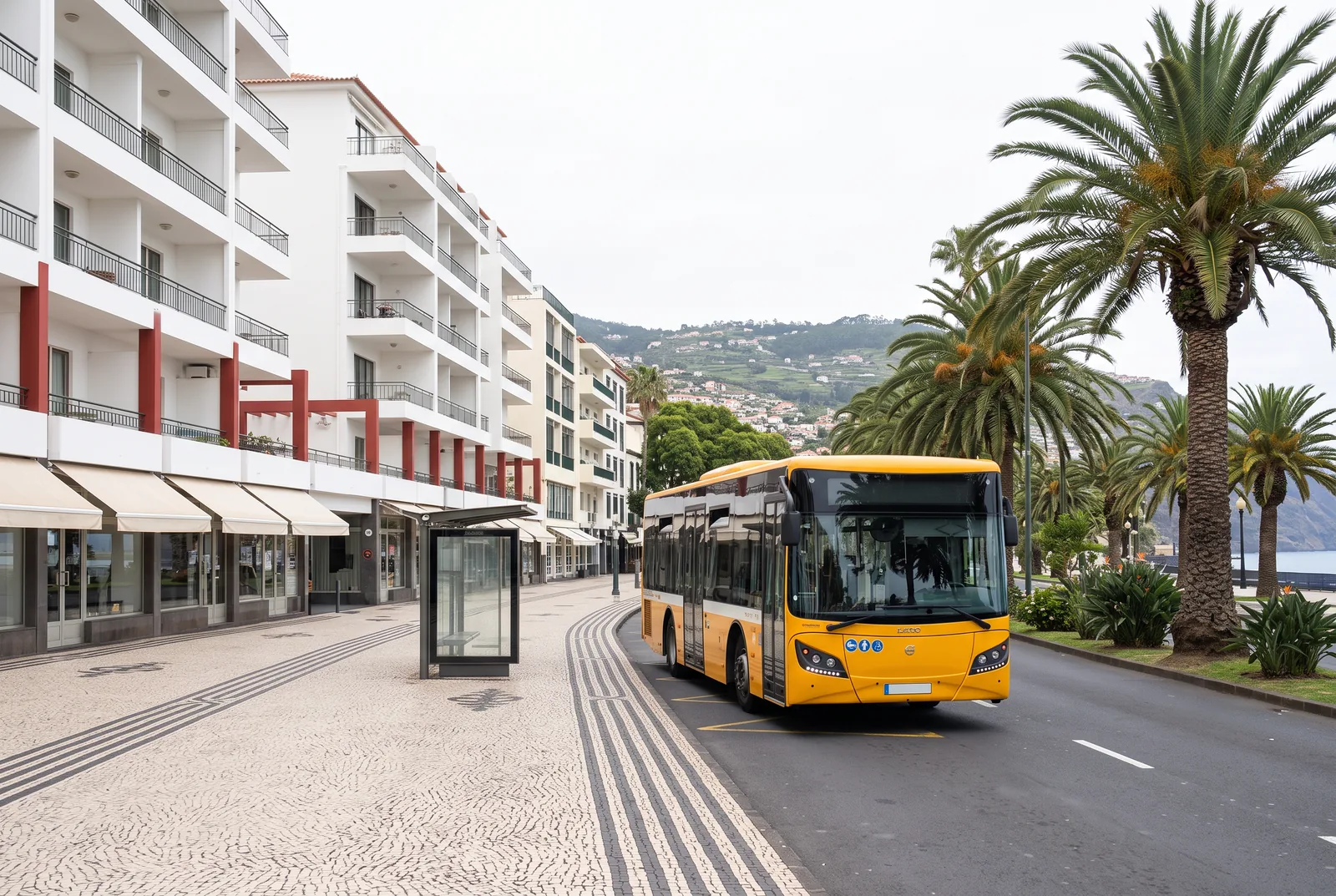
The Funchal complexes and Praia Formosa are on foot or a short city bus ride from the Lido and the old town. For everything else, a car is the practical choice: Machico and Prainha are on the east coast, Calheta in the west, Porto Moniz and Seixal on the north-west corner. The regional bus network reaches all of them, but services to the north and west are few, and the network renumbered its lines in 2026. Check the current timetable on the SIGA site before relying on a bus to get back. From our Downtown villa in the centre, the Lido is about ten minutes by car or on buses 1 and 2.
For Porto Santo there are two options. The Porto Santo Line ferry leaves Funchal in the morning and returns in the evening; it sells tickets rather than reservations, and check-in closes 30 minutes before departure. In October 2026 the ship goes into scheduled maintenance after an extra 06:00 sailing from Funchal on 14 October, with regular service resuming on 23 October, and the company has warned that crossings take about 3 hours 15 minutes for technical reasons; check the timetable before planning. The other option is the Binter flight, about 25 minutes. Wind affects both.
When to swim: sea temperature, lifeguards and the weather on each coast
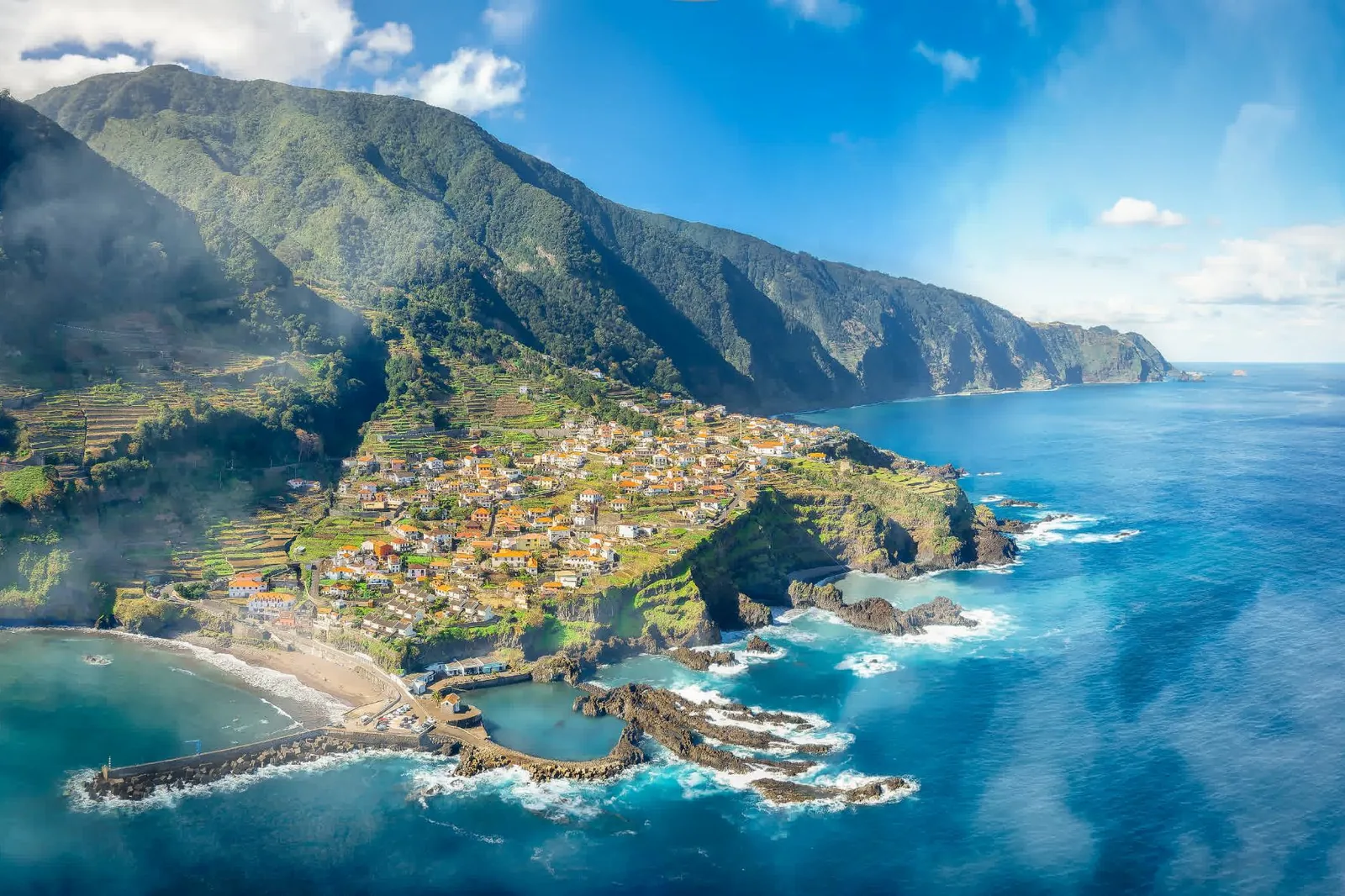
The sea is swimmable all year in Funchal. Regional statistics put the 2023 average at the Funchal harbour at 21.7°C, from 18.9°C in February to 24.6°C in September. Late summer and early autumn are the warmest months; late winter and early spring the coldest. Our month by month guide has the full picture.
Lifeguard seasons are set beach by beach in the regional bathing calendar. Most run from June to mid or late September. The Funchal complexes keep lifeguards outside that season, and the Porto Moniz pools from April to October and beyond. Outside the season, a beach without a lifeguard is your own risk.
The coasts behave differently. The north takes the Atlantic swell and the cloud; the south is sheltered and sunnier. A calm, clear morning in Funchal says nothing about Porto Moniz. Check the forecast and the sea state for the coast you are going to, the morning you go.
Madeira beaches: your questions answered
Does Madeira have sandy beaches?
A few. Prainha, Seixal and Alagoa have natural volcanic sand. Calheta and Machico have imported golden sand. For a long sand beach, go to Porto Santo.
Can you swim in the sea in Madeira?
Yes, all year in Funchal, where the bathing complexes have lifeguards outside the summer season. The sea runs from about 19°C in late winter to about 25°C in late summer. On the north coast, check the swell first.
What is the best beach near Funchal?
For a swim, the Lido or Ponta Gorda complexes. For a free beach, Praia Formosa. For golden sand, Machico, about 30 minutes east by car.
Are the Porto Moniz pools free?
The municipal pools cost €3 and have lifeguards. The Cachalote pools next to them are free and unsupervised.
Is Porto Santo worth a day trip?
It works as a day trip, with the ferry out in the morning and back in the evening, but it is better as a short stay. Keep a spare day in case wind cancels the crossing.
Where to stay for a swimming holiday in Madeira
For swimming every day, stay where the sea is a walk away. The Beachfront penthouse, by Superior Rentals, is in the Lido area, five minutes on foot from the Ponta Gorda complex and the promenade, and about fifteen from the Lido complex. The Downtown villa is in the centre of Funchal, facing the Municipal Gardens, fifteen minutes on foot from the old town. Our where to stay guide compares the rest of the island, and the Madeira page has everything else.
Related topics: Beaches