Lisbon beaches: the best beaches near Lisbon and how to reach them
Ana Freitas · 18 min read · Updated 11/Oct/2026
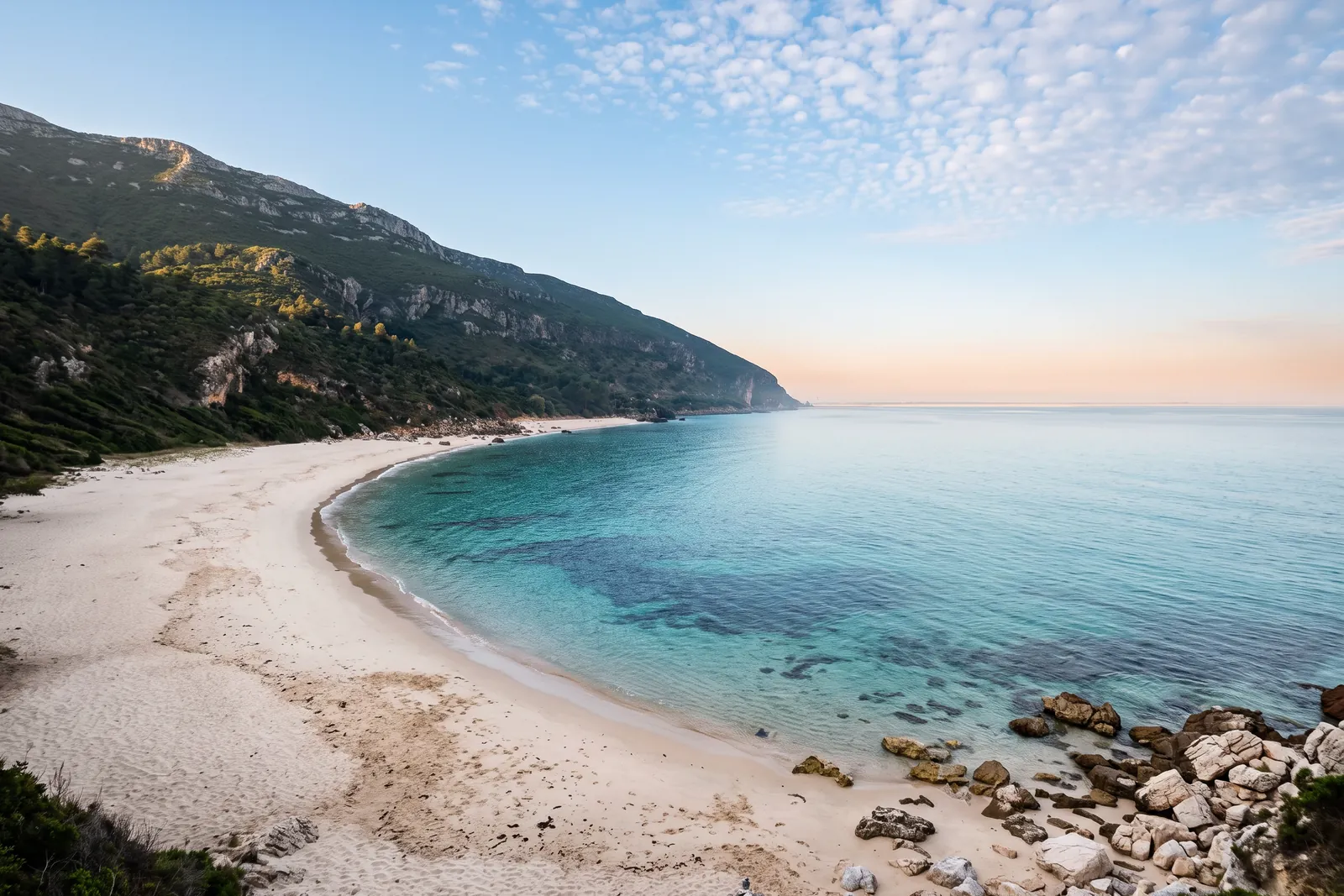
Lisbon has no beach of its own, but the Atlantic is close: ten beaches and beach areas from the Cascais line to Costa da Caparica, the Arrábida, Sintra and Ericeira, chosen by how easy they are to reach.
Does Lisbon have a beach? The short answer
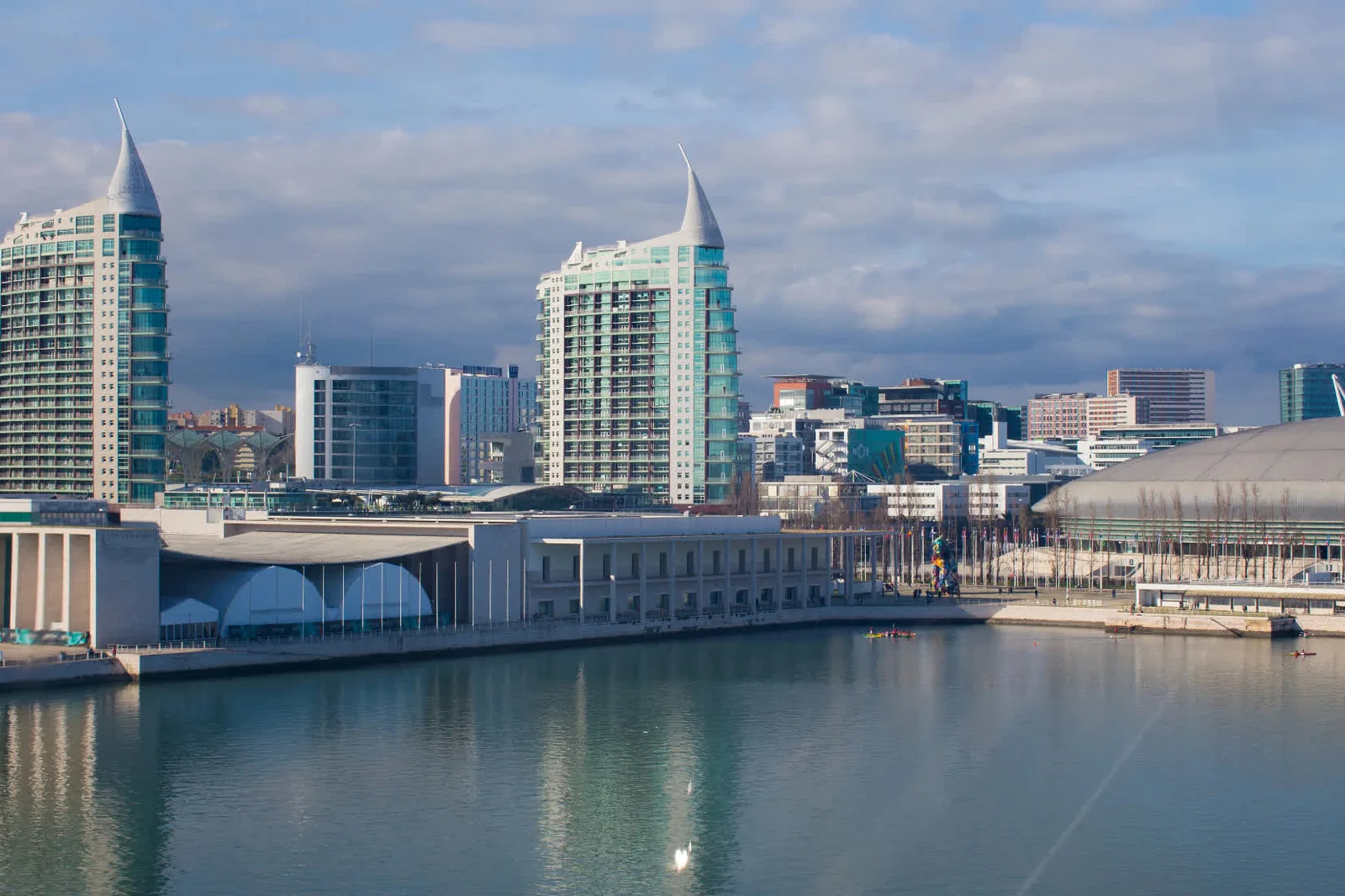
Not inside the city. Lisbon sits on the Tagus estuary, and the riverfront you walk along in Belém or Parque das Nações is promenade, docks and gardens, not sand you swim from. No bathing water is designated within the Lisbon municipality on the official 2026 list. The beaches start just outside it, and they are close: the first lifeguarded beaches on the Cascais line, at Caxias and Paço de Arcos, are under 20 minutes by train from Cais do Sodré, Santo Amaro and Carcavelos under half an hour, and the Atlantic beaches of Costa da Caparica are across the bridge.
So the real question is not whether Lisbon has a beach, but which one fits the day you have. Here is the quick version, before the details.
- Easiest by train: Carcavelos, Santo Amaro de Oeiras and the Estoril beaches, all on the Cascais line from Cais do Sodré.
- Longest stretch of sand: Costa da Caparica, south of the river, with Fonte da Telha at its wild end.
- Calmest water: the Arrábida coves near Setúbal, sheltered from the open Atlantic.
- Wind and surf: Guincho, past Cascais, and Ericeira to the north.
- Dramatic and wild: the Sintra coast, Praia Grande, Adraga and Praia das Maçãs.
- Lifeguard season: in 2026 it ran from 1 May in Cascais, and from late May or June elsewhere, to mid or late September.
How to choose a beach near Lisbon
Guests staying with us ask me one question more than any other: which beach is the closest? I understand why, but it is the wrong measure. A beach further away on a direct train is closer, in every way that matters on a hot Saturday, than a nearer one across a bridge with a bus change in the middle.
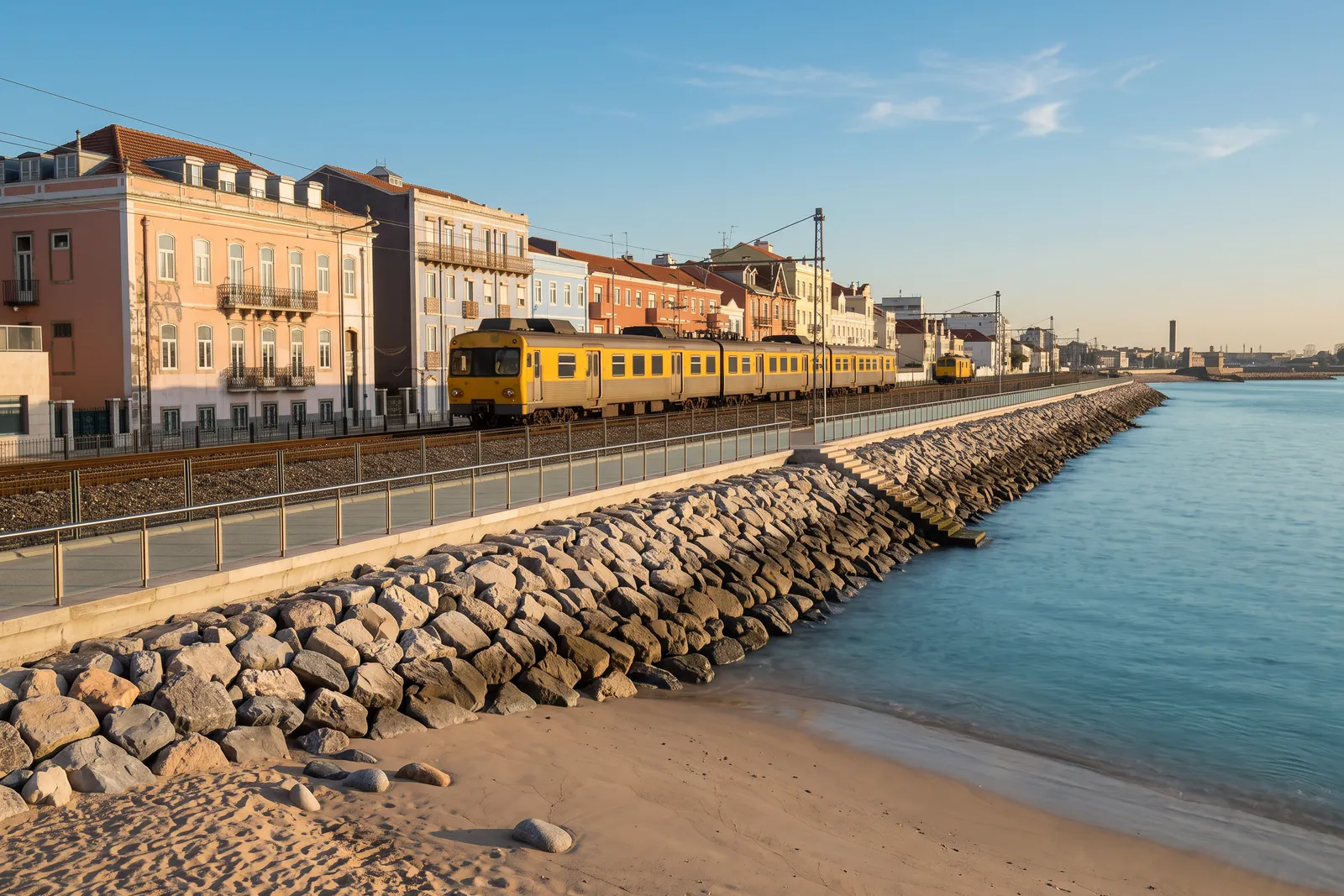
So I choose by transport. From the Riverside apartment in Parque das Nações, Carcavelos and Estoril are simple: the metro to Cais do Sodré and then the Cascais line, which runs along the water the whole way. Costa da Caparica asks for a different kind of trip, a bus over the 25 de Abril bridge or a ferry and a bus, and it rewards you with a far longer beach. The Arrábida is a day out, not an afternoon. Ericeira and the Sintra coast are their own excursions, best paired with something else in the area.
The other choice is the clock. There is an enormous difference between reaching the sand at ten in the morning and arriving after lunch. On summer weekends Carcavelos and the popular beaches of Caparica fill up, the trains and buses back are packed, and the car parks are full by late morning. The most common mistake I see is leaving late on a Saturday or Sunday in July and assuming space, parking and a seat home will be easy to find. They will not be.
The best beaches near Lisbon
Ten beaches and beach areas, west along the Cascais line first, then south across the river, then the wild coast to the north. For each one there is a short card with the practical facts. Blue Flag status is the 2026 list, and it changes every year.
1. Praia de Carcavelos
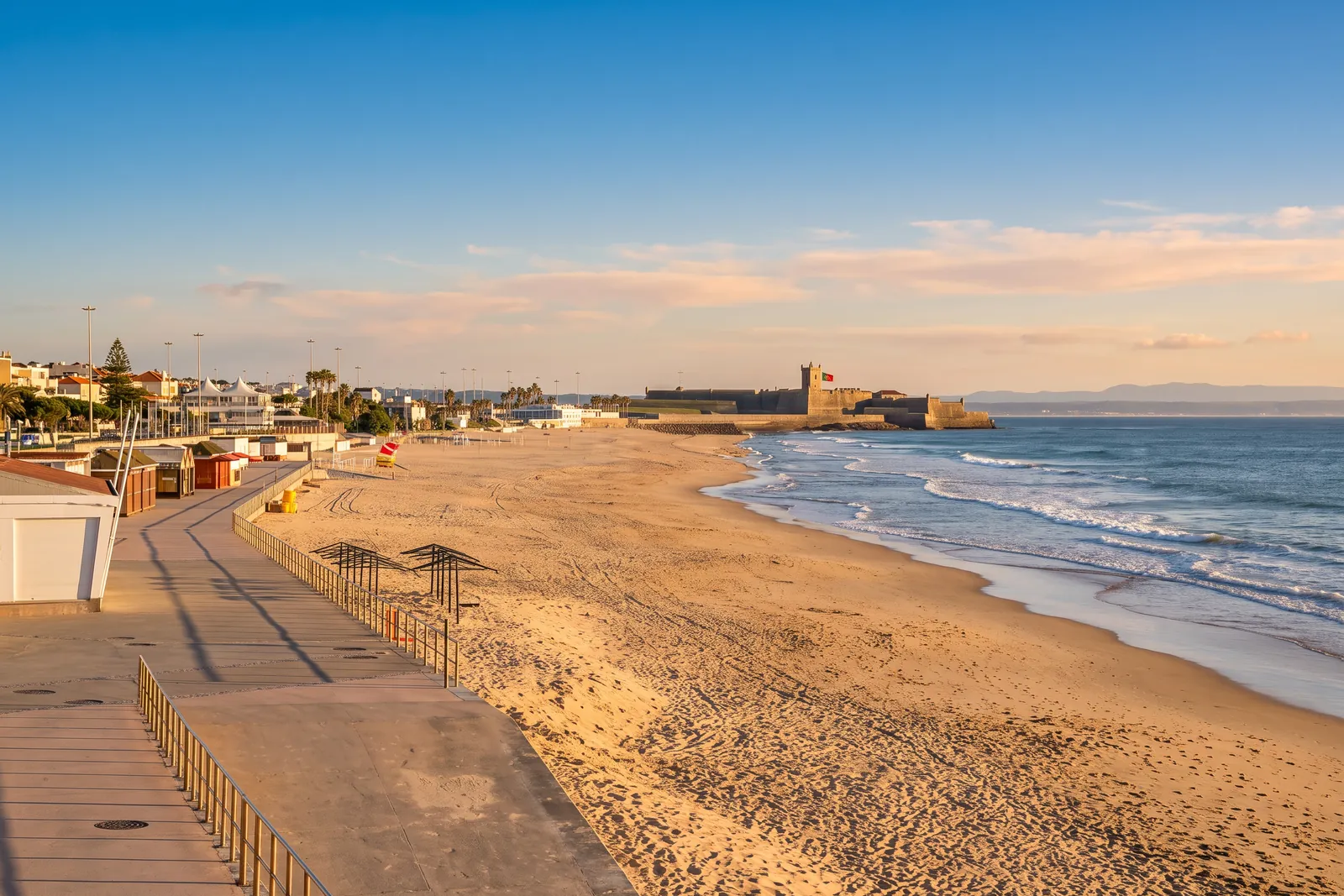
Carcavelos is the beach most of Lisbon means when it says "the beach". It is the biggest on the line between the city and Cascais, about a kilometre and a quarter of sand running from the São Julião da Barra fort to Ponta de Rana, with a promenade behind it and a station a walk away. The water has a steady, moderate surf, which is why the beach is full of boards and surf schools from spring to autumn, and why it is a good place for a first lesson rather than a long floating swim.
I first went in July 2022 and it is the beach I know best; I have been back many times since. My advice is always the same: go early. On summer weekends it gets very full, and the difference between arriving at ten and arriving after lunch is the difference between choosing your spot and taking what is left. The council's beach page lists the services, and our Cascais guide covers the rest of the line in more detail.
- Getting there: Cascais line train to Carcavelos, about 27 minutes from Cais do Sodré, then a walk to the sand.
- Water: open Atlantic with steady surf; lifeguards in season.
- Blue Flag 2026: yes.
- Best for: surf lessons, a long walk, an easy half day from the city.
- Skip if: you want calm water or space to yourself on a summer weekend.
2. Praia de Santo Amaro de Oeiras
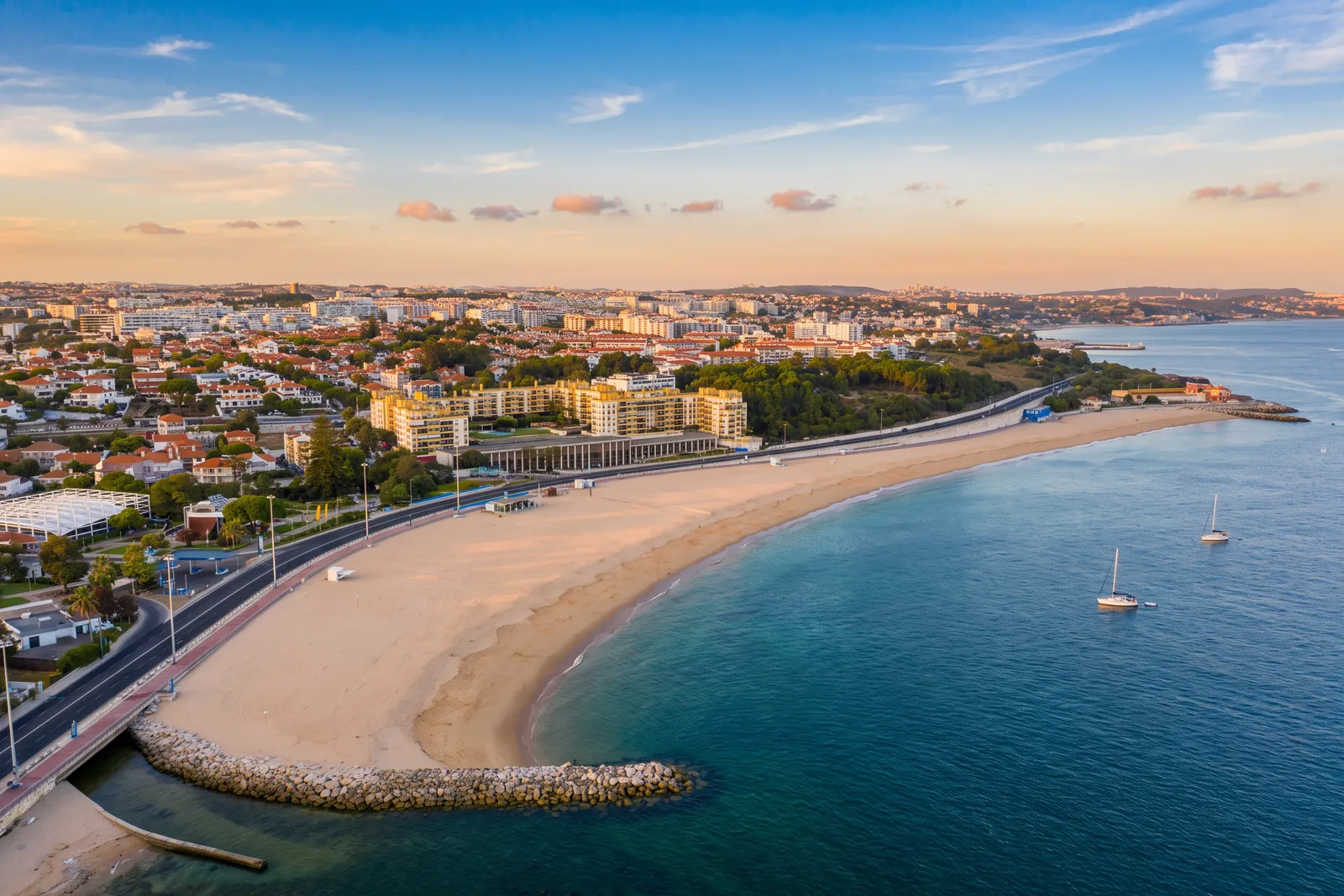
Santo Amaro is the first large beach the train reaches, after the smaller beaches of Caxias and Paço de Arcos, still in the Oeiras council and still technically on the estuary, which gives it gentler water than Carcavelos. It is a family beach with the Passeio Marítimo de Oeiras, the seafront promenade, running along it, and it is less of a scene than Carcavelos, more of a neighbourhood beach.
I went in July 2025. The Oeiras council also runs an accessible beach programme here through the bathing season, with free amphibious chairs and walkways on the sand.
- Getting there: Cascais line train to Santo Amaro, about 23 minutes from Cais do Sodré.
- Water: calmer than the open coast; lifeguards in season (1 June to 30 September in 2026).
- Blue Flag 2026: yes.
- Best for: families, a quieter day, a walk or ride along the promenade.
- Skip if: you came for waves.
3. Estoril: Tamariz and Poça
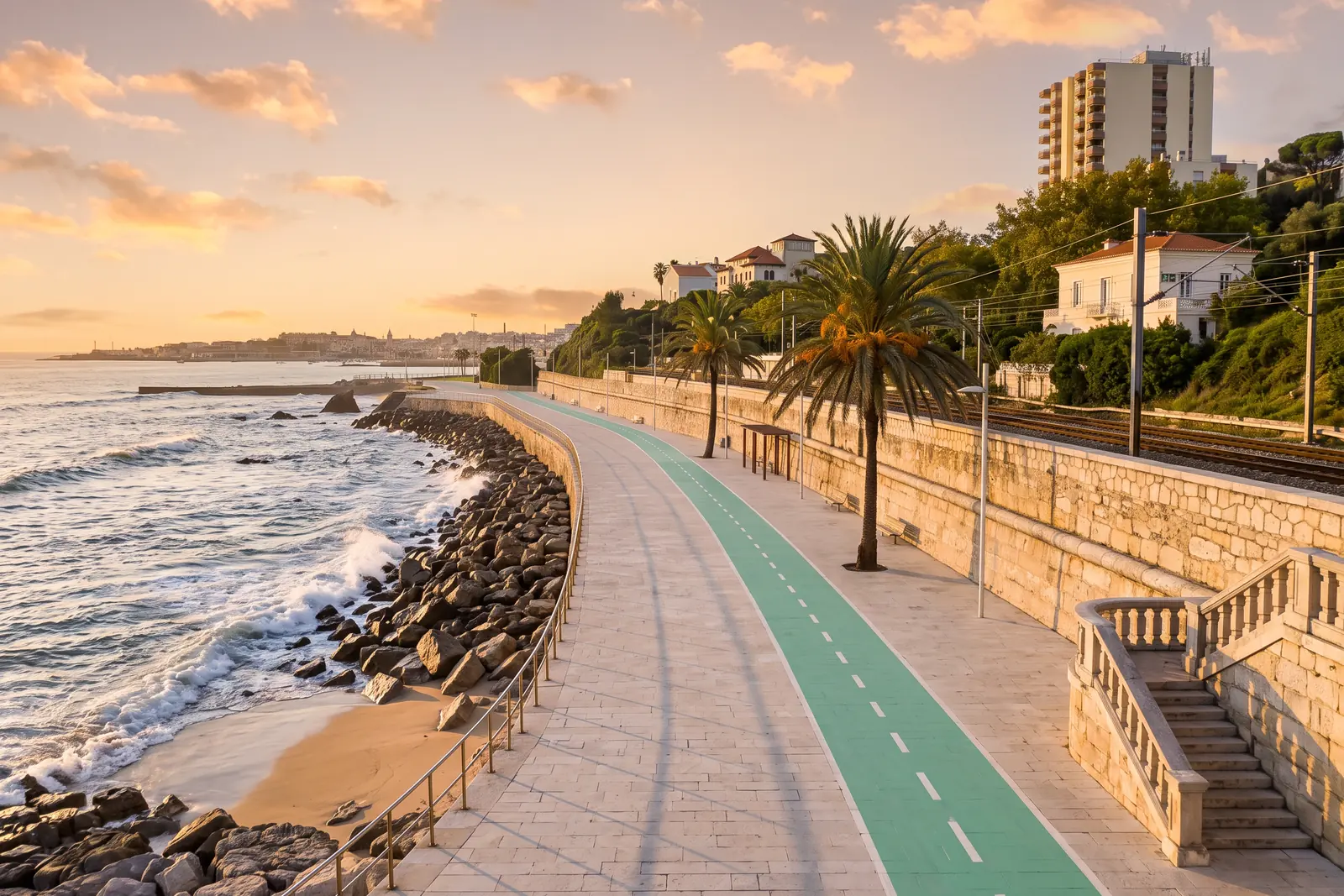
Estoril is where the line starts to feel like a resort. Praia do Tamariz sits right next to the station, below the gardens that climb to the casino, with a seawater pool built into the rocks at one end. A few minutes east along the paredão, the seafront promenade that runs all the way to Cascais, Praia da Poça is a smaller family beach between two old forts. Both are compact, both fill quickly, and both make it easy to combine a swim with lunch on the promenade.
I went to Tamariz in August 2023, and it is the beach on this list that asks the least of you: it is right beside the station. Neither Tamariz nor Poça flew a Blue Flag in 2026, though Tamariz kept its accessible beach award.
- Getting there: Cascais line train to Estoril, about 36 minutes from Cais do Sodré; Tamariz is beside the station.
- Water: sheltered and usually calm; lifeguards in season.
- Blue Flag 2026: no.
- Best for: a swim with no logistics, walking the paredão to Cascais.
- Skip if: you need room to spread out in August.
4. Cascais town beaches: Conceição, Duquesa and Rainha
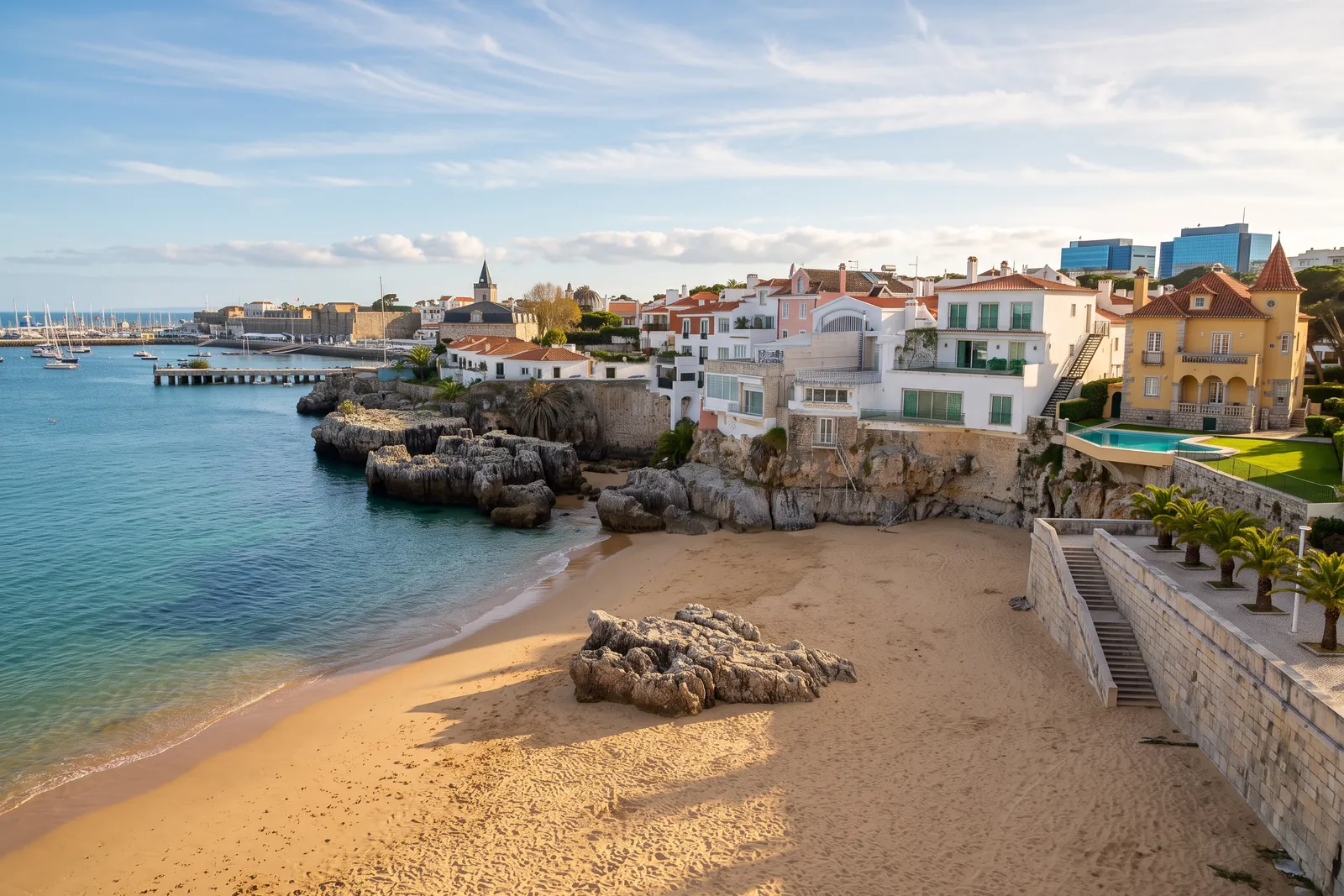
At the end of the line, Cascais has three small beaches in the middle of town. Conceição and Duquesa run into each other below the old summer villas, with calm water, boat and kayak hire and the promenade cafés behind. Praia da Rainha is tiny, a pocket of sand between rocks just off the main square, very pretty and very full. These are beaches to drop into between lunch and a walk around the old town, not to spend a whole day on, and the Cascais guide covers what to do around them.
- Getting there: Cascais line train to the end, about 40 minutes from Cais do Sodré, then a short walk.
- Water: calm, sheltered bay; lifeguards in season (1 May to 30 September in 2026).
- Blue Flag 2026: no.
- Best for: combining a swim with a day in Cascais.
- Skip if: you want a long stretch of sand.
5. Praia do Guincho
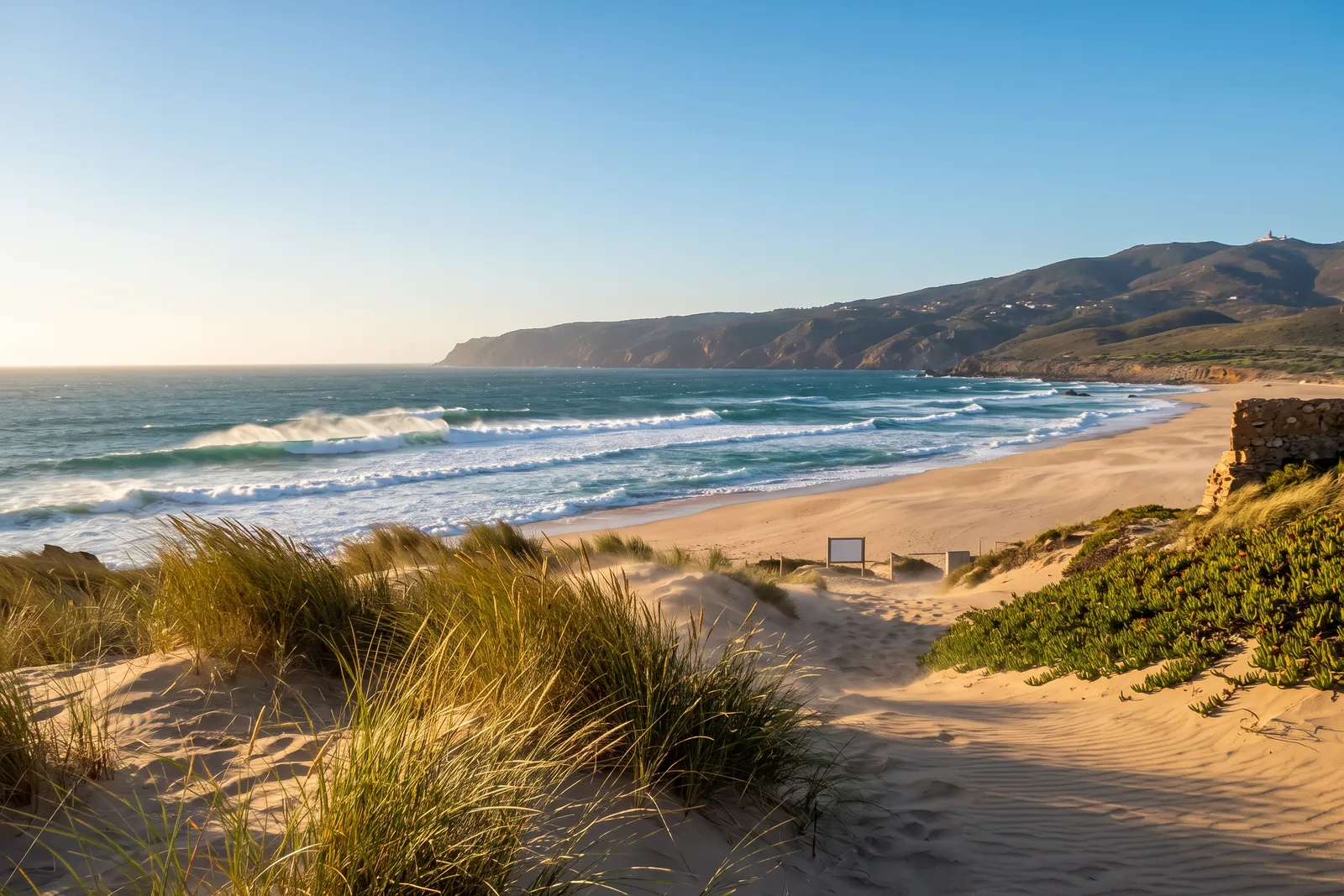
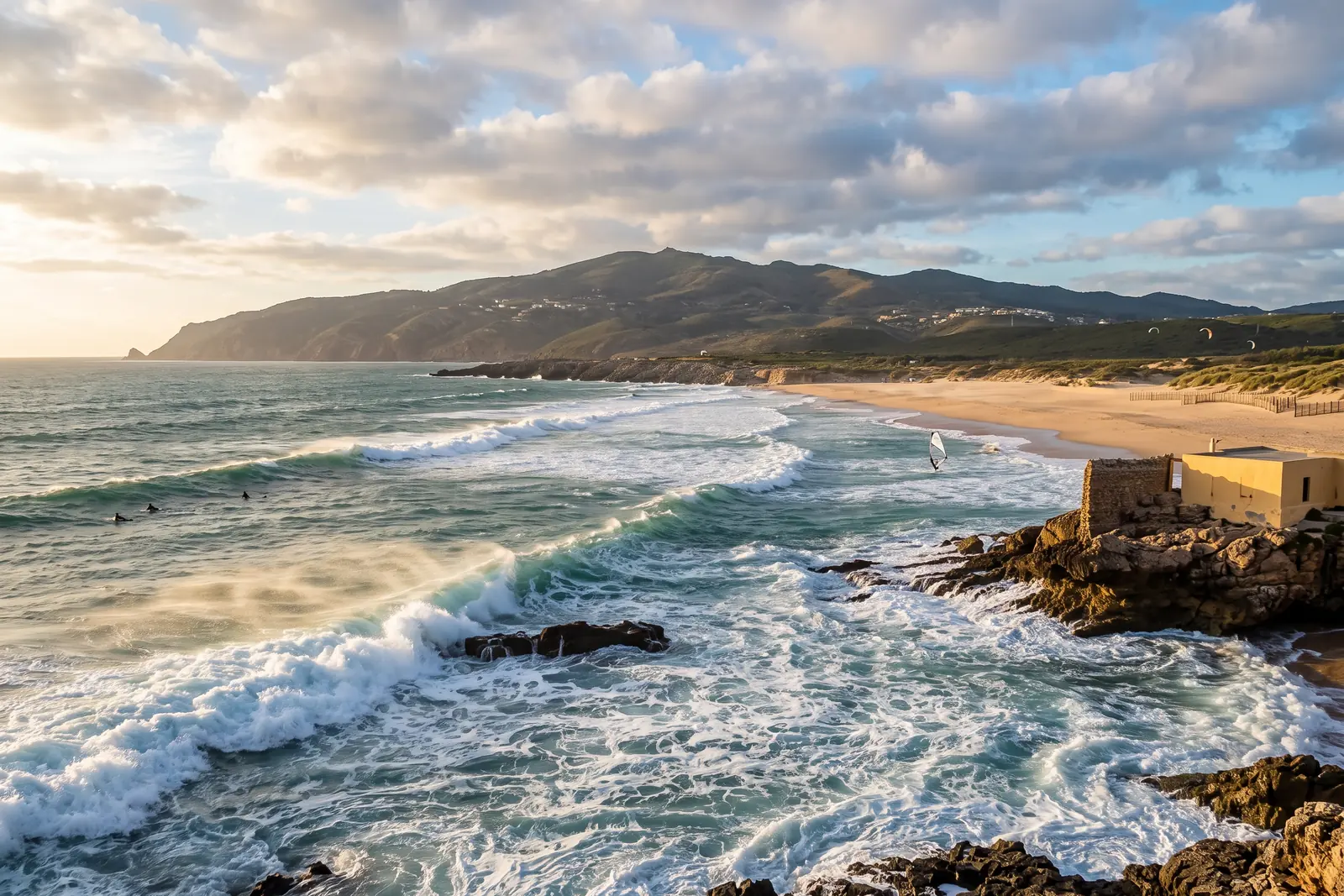
Guincho is the beach on the postcards: a wide, open bay of sand and dunes past Cascais, inside the Sintra-Cascais Natural Park, with the Serra de Sintra behind it. It is also one of the most exposed stretches of coast near Lisbon, which is exactly why kitesurfers, windsurfers and surfers love it, and exactly why it disappoints people looking for a quiet day of lying in the sun.
I went in September 2024, and I would tell any friend the same thing: take something for the wind. It can be a perfect day in central Lisbon and you arrive at Guincho to a ferocious nortada, the summer north wind. Go for the scenery, a walk and the kites, and swim only where and when the lifeguards say so. The council page has the services and the bus information.
- Getting there: train to Cascais, then a municipal bus from the station, or the coastal cycle path; free car park at the beach.
- Water: big surf, strong wind; lifeguards in season.
- Blue Flag 2026: yes (Guincho Norte and Guincho Sul).
- Best for: surfing, kitesurfing, a walk with a view.
- Skip if: you want a calm swim or a lazy afternoon.
6. Costa da Caparica
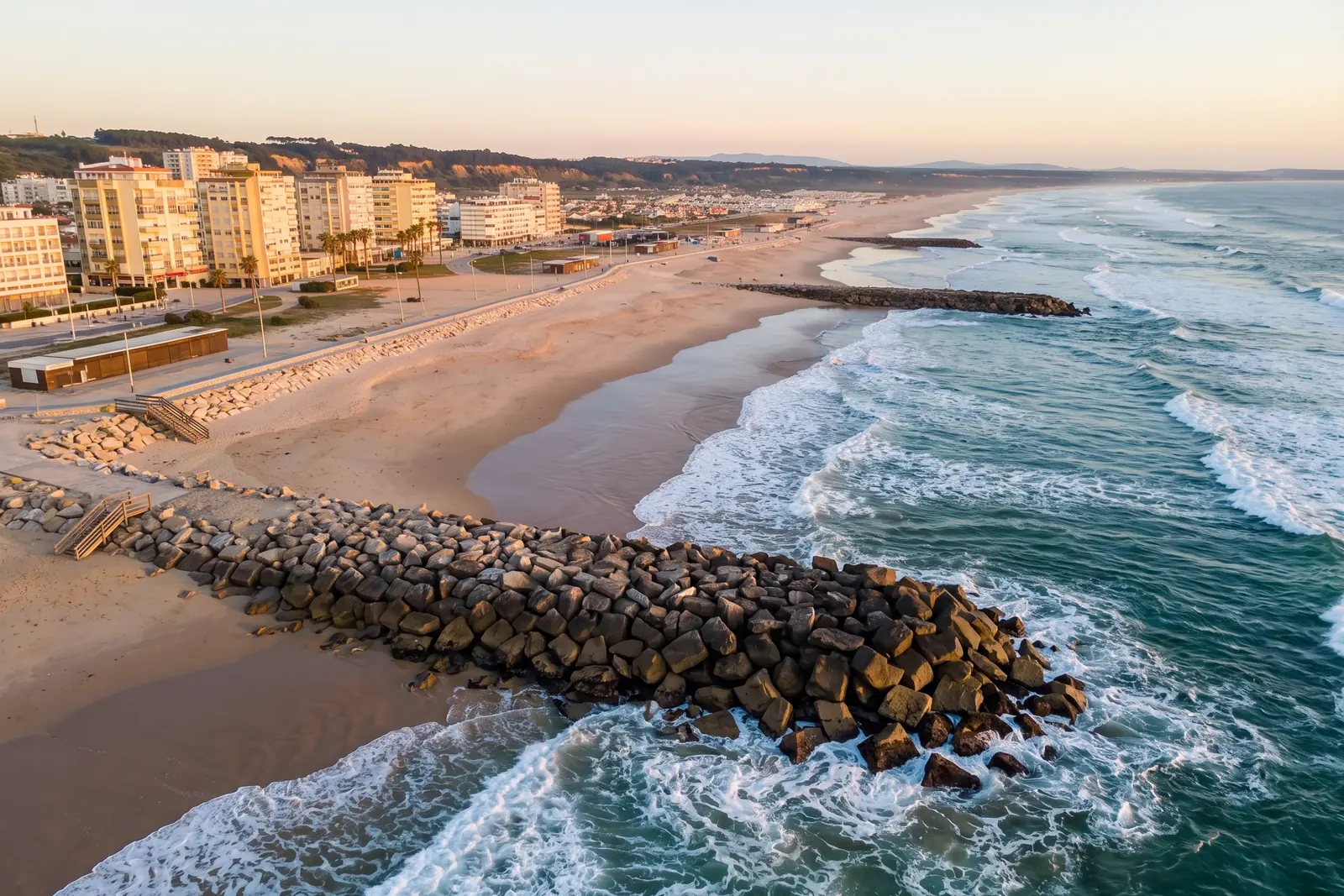
Cross the 25 de Abril bridge and the coast opens into an almost unbroken run of sand, from the Cova do Vapor south along the cliffs of the Arriba Fóssil. Costa da Caparica is not one beach but a chain of them, each with its own lifeguard post, bar and crowd. The urban front, CDS and the beaches around the town, is lively and close to the bus terminal, but its sand shrinks a lot at high tide. São João da Caparica, to the north, is about 1.4 kilometres of sand with a more family feel. Heading south, Castelo, Rei and Morena are younger and louder, built around their beach bars.
I first went in June 2024, and Caparica is, with Carcavelos, the beach I know best. It is also where the weekend rule matters most: the popular beaches here get very full on summer Saturdays and Sundays, so go early. Almada's beach guide lists every beach and its services.
At the far southern end, Fonte da Telha is a former fishing village with about three kilometres of sand under the fossil cliff, wilder and less built up. The council warns that it is reached by a single road, and that the summer traffic jams on it are common.
- Getting there: bus 3710 from Praça do Areeiro to the Costa da Caparica terminal, 45 to 60 minutes; or the ferry from Cais do Sodré to Cacilhas and a bus on.
- Water: open Atlantic, waves and cold water; lifeguards in season (1 June to 30 September in 2026).
- Blue Flag 2026: ten beaches in Almada, including CDS, São João da Caparica and Rainha.
- Best for: a long day on a big beach, beach bars, sunsets.
- Skip if: you only have half a day and no car on a summer weekend.
7. The Arrábida beaches
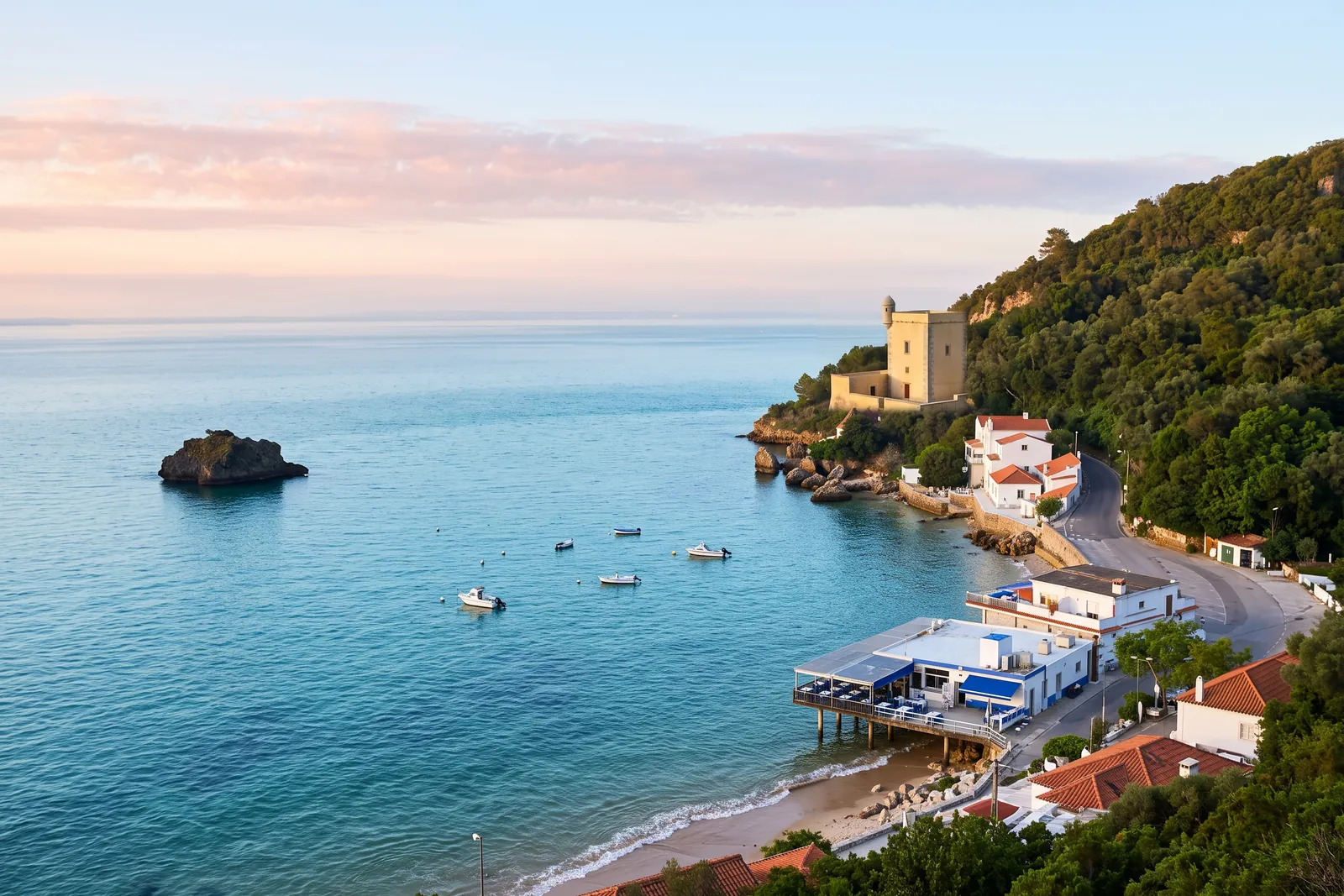
West of Setúbal, the Serra da Arrábida drops straight into the sea, and the coves at its foot have the calmest, clearest water within reach of Lisbon. Figueirinha is the easiest, a wide sheltered bay with services and a Blue Flag. Portinho da Arrábida is a tiny village of restaurants around a small bay. Galapos and Galapinhos are smaller coves under the hill, and Galapinhos was voted the best beach in Europe by European Best Destinations in 2017, which did nothing to make it easier to reach.
The road is the catch. Under Setúbal's Arrábida sem carros scheme, private cars are restricted from early June to mid-September, from 7am to 8pm, and the barriers close when the few car parks fill. In 2026 that meant a paid car park at Creiro and free parking back in Setúbal, with buses and a free shuttle doing the rest. Plan it as public transport, not as a drive.
- Getting there: bus 4720 from Oriente to Setúbal, about 45 minutes, or the Fertagus train; then the seasonal bus to Figueirinha or the free shuttle from Creiro to Galapos.
- Water: sheltered, calm and clear, the gentlest near Lisbon; lifeguards in season (4 June to 15 September in 2026).
- Blue Flag 2026: Figueirinha and Albarquel yes; Portinho, Galapos and Galapinhos no.
- Best for: swimming, children, a full day out.
- Skip if: you were planning to drive down at 11am on an August Saturday.
8. Sesimbra
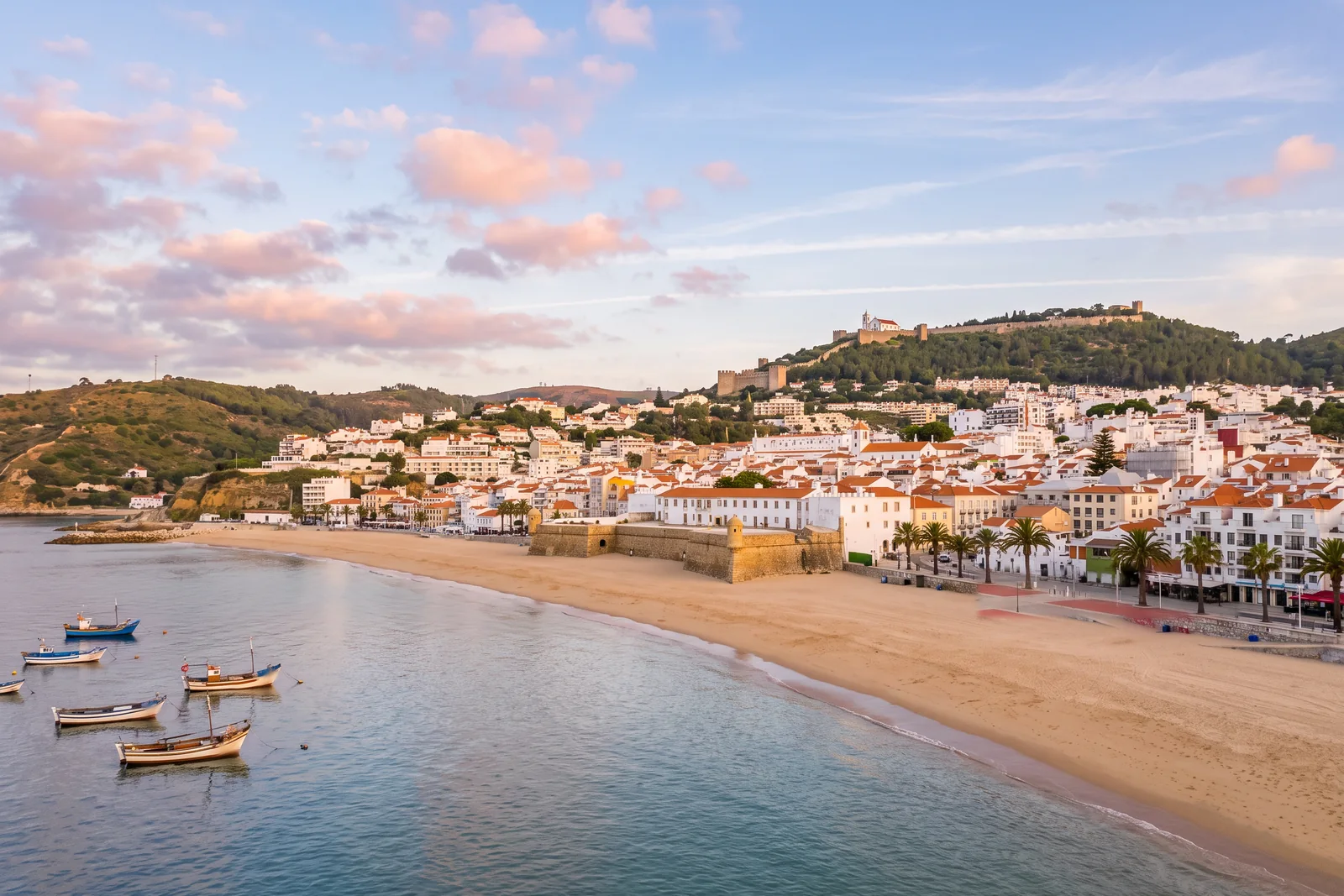
On the other side of the Arrábida range, Sesimbra is a fishing town with its beaches right in front of it: Praia da Califórnia and Praia do Ouro, both with a Blue Flag in 2026, divided by the fort. The water is calmer than at Caparica, the sea front is lined with grilled fish restaurants, and the town gives the day a centre that the beach bars of the open coast do not. It is a long trip without a car, so it suits a full day: lunch, a swim, a walk up to the castle, and the bus back in the early evening.
- Getting there: bus 3721 from Sete Rios, about 70 to 95 minutes; fewer buses at weekends, so check the last one back.
- Water: sheltered and calmer than the open coast; lifeguards in season (4 June to 13 September in 2026).
- Blue Flag 2026: yes, Califórnia and Ouro.
- Best for: a swim with a proper fish lunch.
- Skip if: you have only a few hours.
9. The Sintra coast: Praia Grande, Adraga and Praia das Maçãs
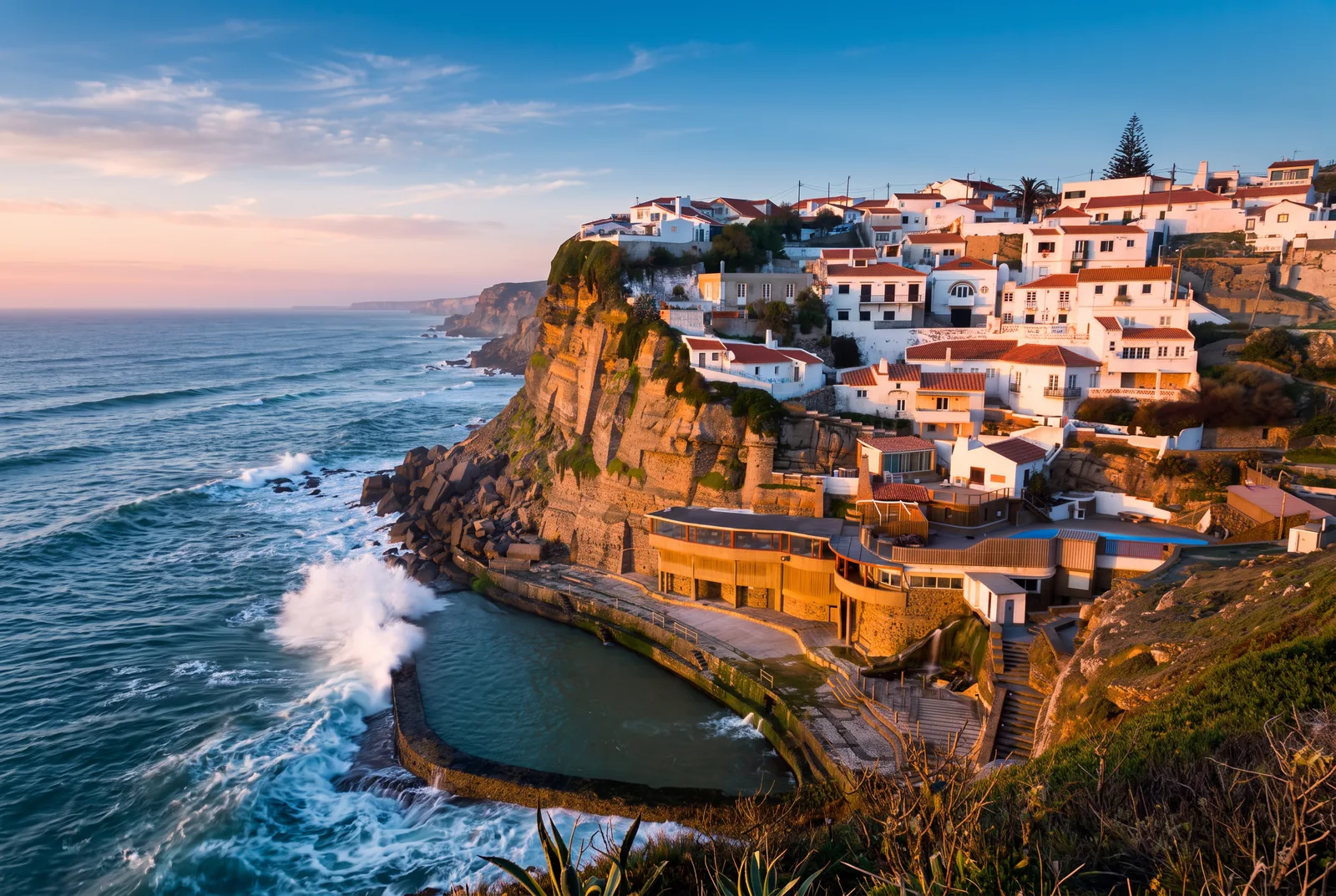
North of Cabo da Roca, the Sintra coast is cliffs, coves and open ocean. Praia Grande is the big one, a wide beach with surf. Praia das Maçãs is a small resort village, reached by the old Sintra tram when it runs. Adraga is a beautiful cove between rock walls, and Azenhas do Mar is the white village on the cliff that everyone photographs, with a small beach and a seawater pool below. All of them are wilder and more exposed than the Cascais line.
Praia Grande, Adraga, Praia das Maçãs, Magoito and São Julião flew a Blue Flag in 2026, according to Sintra council. Praia da Ursa, the cove with the sea stacks that appears in every photo of this coast, is a different matter: it is not a designated bathing beach, it has no lifeguards, and the path down is long, steep and loose. Look at it from the top. The Sintra day trip guide covers how to combine this coast with the palaces.
- Getting there: train to Sintra from Rossio or Oriente, about 40 minutes from Rossio, then a bus from the station or the tram to Praia das Maçãs.
- Water: open Atlantic, cold and often rough; lifeguards in season (30 May to 13 September in 2026).
- Blue Flag 2026: Praia Grande, Adraga, Praia das Maçãs, Magoito and São Julião.
- Best for: scenery, a beach afternoon after a morning in Sintra.
- Skip if: you want warm, calm water.
10. Ericeira
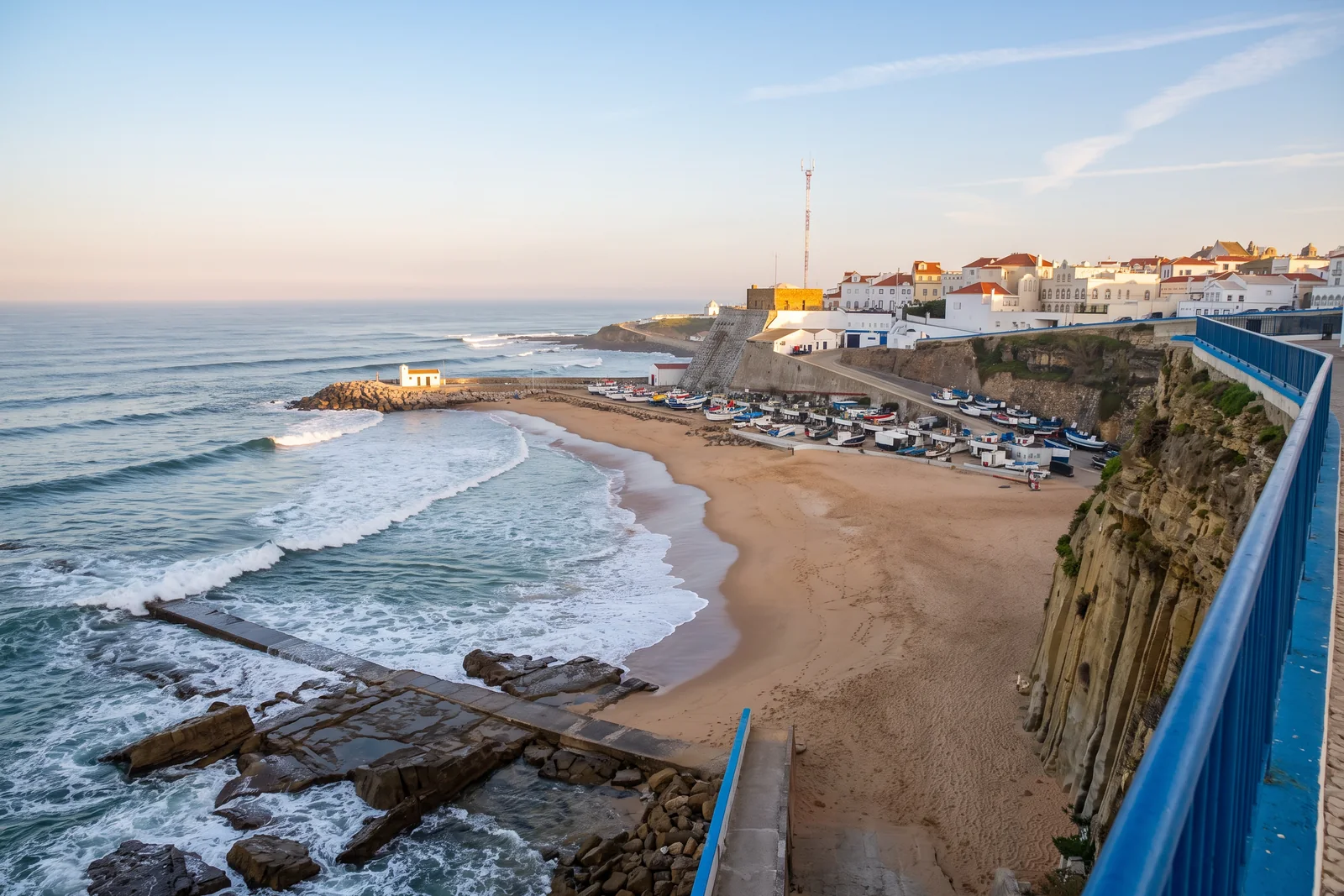
North of Lisbon, Ericeira is a whitewashed fishing town that has become the surf capital of the region. Its coast is a recognised World Surfing Reserve, and the beaches around it, Ribeira d'Ilhas and Foz do Lizandro above all, are about waves rather than lying still. The town itself, blue and white houses above a fishing harbour, is a pleasant place to spend the rest of the day.
- Getting there: Carris Metropolitana bus from Campo Grande, a little over an hour.
- Water: open Atlantic and serious surf; lifeguards in season (13 June to 13 September in 2026).
- Blue Flag 2026: Ribeira d'Ilhas, Foz do Lizandro, São Lourenço, Praia do Norte and Praia do Sul; not Praia dos Pescadores.
- Best for: surfing, a town with character.
- Skip if: you want a swimming beach close to the city.
Getting to the beach from Lisbon

The train to the Cascais line beaches leaves from Cais do Sodré, and in October 2026 it runs every 20 minutes or so through the day. A single to Cascais cost €2.55 and a return €5.10 in 2026; you pay with a rechargeable Navegante card (€0.50), loaded with single tickets or with Zapping credit, and a 24-hour ticket covering the Carris buses, the metro and the train cost €11.40. Two practical warnings. The train runs along the water, so sit on the left heading out for the view. And since April 2026 works have closed the stretch between Caxias and Cascais at some evening and night hours, and early on Sunday mornings, with replacement buses in its place; check the Infraestruturas de Portugal page before planning a late return.
For Costa da Caparica, the most frequent direct bus is the 3710 from Praça do Areeiro, which crosses the bridge to the Costa da Caparica terminal in 45 to 60 minutes; the operator itself has warned of significant delays on the line in 2026, so leave margin. The alternative is the ferry from Cais do Sodré to Cacilhas, about ten minutes on the water, and a bus from Cacilhas to the beach. There is no direct bus from Oriente. Count on roughly an hour and a half door to door from Parque das Nações.
For the Arrábida and Setúbal, Parque das Nações is unexpectedly well placed: the 4720 bus leaves from Oriente for Setúbal in about 45 minutes, and the seasonal beach buses connect at Setúbal. The Fertagus train from Roma-Areeiro, Entrecampos or Sete Rios is the other option. For Sesimbra, the 3721 from Sete Rios. For the Sintra coast, the train to Sintra also leaves from Oriente. For Ericeira, the bus from Campo Grande. Carris Metropolitana publishes current timetables on its website, and they change between summer and winter.
Driving makes sense for Guincho and the Sintra coast outside high summer, and almost no sense for the Arrábida, Caparica or the Cascais line on a summer weekend.
When to go: lifeguards, water temperature, wind and crowds
The bathing season is set every year by each council. In 2026 it ran from 1 May to 30 September in Cascais, 1 June to 30 September in Oeiras and Almada, 30 May to 13 September in Sintra, 4 June to 15 September in Setúbal, and 4 June to 13 September in Sesimbra. Outside those dates most beaches have no lifeguards, even on a hot day in October.
The water is the thing visitors get wrong most often, and the first thing I would tell a friend: the Atlantic here is a lot colder than people expect, even on a very hot day in Lisbon. IPMA, the national weather service, describes the sea off Cascais as usually below 16°C in winter and spring and above 18°C between June and November. That is refreshing in August and bracing in May. The Arrábida coves are sheltered from the swell; the Sintra coast and Guincho take the open ocean head on.
Wind is the other variable. The nortada, the summer north wind, can turn a beach on the open coast into a sandblaster while the city stays calm, and Guincho is where it is strongest. On those days, the sheltered beaches of Estoril, Cascais town and the Arrábida are the better bet. As for crowds, the rule is simple: summer weekends are full everywhere, weekday mornings much less so, and September is quieter once the holidays end, though several councils stop the lifeguards in mid-September.
Lisbon beaches: your questions answered
Does Lisbon have a beach?
Not in the city itself: no bathing beach is designated within the Lisbon municipality. The nearest are on the Cascais line in Oeiras and Cascais, from under 20 minutes from Cais do Sodré by train, and at Costa da Caparica across the river.
What is the closest beach to Lisbon?
By train, Caxias and Paço de Arcos are the first lifeguarded beaches, under 20 minutes from Cais do Sodré, but Santo Amaro de Oeiras and Carcavelos, both under half an hour, are the bigger and better ones. By road, Costa da Caparica is close on the map but slower in summer traffic. Choose by how you will get there, not by distance.
Can you swim in the sea near Lisbon?
Yes, in season, on lifeguarded beaches, and always between the flags. Expect cold water, usually above 18°C from June to November according to IPMA, and waves on the open coast. For the calmest water, go to the Arrábida or the Estoril and Cascais town beaches.
Which beach near Lisbon is best for families?
Santo Amaro de Oeiras and the Estoril beaches for an easy train trip and gentle water, and Figueirinha in the Arrábida for the calmest sea, if you are happy to make a day of it.
Costa da Caparica or Cascais: which is better?
Caparica for a long beach day on a huge stretch of sand; the Cascais line for an easy trip with a town attached. From Parque das Nações the Cascais line is simpler, Caparica takes longer but gives you far more space once you are there.
Where to stay for a beach day from Lisbon
The beaches are half the reason to stay outside the busiest neighbourhoods. The Riverside apartment, by Superior Rentals, is in Parque das Nações, beside Oriente station, with the metro to Cais do Sodré for the Cascais line, direct buses to Setúbal for the Arrábida and trains to Sintra, then a quiet riverfront to come back to. Our Lisbon neighbourhood guide compares the alternatives, things to do in Lisbon covers the city days in between, and the Lisbon page has everything else.