Things to do in Lisbon: the 20 best places to see, from Belém to Parque das Nações
Ana Freitas · 20 min read · Updated 14/Oct/2026
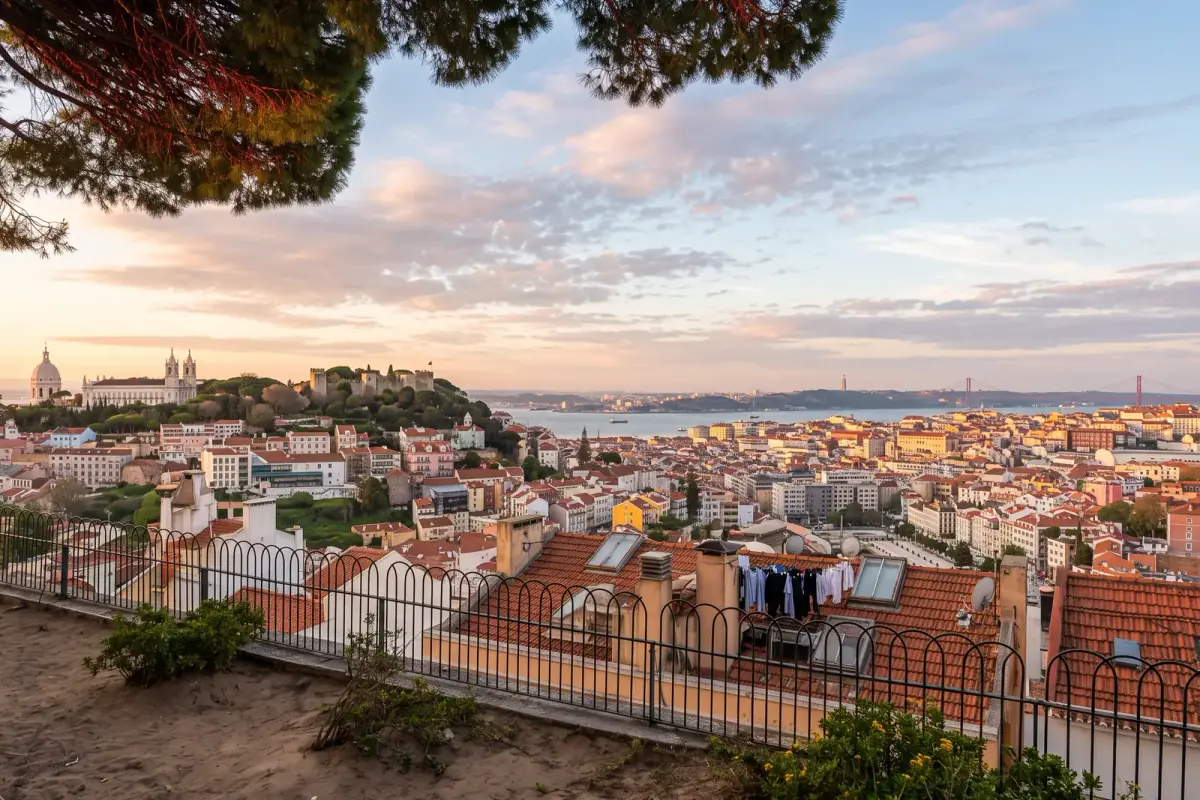
Two Lisbons share the same tram stop: the postcard one, and the one where people carry their shopping up the same stairs. Twenty places in the order you would walk them, with 2026 prices, hours and the honest caveats.
Lisbon at a glance: what to see and how many days you need
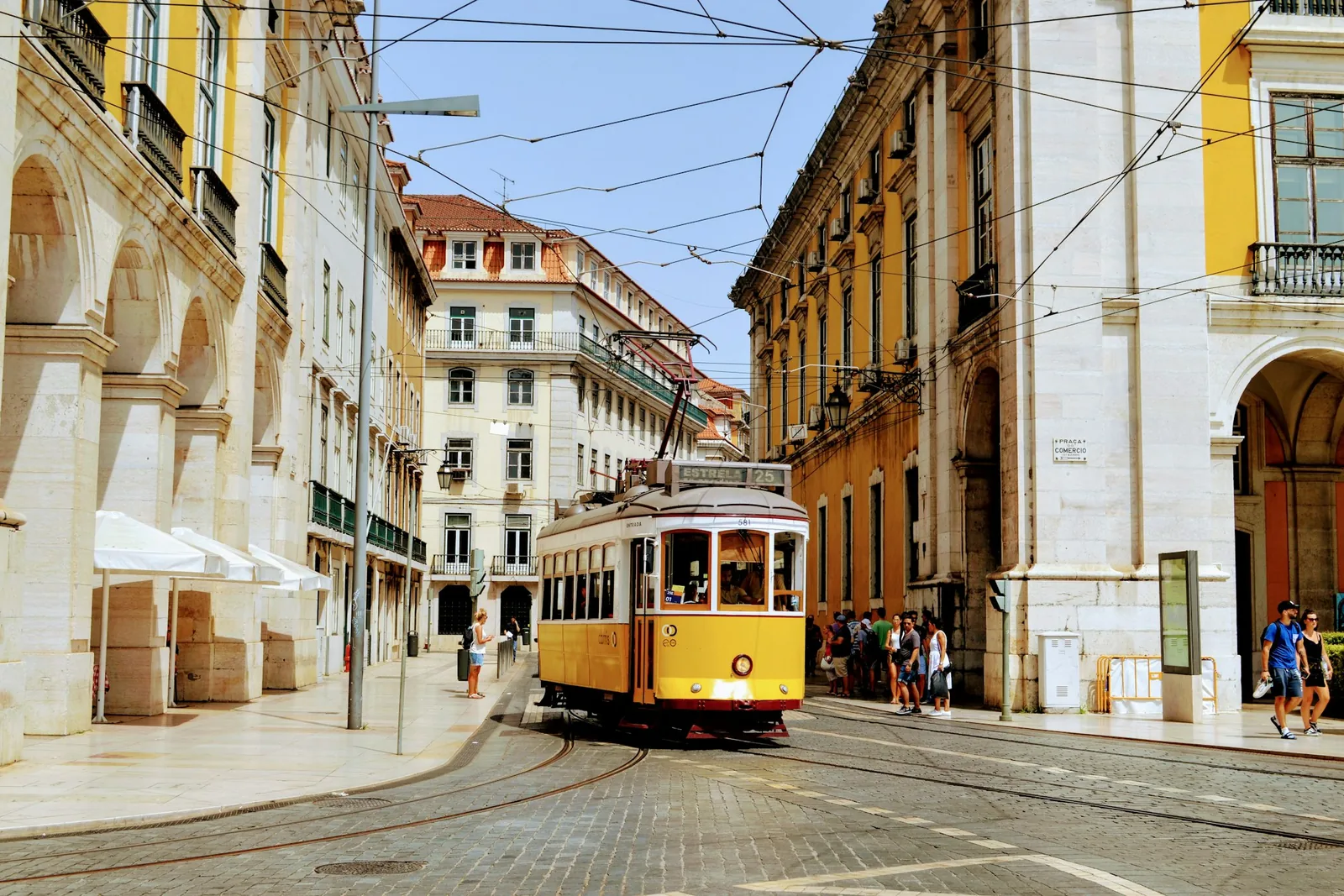
Two Lisbons share the same tram stop. One is the postcard: the yellow carriage past the cathedral, the tiled facades, the river at the end of every street. The other belongs to the people carrying shopping up those stairs, two streets off the photographed route.
Guests ask how many days they need. Four days is a good minimum for a first visit; three works if you accept that you are choosing rather than covering. The shape of the city is simple: hills between a castle and the Tagus, a flat grid rebuilt after 1755 below them, and Parque das Nações in the east, the only flat neighbourhood here.
The entries run in the order you would walk them. Prices and hours are as of August 2026, and where a fact is unsettled the line says so.
- First visit: four days, one area a day.
- Two days: the castle hill and Alfama, then Belém.
- With children: the Oceanário, the cable car and the flat promenade.
- Rainy day: the Jerónimos cloister, the Oceanário, Time Out Market.
- Free: every miradouro, Praça do Comércio, the Jerónimos church.
- Skip: the Museu Nacional dos Coches, €15 since its price nearly doubled in January 2025.
The 20 best things to do in Lisbon, area by area
Twenty places in touring order, grouped so each block is one outing. Start downriver in Belém, four sights within ten walkable minutes of each other, and the one part of Lisbon where arriving early changes everything.
1. Torre de Belém
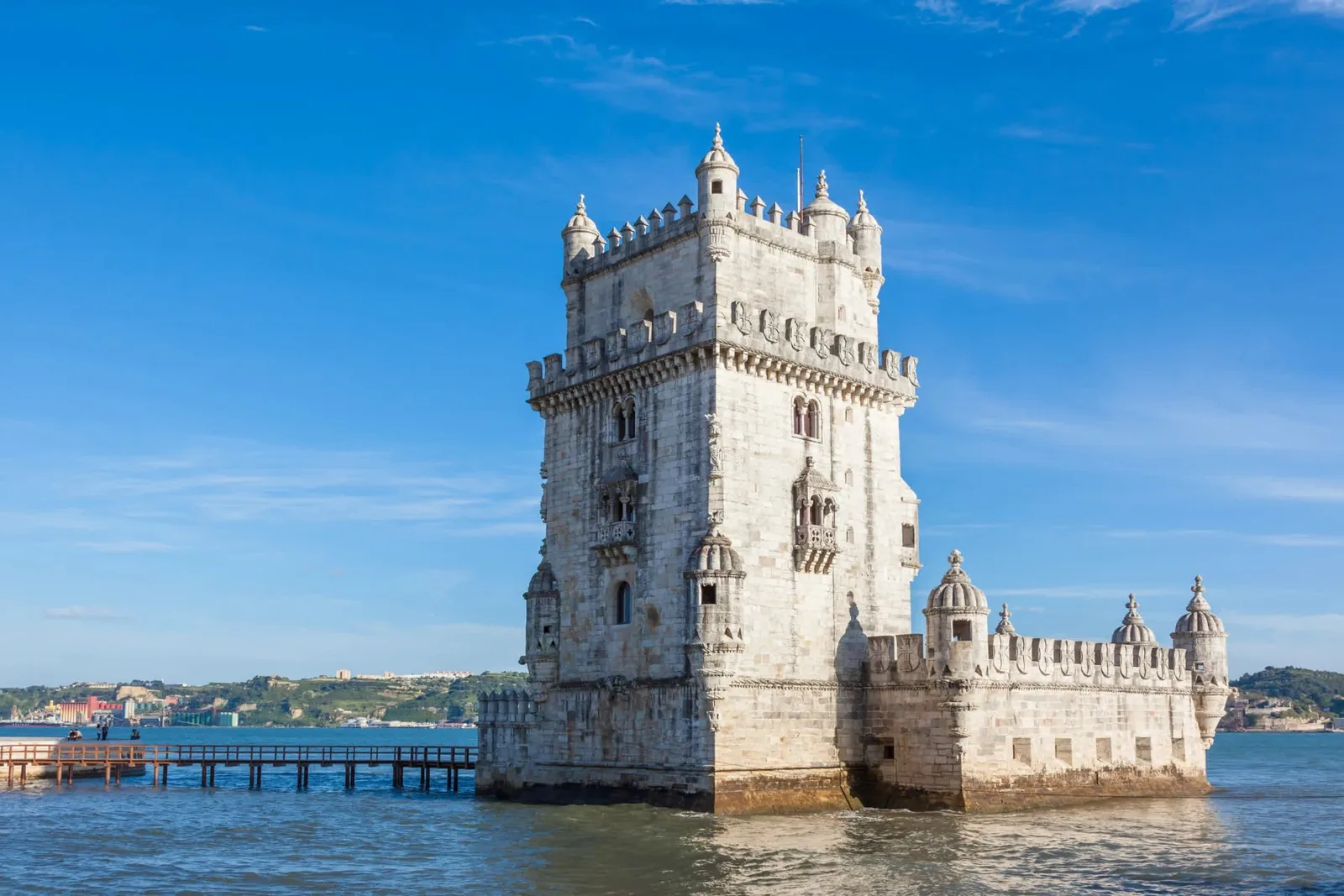
The tower reopened on 27 May 2026 after its first conservation work since 1998, and came back with timed entry slots, so turning up and joining the line no longer works. Inside it is small: spiral stairs, a cistern, one bottleneck after another. The honest caveat is that the payoff is the terrace, not the rooms. Slots, prices and the order that works are in our Belém half-day guide.
I try to get to Belém early. One hour makes a real difference to the queues and to the number of groups.
- Where: Belém riverfront (map).
- Cost: €15 adult, €7.50 reduced.
- Hours: Tuesday to Sunday 09:30 to 17:30, closed Mondays.
- Time needed: 30 to 45 minutes.
- Best time: the first slot of the day.
- Book: yes, on the official page.
2. Mosteiro dos Jerónimos
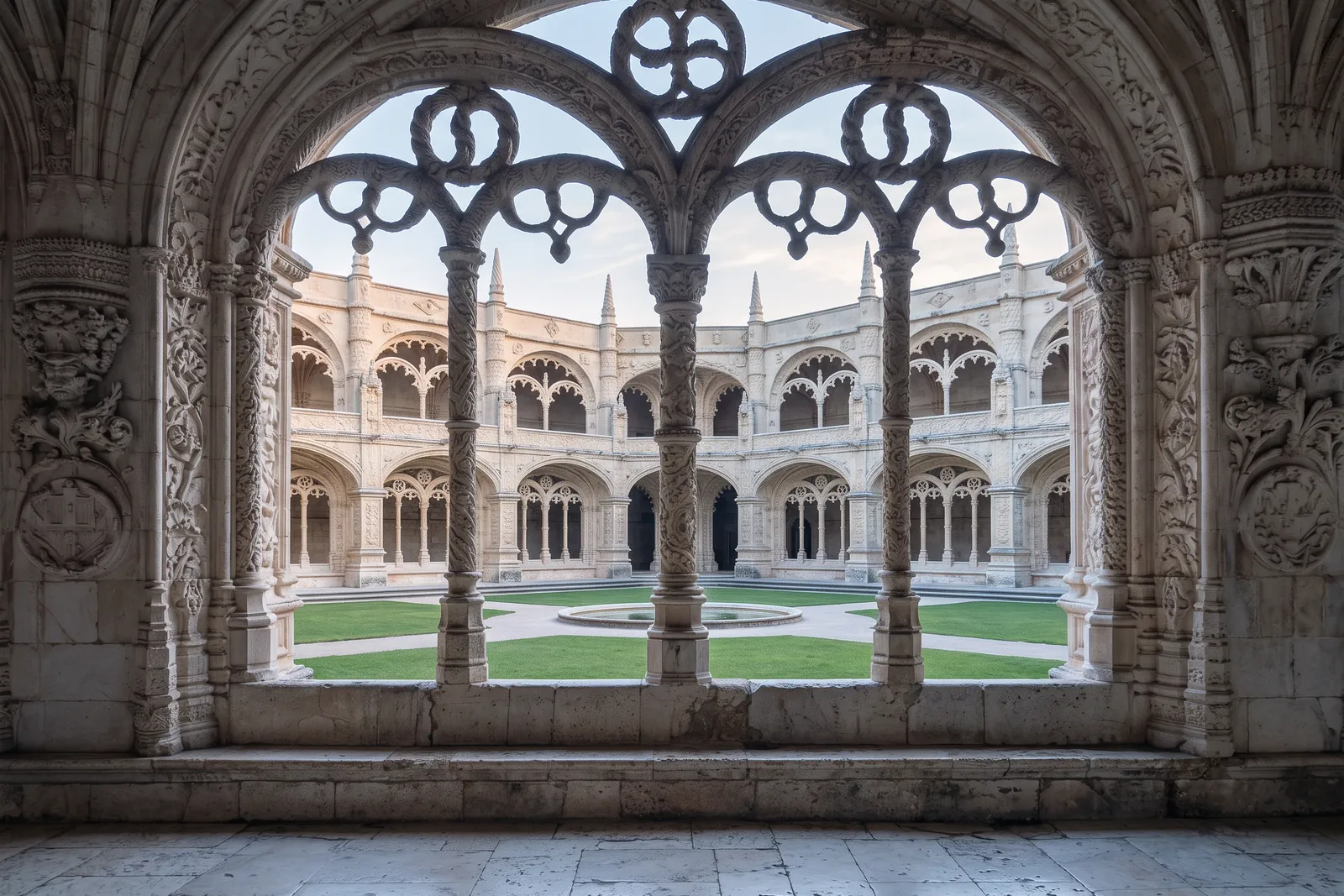
Ten minutes on foot from the tower, and the better building of the two. The church is free and holds the tombs of Vasco da Gama and Camões; the cloister is the ticketed part, two storeys of Manueline stone carved like rope and coral. There is no combined ticket with the tower, whatever a reseller says. Walk into the free church first: it tells you whether the cloister queue is worth it.
- Where: Praça do Império (map).
- Cost: €18 for the cloister, church free.
- Hours: Tuesday to Sunday 09:30 to 17:30, closed Mondays.
- Time needed: an hour.
- Best time: at opening, or the last hour.
- Book: yes, at the official ticket page.
3. Pastéis de Belém
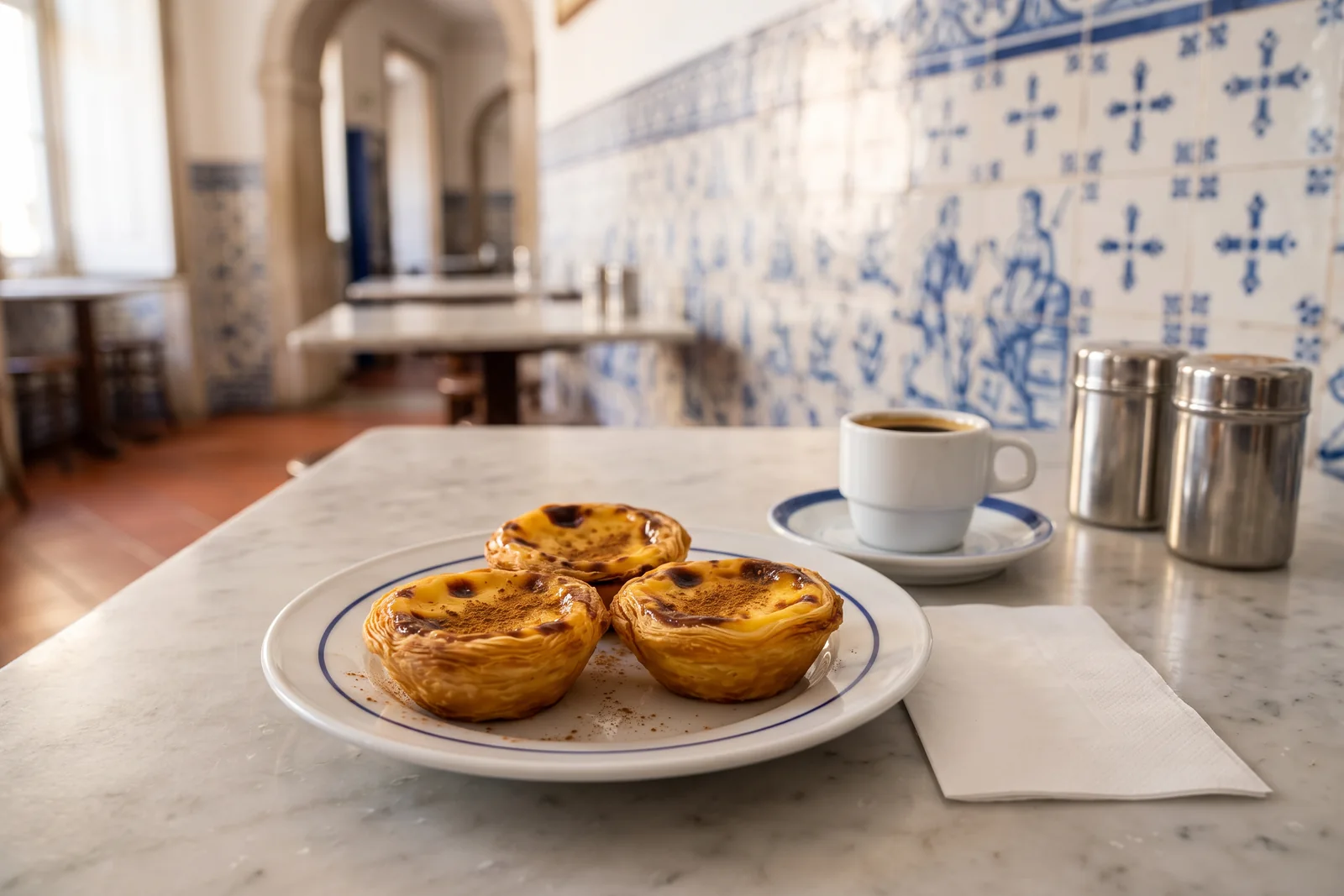
The recipe came out of the Jerónimos monastery in 1837 and has not left the street since. The queue you see from outside is the takeaway counter, and it is why most visitors give up. It is also avoidable: the house has more than a thousand seats through back rooms nobody outside knows exist. Walk past the line and ask for a table.
- Where: Rua de Belém 84 to 92 (map).
- Cost: about €1.25 at a table; the takeaway price is not published, so check on arrival.
- Hours: open every day; exact times are not published on the official site, so check.
- Time needed: 20 to 30 minutes seated.
- Best time: before 10:00.
- Book: not needed.
4. MAAT and the Belém riverfront
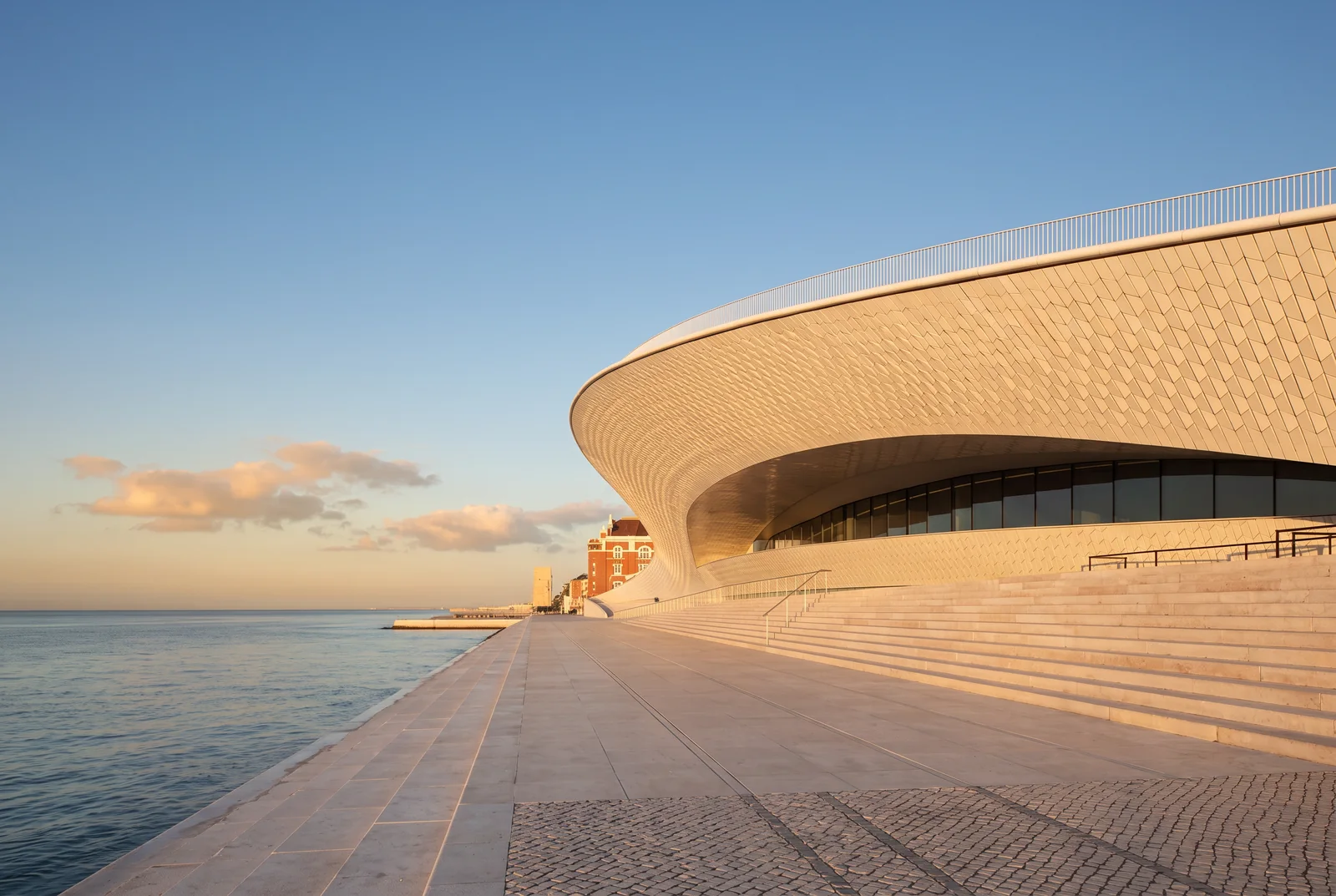
Between the monastery and the bridge the riverfront turns modern. MAAT is the low white wave on the water, an art and architecture museum whose roof doubles as a public walkway. East of it stands the Padrão dos Descobrimentos, a 1960 monument you climb by lift for the widest view of Belém.
- Where: Avenida Brasília (map).
- Cost: MAAT €16 full for international visitors; Padrão dos Descobrimentos €10.
- Hours: MAAT Wednesday to Monday 10:00 to 19:00; the Padrão daily 10:00 to 19:00 from March to September.
- Time needed: an hour each.
- Best time: late afternoon.
- Book: not needed.
Back in the centre, the castle hill is where Lisbon is least organised and most itself: five entries in one climb.
5. Alfama
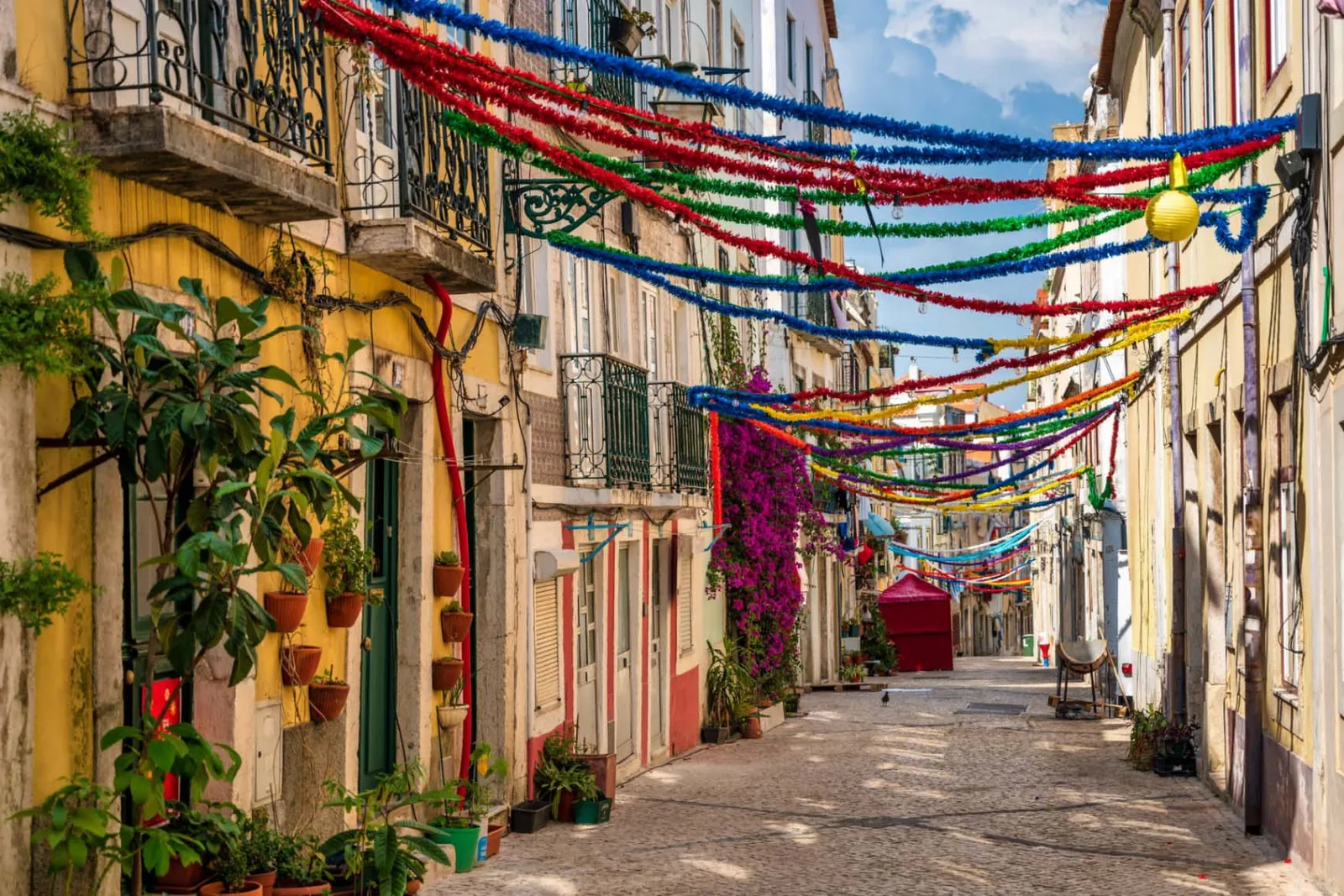
The oldest quarter, the one the earthquake mostly spared, and still a neighbourhood before it is an attraction: laundry over the alleys, a grocer at the foot of a staircase, a tasca with four tables. The caveat is that it is a real maze, and your phone will lie about which staircase connects to which.
I would never follow only the shortest route on the map here. Some of the most interesting streets appear exactly when you stop trying to reach the next monument quickly.
- Where: below the castle (map).
- Cost: free.
- Hours: always open.
- Time needed: half a day, walked without a plan.
- Best time: early morning, or after 19:00.
- Book: not needed.
6. Castelo de São Jorge
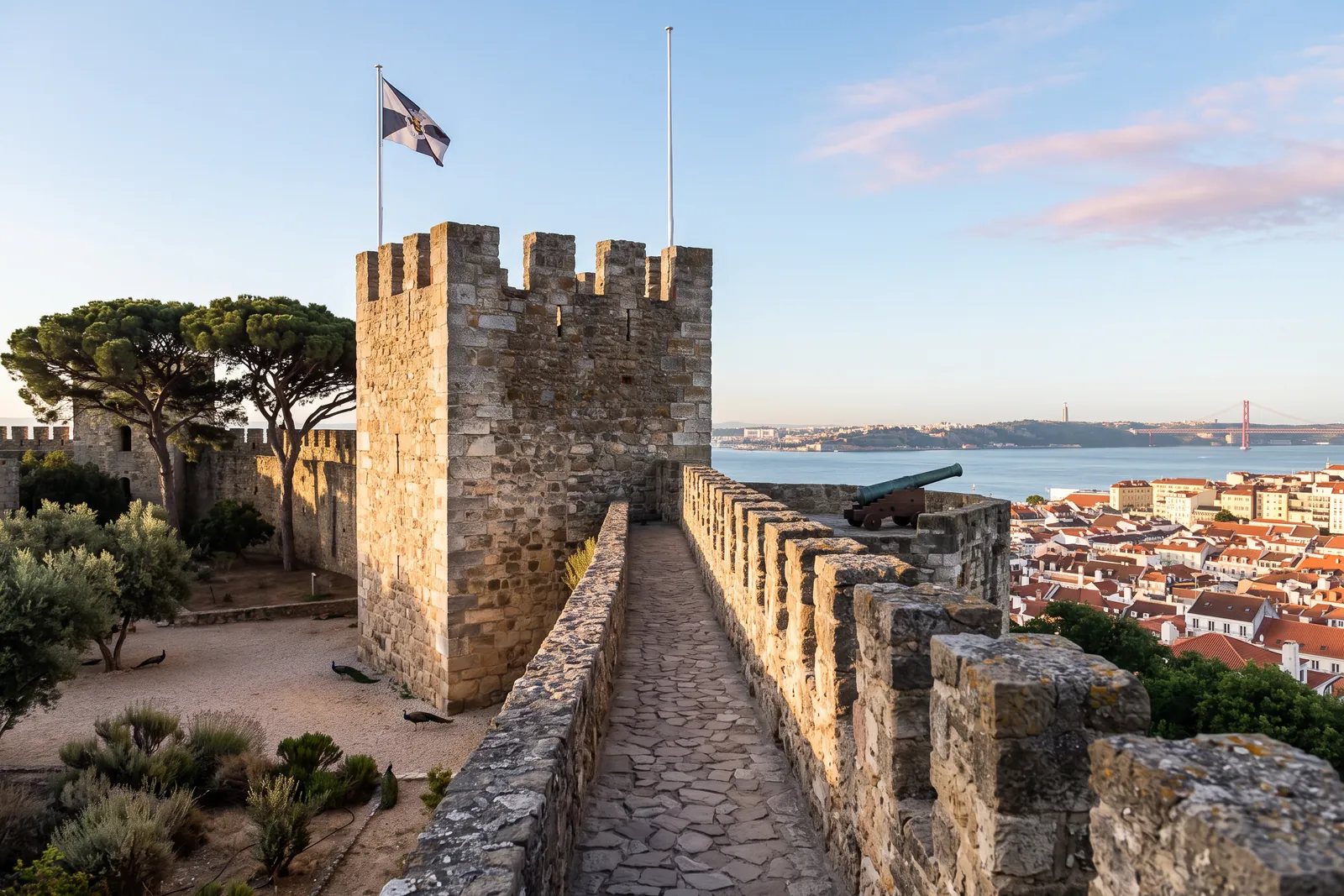
Eleven towers and a walkable rampart on top of the hill, an archaeological site layered from the Iron Age through the eleventh-century Islamic quarter, and the Camera Obscura, a periscope that throws a live image of the city onto a white dish. Most visitors miss that last one: it runs as a separate guided visit, so ask on the way in.
- Where: the top of the castle hill (map).
- Cost: €17 adult, €14 over 65, €8.50 under 25, free under 12.
- Hours: 09:00 to 21:00 from March to October, to 18:00 otherwise.
- Time needed: 2 to 3 hours.
- Best time: at 09:00, or the last two hours.
- Book: yes, at castelodesaojorge.pt, never a reseller.
7. Sé de Lisboa
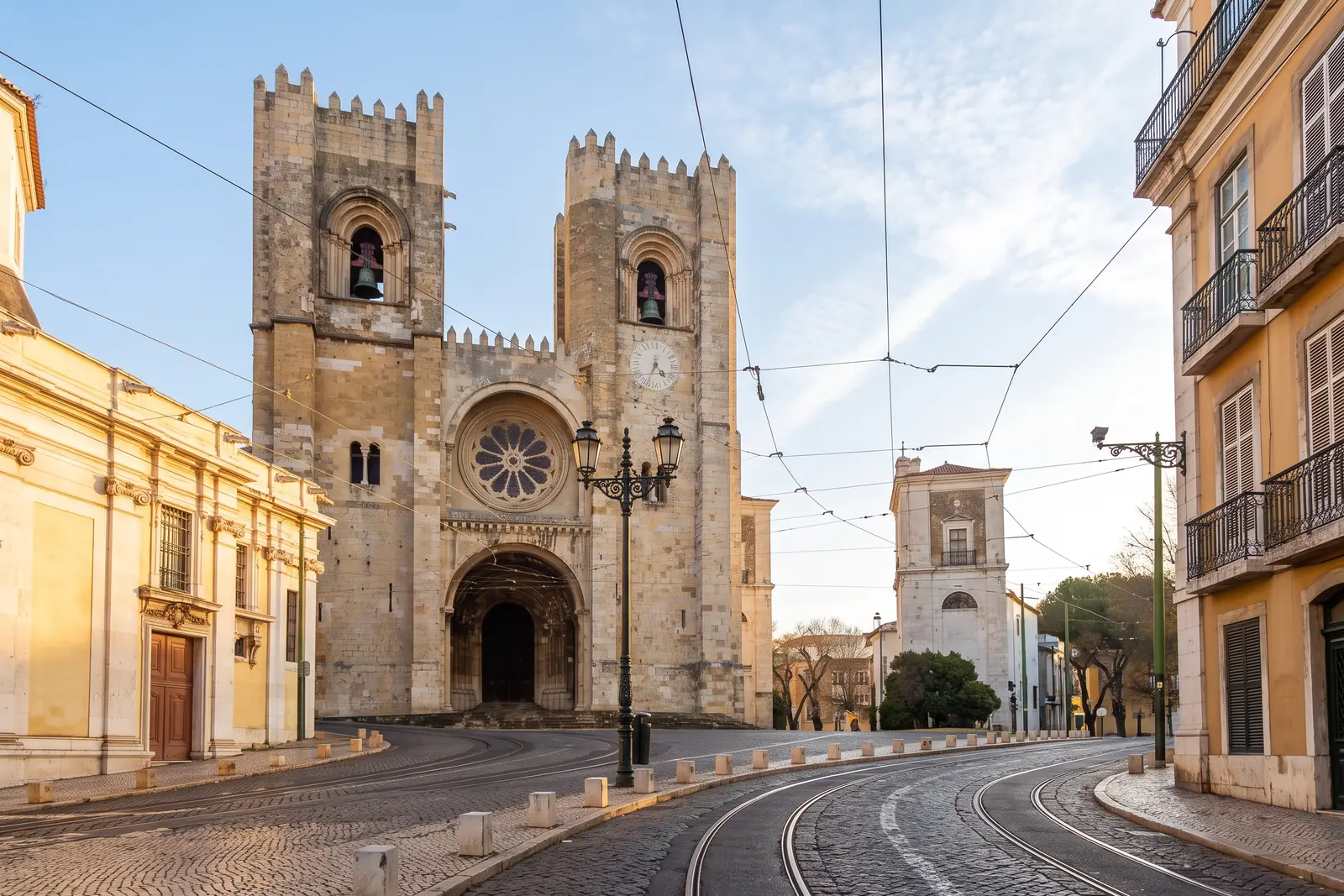
The cathedral has stood since 1147 and looks it: a squat Romanesque front with two blunt towers, built to survive rather than to impress. Since May 2026 the whole visit is ticketed, nave included, with a small side space kept free for prayer. The Gothic cloister sits over an active dig of Roman, Arab and medieval remains; it reopened in late 2024 after restoration, and hours can shift, so ask at the door.
- Where: Largo da Sé (map).
- Cost: €7 for the visit, nave included, since a May 2026 rule change; a small side space stays free for prayer.
- Hours: Monday to Saturday 10:00 to 18:00 from November to May, 09:30 to 19:00 from June to October, closed Sundays to visits.
- Time needed: 20 minutes.
- Best time: mid-morning, outside service hours.
- Book: not needed.
8. The miradouros: Santa Luzia, Portas do Sol, Senhora do Monte and Graça
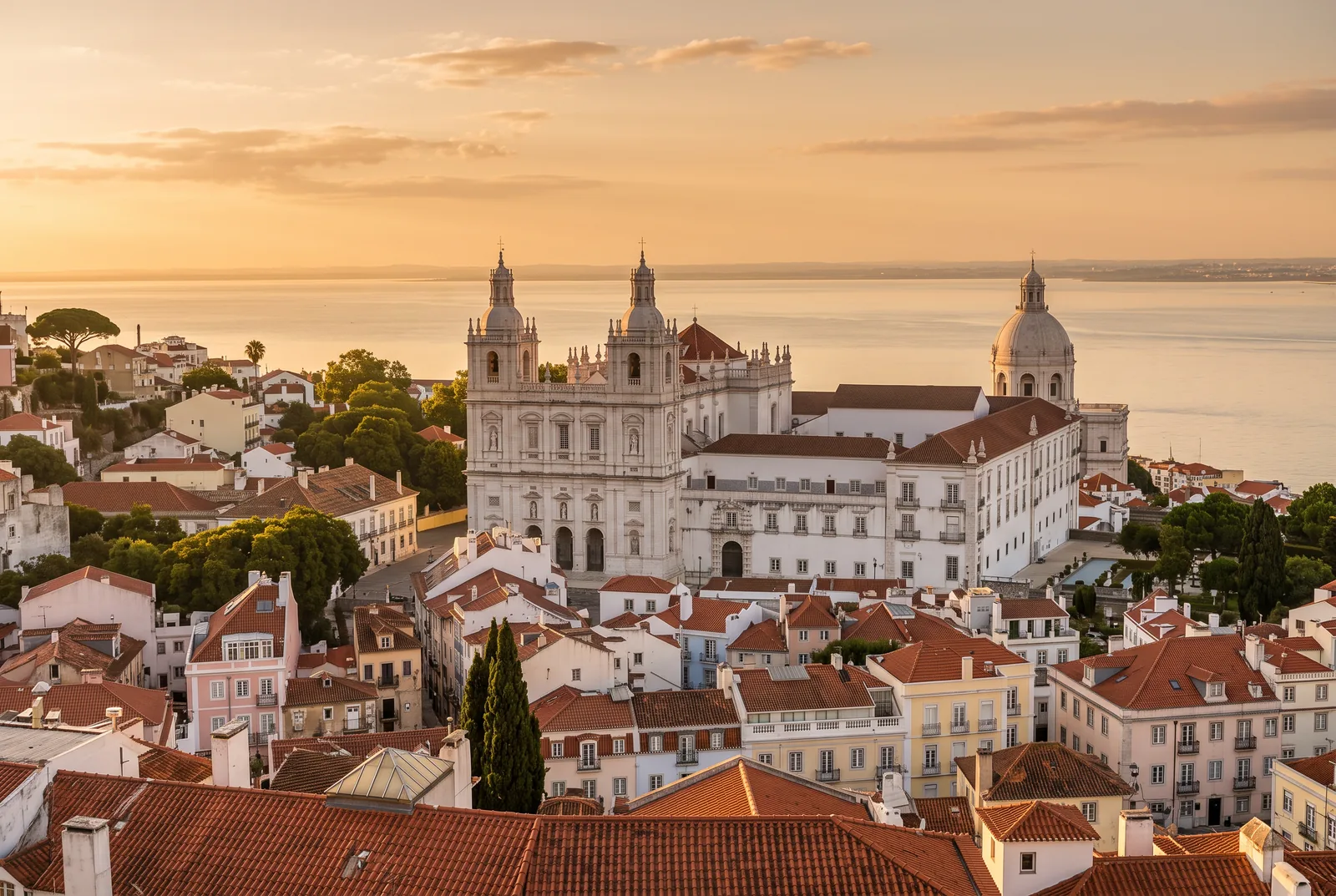
Four viewpoints on one hillside, and all of them free. Santa Luzia is the small terrace with the tile panels, prettier than it is panoramic. Portas do Sol, two minutes along, is the wide one over Alfama's rooftops, and also the tuk-tuk rank, so it fills first. Graça has a kiosk and a statue of Sophia de Mello Breyner Andresen. Senhora do Monte is the highest and emptiest.
- Where: one hillside walk (map).
- Cost: free, all four.
- Hours: always open.
- Time needed: 10 to 15 minutes each.
- Best time: Portas do Sol before 10:30, Graça at sunset, Senhora do Monte at dawn.
- Book: not needed.
9. Tram 28
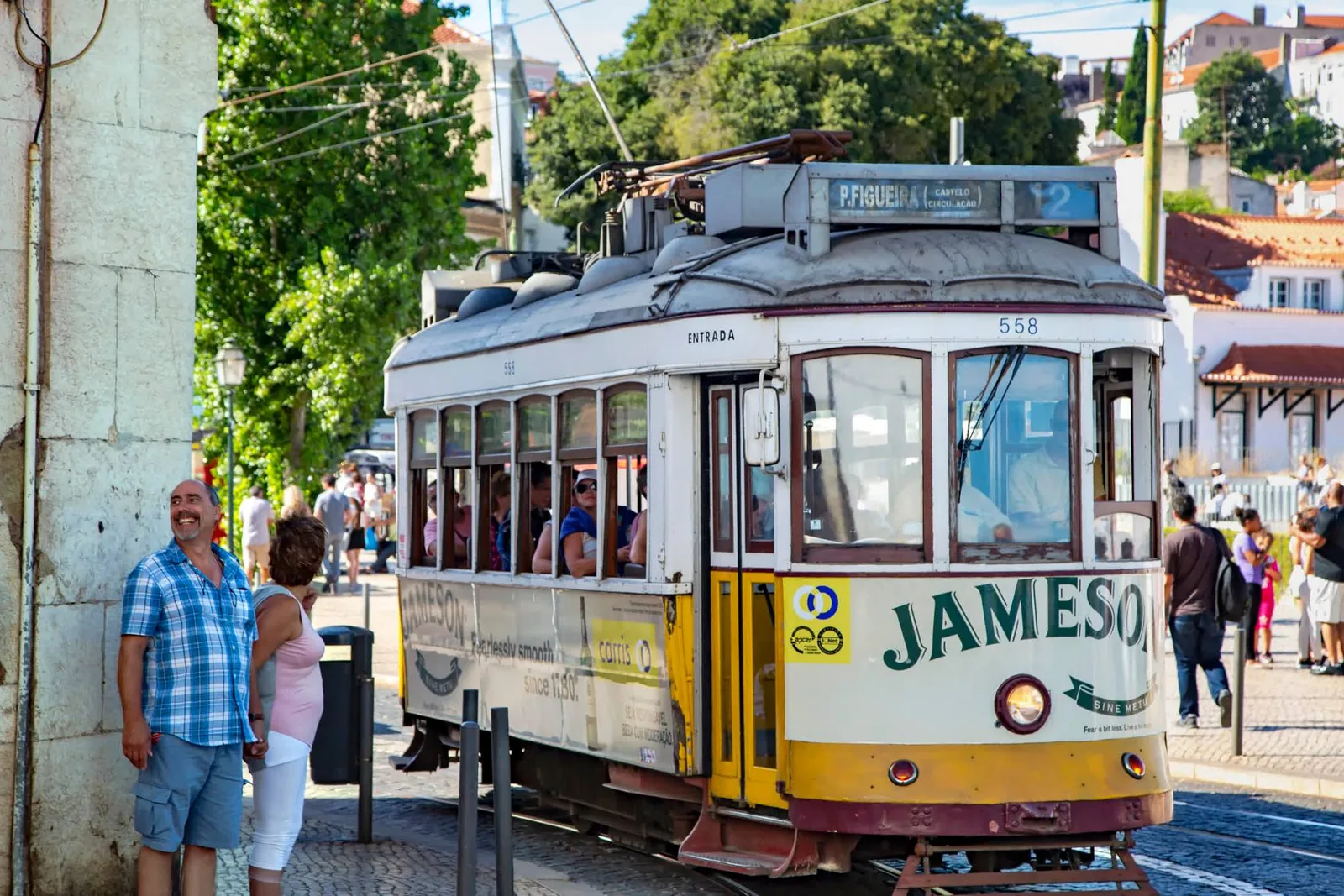
A 1930s carriage running Martim Moniz to Campo de Ourique through Graça, Alfama, Baixa and Chiado, and it is public transport before it is a ride. Two things people get wrong: the fare is much higher paid on board than tapped with a card, and the carriage is a reliable pickpocket spot, worst when jammed at the Alfama stops. If the queue looks absurd, take tram 12, or bus 737, the one route that climbs to the castle gate.
- Where: Martim Moniz (map).
- Cost: €2.30 on board, €1.72 with zapping on a navegante card; the 24 hour Carris and metro pass is €7.25.
- Hours: first departures around 05:40.
- Time needed: 45 to 50 minutes end to end, less for a short stretch.
- Best time: before 09:00 or after 19:00.
- Book: no, but load a card first.
At the bottom of the hill, Baixa is the rebuilt city: a grid laid out after 1755, three entries wide and flat.
10. Praça do Comércio and the Arco da Rua Augusta
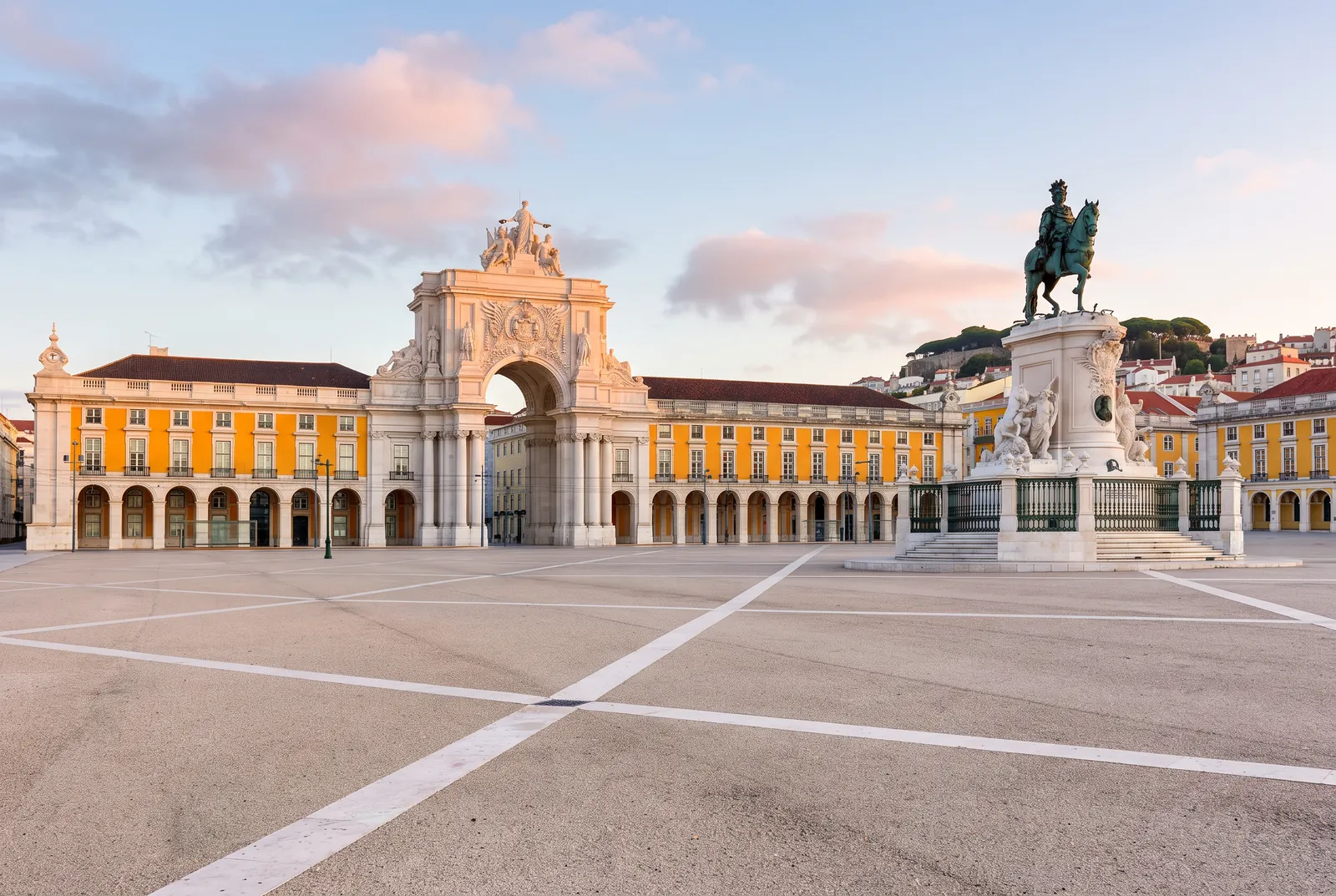
The square where the royal palace stood until the earthquake took it, open on one side to the Tagus and closed on the other by the arch that finishes Rua Augusta. You go up the arch by lift and staircase for a view over the grid and the river. At its southern edge the marble steps of the Cais das Colunas run into the water: free, emptier than any miradouro, one of the best sunset seats in the centre.
- Where: the river end of Baixa (map).
- Cost: square free; the arch €3.50.
- Hours: the arch daily 10:00 to 19:00.
- Time needed: an hour with the arch.
- Best time: golden hour on the steps.
- Book: not needed.
11. Convento do Carmo and the Santa Justa lift
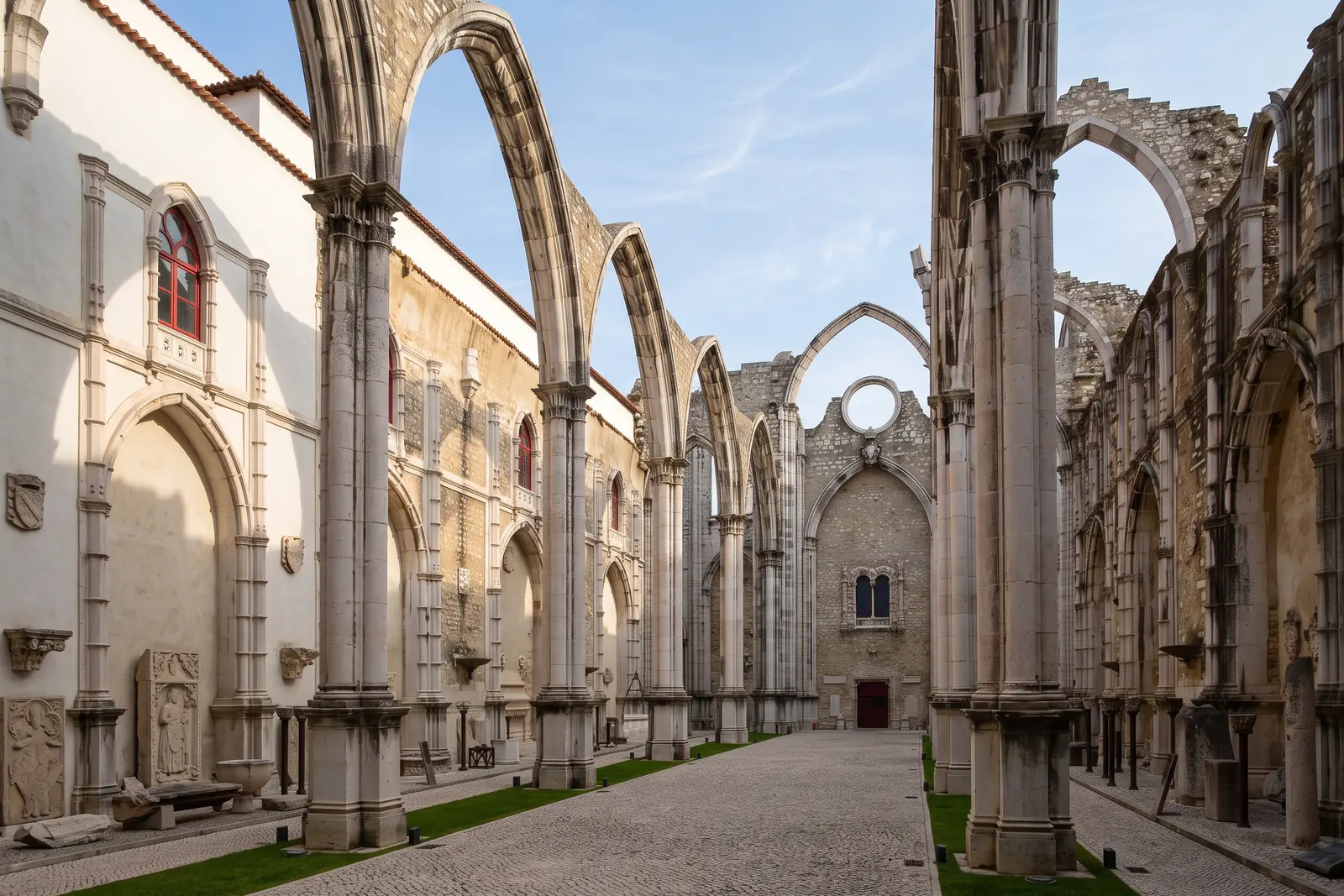
The Carmo church lost its roof in 1755, so the Gothic nave stands open to the sky with a museum inside. Next to it stands the Santa Justa lift, closed since the Ascensor da Glória accident of September 2025, with no reopening date announced by Carris; when it ran, its queue was one of the longest pointless waits in the city.
I would not queue for the lift even when it is running, and right now it is not. I walk up to the Carmo instead and take the upper level far more calmly, which costs nothing.
As of August 2026 the Glória, Bica and Lavra funiculars remain suspended after the Ascensor da Glória accident of 3 September 2025, with no reopening date.
- Where: Largo do Carmo (map).
- Cost: Carmo museum €7 adult.
- Hours: Carmo Monday to Saturday 10:00 to 19:00 (to 18:00 from November to April), closed Sundays; the lift is closed, with no reopening date.
- Time needed: 45 minutes.
- Best time: early.
- Book: not needed.
12. Chiado
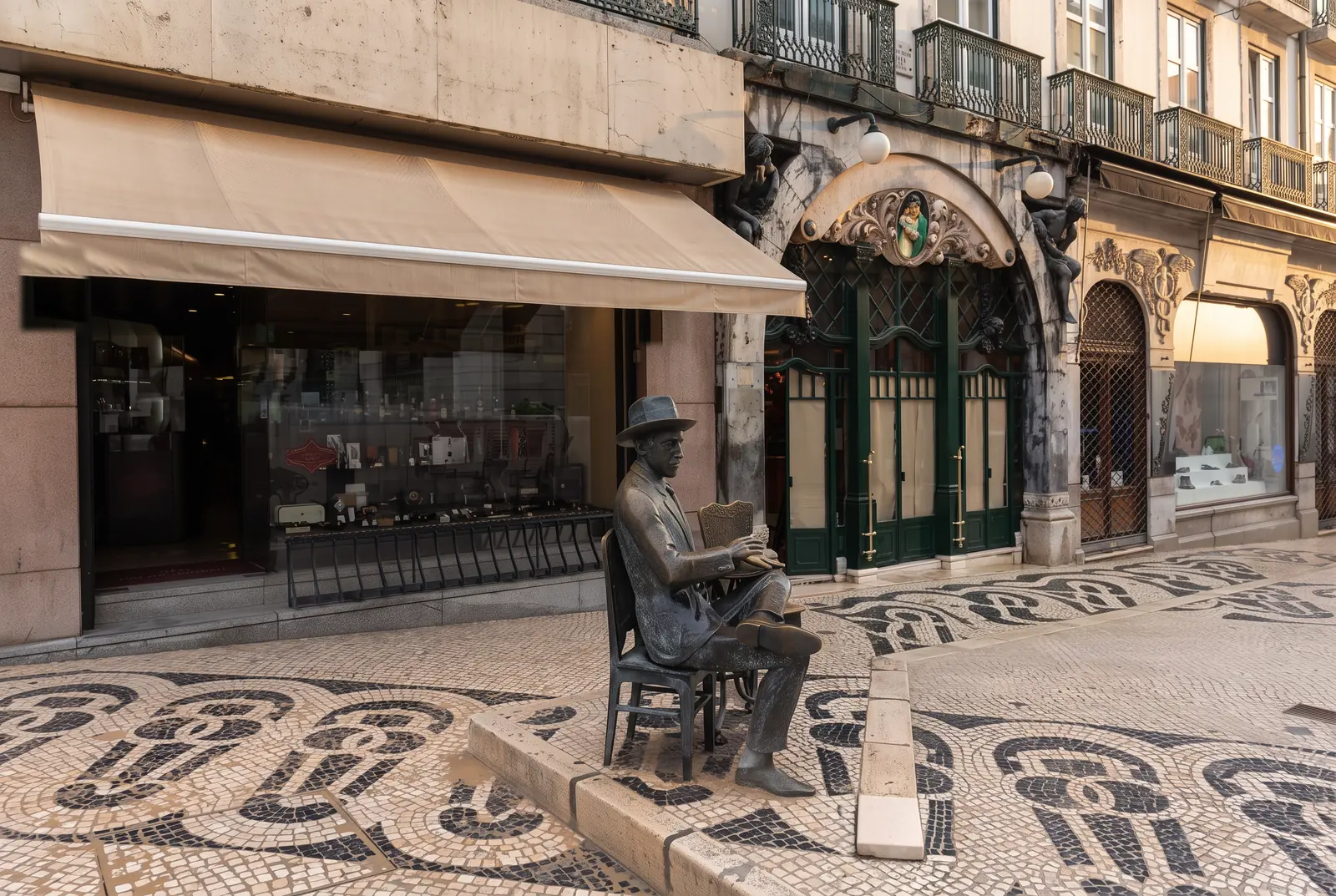
Uphill from Baixa, the district of bookshops, theatres and old cafés, rebuilt after the 1988 fire. Livraria Bertrand has traded here since 1732 and is the oldest operating bookshop in the world. A Brasileira has the bronze Fernando Pessoa on its terrace and a queue to sit beside it; go for the Belle Époque room, not the coffee.
- Where: between Baixa and Bairro Alto (map).
- Cost: free to walk; the Igreja de São Roque free, its museum €2.50, free on Sundays until 14:00.
- Hours: the church in daytime hours, check locally; the museum Tuesday to Sunday 10:00 to 18:00, closed Mondays.
- Time needed: two hours.
- Best time: weekday morning.
- Book: not needed.
West of Chiado the city changes shift: three entries that make sense after dark, or at least after lunch.
13. Bairro Alto and a fado house
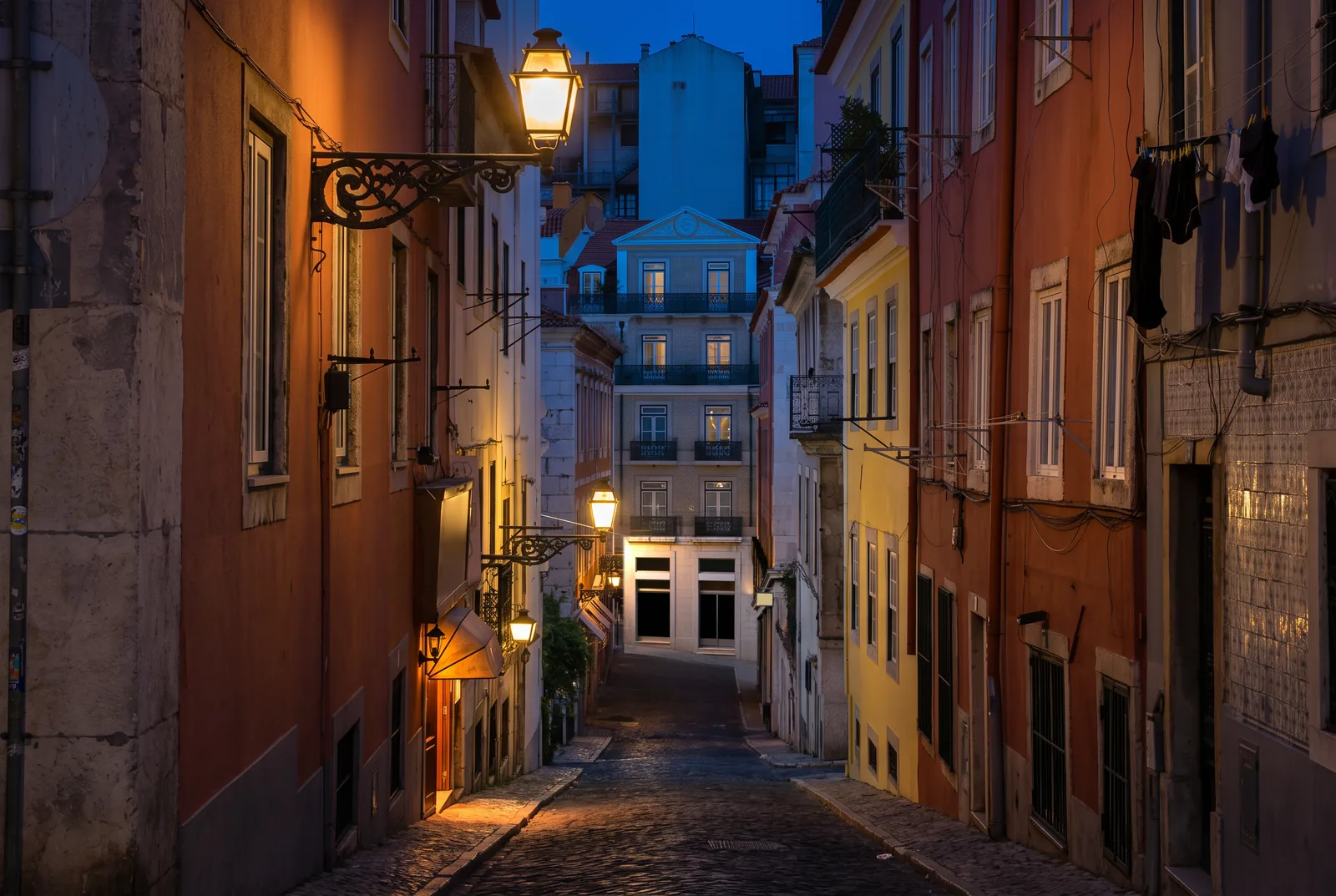
By day Bairro Alto is a quiet grid of design shops and old tascas. After about 21:00 the same streets become the densest bar crawl in Lisbon. One warning about fado with dinner: venues with laminated menus and a coach pickup point nearby charge €50 and upwards for mediocre food and singers on rotation. Book a real house, or a fado vadio tasca where the food is beside the point.
- Where: the grid above Chiado (map).
- Cost: free; dinner with fado about €45 to €65 a head.
- Hours: bars from 21:00; street drinking ends at 2:00, indoor service at 3:00.
- Time needed: an evening.
- Best time: Thursday to Saturday.
- Book: yes for a fado house, one to two weeks ahead.
14. Pink Street and Cais do Sodré
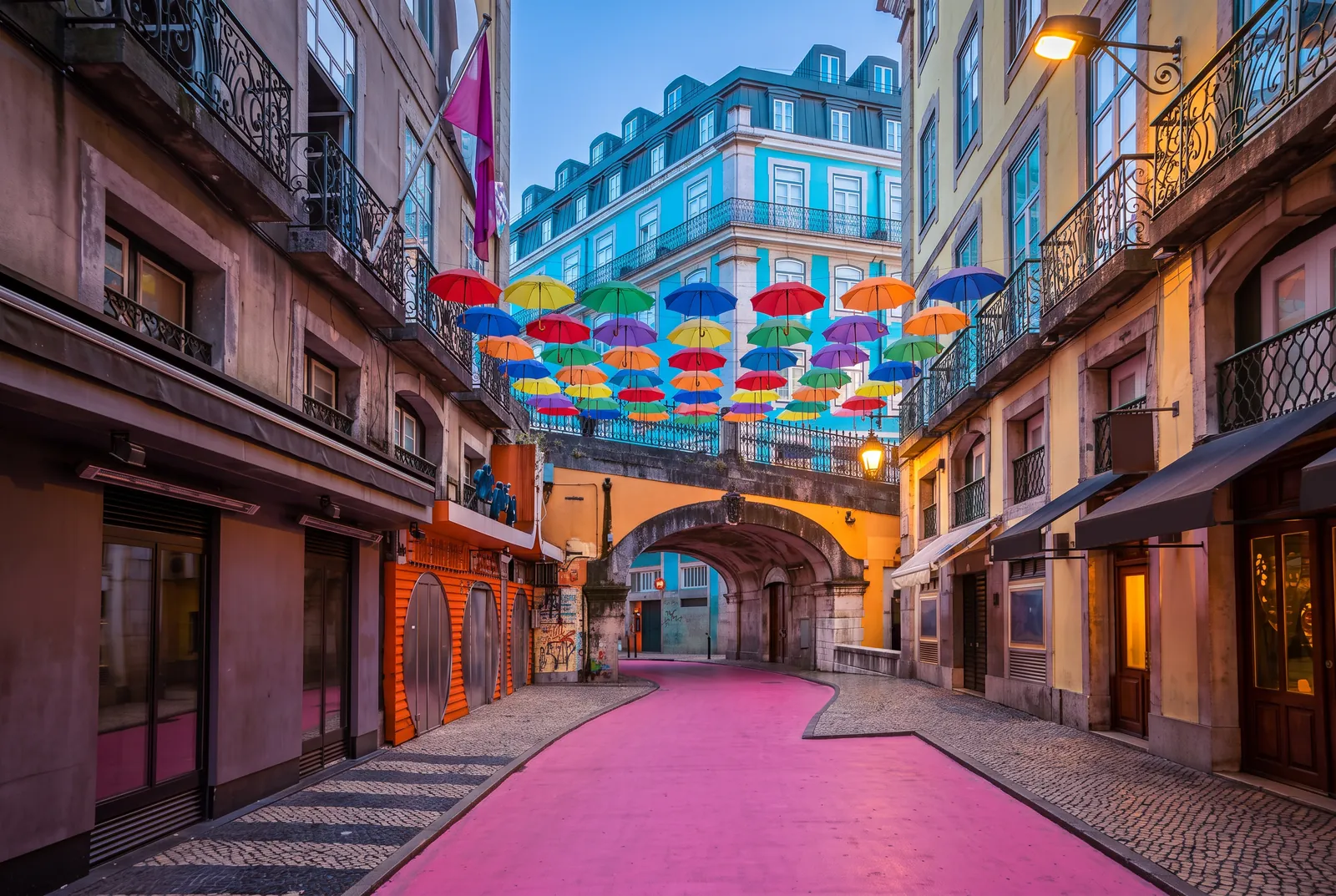
Rua Nova do Carvalho was the sailors' red-light strip until an urban renewal project painted the road pink over a decade ago, and the bars that replaced the old ones kept the address. The honest caveat is that this is a night attraction and nothing else: at 15:00 it is a pink street with the shutters down. Cais do Sodré around it holds the ferry terminal, the Cascais trains and the market.
- Where: Rua Nova do Carvalho (map).
- Cost: free, the street itself.
- Hours: bars and clubs roughly 14:00 to 04:00.
- Time needed: as long as the night runs.
- Best time: after 23:00.
- Book: not needed.
15. Time Out Market
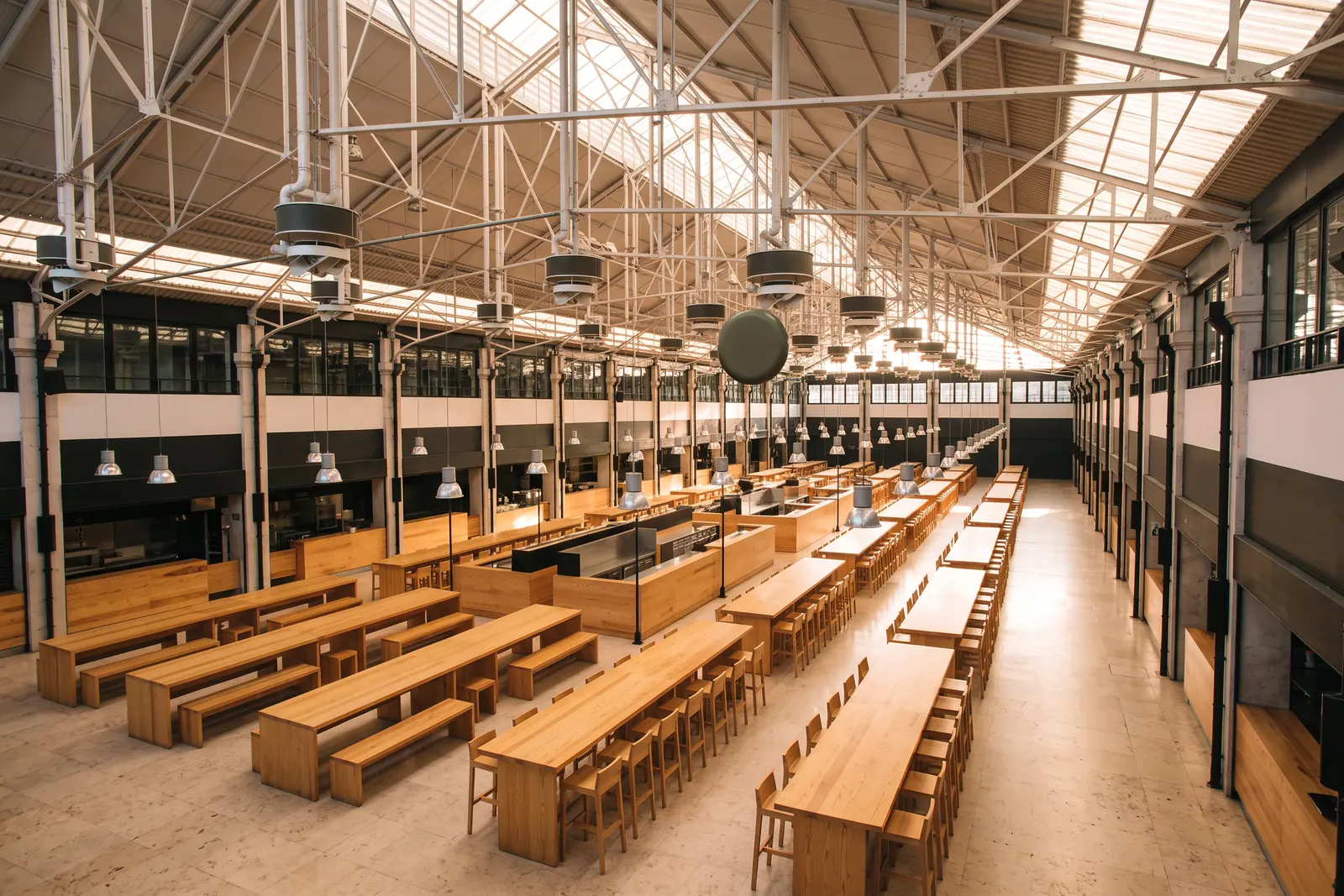
Half of the 1892 Mercado da Ribeira is still a produce market in the morning; the other half is a food hall where known Lisbon kitchens each run a counter around communal tables. It works when a group wants five different things at once, and on a wet evening. It is noisier and dearer than the same plate in a tasca. For the tascas and seafood halls that are better value, see our Lisbon food and restaurant guide.
- Where: Cais do Sodré, opposite the station (map).
- Cost: counter prices, a few euros above the same plate in a tasca.
- Hours: Sunday to Wednesday 10:00 to 00:00, Thursday to Saturday 10:00 to 02:00, per timeoutmarket.com.
- Time needed: an hour and a half.
- Best time: before 12:30 or after 21:30.
- Book: not possible.
Two entries go west along the river and then across it, both easier than the map suggests.
16. LX Factory
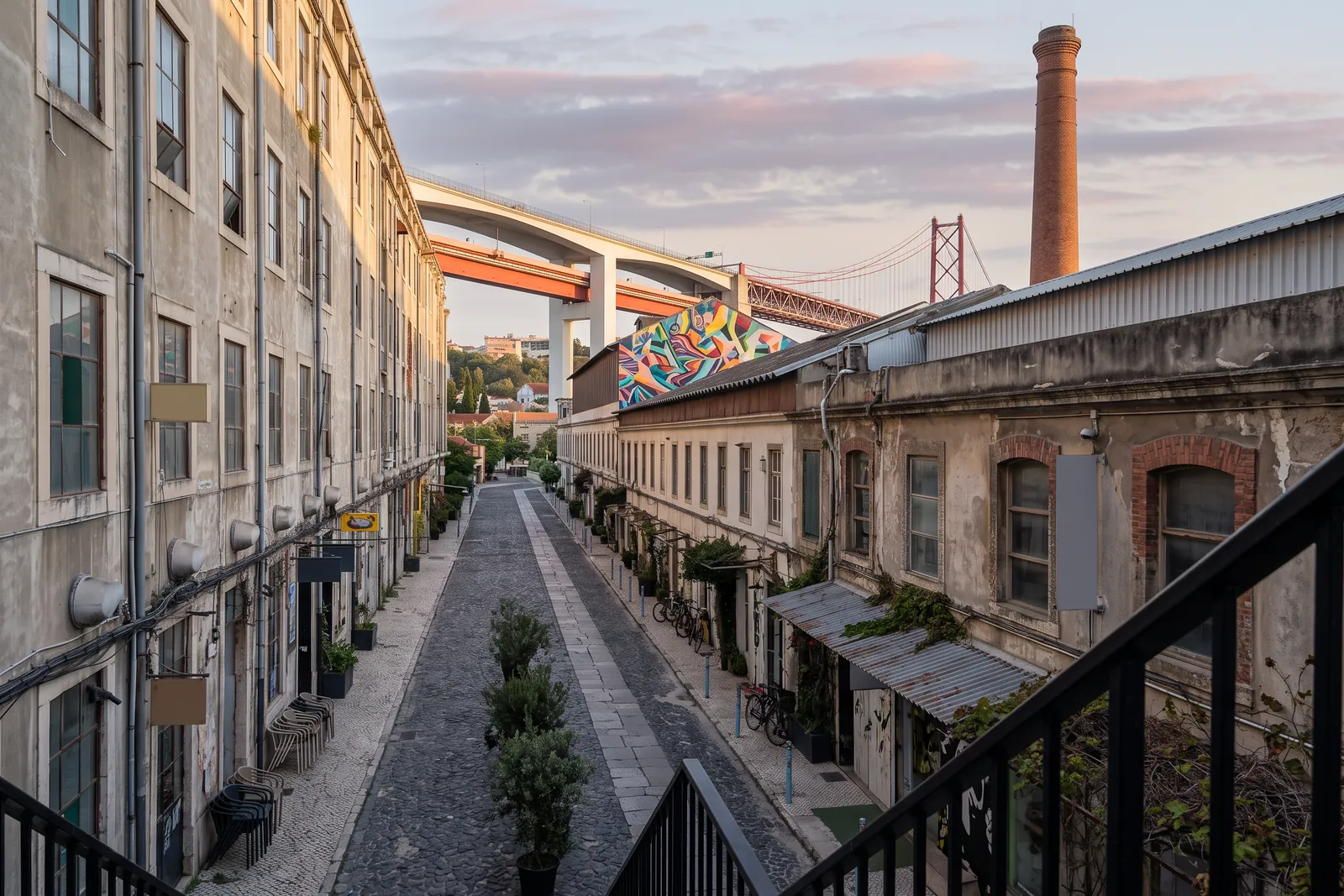
A nineteenth-century industrial compound under the bridge in Alcântara, reopened as a warren of studios, shops, bars and murals. Ler Devagar is the reason to come: a former printing works turned bookshop, presses still on the floor, shelves to the ceiling, a bicycle hanging above the till. The caveat is that this stopped being an undiscovered creative quarter years ago, and the souvenir stalls say so.
- Where: Alcântara (map).
- Cost: free to enter; per-shop hours on lxfactory.com.
- Hours: the site is open from morning until late; each shop sets its own hours, so check before going for a specific one.
- Time needed: an hour or two.
- Best time: Sunday 11:00 to 18:00, for the LX Market.
- Book: not needed.
17. Cristo Rei and the 25 de Abril bridge
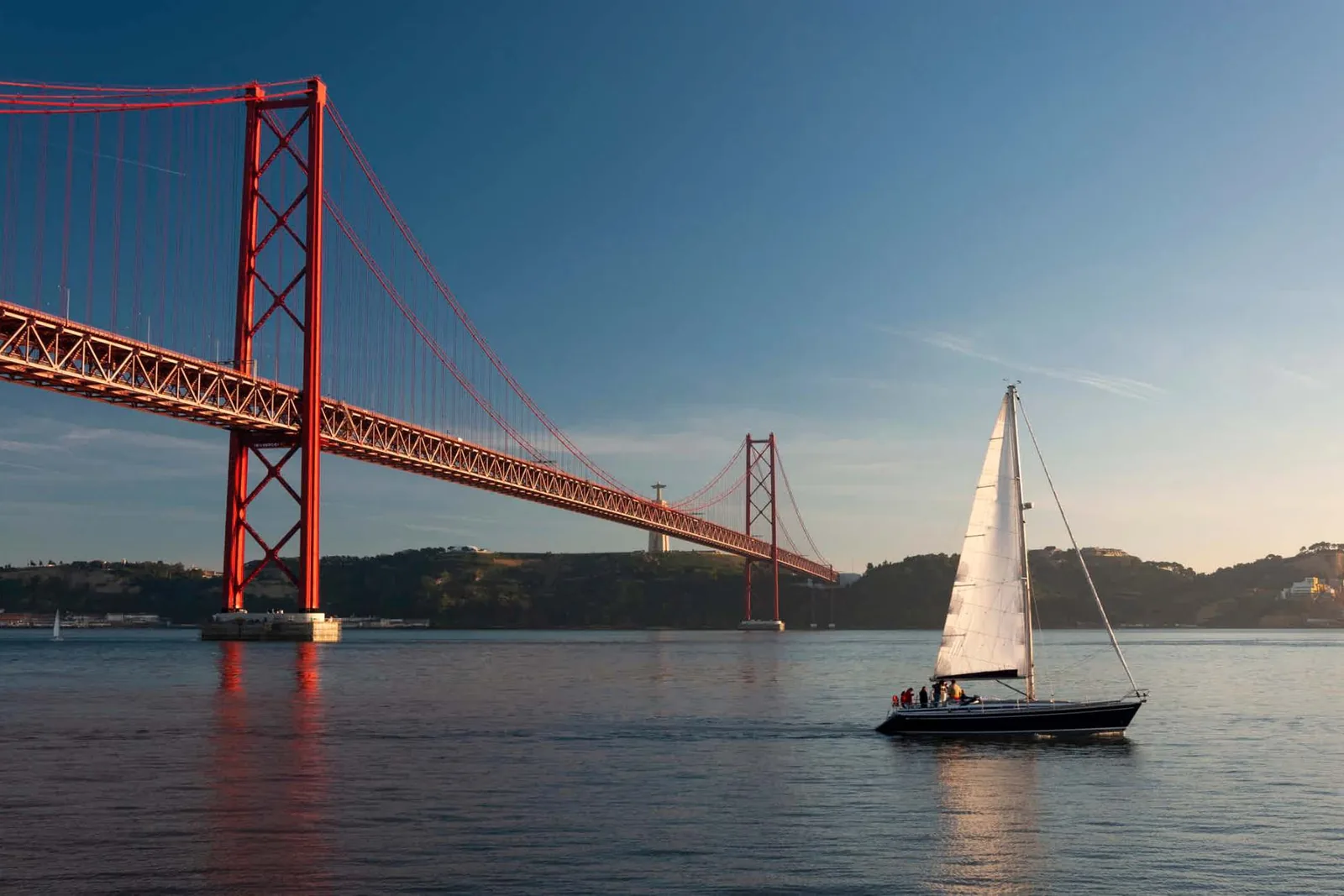
The statue on the Almada cliff faces the city with its arms out, and the reason to go is the reverse angle: the whole bridge, and Lisbon behind it. The ferry from Cais do Sodré to Cacilhas takes under ten minutes, then bus 101 climbs the hill. On this bank, Pilar 7 climbs inside one of the bridge piers to a glass-floored platform at about 80 metres; its glass lift has been out of service for long stretches in 2026, so expect the stairs.
- Where: Almada; Pilar 7 on Avenida da Índia (map).
- Cost: ferry €1.55 single, €1.60 with zapping, on the 2026 TTSL tariff; Cristo Rei €10 for ages 13 and over; €6 for Pilar 7.
- Hours: Cristo Rei 10:00 to 19:00 from April to September; Pilar 7 daily to 18:00.
- Time needed: half a day; an hour for Pilar 7.
- Best time: late afternoon.
- Book: not needed.
Finally the east, which almost no Lisbon guide covers, and which holds the aquarium, the cable car and the transport hub.
18. Oceanário de Lisboa
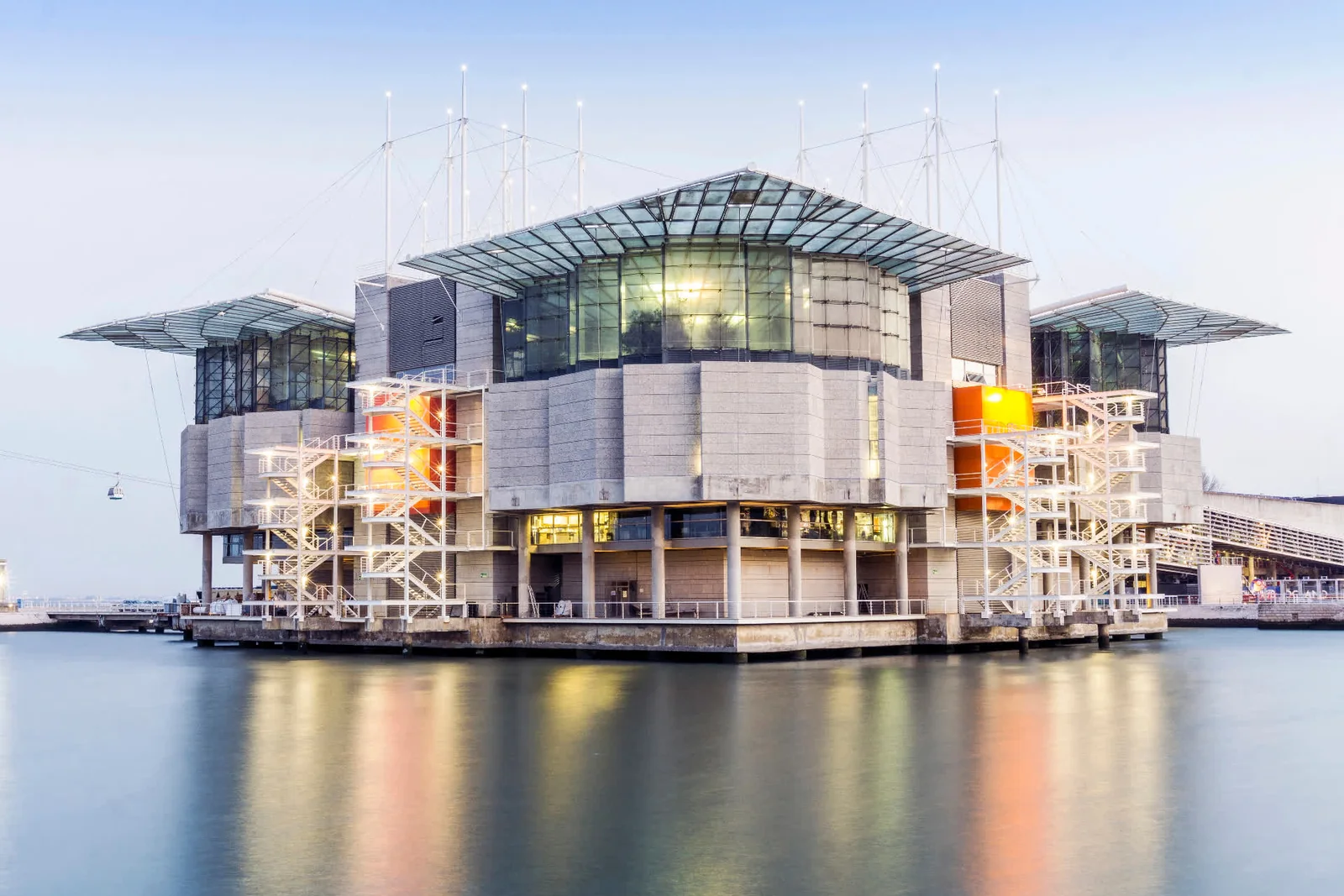
One central tank, four habitats built around it so that the same body of water reads as the Atlantic, the Pacific, the Indian and the Antarctic depending which side of the glass you stand on. It holds a seven-year-old and an adult for two hours, which few places in Lisbon manage. Through 1 November 2026 the atrium carries a temporary exhibition, Monstros Marinhos.
- Where: Parque das Nações (map).
- Cost: €25 to €29 adult depending on the time slot, €15 to €17 for ages 3 to 12, free under 3.
- Hours: daily 10:00 to 20:00, last entry 19:00.
- Time needed: 1.5 to 2.5 hours.
- Best time: at 10:00 or after 16:00, when school groups have gone.
- Book: yes, at tickets.oceanario.pt.
19. Parque das Nações
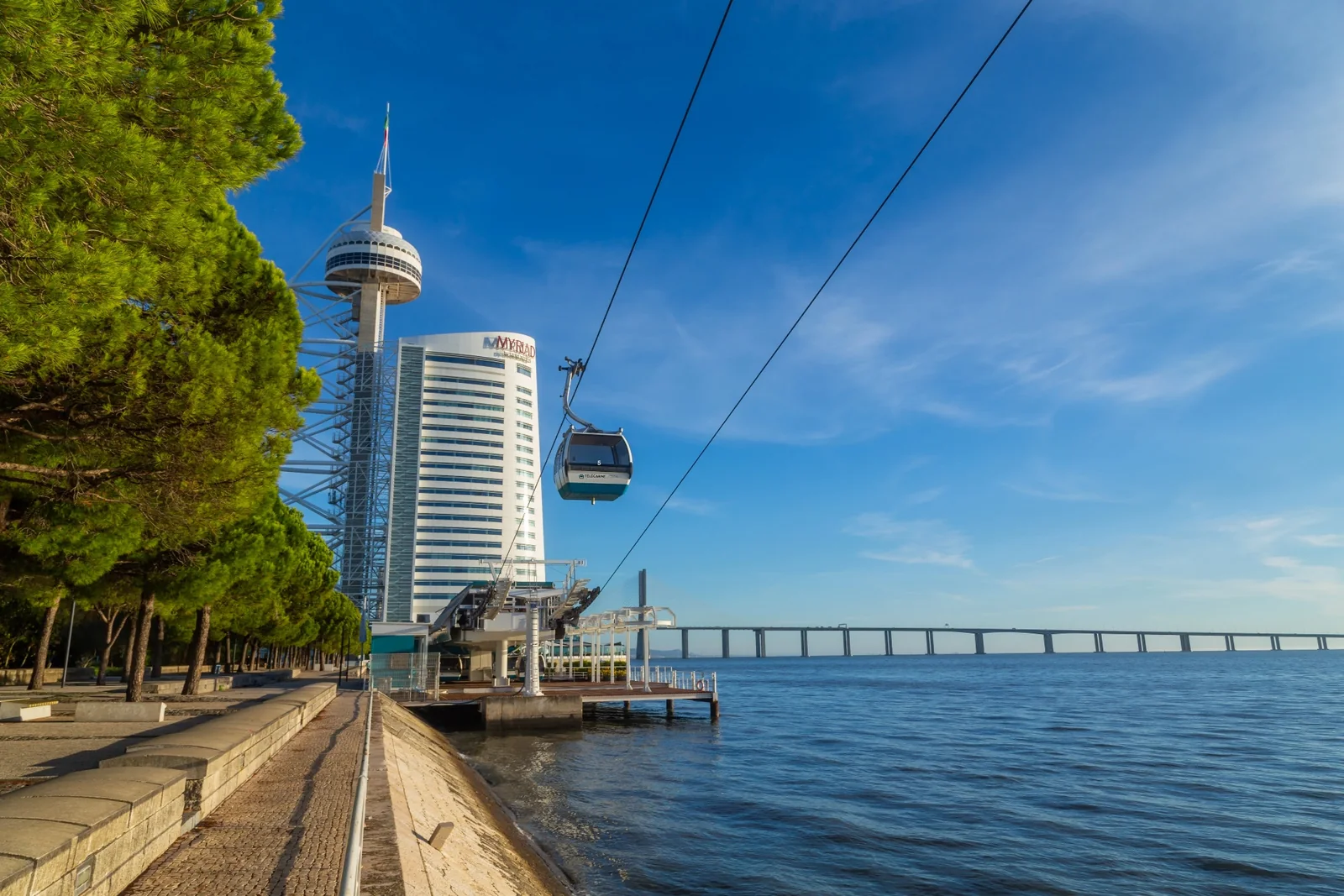
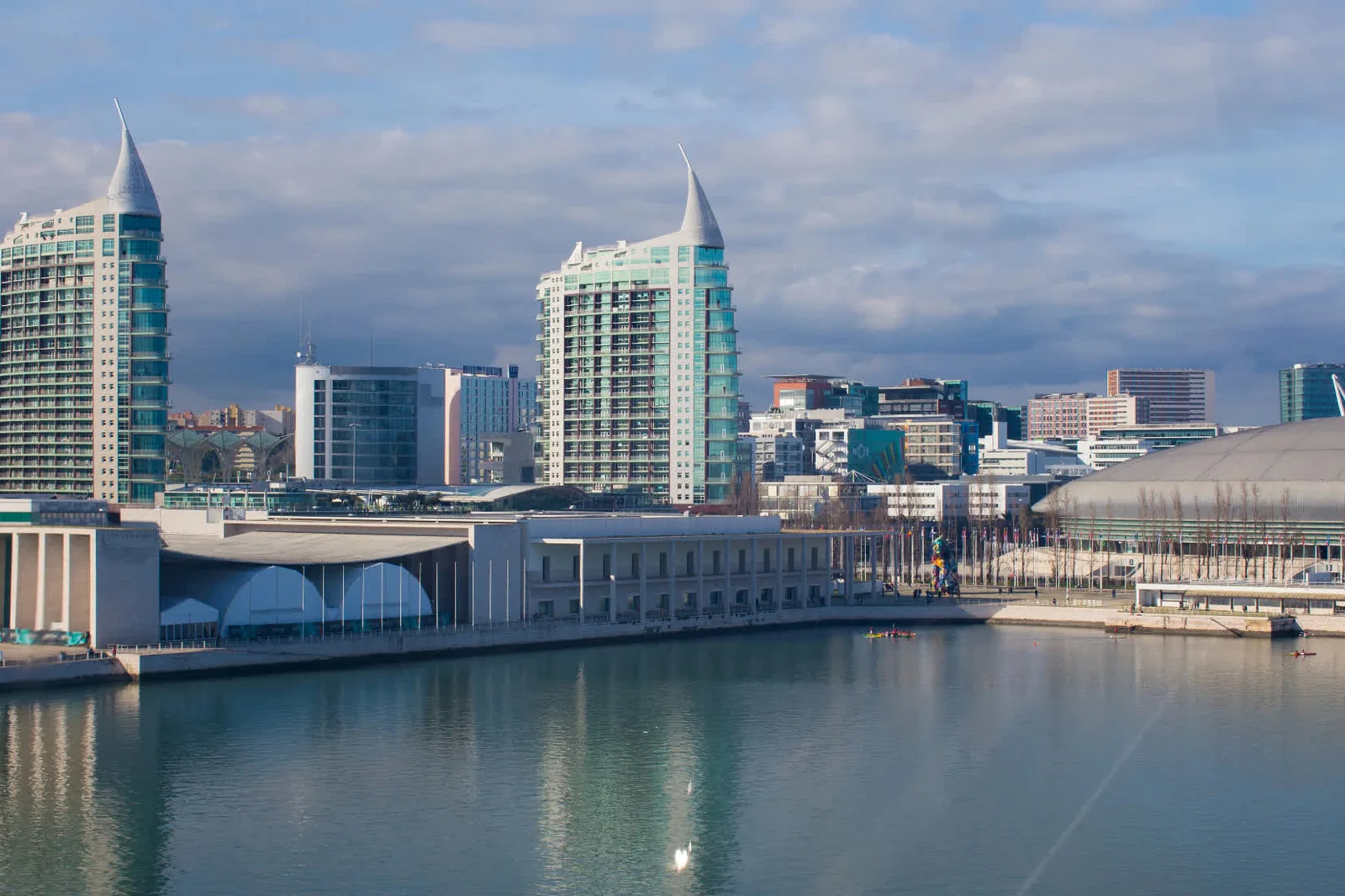
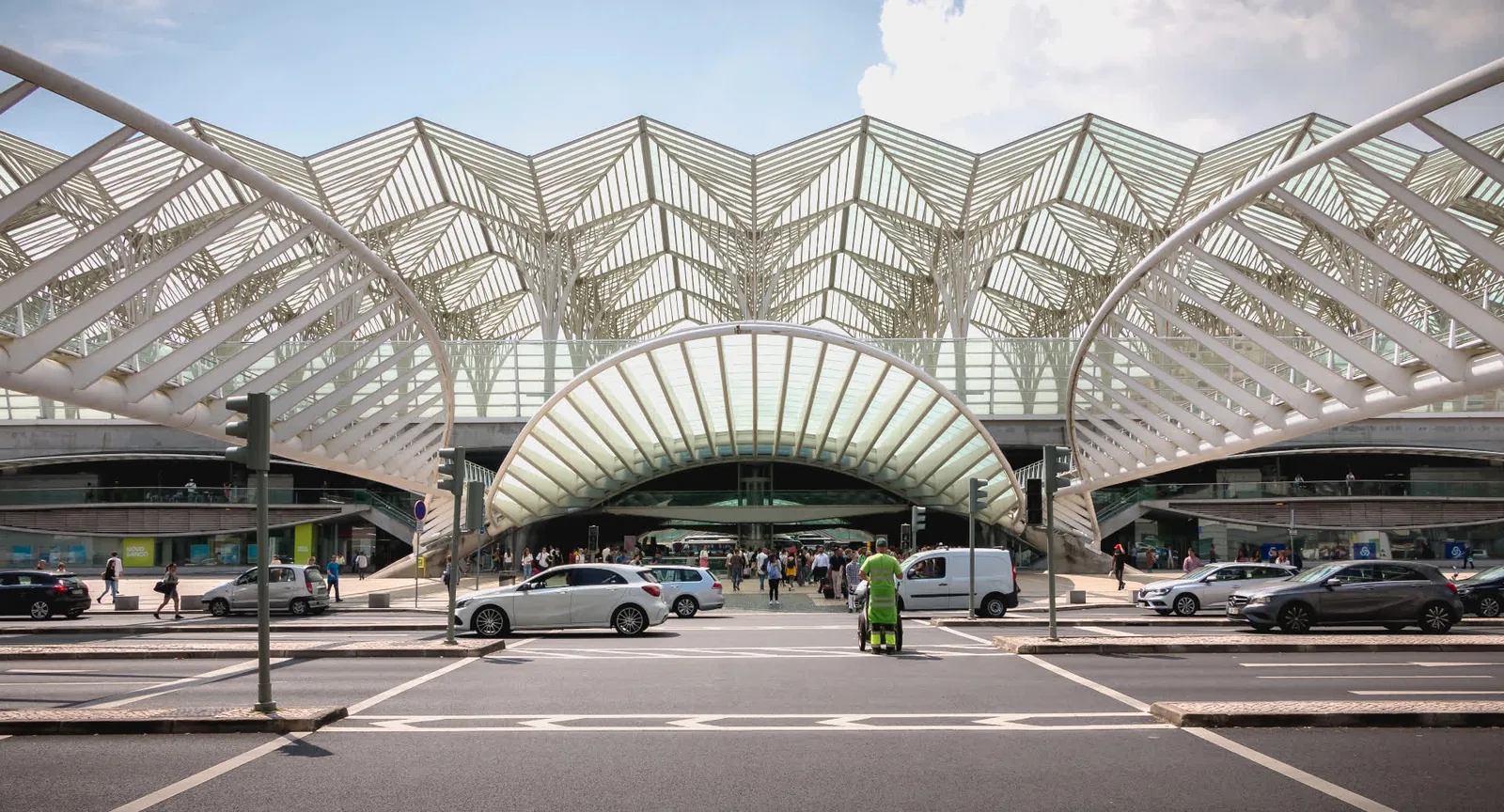
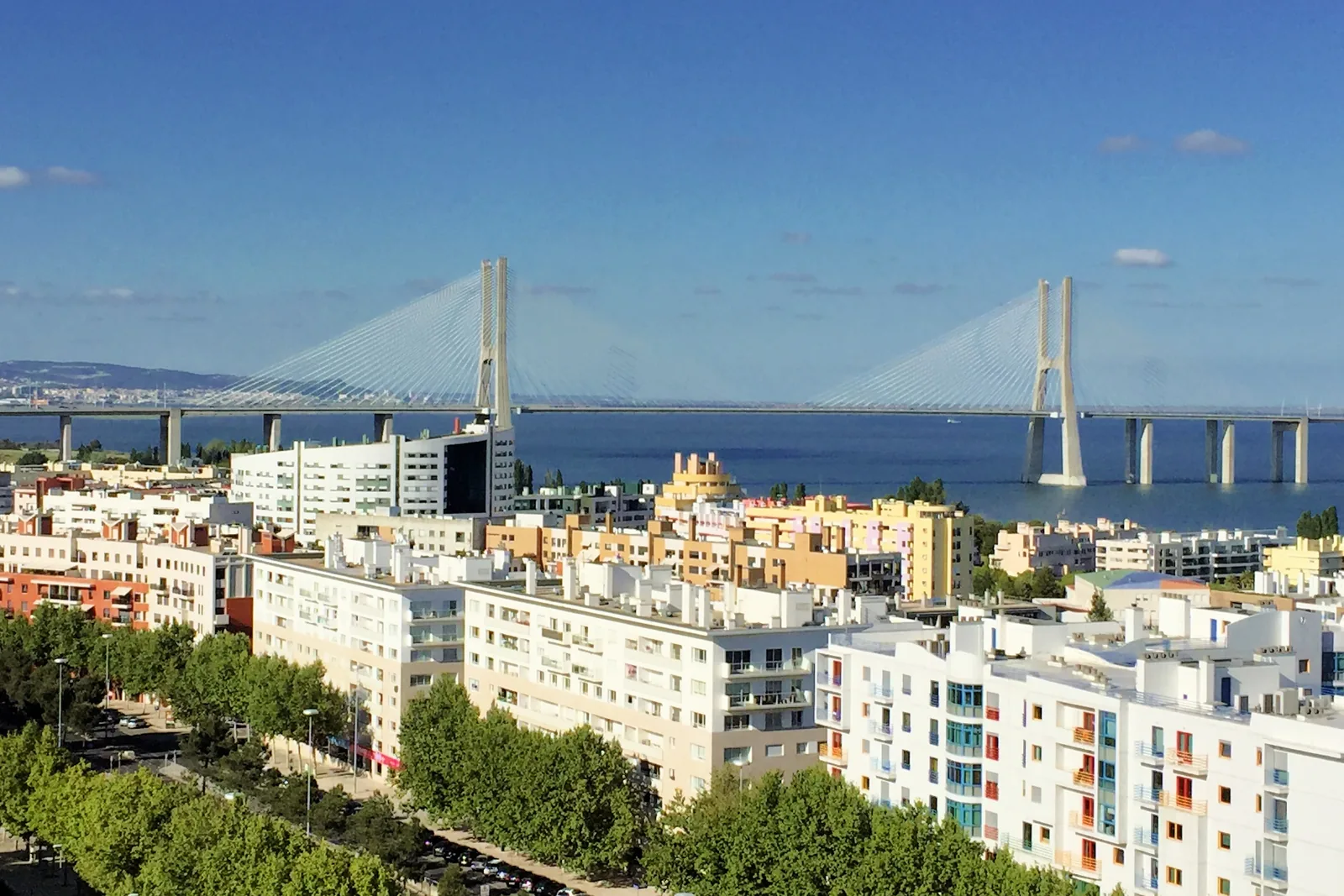
The Expo '98 site, and the one part of Lisbon designed rather than accumulated: a flat riverside promenade the length of the old fairground, gardens, a marina, and Calatrava's Gare do Oriente under its steel canopy. The cable car glides 1,230 metres over the water. The Vasco da Gama tower is a hotel now.
Guests at our Riverside apartment, ten minutes on foot from the Oceanário, often ask whether this is too far from the centre: central Lisbon is about 20 minutes away by metro. Oriente is one of the best transport points in Lisbon, and the distance on a map frightens people more than the journey.
- Where: around Gare do Oriente (map).
- Cost: promenade and station free; the cable car from €7.50 one way.
- Hours: promenade always open; the cable car runs daily, with seasonal hours.
- Time needed: two hours.
- Best time: late afternoon.
- Book: only the cable car, to skip the queue.
20. Feira da Ladra and the Panteão Nacional
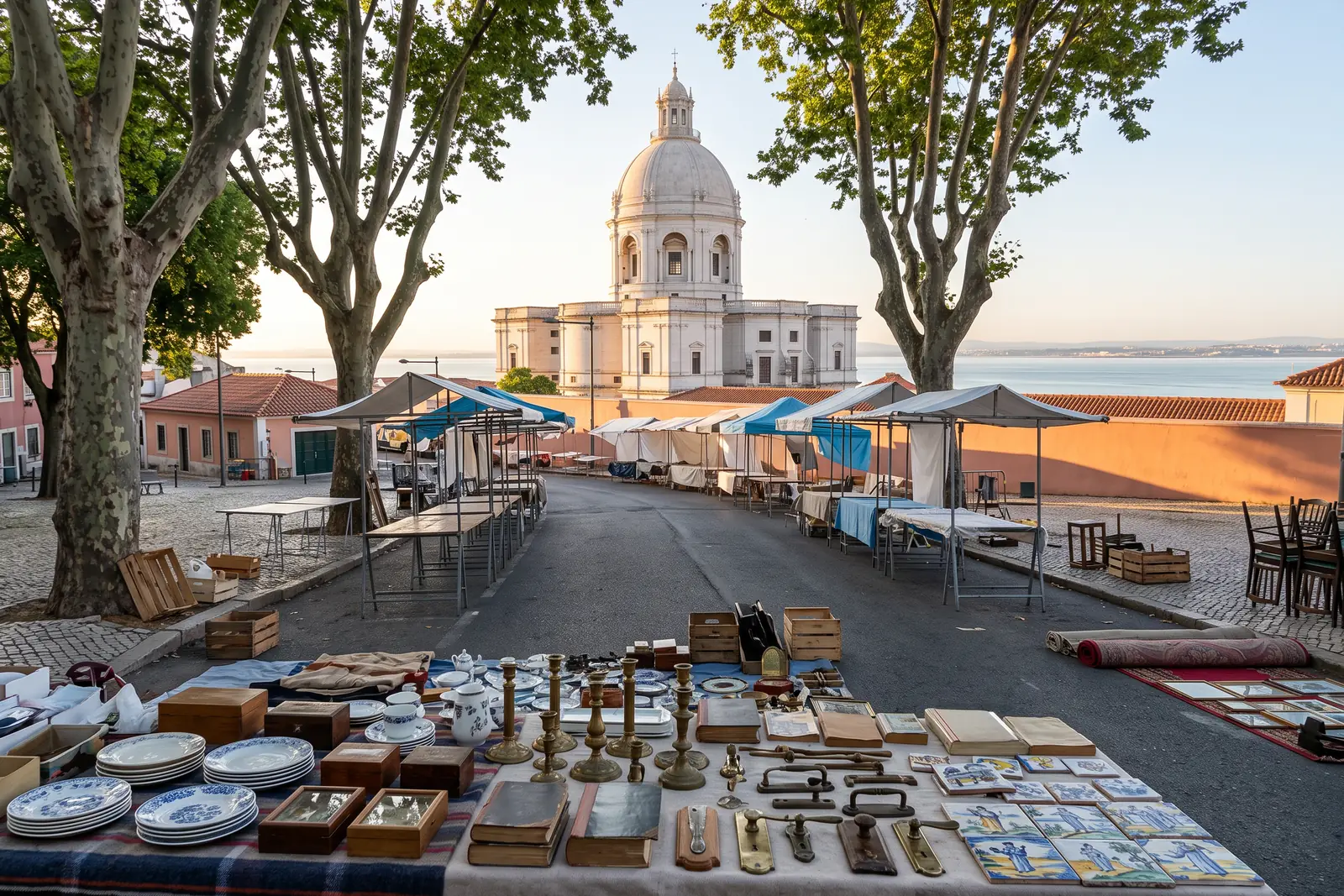
The flea market has been held at Campo de Santa Clara for centuries and still runs on Tuesdays and Saturdays only, which catches out more visitors than any other timing here. Antiques at the river end, honest junk further along, cash expected. Next door the domed Panteão looks like a church from outside and is the reason to come anyway: a narrow stair opens onto a terrace over Alfama's roofs.
- Where: Campo de Santa Clara (map).
- Cost: market free; Panteão Nacional €10.
- Hours: market Tuesdays and Saturdays 09:00 to 18:00 only; Panteão 10:00 to 18:00 from April to September, to 17:00 from October to March, closed Mondays.
- Time needed: an hour, plus 45 minutes for the terrace.
- Best time: Saturday before 11:00.
- Book: not needed.
How to fit these into a few days
Grouping the twenty by area is what makes them fit: Belém in one morning, Alfama and the castle in another day, Baixa, Chiado and Bairro Alto in a third. For the full day-by-day plan, with the order, the timing, what closes on Mondays and the 2 and 4 day versions, see our Lisbon in 3 days itinerary.
With a fourth day, leave the city: our Sintra day trip guide and Cascais guide each cover a day, and the day trips page compares the rest.
Practical: tickets, the Lisboa Card and getting around from Gare do Oriente
Buy a navegante card on arrival. It costs €0.50, once, and you then either load zapping credit, pay as you go across the metro, Carris buses and trams, urban trains and the Cacilhas ferry, or buy a 24 hour pass. Since 1 January 2026 the passes are €7.25 for Carris and metro, €10.35 with the ferry, €11.40 with CP trains. The metro runs 06:30 to 01:00 daily, and its page is worth a look first: the Green line had works at Cais do Sodré in 2026.
From the airport, take the red line: the Aerobus has been discontinued since 2022 and still appears in old guides. Note the asymmetry for day trips, CP trains to Sintra leave from Rossio and Oriente, Cascais trains from Cais do Sodré only. Oriente is five minutes on foot from our Riverside apartment, so both the airport metro and the Sintra train start close by.
- Baixa: red line to São Sebastião, change to blue, about 20 minutes.
- Belém: no metro, so metro to Cais do Sodré then the Cascais-line train or tram 15E, about 45 minutes.
- Alfama: red line to São Sebastião, change to blue to Santa Apolónia, about 20 minutes.
- Cais do Sodré: red line to Alameda, change to green, about 30 minutes.
- Cristo Rei: ferry from Cais do Sodré, then bus 101, about an hour.
- Sintra: direct CP train, about 45 minutes, €2.55 single, €2.05 with zapping.
- Cascais: via Cais do Sodré, about an hour.
- Airport: red line, three stops, about 8 minutes.
The Lisboa Card costs €31 for 24 hours, €51 for 48 and €62 for 72, with children 4 to 15 at €21, €28 and €35. It covers all public transport, the Sintra and Cascais trains included, and free entry to more than fifty sites, the Torre de Belém, the Mosteiro dos Jerónimos and the castle among them. Do the arithmetic first: the Belém trio is €15 plus €18 plus €10, and the castle adds €17, which is €60 against a 72 hour card at €62. The verdict I give guests is that it pays only when you stack several paid monuments and transport into the same day. Walk more than you ride, and single tickets win.
One last line: Lisbon charges a tourist tax of €4 per guest per night, capped at seven nights, for anyone aged 13 or over.
Things to do in Lisbon: your questions answered
How many days do you need in Lisbon?
Four days is a good minimum for a first visit: one for Belém, one for the castle hill and Alfama, one for Baixa, Chiado and the east, one outside the city. The itinerary above is built for three.
Is the Lisboa Card worth it?
Only when you concentrate several paid monuments and a lot of transport into the same day. A 72 hour card is €62, and the Belém sights plus the castle come to about €60 in entry fees, so a dense day clears it. A slower trip built on miradouros and walking does not.
Is Lisbon expensive?
Less than most western European capitals at the everyday end, no longer cheap at the tourist end. An espresso at the counter runs €1.50 to €2.20, a milk coffee €3 to €4, a pastel de nata €1.10 to €1.50, the prato do dia at a tasca €8 to €15. What has risen is entry fees.
Is Lisbon safe, and are the funiculars running?
Violent crime is not the issue for visitors; pickpocketing is, and it concentrates on tram 28 between Martim Moniz and the Sé, and in crowded metro carriages. As for the funiculars, as of August 2026 the Glória, Bica and Lavra remain suspended after the accident of 3 September 2025; walk the Calçada da Glória instead.
Does Lisbon have a beach?
Not in the city itself: the river front at Ribeira das Naus is for sitting, not swimming. The nearest beaches are on the Cascais line, about 40 minutes from Cais do Sodré, Carcavelos the usual stop; our complete Cascais guide covers the day. Across the bridge, Costa da Caparica has the long Atlantic sand.
Our guide to Lisbon beaches compares them all, from Carcavelos to the Arrábida, and how to reach each one.
Is Parque das Nações too far from the centre?
It is the question guests ask most, and the answer is no. Gare do Oriente is one of the best transport points in the city: the airport is three stops away, Sintra trains leave directly, the centre is a straightforward metro ride.
Where to stay for this list
Where you sleep decides how much of this list you see. Our apartment in Parque das Nações sits on the flat side of the city, minutes from the Oceanário and a short walk from Oriente, where the airport metro and the Sintra trains meet. To weigh the neighbourhoods first, the Lisbon neighbourhood guide lays out the trade-offs, the Lisbon page has the practical detail, and Superior Rentals has the rest of our houses.