Belém, Lisbon in half a day: Belém Tower, Jerónimos Monastery and Pastéis de Belém
Ana Freitas · 14 min read · Updated 12/Oct/2026
Belém Tower, the Jerónimos Monastery and Pastéis de Belém in one well-ordered morning: 2026 tickets and timed slots, opening hours, the queues, the Monument to the Discoveries and how to get there.
Belém in one minute: tickets, hours and the order that works
Belém is where Lisbon keeps its postcards. The tower in the river, the white limestone monastery, the custard tarts in the blue-tiled rooms: they sit within a long walk of each other on the western riverfront, about six kilometres from the Baixa, and most visitors try to see all of them between breakfast and lunch. On a map that looks easy. On the ground, with two ticketed monuments, a famous queue and a riverside walk that pulls you along, it is not.
I have been to each of them, the tower in May 2022, the monastery's church and cloister in October 2023, the Monument to the Discoveries in April 2024 and MAAT in September 2025, and I have been back to Pastéis de Belém many times, most recently in July 2024. The thing I tell friends is simple: in Belém, one hour makes all the difference. Arrive early for the monastery, leave the river for later, and do not try to get through it all in two hours.
- Belém Tower: €15, timed slots booked in advance, Tuesday to Sunday 09:30–17:30.
- Jerónimos Monastery: €18 for the cloister; the church is free.
- Pastéis de Belém: €1.60 a tart, open every day.
- Monument to the Discoveries: €10 with the rooftop viewpoint.
- Closed on Mondays: the tower and the monastery; the tarts and the Monument to the Discoveries are not.
- Time to allow: half a day at least, a full morning plus lunch if you want to go inside both monuments.
- Getting there: tram 15E from Praça da Figueira, or the train from Cais do Sodré in about eight minutes.
Belém Tower: tickets and timed slots in 2026
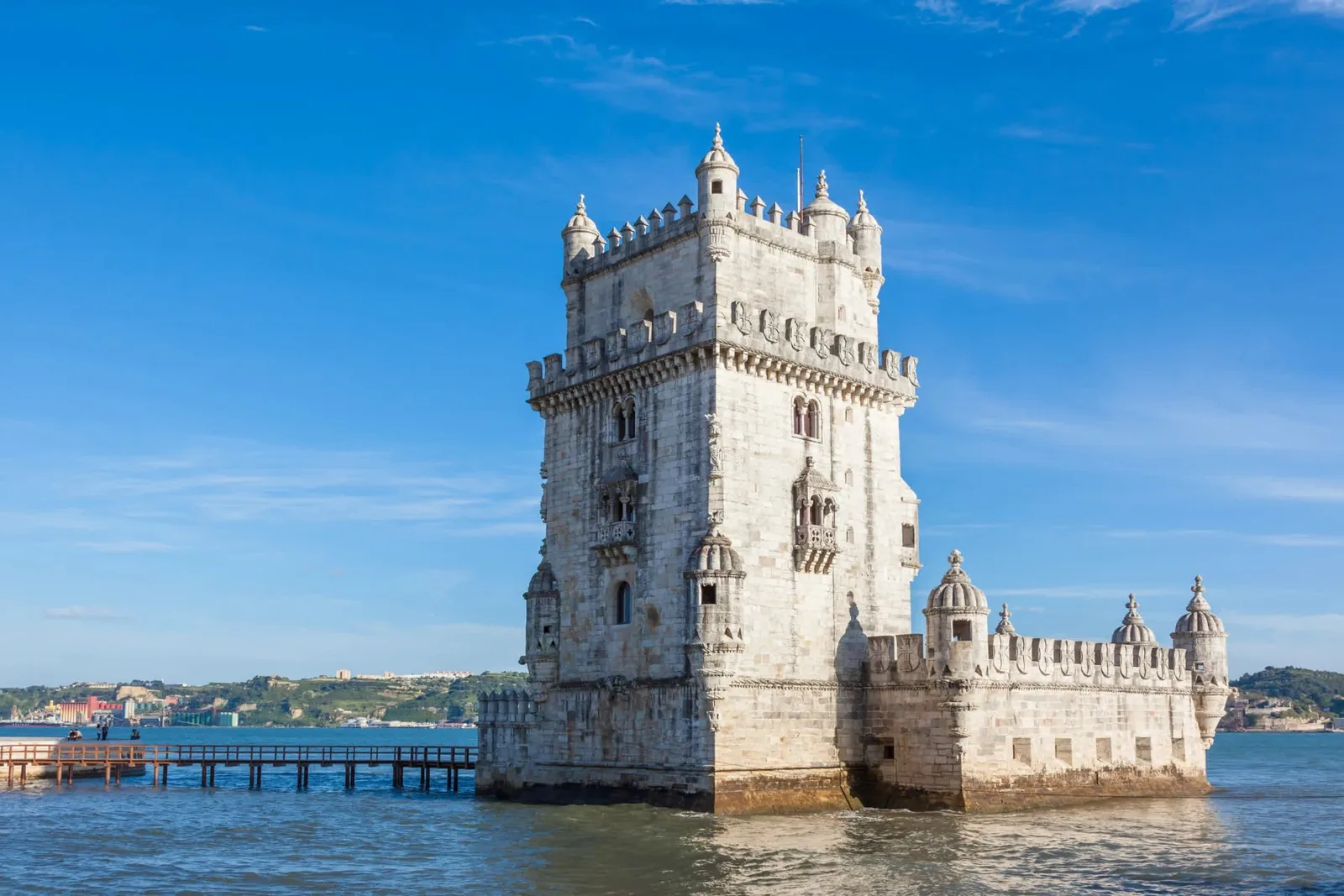
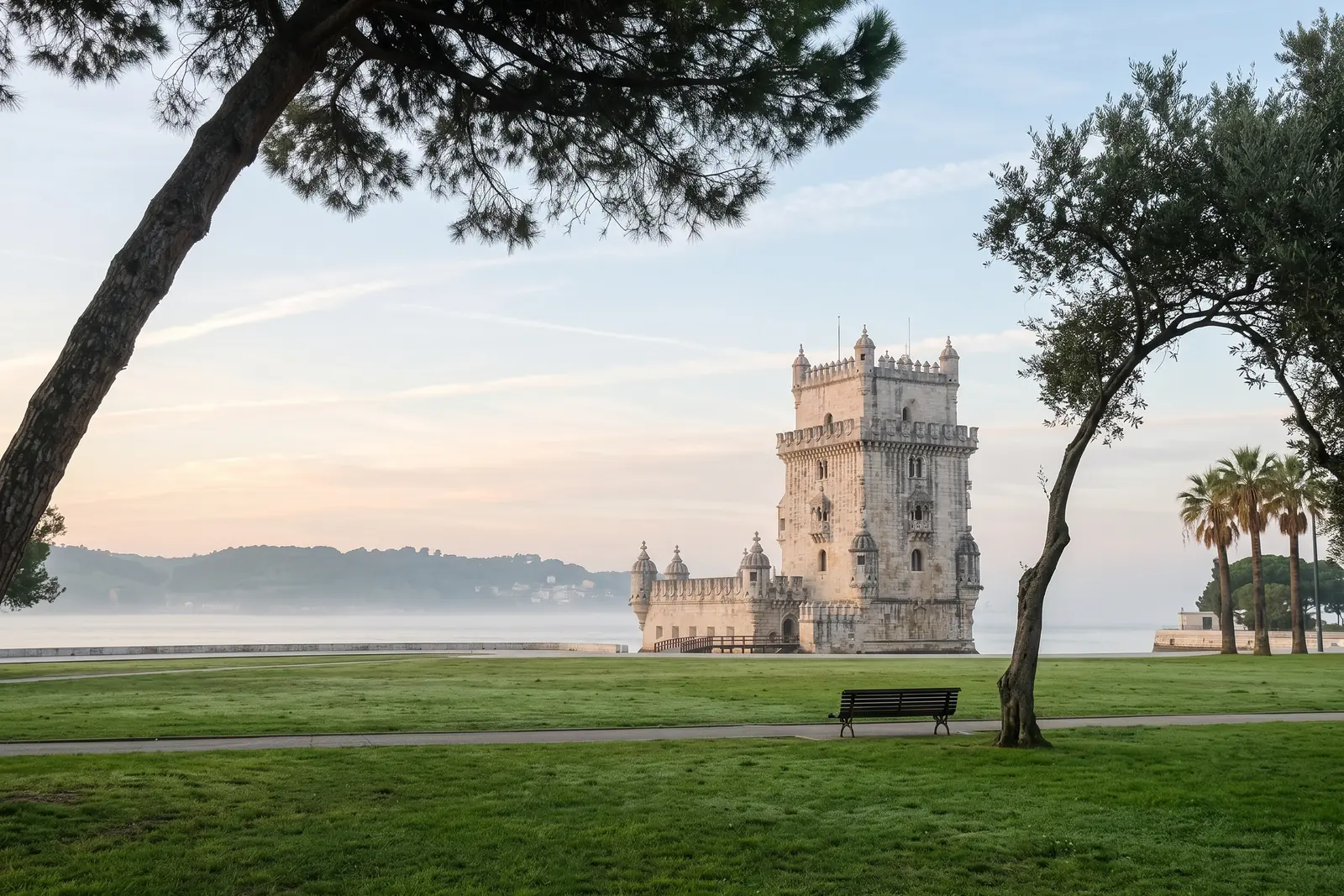
The Belém Tower (Torre de Belém) is the image on half the fridge magnets in Lisbon, a small fortified tower built in the early sixteenth century to guard the mouth of the Tagus, and a UNESCO World Heritage Site together with the monastery since 1983. It reopened on 27 May 2026 after about a year of restoration, and it now works very differently from the tower I visited in May 2022.
Entry is by timed slot: about 60 people every half hour, roughly 900 a day. There is no ticket window at the tower itself. You buy online, or at the ticket kiosk in front of the Jerónimos Monastery, and the slots often sell out, so on a busy day you will not find one on arrival. Book before you go and build the rest of the morning around that time.
Inside, the rooms are bare and the spiral staircase is narrow, which is why the slots exist. The tower's real pleasure is the outside: the stone rope carvings, the rhinoceros head under one of the turrets, the light on the river. If your slot does not work out, walking around it and along the water is still the best part of Belém, and it is free.
- Where: on the riverfront at the western end of Belém, map.
- Cost: €15; half price for ages 13–24 and over 65; free up to 12, as of 2026.
- Hours: Tuesday to Sunday 09:30–17:30, last entry 17:00; closed on Mondays, 1 January, Easter Sunday, 1 May, 13 June and 25 December.
- Time needed: 30–45 minutes inside.
- Best time: a morning slot, before the light flattens and the riverfront fills.
- Book: online or at the kiosk by the monastery, with a date and time on the ticket.
Jerónimos Monastery: the cloister, the free church and the queues
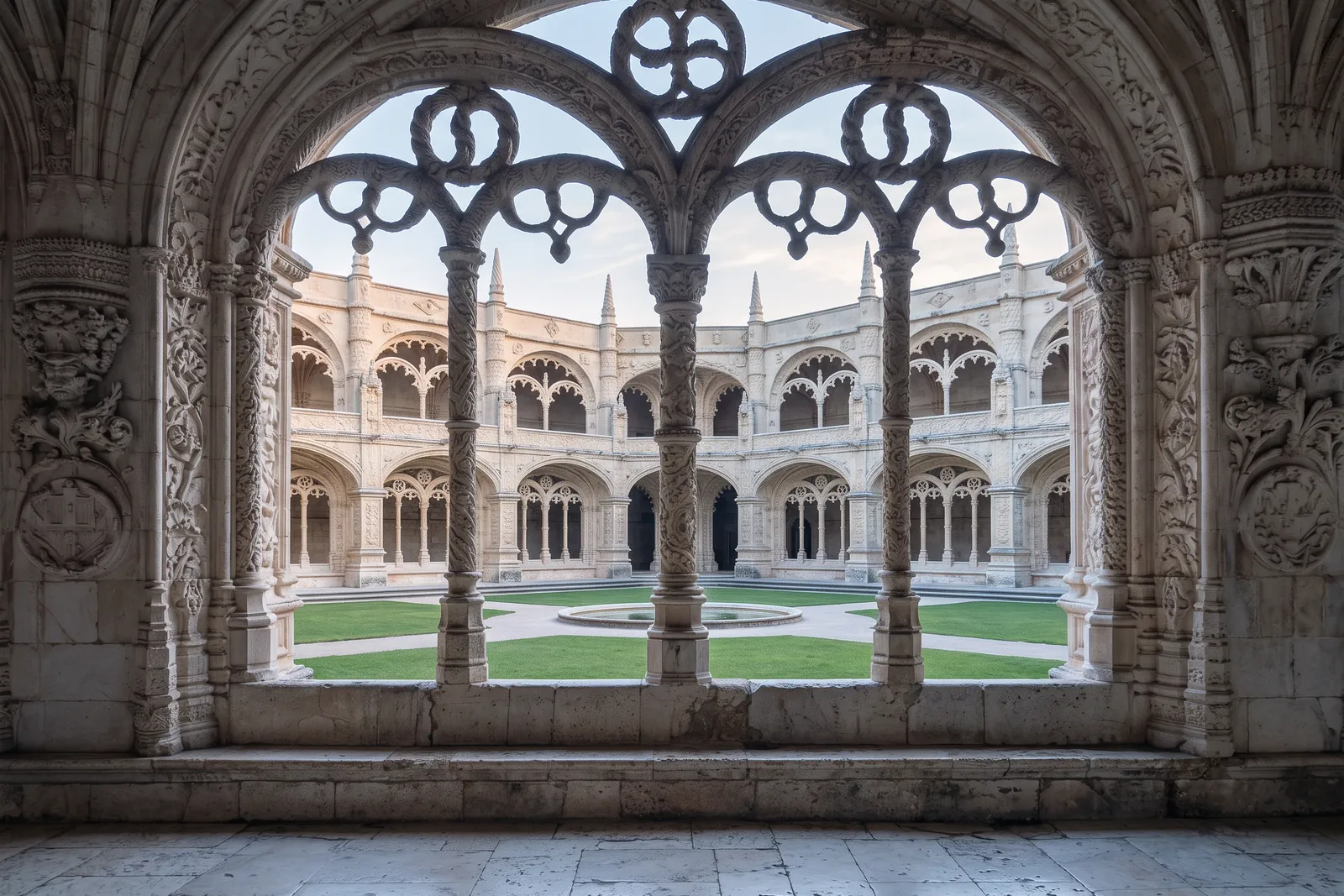
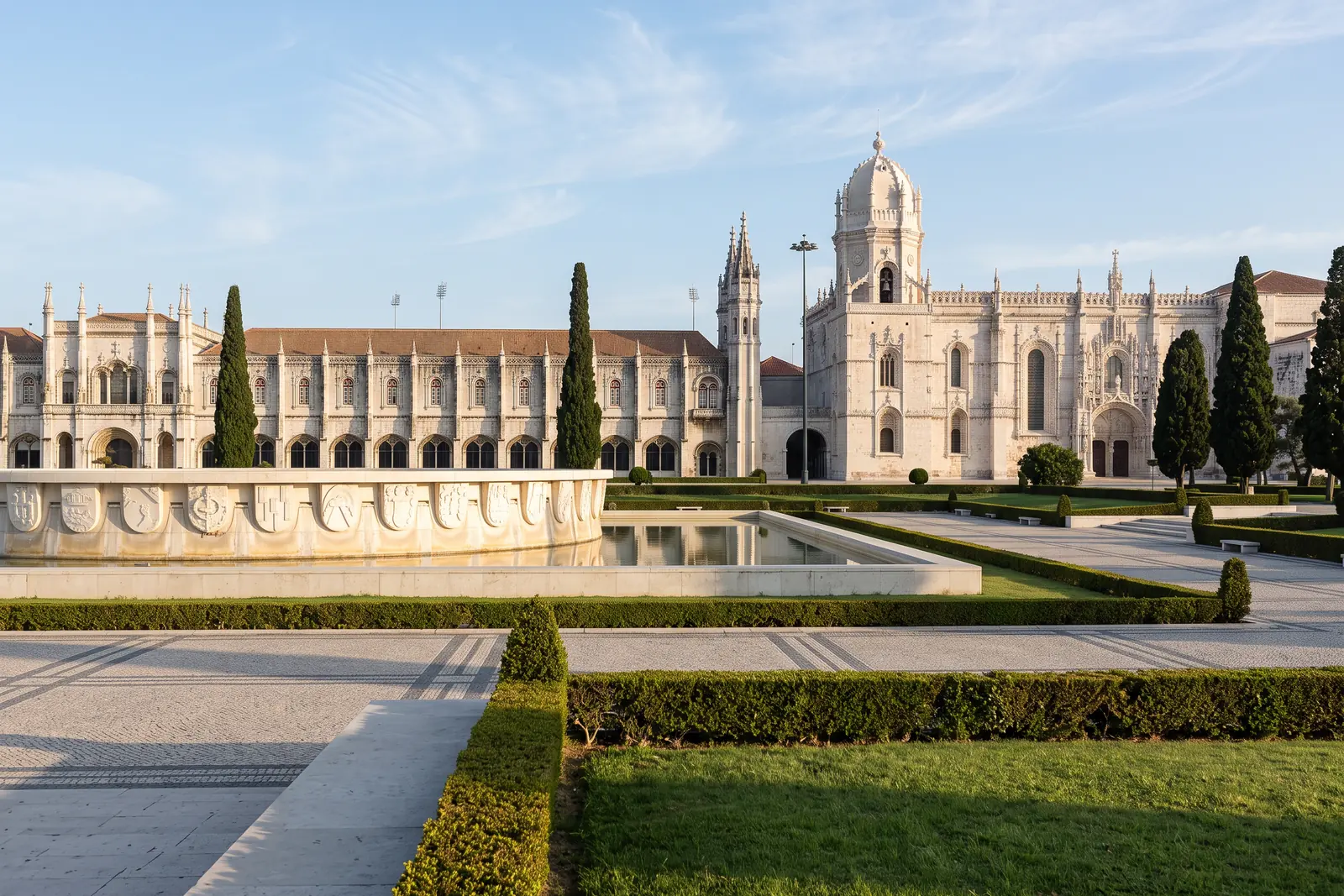
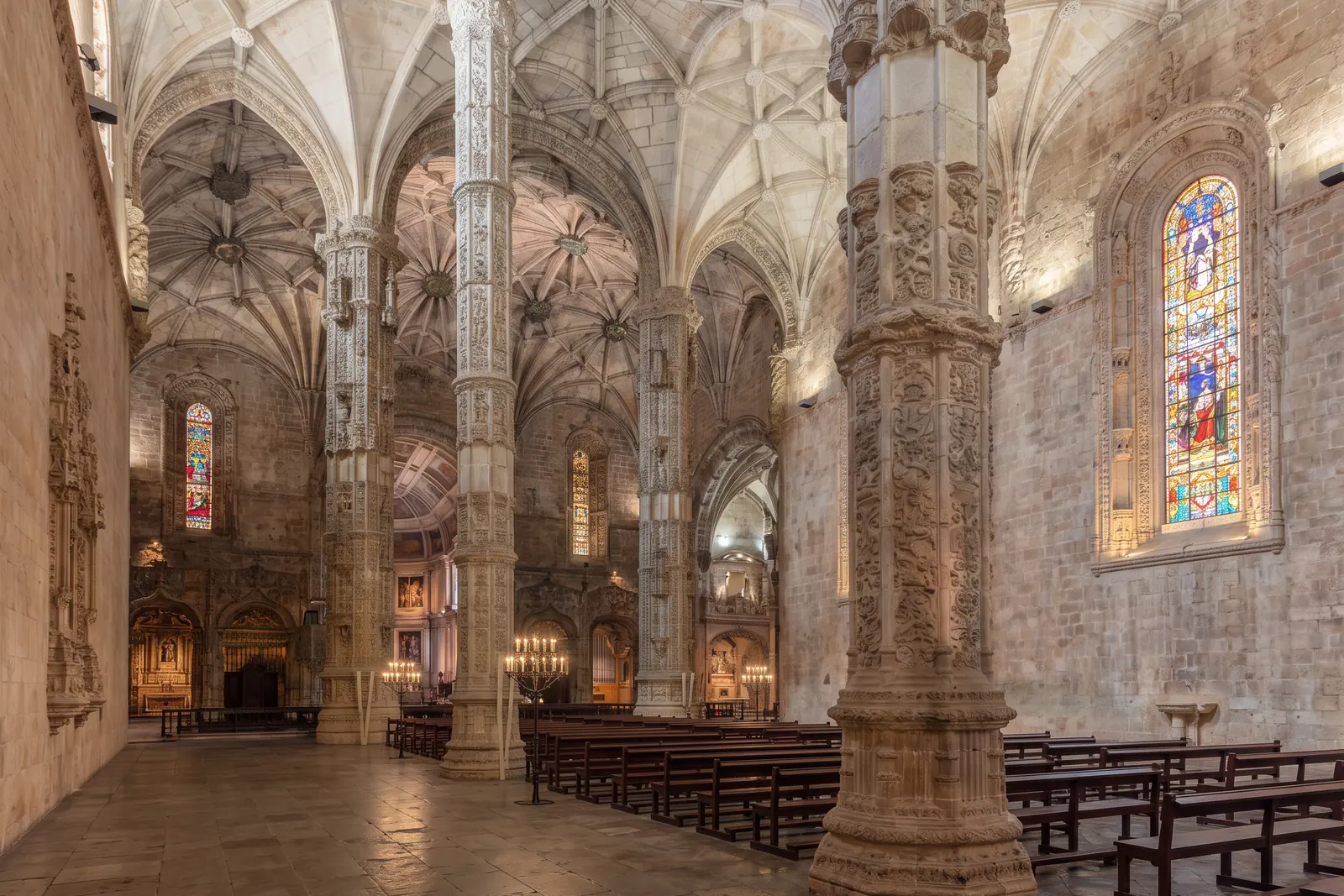
The Jerónimos Monastery (Mosteiro dos Jerónimos) is the reason to come to Belém even if you skip everything else: a long façade of carved limestone, built from 1501–02 in the Manueline style, ropes, sea creatures and armillary spheres worked into the stone. It has two doors and, effectively, two queues. The cloister is ticketed; the church of Santa Maria de Belém is free and has its own entrance and its own hours, and it holds the tombs of Vasco da Gama and the poet Luís de Camões.
When I went in October 2023 I did both. The cloister, two storeys of carved arcades around a garden, is what the ticket pays for; the church, with its slender columns rising to a ribbed vault, costs nothing and is worth the separate door.
The most common mistake I see in Belém happens here. People arrive in the middle of the morning, with no tickets and no plan, and join the longest queue first. Do it the other way round: be at the monastery when it opens, with a timed ticket bought online, and leave the flexible parts of the day for later.
- Where: Praça do Império, facing the gardens, map.
- Cost: €18 for the cloister, same discounts as the tower; the church is free, as of 2026.
- Hours: cloister Tuesday to Sunday 09:30–17:30, last entry 17:00; church Tuesday to Saturday 10:30–17:00, Sundays and religious holidays 14:00–17:00; closed on Mondays.
- Time needed: an hour for the cloister, 20 minutes for the church.
- Best time: the first slot of the day.
- Book: timed tickets online; there is no official combined ticket with the tower, and resellers' bundles cost more.
The two wings of the monastery hold museums of their own. The Navy Museum is open, at €8. The National Archaeology Museum has been closed for renovation since 2022 and is not expected to reopen before 2030, so ignore any guide that still sends you there.
Pastéis de Belém: the queue is not what it looks like
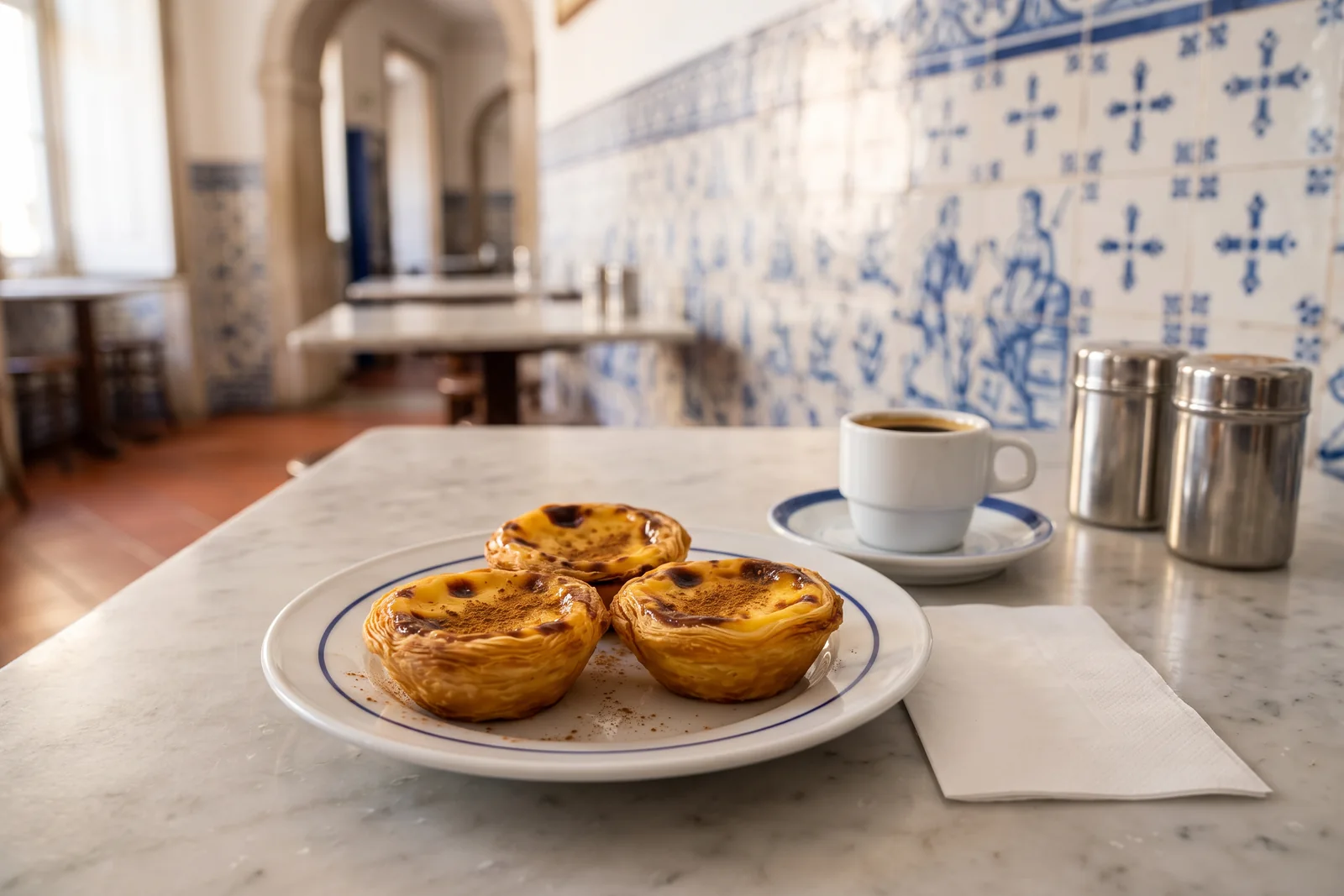
Pastéis de Belém has baked its custard tarts since 1837, a few minutes' walk from the monastery whose monks are said to have left the recipe behind when the convents were closed in 1834. The bakery is the only place allowed to call its tarts pastéis de Belém; everywhere else in Lisbon they are pastéis de nata. They come warm, with the crust that shatters, and you add cinnamon, and sugar if you want it, at the table.
The queue on the pavement is the first thing you see, and it puts people off. Do not assume it means you cannot get in. Here is what I tell friends: the queue for a seat inside, in the tiled rooms behind the shop, moves differently from the takeaway line.
- Where: Rua de Belém 84–92, map.
- Cost: €1.60 a tart, €9.60 for a box of six, as of 2026.
- Hours: every day 08:00–21:00, until 22:00 from July to September, with exceptions on 24, 25 and 31 December.
- Best time: before 10:00 or late in the afternoon; the weekends of July and August around lunch are the worst.
For the rest of the city's tarts, from Manteigaria in Chiado to the neighbourhood pastelarias, our guide to Lisbon food has the comparison.
The Monument to the Discoveries and the riverfront
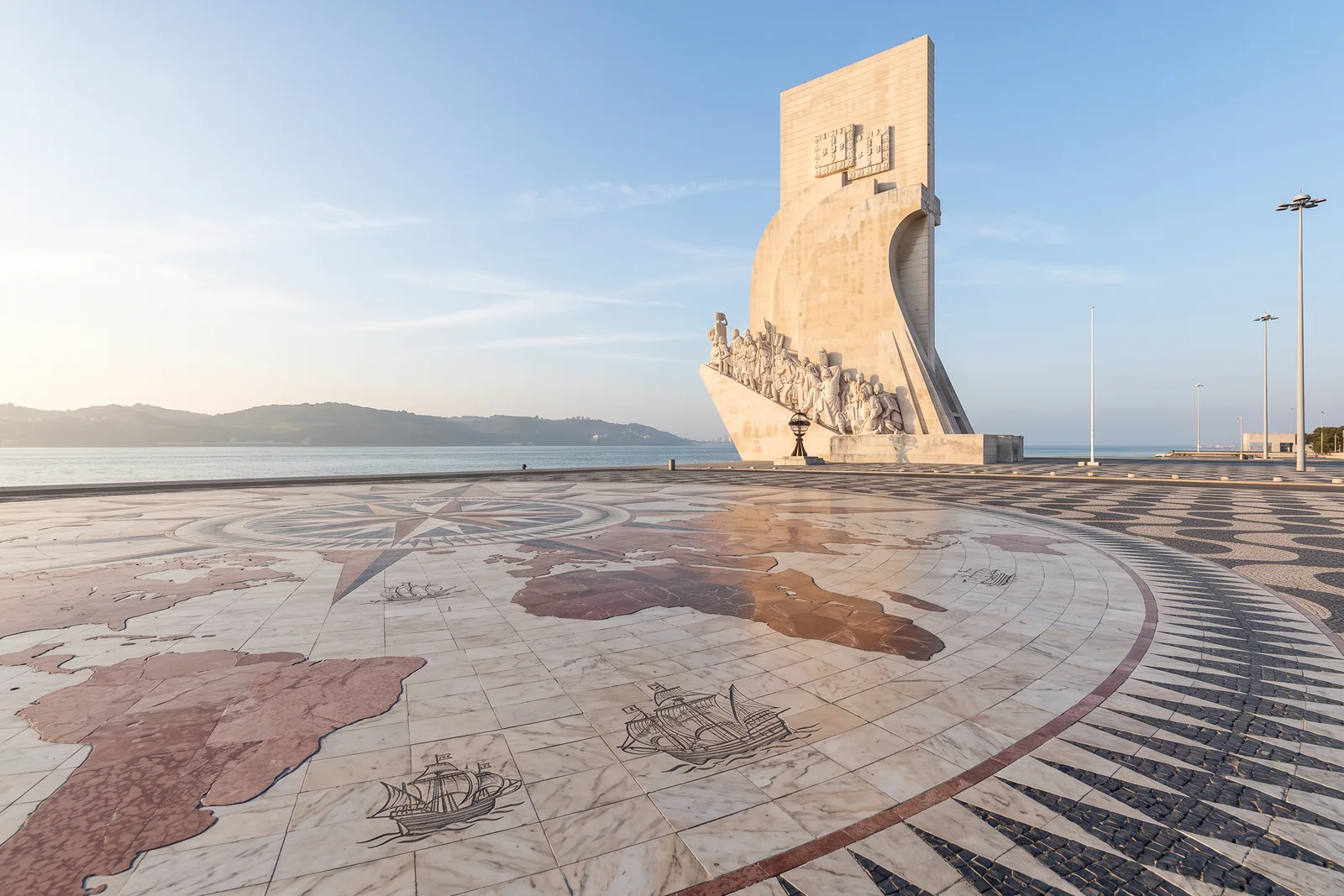
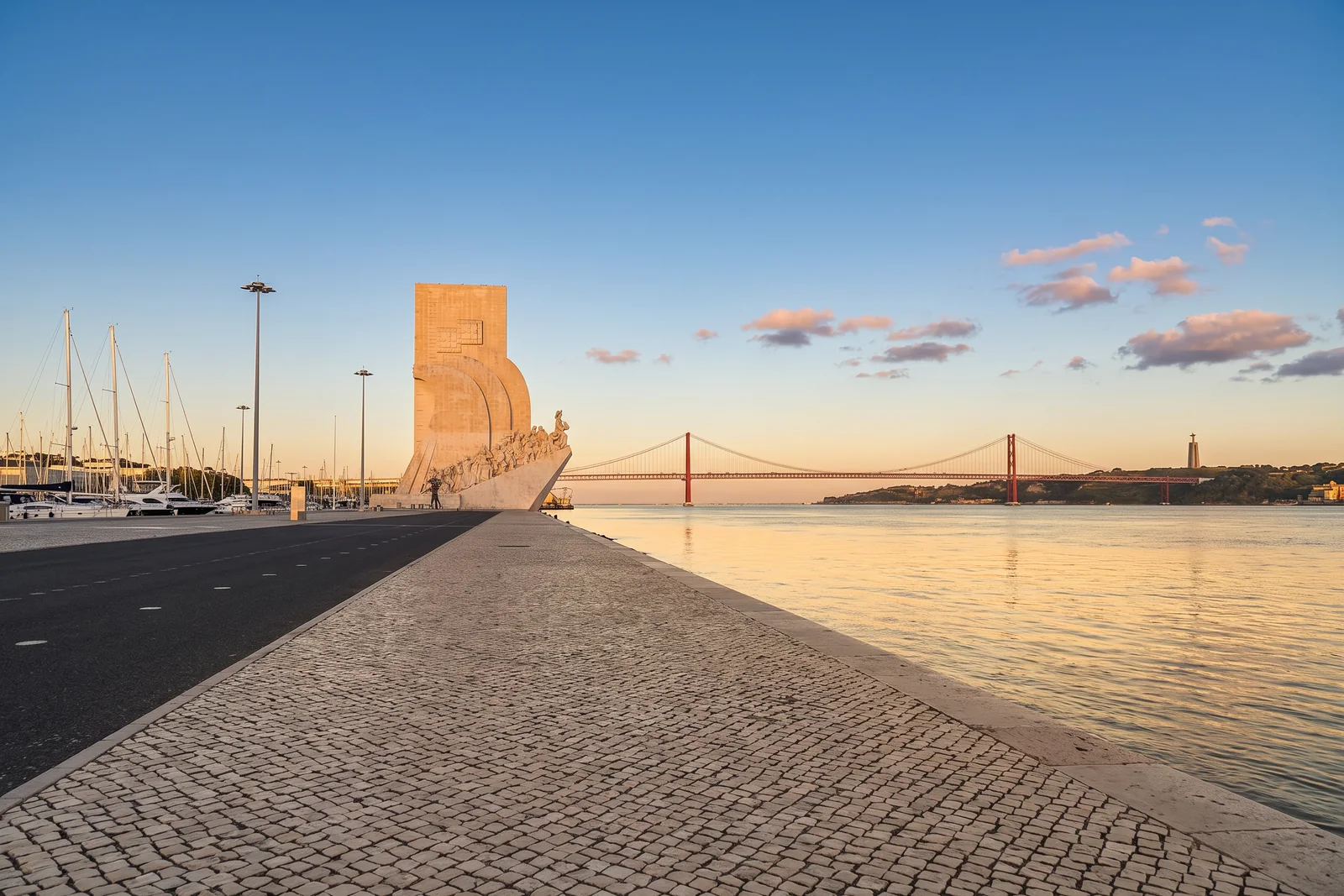
Cross the gardens and take the underpass below the road and the railway, and you come out at the river beside the Monument to the Discoveries (Padrão dos Descobrimentos), a 1960 concrete prow with Henry the Navigator at its tip and the explorers lined up behind him. In front of it, set into the pavement, is a compass rose about 50 metres across with a world map at its centre, a gift from South Africa the same year.
I visited in April 2024. A lift takes you to the sixth floor and 42 steps finish the climb to the terrace at the top, with the monastery behind you, the tower to the west and the 25 de Abril Bridge to the east. It is the best overview of Belém, and, like MAAT, it opens on Mondays.
- Where: on the riverfront opposite the monastery, map.
- Cost: €10 for the viewpoint, the exhibition and the film, €5 for the exhibition only; free under 12, as of 2026.
- Hours: daily from 10:00; closed only on a few public holidays.
- Time needed: 30–45 minutes.
From here the riverside path runs west to the tower in about fifteen minutes. This is the part of Belém I leave for later in the day, once the monuments are done: the walk along the Tagus is the reward, and it takes longer than the map suggests.
MAAT and what to skip in half a day
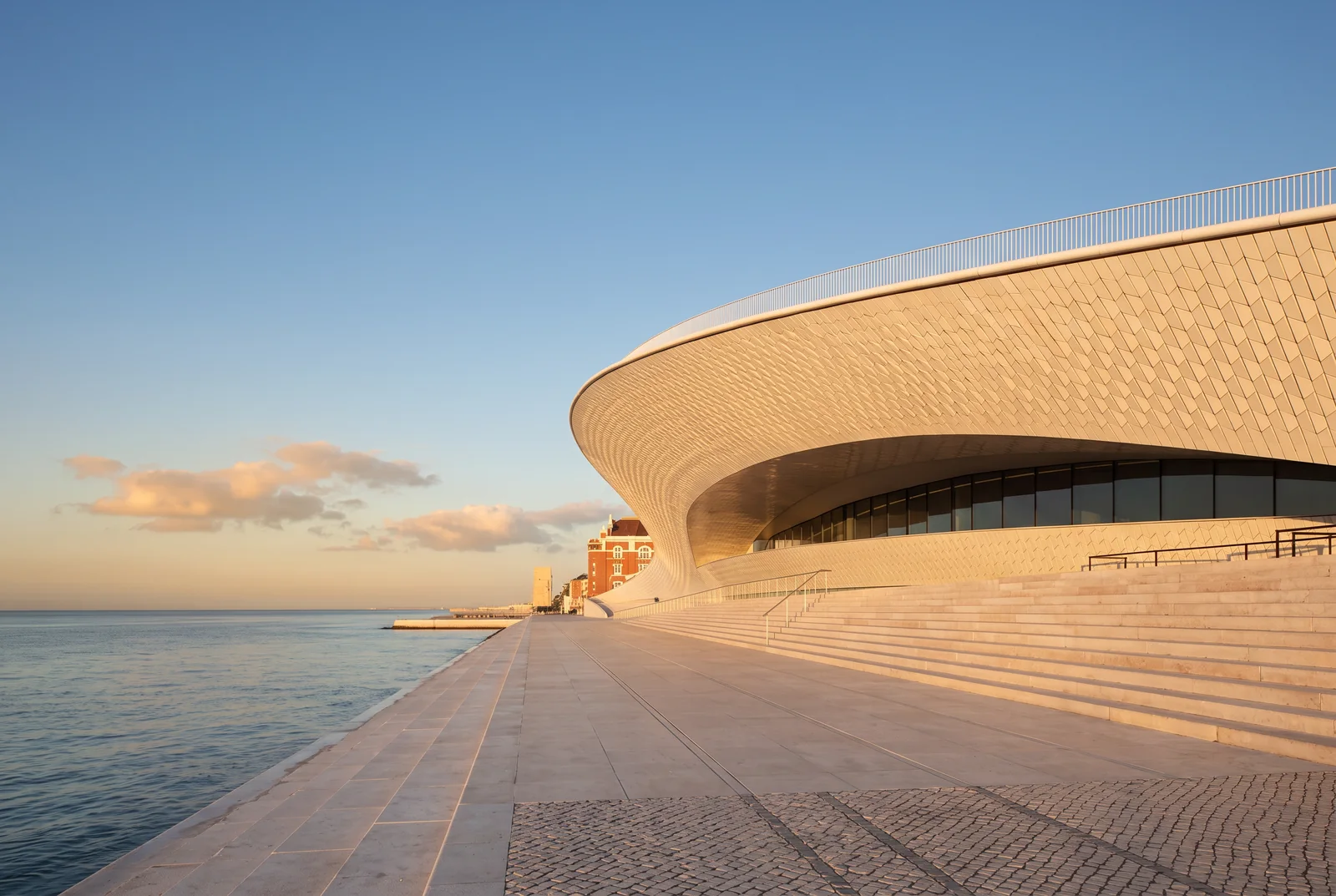
East along the river, about a kilometre from the Monument to the Discoveries, the curving white roof of MAAT, the Museum of Art, Architecture and Technology, rises out of the waterfront next to the red brick of the old Tejo Power Station. I went in September 2025. It is the other face of Belém: the empire in stone at one end of the riverfront, contemporary art and a former power plant at the other.
- Where: Avenida Brasília, on the river east of the Monument to the Discoveries, map.
- Cost: €16, or €12 for residents of Portugal, as of 2026.
- Hours: Wednesday to Monday 10:00–19:00, closed on Tuesdays.
- Time needed: one to two hours.
In half a day, pick one of MAAT or the Monument to the Discoveries, not both, and leave the rest for another visit. The National Coach Museum (€15, closed on Mondays) is excellent if you care about royal carriages, and MAC/CCB, the contemporary art museum in the Belém Cultural Centre, costs €15; both deserve their own morning. The LX Factory, often sold as "near Belém", is in Alcântara, a short tram or train ride back towards the centre.
Belém in half a day: a plan with times
A question I am often asked is whether Belém fits in "before lunch". You can see the area in a morning; to go inside the main monuments without rushing, give it at least half a day. This is the order I would follow from Tuesday to Saturday, with both tickets booked the day before.
- 09:30, Jerónimos cloister: the first slot of the day, 09:30 to 10:30.
- 10:45, the church: it opens at 10:30 from Tuesday to Saturday, through its own door.
- 11:15, the gardens and the underpass: a look at the compass rose on the way to the river.
- 11:30, Belém Tower: your booked slot, after a fifteen-minute walk along the water.
- 12:30, the Monument to the Discoveries: the rooftop on the way back, or straight on to lunch.
- 13:15, Pastéis de Belém: a table inside, then lunch nearby or the tram back.
On a Monday, when the tower and the monastery are closed, come for the outside: the façade, the tower from the riverside path, the Monument to the Discoveries (open), MAAT (open) and the tarts. On a Sunday, the church only opens at 14:00, so do the cloister and the tower in the morning and come back to the church after lunch. In the afternoon, reverse the plan: tarts first, the riverfront in the late light, and the cloister before its last entry at 17:00 (the kiosk stops selling at 16:30).
For lunch, the tables facing the road on Rua de Belém trade on their location. Canalha, on Rua da Junqueira next to MAAT, is a better bet, with mains mostly €16–25 (meat and fish sold by the kilo cost more) and open every day from 12:30, as of 2026.
How to get to Belém from central Lisbon
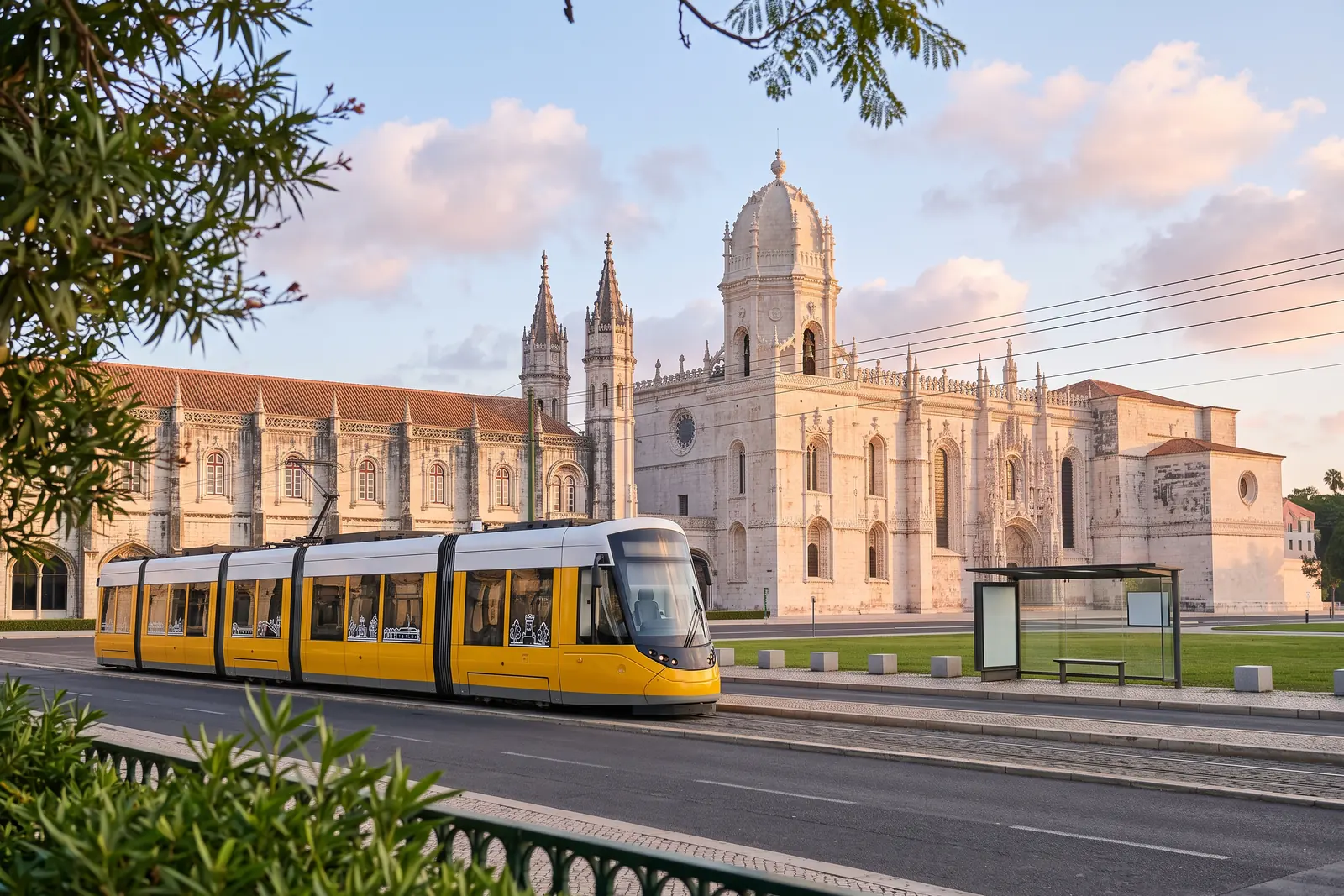
Belém is about six kilometres west of the Baixa, too far to walk comfortably, and close enough that the journey is part of the day.
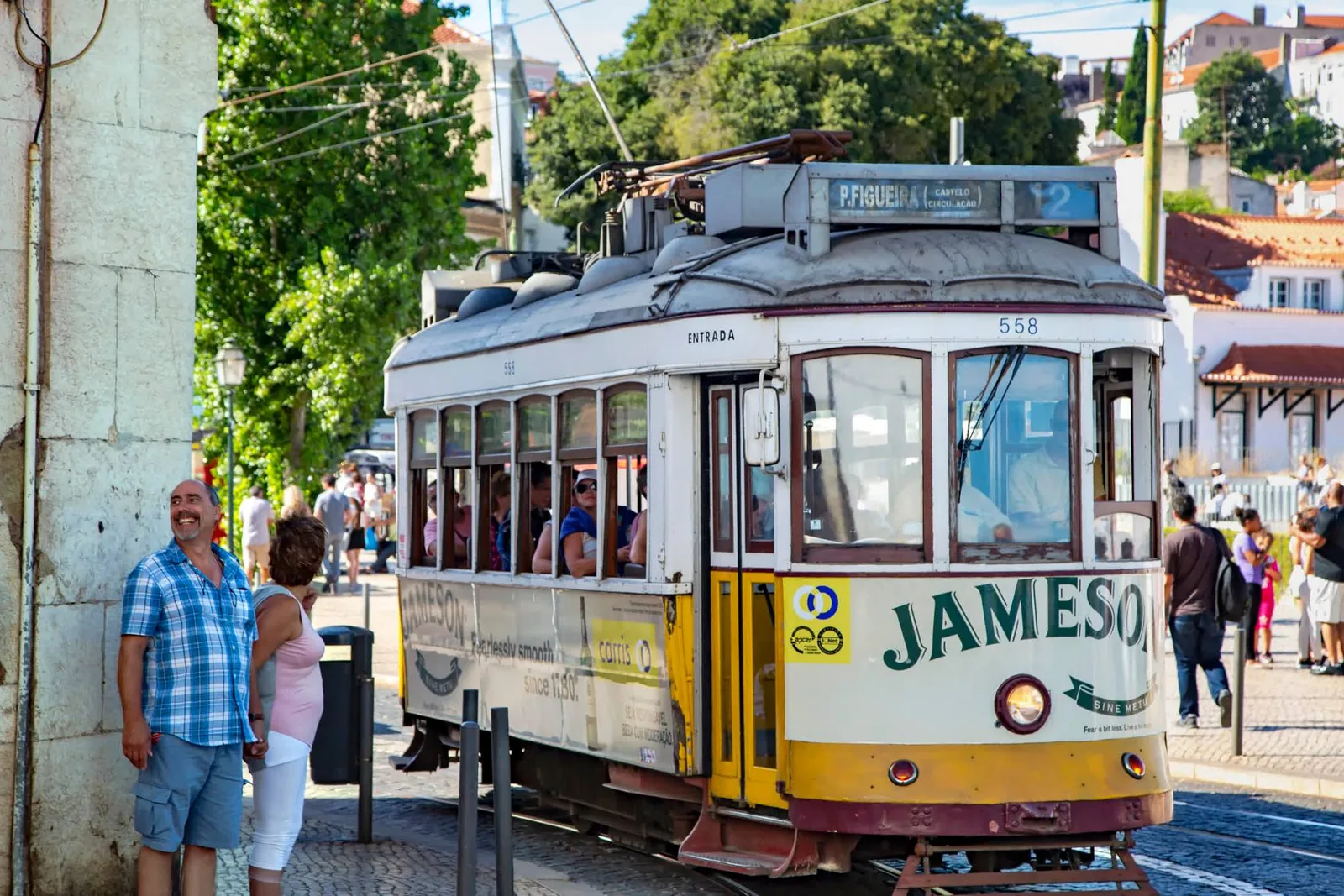
- Tram 15E: from Praça da Figueira and Praça do Comércio along the river to Belém, roughly every ten minutes on weekdays and less often at weekends, 25–40 minutes depending on traffic; €3.30 on board, less with a rechargeable card, as of 2026.
- Train: the Cascais line from Cais do Sodré to Belém station takes about eight minutes, and the station is a short walk from the monastery.
- Bus 728: runs along the river from Oriente through Santa Apolónia and Cais do Sodré to Belém and the monastery, slow but direct.
- Taxi or ride-hailing: the easiest choice for an early first slot.
From Parque das Nações, at the opposite, eastern end of the riverfront, Belém is a longer trip. Our Riverside apartment is a five-minute walk from Oriente station, with the historic centre about 20 minutes away by metro; from there, the train from Cais do Sodré or tram 15E covers the last stretch. Bus 728 also stops at Oriente and goes all the way to Belém without a change, if you are not in a hurry. The same Cascais line continues past Belém to the coast, which is how our Cascais guide gets you there.
Tickets and the Lisboa Card: is it worth it for Belém?
Book the tower and the monastery on the official ticketing site of Museus e Monumentos de Portugal, which sells timed tickets for both. There is no official joint ticket for the two, and the "skip the line" bundles sold elsewhere usually cost more than the two tickets bought separately.
The Lisboa Card includes free entry to the monastery, the tower and the Monument to the Discoveries, plus public transport, tram 15E and the Cascais line included. The catch is the timed slots: you still have to book them, and only after exchanging your voucher for the physical card. The three entries add up to €43 at full price, against €31 for a 24-hour adult card, as of 2026, so it pays off on a single Belém day if you get both slots; with the half-price discounts for ages 13–24 and over 65 it does not, unless you also use it for transport and other museums.
Residents of Portugal have their own scheme: under Acesso 52 they can visit national monuments free on up to 52 days a year, booked with a tax number. Sites that still promise free Sundays for everyone are out of date.
Belém FAQ
Do you need to book Belém Tower in advance?
Yes. Since it reopened on 27 May 2026, entry is by timed slot, about 60 people every half hour, and the slots often sell out. There is no ticket office at the tower: buy online or at the kiosk by the monastery.
How much are tickets for Belém Tower and Jerónimos Monastery?
€15 for the tower and €18 for the monastery cloister, as of 2026; the monastery church is free. Under-13s go free and ages 13–24 and over 65 pay half.
Are Belém Tower and Jerónimos open on Mondays?
No. Both close on Mondays. Pastéis de Belém, the Monument to the Discoveries and MAAT are open.
How long do you need in Belém?
Half a day at least to go inside the monastery and the tower, and a full morning plus lunch to add the Monument to the Discoveries and the tarts without rushing.
How do you get from Lisbon to Belém?
Tram 15E from Praça da Figueira, or the train from Cais do Sodré in about eight minutes. Bus 728 runs along the river from Oriente.
Is the queue at Pastéis de Belém worth it?
A long queue at the door does not mean you cannot get in: the queue for a table inside moves differently from the takeaway line.
Where to stay in Lisbon for a day in Belém
Belém is an easy morning from anywhere on the river. Our Riverside apartment in Parque das Nações is five minutes on foot from Oriente station, about 20 minutes from the historic centre by metro, and bus 728 runs from Oriente to Belém. Our Lisbon page has the details, the Superior Rentals homepage shows our homes in Madeira too, and if you are planning the whole stay, our Lisbon in 3 days itinerary puts Belém on the second morning and the best things to do in Lisbon covers the rest of the city.
Related topics: Museums, Attractions