Lisbon food and the best restaurants in Lisbon: what to eat and where
Maria Santos · 22 min read · Updated 12/Oct/2026
What to eat in Lisbon and where to eat it, from a €3 bifana to two Michelin stars: the dishes, the best pastel de nata, restaurants by type, brunch, Parque das Nações and the local rules on couvert and dinner time.
Lisbon food in one minute
Lisbon eats in two registers, and the trick is to use both. There is the city of the tasca, the small family dining room with paper on the table, a blackboard of daily dishes and a bill that rarely passes €20 a head, and there is the city of the chef, where a tasting menu can cost more than a night in a good hotel. Most visitors only meet the tasca through a tourist menu on Rua Augusta and the chef through a list of Michelin stars, and miss what sits in between: the cervejaria, the pastelaria, the counter where a bifana and a small beer cost a few euros.
This guide is built the way I would plan a short trip for a friend, as of autumn 2026: the dishes first, each with a place to try it, then the restaurants by type, then the practical rules that decide whether a meal in Lisbon feels local or feels like a trap. If you only read one block, read this one.
- One pastel de nata: Pastéis de Belém for the history, Manteigaria in Chiado for the one you will think about later, about €1.50–1.60 each.
- One seafood dinner: Cervejaria Ramiro, clams Bulhão Pato and garlic prawns, then a prego to finish, roughly €40–60 a head.
- One tasca lunch: the prato do dia at a neighbourhood tasca, €8–12 with soup or a drink.
- One counter snack: a bifana with a small draught beer, under €6 if you are paying a fair price.
- One special night: Belcanto or Henrique Sá Pessoa, both with two Michelin stars in 2026; menus from €140 at Henrique Sá Pessoa, €295 for Belcanto's tasting menu.
- Dinner time: book for 20:00 or 20:30, not 18:00; Lisbon dinner starts late.
- The couvert: bread, olives and cheese put on the table are charged only if you eat them.
What to eat in Lisbon: the dishes and where to try them
Portuguese cooking is generous rather than refined, built on olive oil, garlic, coriander, bread and whatever the Atlantic brought in that morning. Lisbon adds a city's appetite for snacks eaten standing up and a long memory of convent sweets. These are the dishes I would make room for, roughly in the order a visitor meets them.
Bifana
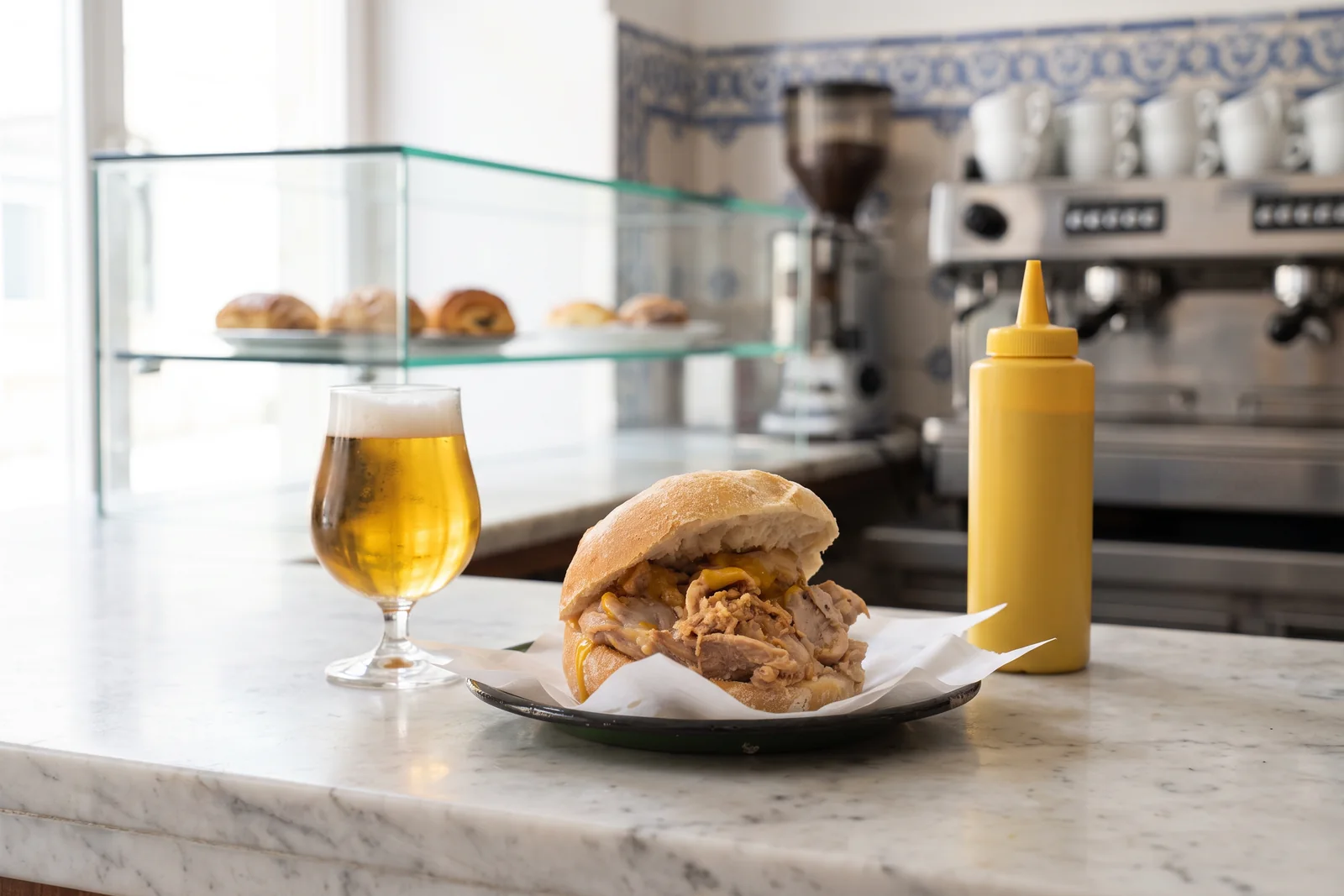
A thin slice of pork loin simmered in white wine, garlic and paprika, slipped into a soft papo seco roll with some of the cooking liquid. The Lisbon version is brothy and plain; the spicy, saucy one belongs to Porto. It is the city's working lunch, eaten at the counter with yellow mustard from a squeeze bottle and a small beer.
- Try it at: As Bifanas do Afonso, Rua da Madalena 146 in the Baixa (weekdays and Saturday mornings), or O Trevo on Praça Luís de Camões in Chiado.
- Price: €2.50–4.50 is fair; €6 or more in the Baixa usually means a reheated tourist version.
- Tip: eat at the counter, not on a terrace, and ask for it with extra sauce.
Prego
A thin beef steak cooked fast with garlic and served in the same kind of roll. It is the sandwich Lisbon eats at the end of a seafood meal, which sounds odd until you try it, and the reason the cervejarias keep a grill going next to the shellfish tanks.
- Try it at: Cervejaria Ramiro, as the last course of a seafood dinner, or at the counter of most cafés.
- Price: €3–8 depending on the place and the bread.
- Tip: do not confuse it with the bifana; one is pork, one is beef.
Bacalhau
Salt cod arrived with the cod fleets of the North Atlantic and never left, and every family argues about the right way to cook it. The two versions to know in Lisbon are bacalhau à brás, shredded cod folded with matchstick potatoes, egg and black olives, and the pastel de bacalhau, a fried cod and potato croquette eaten at the counter.
- Try it at: any tasca on the day it is the prato do dia; pastéis de bacalhau at Cervejaria Trindade or at the bar of a neighbourhood café.
- Price: about €10 as a dish of the day; €1–2.50 for a croquette.
- Tip: skip the cheese-filled croquettes sold near the Rua Augusta arch at several times the usual price.
Grilled sardines
Sardines are the smell of Lisbon in summer, grilled whole over charcoal and laid on a slice of bread that soaks up the oil. They peak from June to September and the city celebrates them at the Santos Populares in June, when the old quarters fill with street grills.
- Try it at: a tasca in Alfama or Mouraria in season, or a June arraial street party.
- Price: €10–15 for a plate at a tasca, more at a sit-down restaurant.
- Tip: outside the season ask whether they are fresh; from December to May they are usually frozen, and carapau (horse mackerel) is often the better grilled fish.
Clams Bulhão Pato
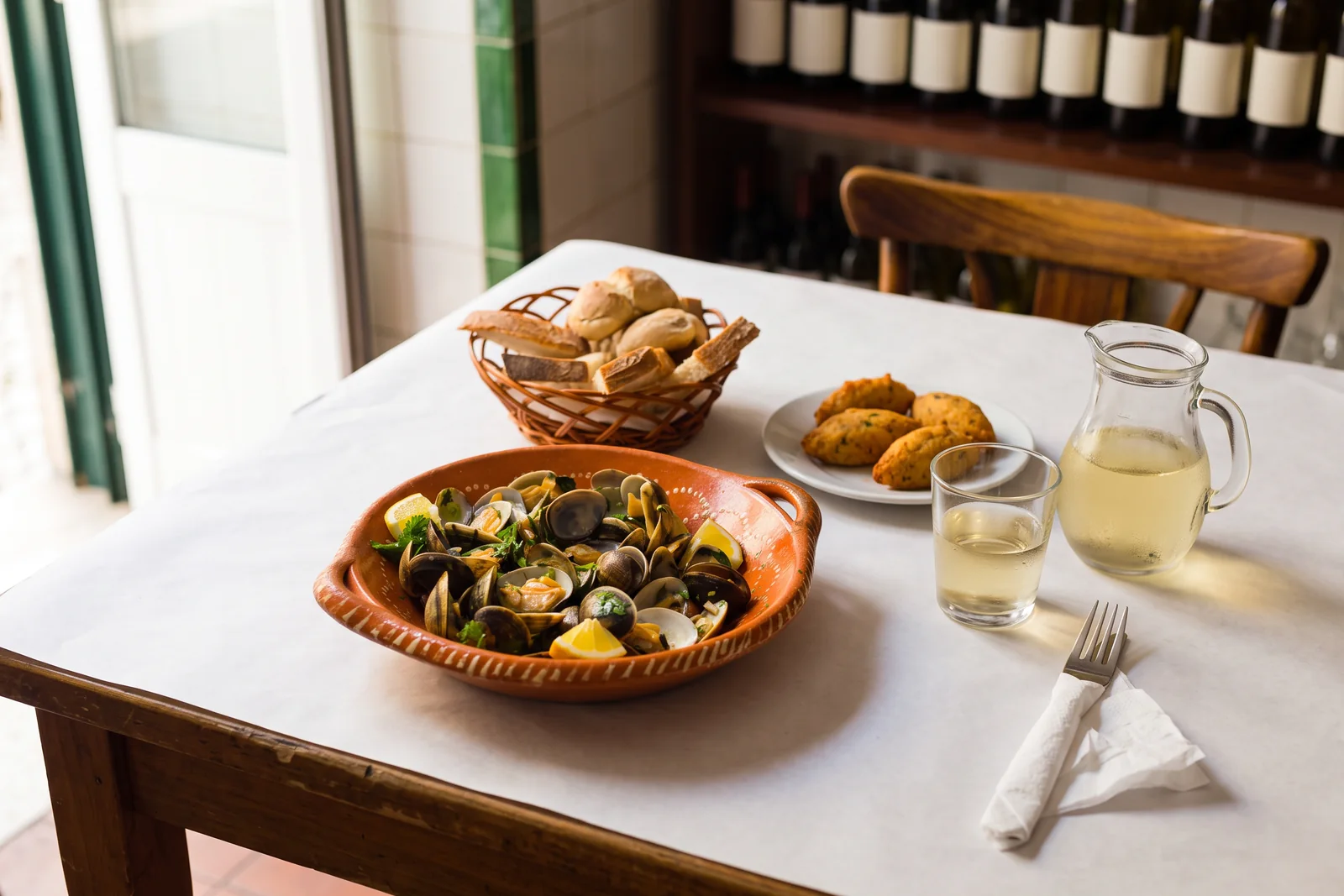
Amêijoas à Bulhão Pato are clams opened in olive oil with garlic, coriander and a splash of white wine, named after a nineteenth century poet. The clams are only half the point: the broth left in the dish is what the bread on your table is for.
- Try it at: Cervejaria Ramiro or Cervejaria Trindade.
- Price: around €20 a dose at the cervejarias (€22 at Cervejaria Trindade in 2026).
- Tip: order one dose to share and keep ordering; the dish is meant to be eaten while it is hot.
Polvo à lagareiro
Octopus, boiled until tender and then roasted, finished at the table with a generous pour of olive oil and garlic and served with small potatoes punched open by hand. The name comes from the lagar, the olive press, which tells you where the flavour lives.
- Try it at: most traditional restaurants; in Parque das Nações, D'Bacalhau gives cod the same lagareiro treatment.
- Price: €16–22 as a main course.
- Tip: portions are large; one plate often feeds two with a starter.
Arroz de marisco
Seafood rice, cooked wet and brothy in a pot, closer to a risotto than to a paella, with clams, prawns and often crab. It is a dish for sharing and for taking time over, usually ordered for two at the minimum.
- Try it at: the seafood cervejarias, or Marisqueira Uma in the Baixa for a cheaper version.
- Price: about €18–35 per person, cheapest at Uma.
- Tip: be wary of any picture menu advertising "paella" by the door.
Caldo verde
A potato soup thickened until smooth, then filled with ribbons of kale and topped with a slice of chouriço and a thread of olive oil. It comes from the Minho in the north, but Lisbon has adopted it as the first thing on the table on a cold evening.
- Try it at: any tasca from October to March, often as part of the lunch menu.
- Price: €3–4 a bowl.
- Tip: it is the cheapest honest dish on most menus, and a good way to judge a kitchen.
Cozido à portuguesa
The winter dish: boiled beef, pork, chicken and smoked sausages served on one platter with cabbage, carrots, potatoes and rice cooked in the broth. Many restaurants only make it on one day of the week, usually on one fixed weekday at lunch, from October to March.
- Try it at: neighbourhood restaurants that announce their cozido day on the door; call ahead, because the day changes.
- Price: from about €10 to €24 a person.
- Tip: treat it as the meal of the day, not lunch before an afternoon of walking.
What to drink in Lisbon: ginjinha, wine and the bica
Lisbon drinks the way it eats, standing at a counter as often as sitting at a table, and three drinks cover most of the day: a bica in the morning, a glass of white or a small beer with lunch, and a ginjinha in a doorway on the way home.
Ginjinha
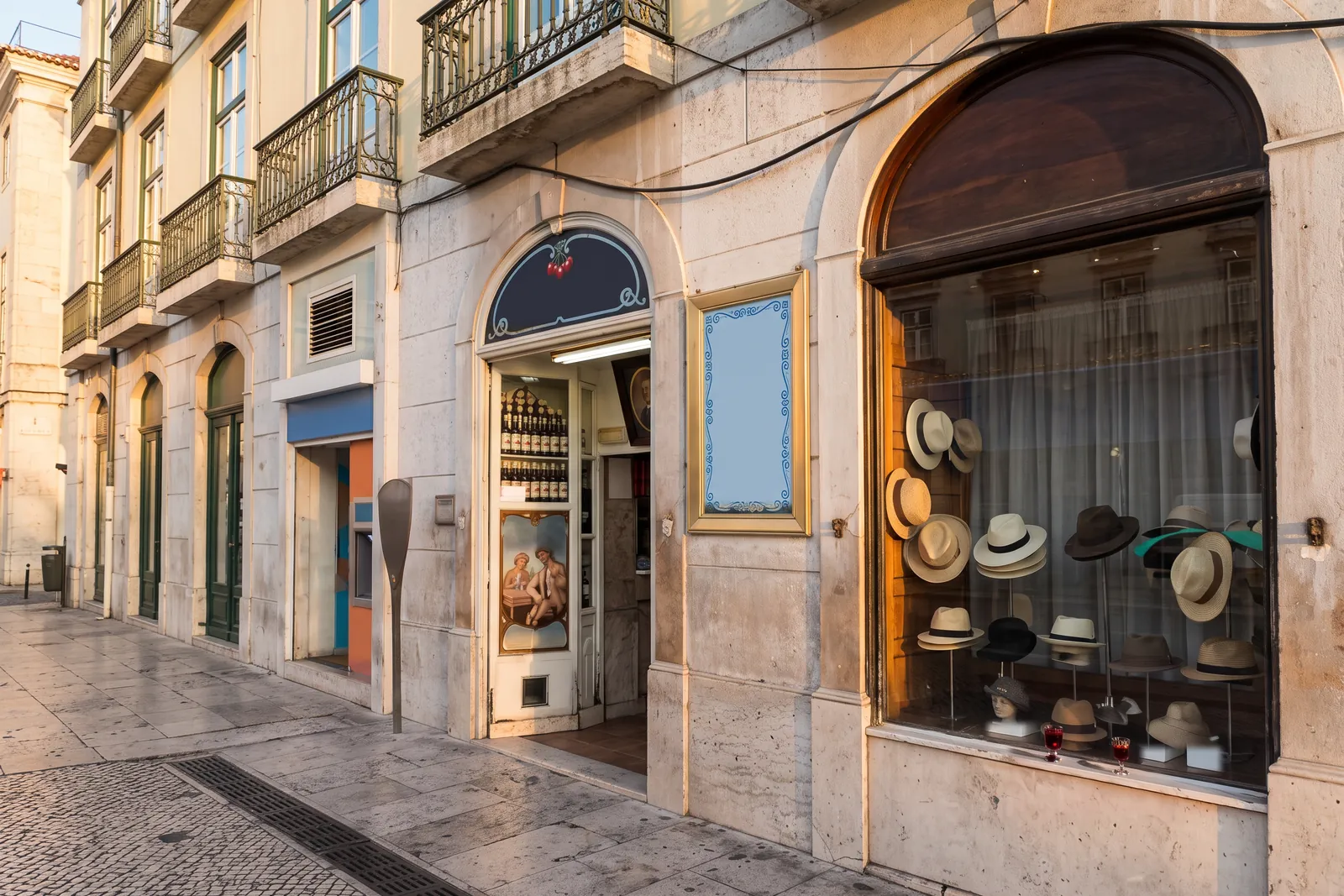
A sour cherry liqueur made by steeping ginja cherries in aguardente with sugar and spices, sold in tiny glasses from doorway bars near Rossio since the nineteenth century. You drink it standing in the street, and the only decision is whether you want a cherry in the glass.
- Try it at: A Ginjinha on Largo de São Domingos, or Ginjinha Sem Rival on Rua das Portas de Santo Antão.
- Price: about €1.50–2, cash.
- Tip: say "com elas" for a cherry, "sem elas" without.
Wine, beer and coffee
Vinho verde is the light, slightly sparkling wine of the north that goes with everything from clams to sardines. The Lisbon region has its own appellations, Bucelas for crisp Arinto whites and Colares for rare reds grown in sand near the coast. Beer is ordered as an imperial, a small draught, and coffee as a bica, a short espresso drunk at the counter.
- Try it at: any tasca for vinho verde by the jug; a wine bar in Chiado for Bucelas by the glass.
- Price: €4–12 for a glass at a wine bar; a bica at the counter about €1.
- Tip: a bica costs double sitting at a terrace table on a famous square.
The best pastel de nata in Lisbon
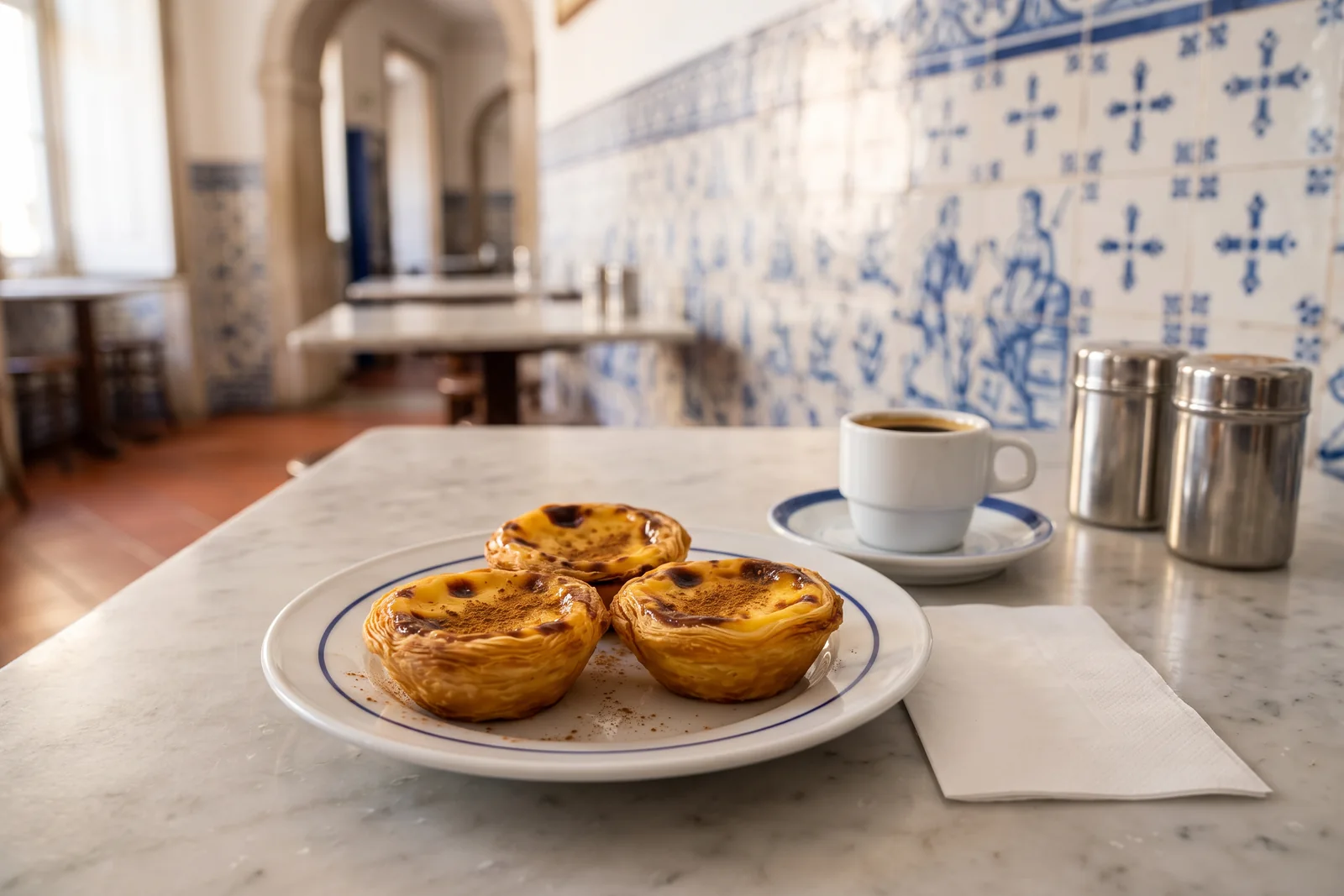
The pastel de nata is an egg custard tart in crisp, layered pastry, scorched on top in a very hot oven and dusted with cinnamon if you like. The recipe is tied to the monks of the Jerónimos Monastery in Belém, and since 1837 one shop next door has baked it under its own name. Everything else in the city is a pastel de nata; only that shop sells the pastel de Belém.
I went back to Pastéis de Belém in July 2024, and although it is probably the most touristy nata in Lisbon, I still think it is worth having at least once. When the queue on the pavement looks endless, check first whether it is only for takeaway: walking in and sitting down in the tiled rooms inside is often a much less painful experience. Order them warm and eat them there, because they do not travel well.
- Pastéis de Belém: Rua de Belém 84-92, Belém; open every day from 08:00; €1.60 each, a box of six €9.60; crisp pastry and a firmer, less sweet custard.
- Manteigaria: the original at Rua do Loreto 2 by Largo de Camões in Chiado, with branches across the city; about €1.50; a bell rings when a fresh tray comes out of the oven.
- Aloma: Campo de Ourique since 1943, and since October 2025 also in Parque das Nações; winner of the Lisbon best pastel de nata contest for the third year running in September 2026.
- Skip: natas sold cold from big trays in souvenir cafés around Praça do Comércio at well over €2.
The local argument is simple: Belém is crunchier and more savoury, Manteigaria is butterier and sweeter, and Aloma keeps winning the city's contest. Have a bica with each and decide for yourself. If Belém is on your list anyway, our guide to things to do in Lisbon has the monastery and the tower with 2026 tickets.
Best restaurants in Lisbon, by type
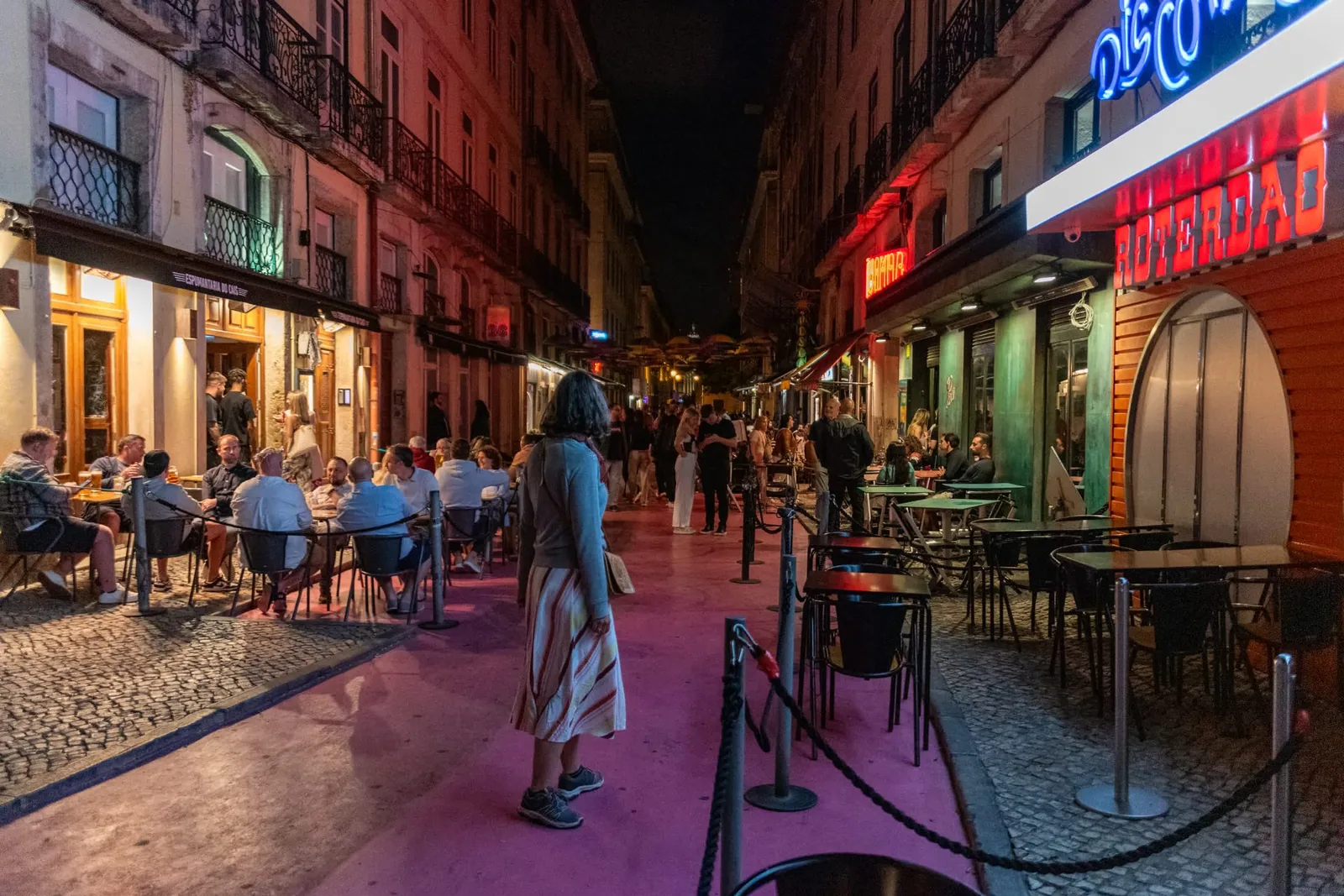
No two Lisbon guides agree on a list of restaurants, and that is a good sign: the city has too many good small kitchens for a consensus. What helps more than a ranking is knowing what kind of meal you want, because a tasca, a cervejaria and a tasting menu answer different questions. These are the places I would send a friend to in each category, with the prices as of autumn 2026.
Tascas and traditional restaurants
A tasca is the family restaurant of a neighbourhood: a handful of tables, a television in the corner, the dishes of the day written on paper at the door and portions meant to be shared. The food is home cooking without decoration, and the bill is the cheapest good meal in the city. I ate at Zé da Mouraria 2 in May 2024. Portions at both houses are made for sharing, so ask for a meia dose, a half portion, if you are eating alone.
- Zé da Mouraria: the original on Rua João do Outeiro in Mouraria and its sister Zé da Mouraria 2 on Rua Gomes Freire near Campo Mártires da Pátria; roast cod and grilled fish in huge portions; €15–25 a head, more for fish sold by the kilo; the original opens for lunch only, and both close on Sundays.
- A Provinciana: Travessa do Forno 23, hidden behind Restauradores; a different stew each weekday and wine from the barrel; dishes under €10; cash only, closed Sundays.
- Taberna da Rua das Flores: Rua das Flores 103, Chiado; petiscos from a blackboard that changes daily; €15–30 a head; tiny, so arrive at noon or late.
- O Trevo: Praça Luís de Camões, Chiado; the bifana counter Anthony Bourdain made famous; a few euros; walk in, no bookings.
Seafood cervejarias
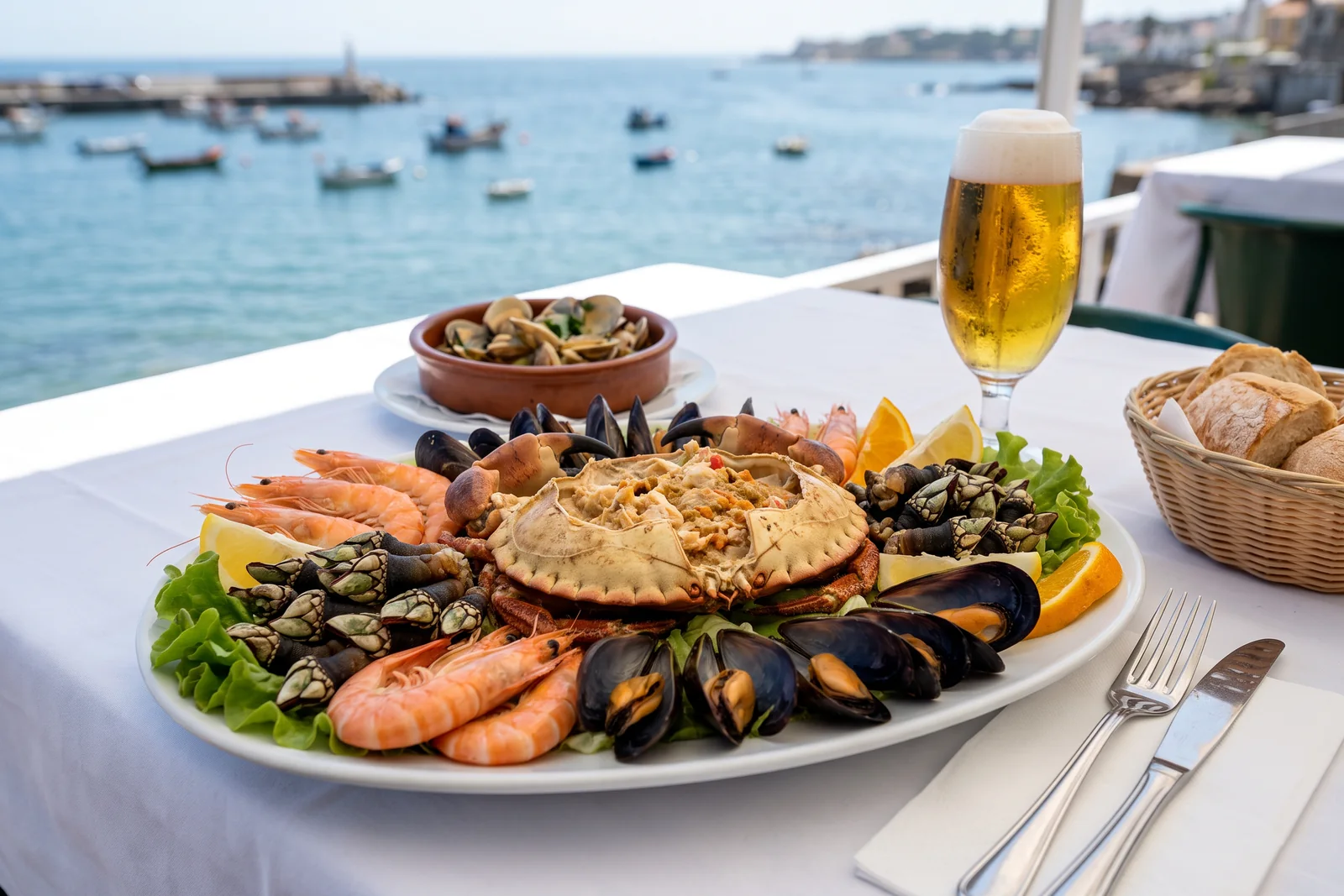
A cervejaria is a beer hall that became a seafood restaurant: bright, loud, with tanks of crab and lobster by the door and a menu where half the prices are per kilo. I ate at Cervejaria Ramiro in March 2023 and at Cervejaria Trindade that November, and the one mistake I would warn a friend against at Ramiro is eating so much shellfish that there is no room left for the prego at the end. Finishing a seafood dinner with a steak sandwich seems strange, but it is part of the experience.
- Cervejaria Ramiro: Avenida Almirante Reis 1-H, Intendente; garlic prawns, clams, crab, then the prego; €40–60 a head with beer; closed Mondays; book online with a deposit or take a ticket at the door and expect a long wait at peak times.
- Cervejaria Trindade: Rua Nova da Trindade 20C, Chiado; a former convent with tiled halls, steaks and seafood; €25–45 a head; open every day, book for dinner.
- Marisqueira Uma: Rua dos Sapateiros 177, Baixa; known for arroz de marisco, cheaper and plainer than Ramiro.
- Tip: much of the shellfish is priced by the kilo; ask for the weight and the price before it reaches the table.
Contemporary Portuguese
Between the tasca and the tasting menu is the part of Lisbon's food scene that has changed most in ten years: young chefs cooking Portuguese produce with a lighter hand, natural wine lists, small rooms you need to book. Expect €30–60 a head and a meal that still tastes of the place.
- Prado: Travessa das Pedras Negras 2, between the Baixa and Alfama; farm produce and natural wine from chef António Galapito; lunch Thursday to Saturday is the easier way in; closed Sunday and Monday.
- Taberna Sal Grosso: Calçada do Forte 22, Alfama, near Santa Apolónia; modern petiscos in a 27-seat room; book.
- Bairro do Avillez: Rua Nova da Trindade 18, Chiado; José Avillez's food hall of a restaurant, with a taberna, a patio and a delicatessen; good for sharing starters at the counter.
Michelin-starred restaurants
The Michelin Guide Portugal 2026 gives Lisbon three two-star restaurants and a dozen with one star, and several older lists are now out of date: Alma closed at the end of 2025 and its chef reopened under his own name in February 2026, and Eleven lost its star in March 2026. All of these need booking weeks ahead, and wine is extra.
- Belcanto: two stars, José Avillez, Rua Serpa Pinto in Chiado; tasting menu €295.
- Henrique Sá Pessoa: two stars, the former Alma, now at Páteo Bagatela in Amoreiras; menus at €140 and €220.
- Fifty Seconds: two stars, at the top of the Vasco da Gama tower in Parque das Nações, with the view to match.
- Encanto: one star, Largo de São Carlos in Chiado, an all-vegetarian tasting menu.
- Feitoria: one star, by the river in Belém, chef André Cruz.
You can check the full list on the Michelin Guide's 2026 page for Portugal.
Time Out Market Lisbon: is it worth it?
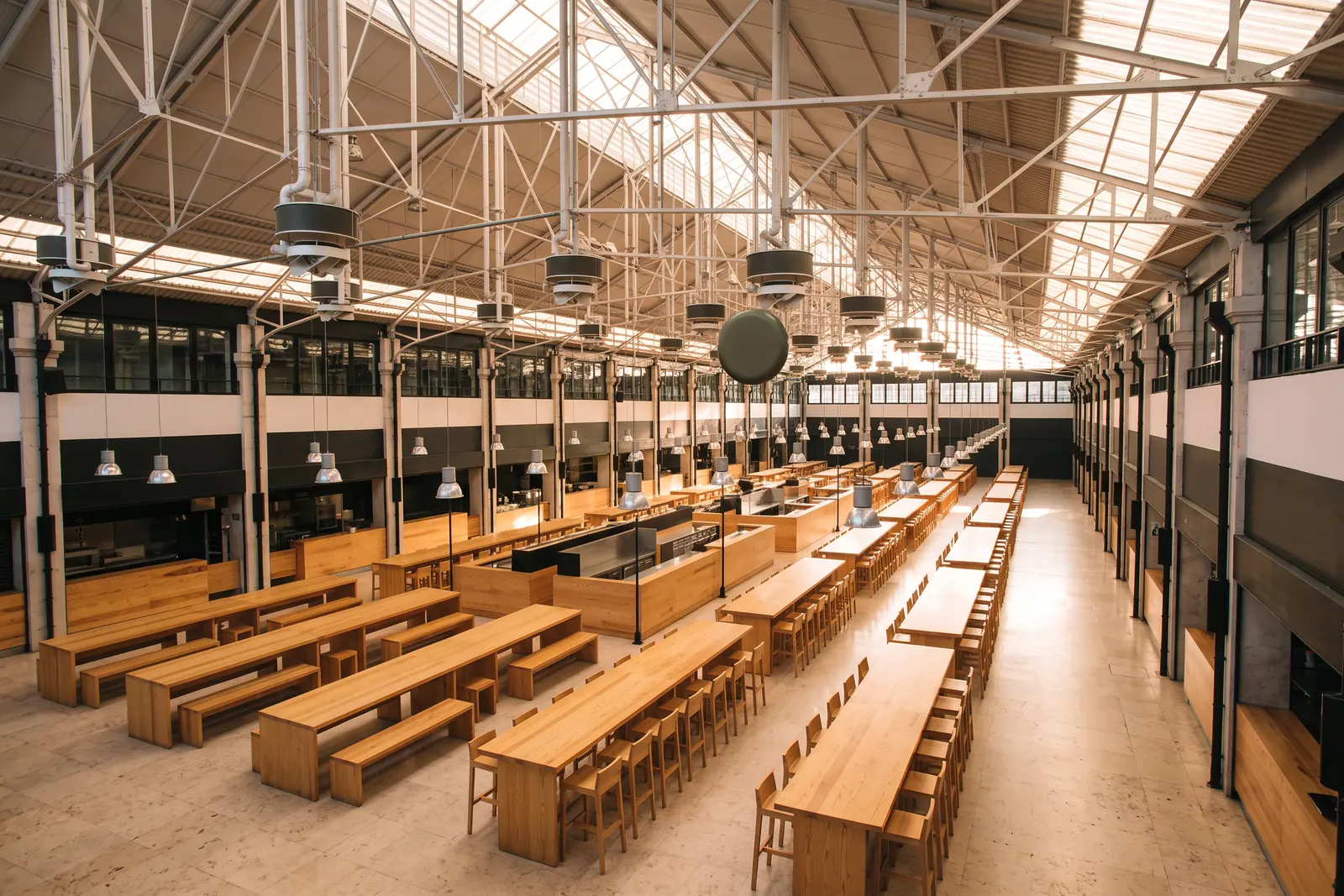
The Time Out Market took over half of the Mercado da Ribeira in Cais do Sodré in 2014 and filled it with around forty stalls run by well-known chefs and brands, around long communal tables. You order and pay at each stall, carry your tray to a seat and eat. The old produce market still trades in the other half in the morning.
My answer to a friend is yes to see it, no as the answer to the question of where Lisbon people eat. It is fun because you can taste several kitchens in one place, which also solves the group that cannot agree on dinner. But if you only have a few meals in Lisbon, keep at least one for a tasca or a cervejaria away from the busiest circuits, where the same money buys a better meal and a quieter room.
- Where: Avenida 24 de Julho 49, Cais do Sodré, opposite the train station.
- Hours: Sunday to Wednesday 10:00–24:00, Thursday to Saturday 10:00–02:00.
- Price: €10–25 a dish; a full meal around €20–35 a head.
- Best time: before 12:00, mid-afternoon or after 21:30; at 13:30 on a Saturday finding a seat is the hardest part of the meal.
- Book: no reservations, walk in.
Brunch in Lisbon
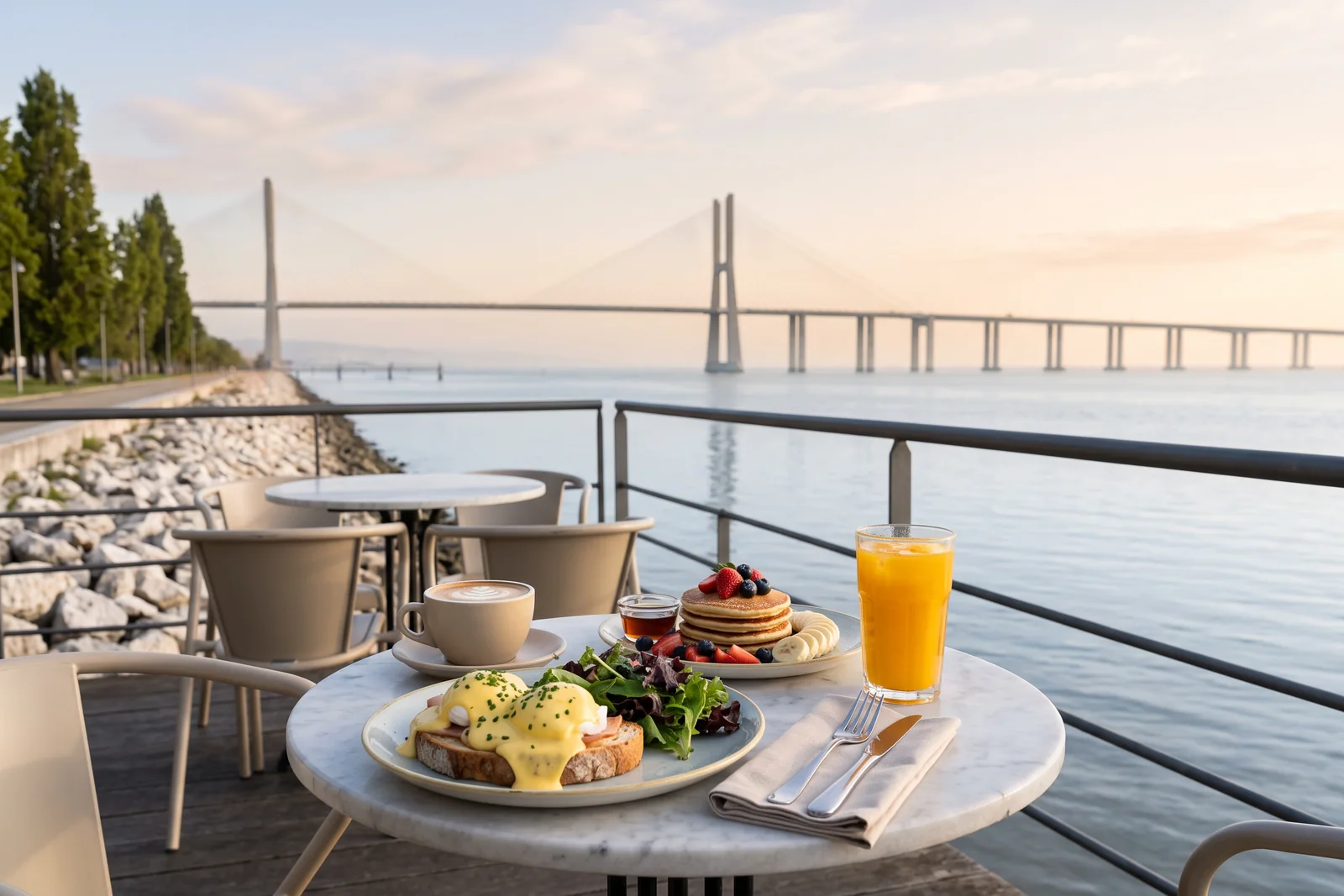
Brunch is not a Portuguese tradition, and nobody's grandmother made eggs Benedict, but in the last ten years it has become one of the things Lisbon does best: specialty coffee, sourdough, long weekend mornings on a terrace. The traditional alternative is still there and still cheaper, a pastel de nata and a bica standing at the counter of a pastelaria, and the best morning combines both.
- Heim Café: Rua de Santos-o-Velho 2, Santos; pancakes and eggs; busy on weekends.
- Dear Breakfast: several houses including one by the Sé in Alfama; open every day from 08:00; poached eggs, pancakes, a mimosa.
- Price: €12–22 a head with coffee.
- Tip: arrive before 10:30 on Saturday and Sunday or expect a queue; many places do not take bookings.
Some of the best brunch in the city is not in the centre at all, but by the river in Parque das Nações, which is the next section.
Where to eat in Parque das Nações

Parque das Nações is the riverside district built for Expo 98 at the eastern end of the city, around Oriente station, the Oceanário and the MEO Arena. It is where I end up eating most often, and what I like best are the restaurants along the riverfront, where you eat looking at the Tagus and the Vasco da Gama bridge instead of at a traffic jam. Prices here are middle of the road, closer to a residential neighbourhood than to the Baixa.
For breakfast or brunch, one of the places I have been using most recently is Nook Café on Alameda dos Oceanos; another very practical one next to Oriente is Sense of Coffee, a few minutes on foot from the station. Further north along the river, Nina on Rua Cais das Naus has a terrace facing the water and fills up by late morning on weekends.
- Aloma: in the Expo Tower on Avenida Dom João II; the contest-winning pastel de nata, from 08:00.
- D'Bacalhau: Rua da Pimenta 45, north riverside; cod in every form, from pataniscas to a tasting board, and a big terrace; open daily for lunch and dinner.
- Senhor Peixe: Rua da Pimenta, north riverside; fish grilled over charcoal since 1999; lunch only on Sundays, closed on Mondays; ask the price per kilo.
- Cantinho do Avillez: Rua do Bojador 55, by the river; José Avillez's relaxed Portuguese cooking; the weekday lunch menu is the value option; open on Sunday evenings.
- Sky Bar Oriente: sixteenth floor of the Tivoli Oriente, Avenida Dom João II 27; cocktails and small plates with the bridge at sunset; open until 01:00.
- Fifty Seconds: at the top of the Vasco da Gama tower; the district's two Michelin stars, for a special night.
Our Riverside apartment is on Avenida Dom João II, five minutes on foot from Oriente station and the MEO Arena, so the question our guests ask most is where to eat after a concert. My advice is simple: do not wait for the end of the show to start looking for a table. On nights of big concerts thousands of people come out at the same time and the restaurants in Parque das Nações fill quickly, so I would book ahead or have dinner before the show. For dinner I see no need to go back to the historic centre either; there are enough options in the district itself to end the night on foot. The Vasco da Gama shopping centre, 400 metres from the apartment, serves food until midnight every day if everything else is full.
How eating out works in Lisbon
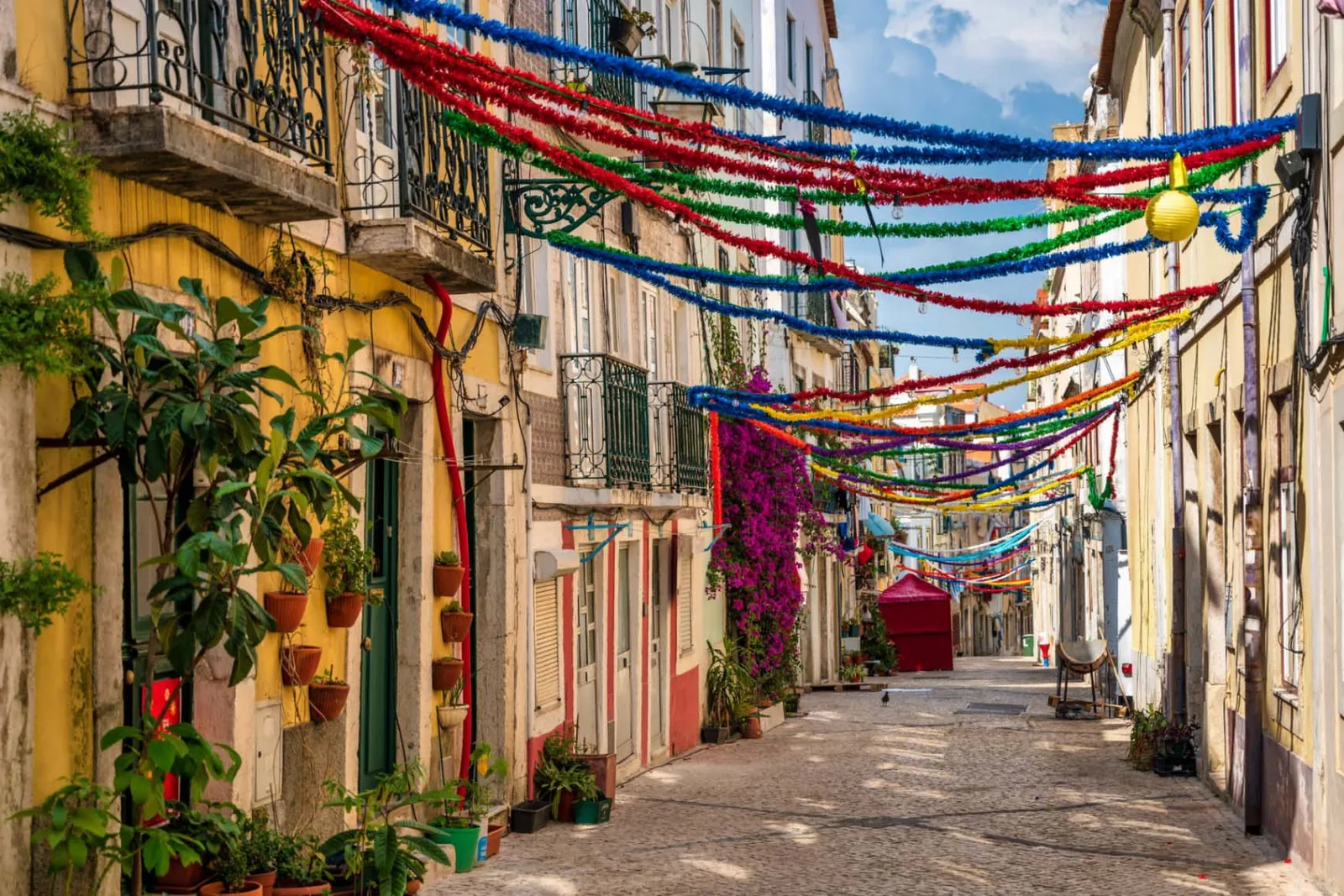
Most of the small disappointments visitors have at Lisbon tables come from a handful of local habits nobody explains. None of them are traps if you know them, and a couple of them are pleasant surprises.
The one that surprises people most is the couvert: bread, butter, olives or cheese placed on the table as you sit down are not necessarily a gift from the house, and if you eat them they are usually charged. By law, nothing can be charged unless you ordered it or used it, so if you do not want them, ask the waiter to take them away. The other is the clock. Many visitors want dinner at 18:00 and are puzzled to find restaurants empty; in Lisbon, 20:00 or 21:00 is a perfectly normal time for dinner.
- Lunch: 12:30–15:00; many kitchens then close until 19:00 or 19:30.
- Dinner: 19:30–22:30, with locals sitting down around 20:30.
- Couvert: charged only if eaten or touched; send it back if you do not want it.
- Tipping: not expected; rounding up or 5–10% at a sit-down dinner if the service was good; nothing at a counter.
- Booking: needed for seafood halls, contemporary restaurants and anything with a star; tascas are mostly walk-in.
- Closed days: many tascas close on Sunday and many restaurants on Monday; check before you cross the city.
A rough budget for 2026, per person and before wine:
- Bifana and a small beer: under €6.
- Prato do dia: €8–12 in neighbourhood places, €12–15 in central Chiado.
- Tasca or petiscos dinner: €15–30.
- Seafood cervejaria: €35–60.
- Contemporary restaurant: €30–60.
- Michelin tasting menu: €140–295.
The honest skips are easy to recognise: waiters on the pavement of Rua Augusta and Rua das Portas de Santo Antão waving picture menus in six languages, "free" welcome drinks, and seafood listed at "market price" with no figure. One block away, in almost every case, there is a tasca with a handwritten menu and half the bill.
Cooking at home: markets and supermarkets
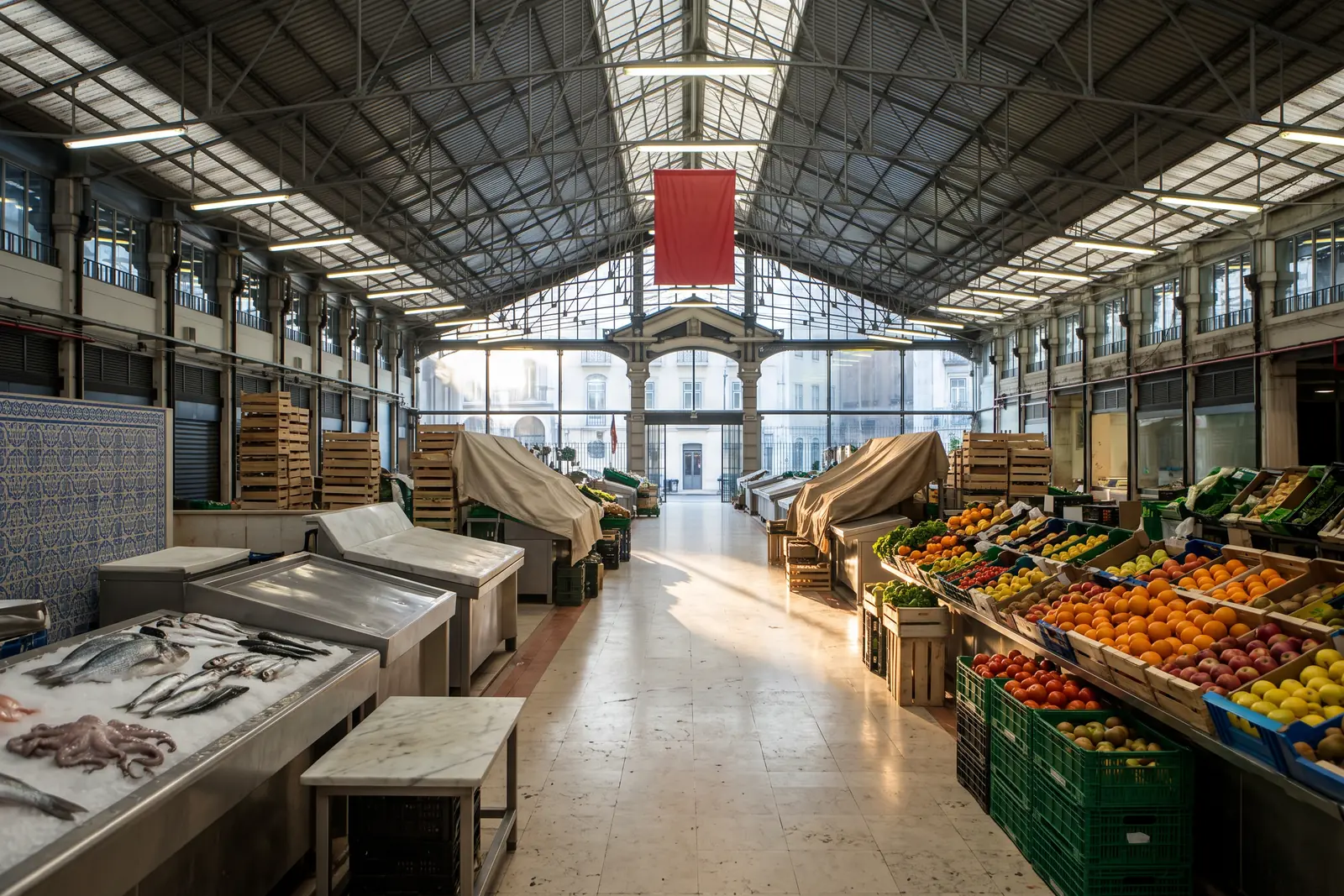
Some of the best food in Lisbon is bought, not ordered. The fish and produce stalls of the Mercado da Ribeira still open in the morning next to the Time Out Market, and the Mercado de Campo de Ourique, in a residential neighbourhood at the end of the 28 tram line, mixes a working market with small counters where locals eat lunch. A tin of good sardines from a conserveira, a loaf, a cheese from the Alentejo and a bottle of Bucelas make a dinner as Portuguese as any restaurant.
This is also where an apartment beats a hotel room. The Riverside apartment has a fully equipped kitchen with a dishwasher and a Nespresso machine, and a supermarket a few minutes away in the Vasco da Gama centre, open from 08:00 to midnight, so a slow breakfast with natas from Aloma and a home-cooked dinner after a day in the centre are both easy. For neighbourhoods to explore while you shop, our Lisbon neighbourhood guide covers each one, and if you are planning the days around meals, the Lisbon in 3 days itinerary already puts dinner in Chiado and an evening in Cais do Sodré.
Lisbon food FAQ
What food is Lisbon famous for?
The pastel de nata above all, then grilled sardines in summer, salt cod in many forms, the bifana and prego sandwiches, clams Bulhão Pato and seafood rice. For drinks, ginjinha, vinho verde and a bica at the counter.
Where do locals eat in Lisbon?
At tascas and neighbourhood restaurants with a handwritten prato do dia, at the seafood cervejarias, and at markets like Campo de Ourique. The Time Out Market is fun, but it is mostly visitors.
Do you need to book restaurants in Lisbon?
For seafood halls like Ramiro, contemporary restaurants and anything with a Michelin star, yes, often days or weeks ahead. Tascas and counters are walk-in; arrive early at lunch.
Is the couvert free in Lisbon?
No. Bread, olives and cheese placed on the table are charged if you eat them, and by law they cannot be charged if you leave them untouched. Ask the waiter to take them away if you do not want them.
How much does a meal cost in Lisbon?
A dish of the day costs €8–15, a tasca dinner €15–30, a seafood dinner €35–60 and a Michelin tasting menu €140–295 per person before wine, as of 2026.
What time do people eat dinner in Lisbon?
Between 20:00 and 21:00 is normal. Restaurants open earlier, around 19:00 or 19:30, but a dining room at 18:00 will usually be empty.
Where to stay to eat well in Lisbon
If you want to end the day by the river, close to Nook, Aloma and the riverside terraces of Parque das Nações, the Riverside apartment is five minutes on foot from Oriente station and about 20 minutes by metro from the historic centre. Our Lisbon page has the rest, and the Superior Rentals homepage shows our homes in Madeira too, where the Funchal food guide picks up the story with espetada and poncha.
Related topics: Restaurants, Markets