Lisbon Oceanarium: tickets, prices, hours and Parque das Nações
Ana Freitas · 14 min read · Updated 17/Nov/2026
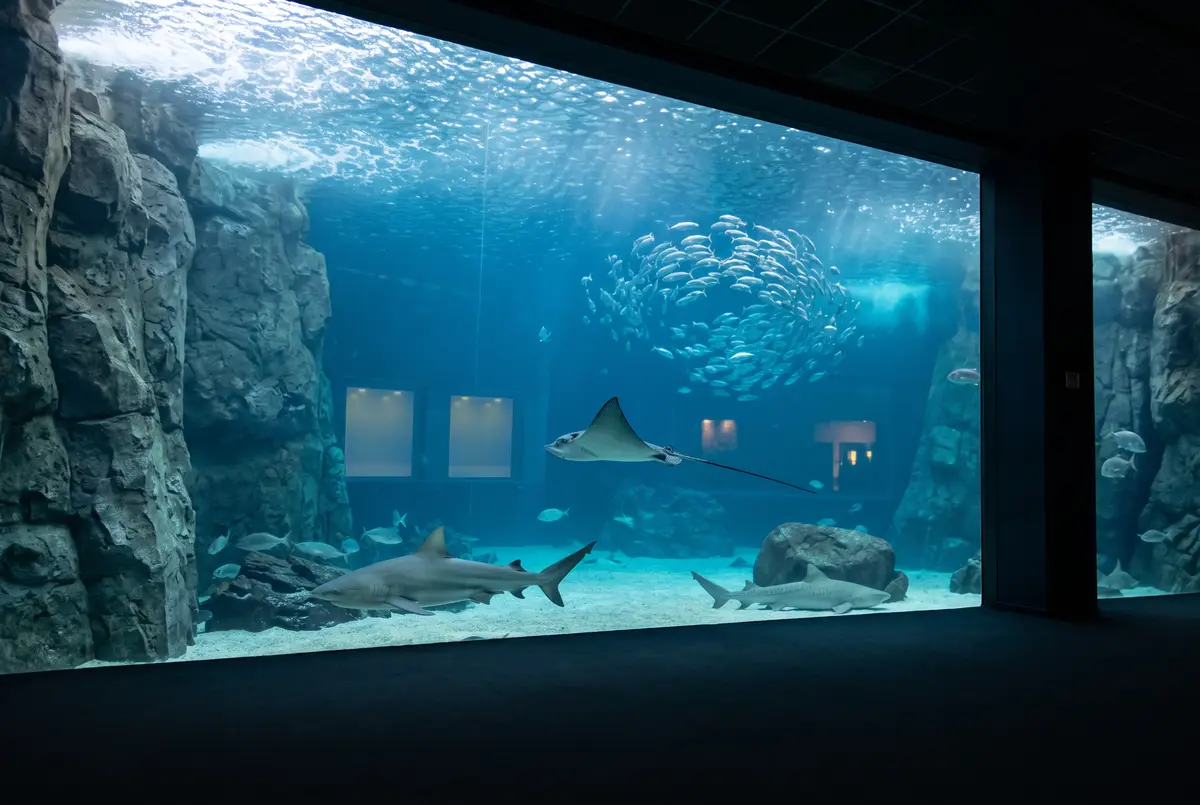
The Oceanário de Lisboa, practically: ticket prices by entry time, opening hours and holidays, the central tank and the penguins, the metro to Oriente, and how to spend the rest of the day in Parque das Nações.
The Lisbon Oceanarium at a glance
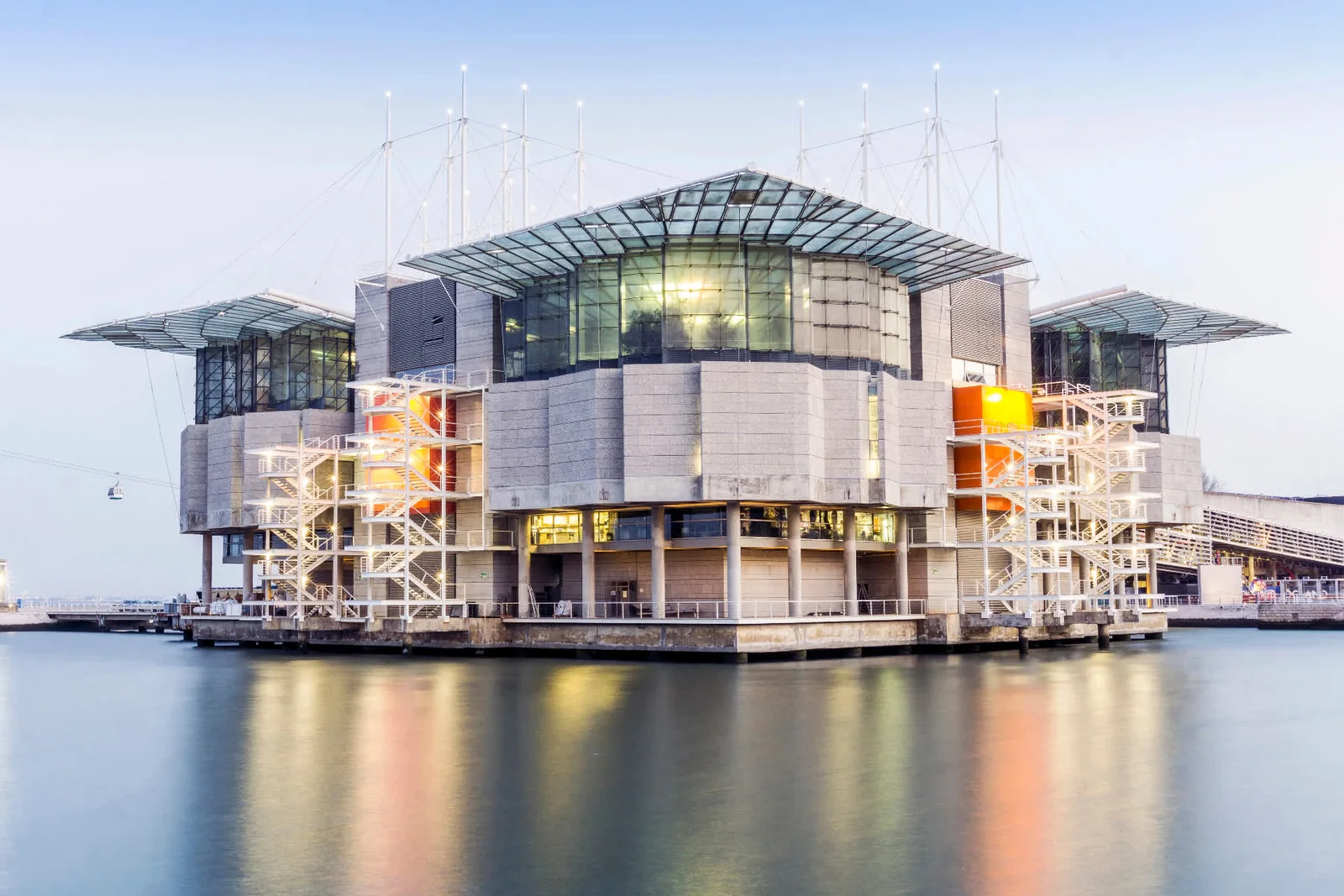
The Oceanário de Lisboa sits on a pier in the Tagus at the eastern end of the city, a building surrounded by the water of the Doca dos Olivais. It was built for Expo 98, in Parque das Nações, the flat riverside district that grew around the exhibition site. These are the facts worth knowing before you go, taken from the Oceanário's own visitor page as published in the autumn of 2026.
- Tickets: from €25.50 for an adult, depending on the time you enter; children under 3 go free.
- Hours: every day from 10:00 to 20:00, last entry at 19:00.
- Holidays: open on 25 December and 1 January, from 11:00.
- Time needed: one and a half to two hours.
- Getting there: Oriente station on the red metro line, then a walk of 15 to 20 minutes.
- Combined ticket: Oceanário and the riverside cable car together for €33.90 for an adult.
What follows covers tickets and the best time to go, what is inside and which exhibitions are on, how to get there from the centre and the airport, and what else the district offers for the rest of the day, from the cable car and the science museum to the riverside promenade.
To stay close to the Oceanário, our best option is the Riverside apartment, a 10-minute walk away along the river. These are its next free dates.
Lisbon Oceanarium tickets, prices and opening hours

The price of a ticket depends on the time you enter, and the gap is worth knowing. For 2026, an adult ticket costs €29.90 for entry between 10:00 and 11:30, €27.70 between 12:00 and 15:30 and €25.50 between 16:00 and 18:30, according to the Oceanário's FAQ. The same three bands apply to the other ages:
- Adults (13 to 64): €29.90, €27.70 or €25.50, from the earliest slot to the latest.
- Children (3 to 12): €17.70, €16.60 or €15.50.
- Seniors (65 and over): €19.90, €18.80 or €17.70.
- Babies (up to 2): free.
- Flexiticket: €41 for an adult, valid for one visit on any day within a week of the date chosen.
There is no family ticket, and there is no longer a separate price for the temporary exhibitions: one ticket covers everything on the route. The official site advertises a 10% discount for tickets bought online, and buying ahead also avoids the queue at the desk, where tickets are sold on the day subject to availability. Visitors with a certified disability of at least 60% enter free and a companion pays 40%, but only with the certificate at the desk. The Lisboa Card does not include free entry to the Oceanário; some resellers advertise a discount, which is worth confirming at the desk before relying on it.
The Oceanário is open every day of the year, from 10:00 to 20:00, with the last entry at 19:00. On 24 and 31 December it closes an hour earlier, and on 25 December and 1 January it opens at 11:00. The official estimate for a visit is one and a half to two hours. That makes the cheapest band, from 16:00, a good choice as long as you enter at the start of it rather than at 18:30.
Weekends, school holidays and rainy days are the busiest, and school groups tend to arrive in the morning. The first hour after opening and the late afternoon are usually the calmer times. The building can also close at short notice in extreme weather, as it did on 11 November 2026, so on a stormy day it is worth checking the official homepage before setting off.
What is inside: the central tank and the four oceans
The design, by the American architect Peter Chermayeff, is built around a single idea: there is one global ocean. At the centre is a tank of 5 million litres, visible from two floors, home to sharks, rays and shoals of fish. Around it sit four habitats, each recreating the coast and the surface of one ocean, the Atlantic, the Pacific, the Indian and the Southern Ocean, so that the walk moves between the open water in the middle and the shoreline at the edges. In total the official figures count about 8,000 animals.
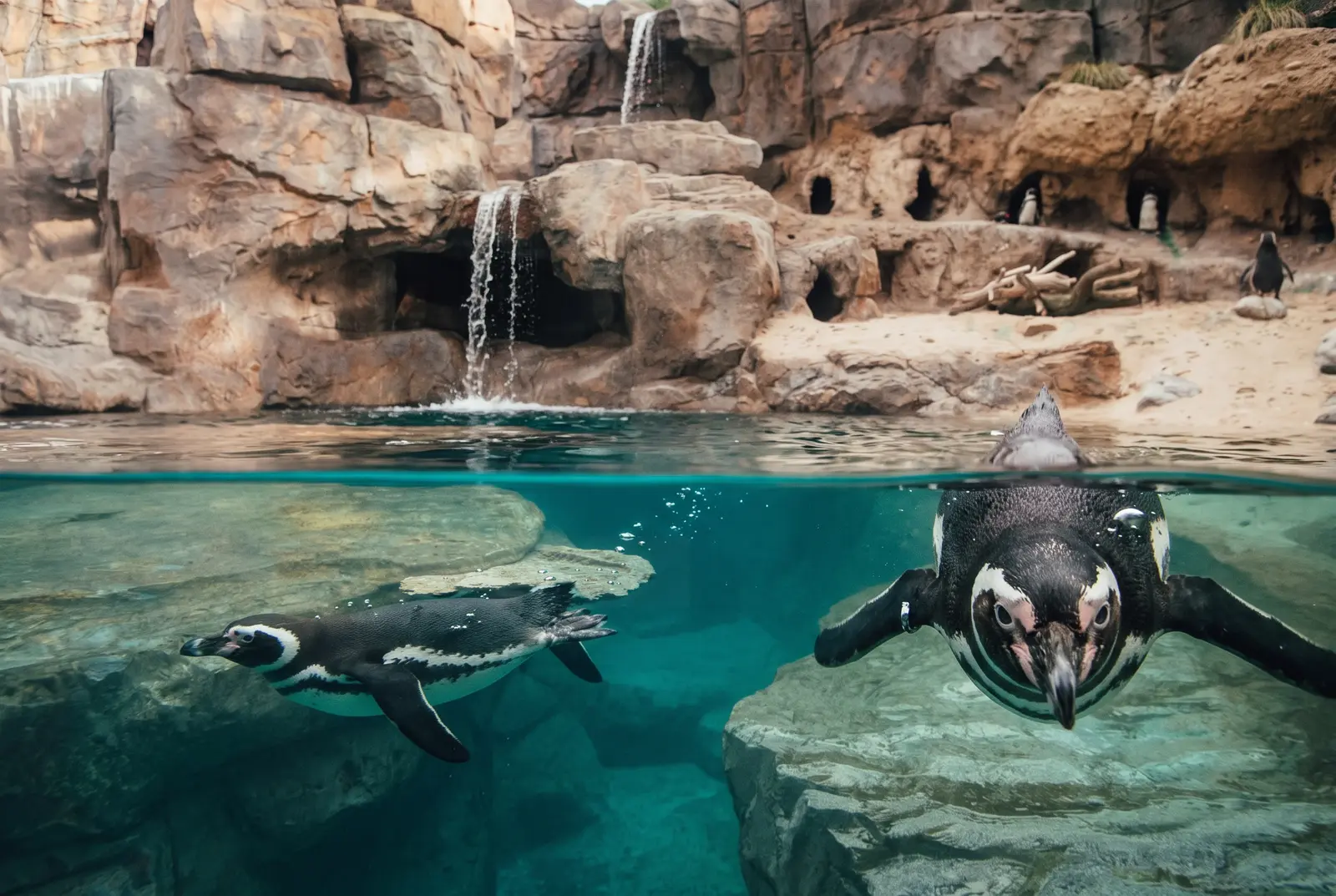
The Southern Ocean habitat is the newest part of the route. It was rebuilt over ten months and reopened on 15 September 2025, when 29 Magellanic penguins returned to it, together with a group of Inca terns. The penguins can be watched both from above, on land, and from the lower floor as they swim underwater.
The Oceanário is often described as Europe's largest indoor aquarium, but the institution itself is more careful and calls it one of the largest aquariums in Europe. It is certainly one of the most visited places in Portugal: its latest annual report counted 1,344,321 visitors in 2025, after 1,467,580 in 2024.
The second building, the Edifício do Mar, by the Portuguese architect Pedro Campos Costa, opened in 2011 next to the original and now holds the temporary exhibition hall, the auditorium and one of the entrances. The permanent route is called "One Planet, One Ocean", and since November 2024 it has also included "Submerged Universe", an immersive installation made with the French studio LesAteliers BK. It uses flashing lights, and the Oceanário warns visitors with photosensitive epilepsy.
Two changes matter for anyone reading older guides. "Forests Underwater", the tank landscape by the Japanese aquascaper Takashi Amano that opened in 2015, closed for good on 30 September 2026. "Sea Monsters", the exhibition of life-size prehistoric marine predators made with the Dino Parque in Lourinhã, was scheduled to end on 1 November 2026. No new temporary exhibition for 2027 had been announced in November 2026, so the exhibitions page is the place to check what is on.
How to get to the Oceanário
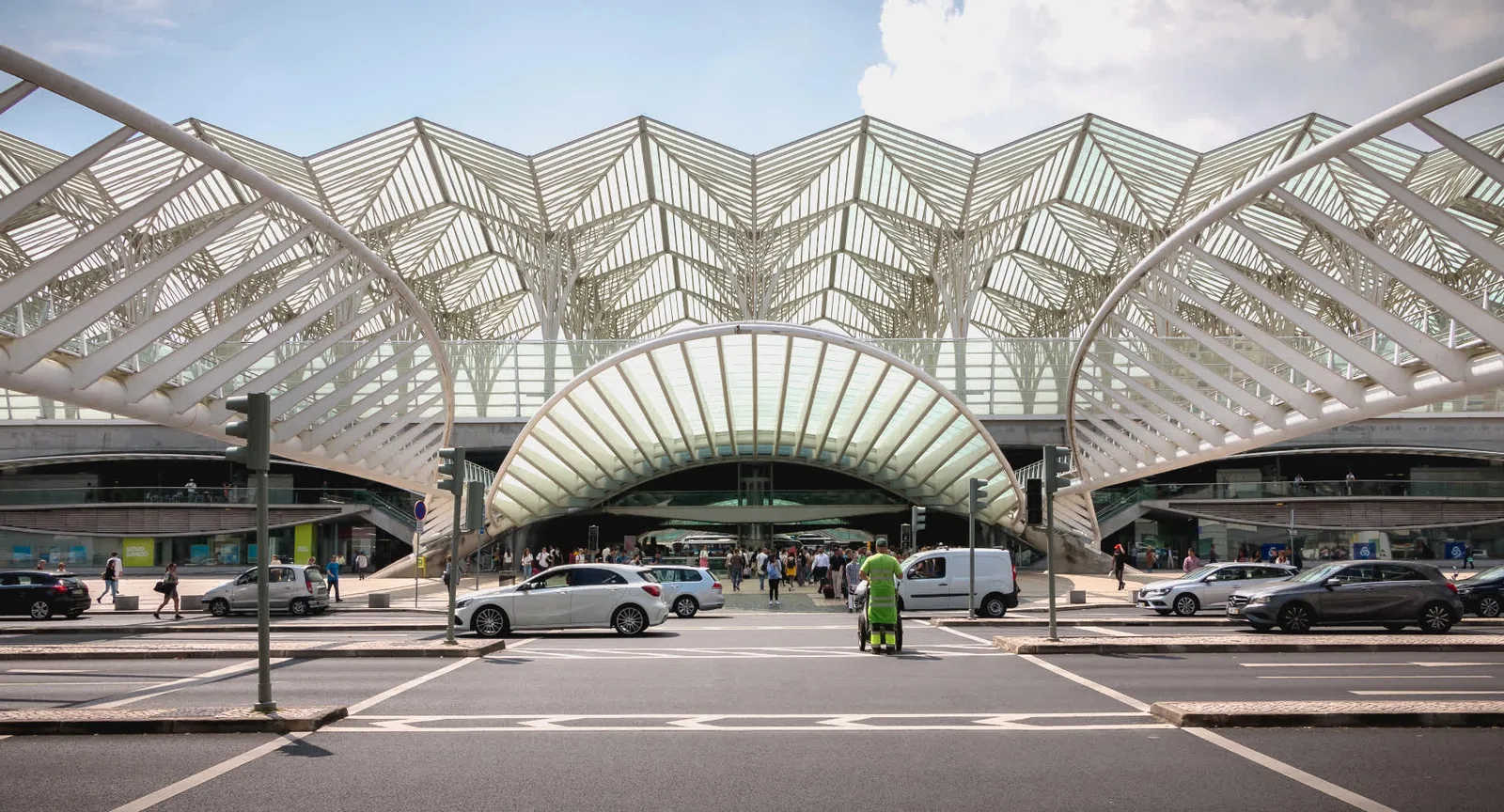
The simplest route is the metro. Oriente station, on the red line, sits under Santiago Calatrava's steel and glass canopy, and from there the Oceanário is a walk of about 1.2 kilometres, 15 to 20 minutes, past the Vasco da Gama shopping centre and down to the river. From the centre the journey takes about 20 minutes with one change: from Baixa-Chiado, take the green line and change to the red line at Alameda; from Marquês de Pombal, take the yellow line to Saldanha and change there. From the airport it is even simpler, a direct ride of three stops on the red line.
Paying is easier than it used to be. The Lisbon metro now accepts contactless bank cards and phones at the gates, at €1.92 a trip, as long as you tap in and out with the same card, according to Metro de Lisboa. The reusable navegante card costs €0.50 and, loaded with "zapping" credit, brings the trip down to €1.72; a 24-hour pass for the metro and Carris buses costs €7.25. Several bus lines also stop near the Oceanário, among them the 705, 725, 728, 744 and 750.
By car, the nearest car park is the one beside the Oceanário itself, open 24 hours, at €2.40 for the first hour and a maximum of €20.90 for the day, with a height limit of 1.90 metres. From the airport, a protocol signed by the taxi association in September 2026, in force since 15 October 2026, sets a fixed fare to Parque das Nações of €16 on weekdays between 07:00 and 22:00, and €20 at night, at weekends and on holidays; it is voluntary for drivers, so it is worth agreeing the fare before getting in.
From our Riverside apartment, on Avenida Dom João II, the Oceanário is about ten minutes on foot along the river, and Oriente station is five. That makes it one of the few big Lisbon sights within walking distance, and easy to reach for the 10:00 opening.
The cable car along the river
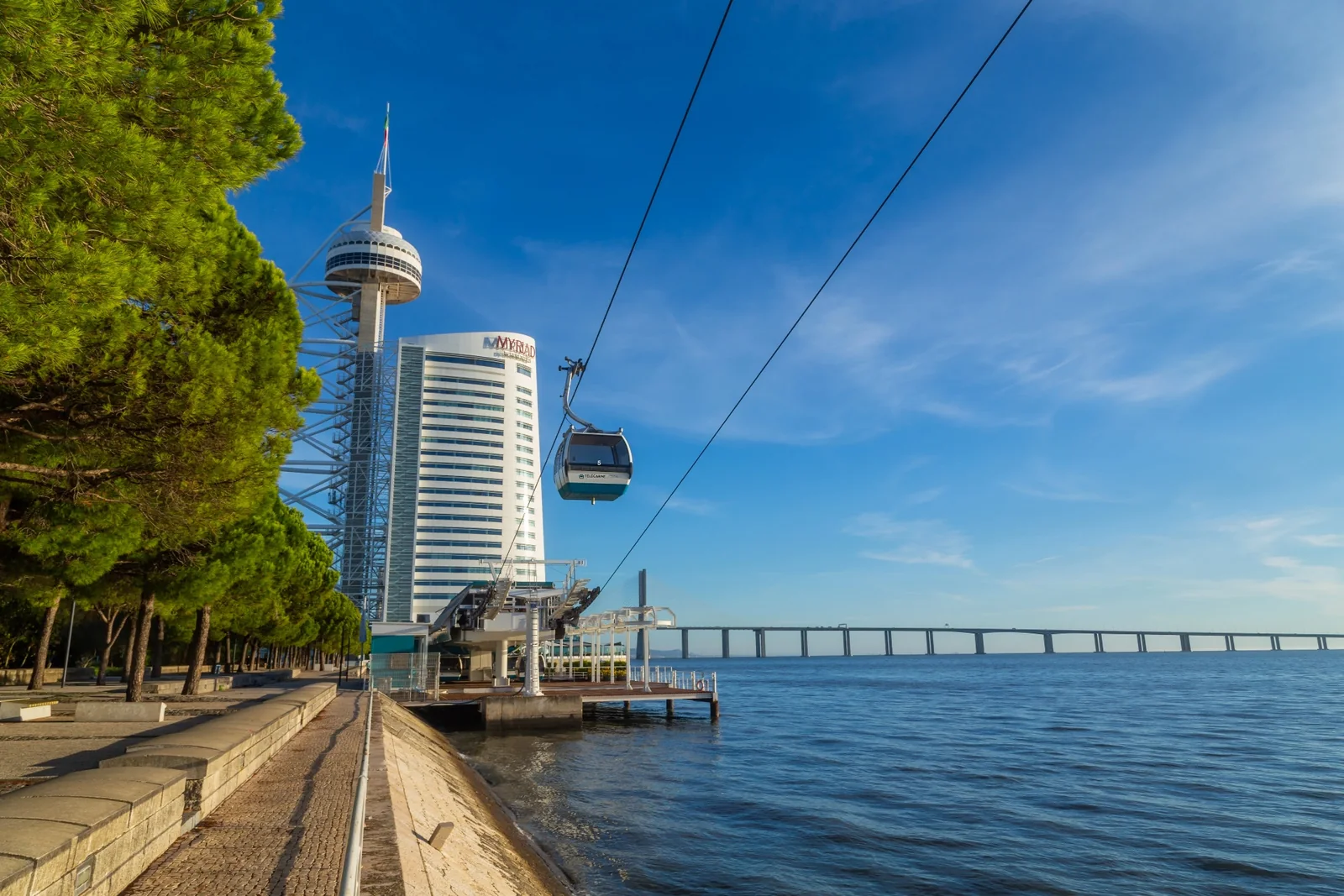
Right next to the Oceanário, the Telecabine Lisboa runs along the riverfront for 1,230 metres, between the Oceanário end and the Torre Vasco da Gama at the northern end of the district. The cabins run above the riverside promenade, and the ride takes between 8 and 16 minutes, with the Vasco da Gama bridge ahead on the way north and the river on one side the whole time.
A one-way ticket costs €7.50 for an adult and €5.50 for a child aged 3 to 12; a return costs €9.50 and €6.50, according to the operator's price page. The Oceanário sells a combined ticket for both at €33.90 for an adult aged 13 to 64. From 24 October 2026 to 12 March 2027 the cable car runs from 11:00 to 18:00, so the last rides are in the late afternoon. It also closes for scheduled maintenance, and is closed from 16 to 27 November 2026.
It is a pleasant ride rather than an essential one. The view is of the flat riverside and the bridge, not of the old city, and the same stretch can be walked along the promenade in about twenty minutes. For children, or on a clear day after the Oceanário, it is a good way to reach the northern end of the district and walk back.
Pavilhão do Conhecimento, the science museum next door

A few steps from the Oceanário, the Pavilhão do Conhecimento is Lisbon's interactive science museum, run by the national Ciência Viva network. It is built for hands rather than glass cases, and it is the natural second stop with children, especially on a rainy day. Its main exhibition until 30 September 2027 is "Floresta: Uma Experiência de Raiz", a set of 24 interactive modules about forests.
- Tickets: adults €15, ages 3 to 17 €10, seniors €11, and a family ticket at €35, according to the museum's ticket page.
- Hours: Tuesday to Friday 10:00 to 18:00, weekends and holidays 10:00 to 19:00; closed on Mondays and on 24, 25 and 31 December and 1 January.
- Time needed: about an hour and a half.
- Good to know: younger children must be accompanied by an adult.
The Monday closure is easy to miss: a Monday in Parque das Nações is better spent on the Oceanário, which opens every day, and the riverside.
More of Parque das Nações: the tower, the gardens and the river
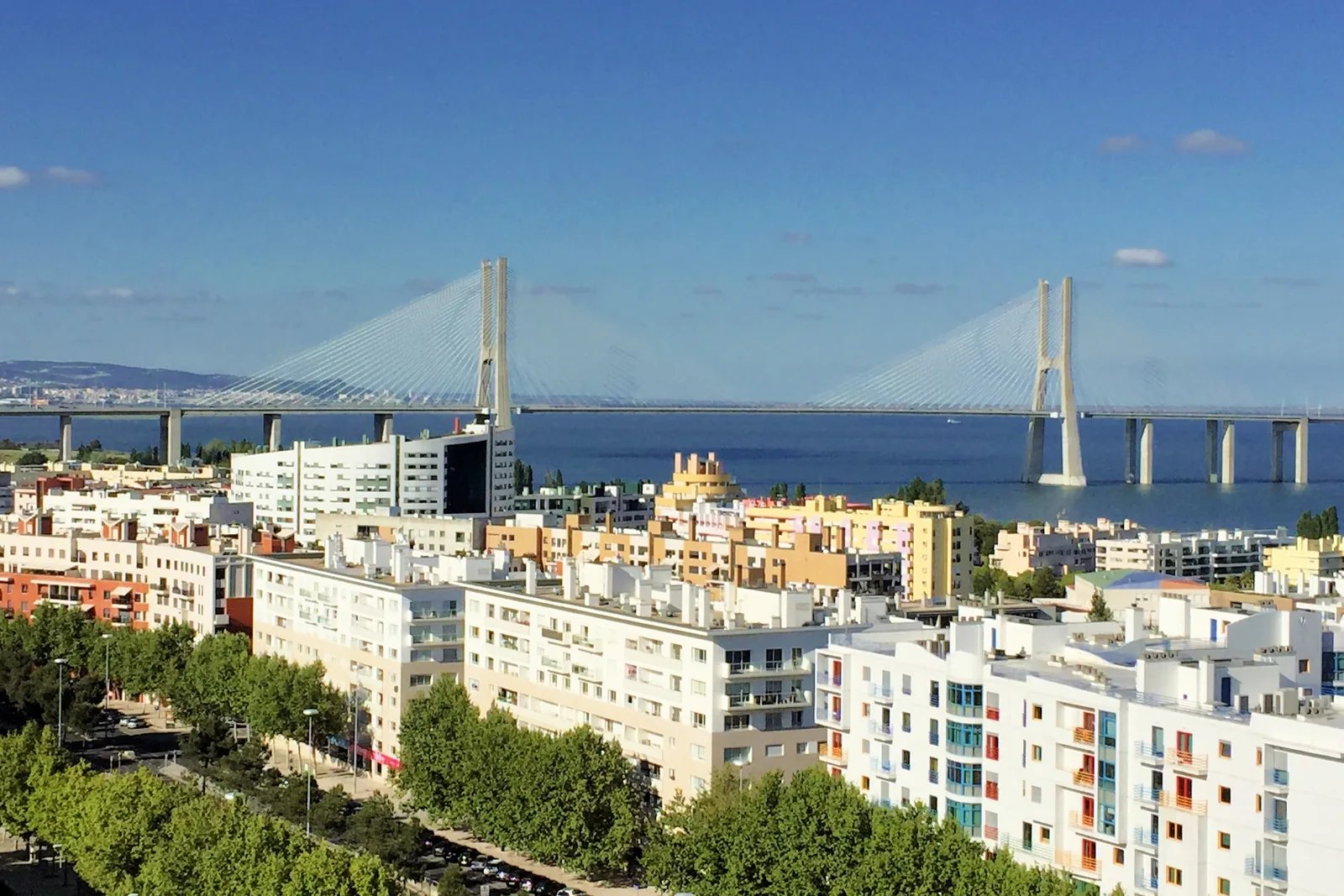
Parque das Nações is the opposite of the Lisbon postcard. There are no hills, no tiles and no trams; the streets are wide, the buildings date from the late 1990s onwards, and the whole district is laid out along five kilometres of river, with a promenade that runs almost its entire length. That is exactly why it works for an afternoon on foot after the Oceanário.
At the northern end, the Torre Vasco da Gama, 145 metres tall, has a public viewpoint at the top, open from 10:00 to 18:00 (last entry 17:30, closed 25 December and 1 January) at €10 for an adult and €5 for a child aged 5 to 12, according to the tower's own site. From there the Vasco da Gama bridge, 17.2 kilometres long, crosses the estuary, and on a clear day the view reaches far up the river. In the evening a separate rooftop bar opens in the same building, for adults only.
Closer to the Oceanário, the Pavilhão de Portugal, by Álvaro Siza, is worth a few minutes for its concrete canopy, which hangs over the open square like a sheet of paper resting on two bricks. The building reopened in April 2025 as an exhibition and congress centre, so access inside depends on the events of the day, but the canopy itself is always visible. The Jardins Garcia de Orta, a strip of about 400 metres of gardens planted with species from the places the Portuguese reached by sea, run along the riverside promenade.
Inland, the Centro Vasco da Gama shopping centre, open every day from 10:00 until midnight for the shops, sits across the road from Oriente station, and the MEO Arena and the Casino Lisboa complete a district that stays lively in the evening on concert nights and quiet on the others.
Where to eat around the Oceanário

Inside the Oceanário there are three places to eat or drink: the #SeaTheFuture restaurant on the ground floor, with a terrace on the river and a menu strong on vegan and gluten-free dishes, open from 10:00 to 19:00; Submerso, serving Portuguese petiscos with a view of the water from 12:00 to 19:00; and a coffee bar from 9:00 to 18:00. Food is not allowed on the visit route, and the Oceanário itself suggests eating before or after the visit.
Outside, the riverfront between the Oceanário and the tower is lined with restaurant terraces, busiest at weekend lunchtimes and on concert nights at the MEO Arena, when booking ahead is wise. For something quicker and cheaper, the food court of the Centro Vasco da Gama has dozens of counters under one roof, a short walk from both the river and the metro. Our guide to food in Lisbon has a section on where to eat in Parque das Nações.
A half day in Parque das Nações
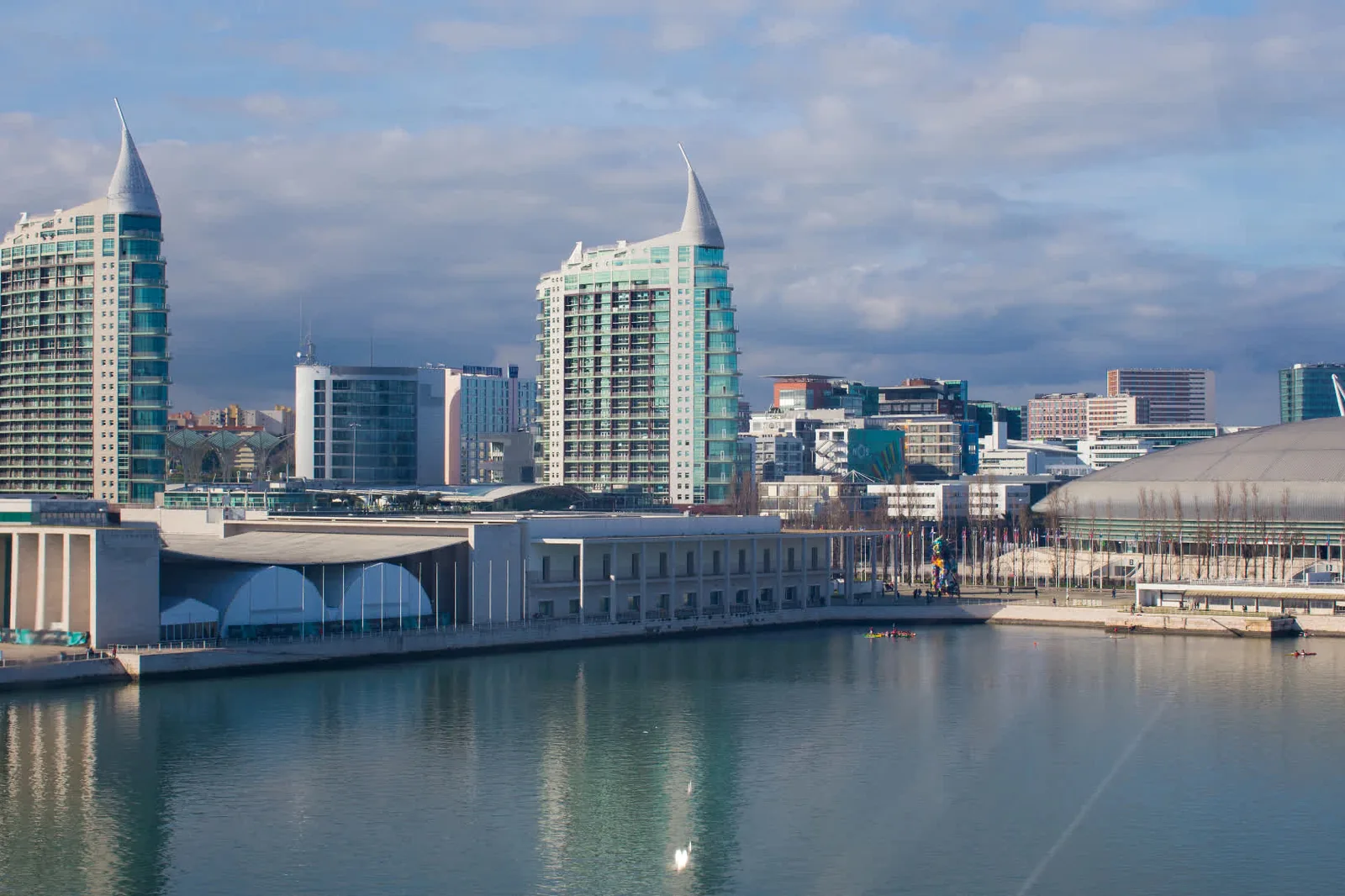
The district fits comfortably into a half day, and it rewards an early start.
Morning: the Oceanário at opening
Arrive for the 10:00 opening, ticket bought online, and give the visit two hours. Start with the central tank on the upper floor while it is still quiet, then follow the four habitats and finish on the lower floor, where the penguins can be seen swimming underwater.
Midday: lunch by the river
Eat on one of the riverside terraces, or in the food court if the weather turns.
Afternoon: the cable car and the tower
Take the cable car north to the Torre Vasco da Gama, go up to the viewpoint before the last entry at 17:30, then walk back along the promenade through the Garcia de Orta gardens. With children, swap the tower for the Pavilhão do Conhecimento, except on a Monday, when it is closed.
For a full day in the rest of the city, our three-day Lisbon itinerary and the list of things to do in Lisbon pick up where this one ends.
Frequently asked questions about the Lisbon Oceanarium

How much does the Lisbon Oceanarium cost?
In 2026 an adult ticket costs €25.50 to €29.90 depending on the time of entry, children aged 3 to 12 pay €15.50 to €17.70, and children under 3 go free. Entering after 16:00 is the cheapest option.
How long does a visit to the Oceanário take?
One and a half to two hours, according to the Oceanário itself. With children and a stop at the penguins, plan for two.
Is the Lisbon Oceanarium open on Christmas Day and New Year's Day?
Yes. It is open every day of the year; on 25 December and 1 January it opens at 11:00 and closes at 20:00, and on 24 and 31 December it closes at 19:00.
Is the Oceanário included in the Lisboa Card?
No, entry is not free with the Lisboa Card. Some resellers advertise a discount; confirm it at the desk before counting on it.
How do you get to the Oceanário by metro?
Take the red line to Oriente, then walk 15 to 20 minutes to the river. From the centre the trip takes about 20 minutes with one change, and from the airport it is three stops on the red line.
Where to stay near the Oceanário
To be in Parque das Nações rather than visit it, our Riverside apartment is on Avenida Dom João II, about ten minutes on foot from the Oceanário along the river and five from Oriente station, with the historic centre about 20 minutes away by metro. Our guide to where to stay in Lisbon compares the neighbourhoods, and the Lisbon page brings it all together, or start from our homepage.