Madeira in February: weather, Carnival 2027 and what to do
Catarina Gomes · 20 min read · Updated 17/Nov/2026
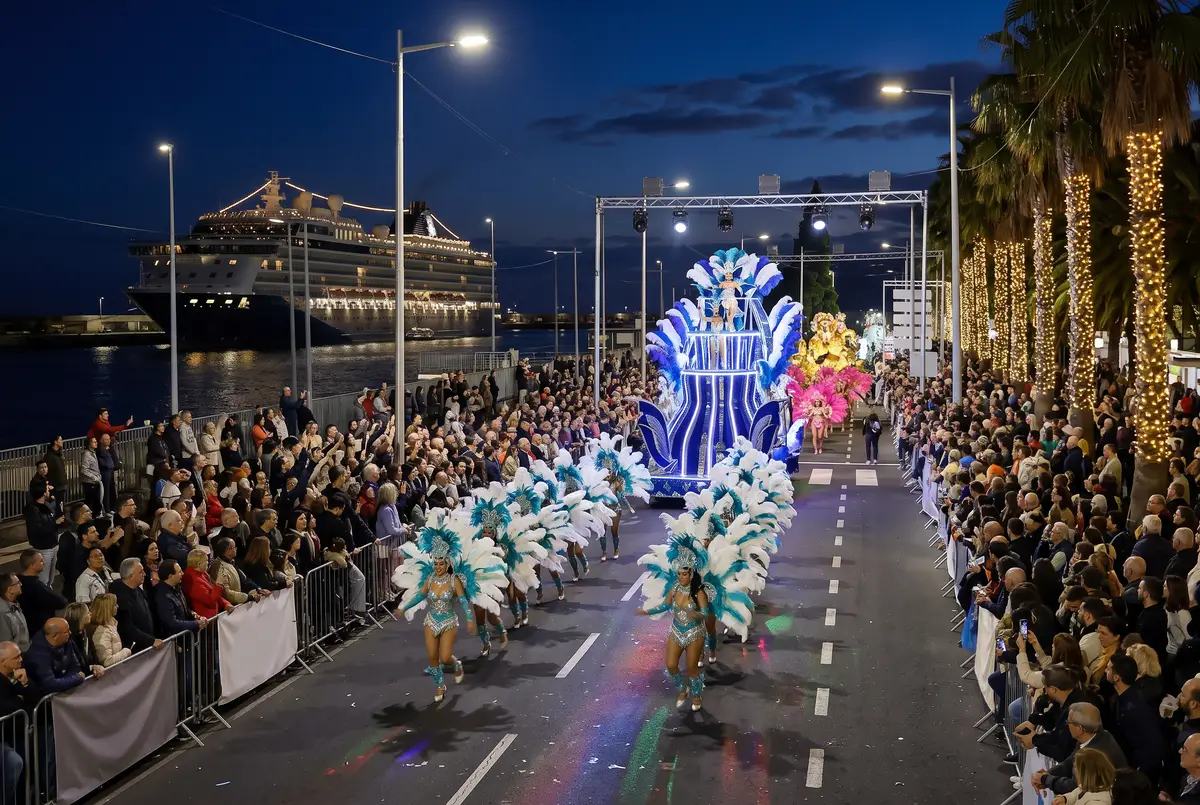
Madeira in February, honestly: mild days on the coast and cold dawns on the peaks, the 2027 Carnival with its two parade nights in Funchal, and what to do, pack and book.
Madeira in February at a glance
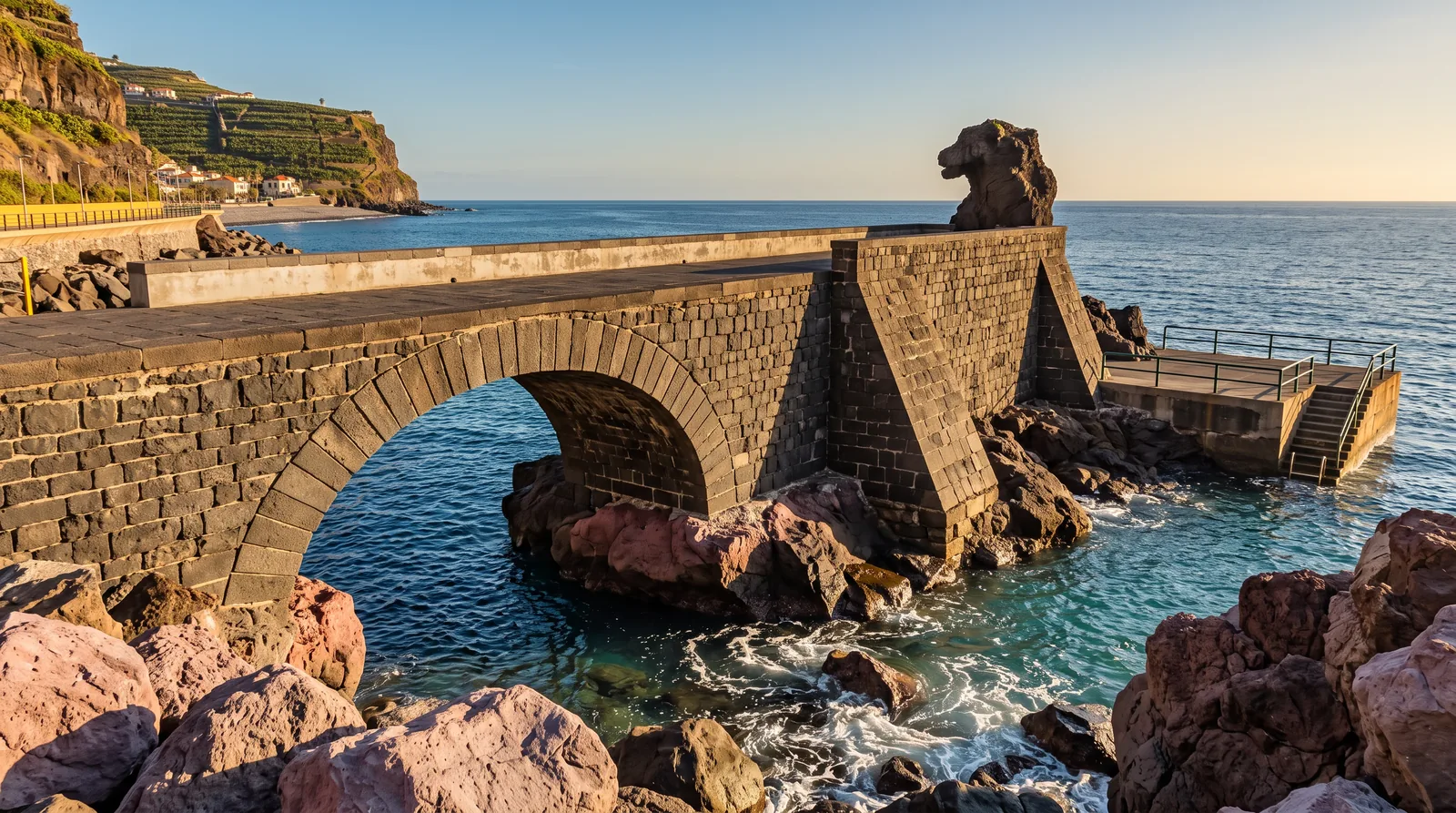
February is the quiet hinge of the Madeira winter. The days lengthen by about 50 minutes across the month, the magnolias open in the old quinta gardens above Funchal, and for one long week the city turns its seafront over to the Carnival. These are the numbers worth knowing before you book, taken from the official climate normals for Funchal and from the published programme of the 2027 Carnival.
- Daytime high: about 20°C on the Funchal seafront.
- Night low: about 14°C, and it does not freeze at sea level.
- Rain: about 72 millimetres over five or six days with at least a millimetre, and only two days with real rain.
- Sea temperature: roughly 18°C, among the coolest of the year.
- Daylight: from 10 hours 38 minutes on 1 February to 11 hours 27 minutes on 28 February.
- Carnival 2027: 3 to 14 February, with the big allegorical parade on two nights, Friday 5 and Saturday 6 February, at 20:00.
- Carnival Tuesday: 9 February 2027, the day of the satirical Trapalhão parade.
The climate figures are the IPMA normals for 1991 to 2020, measured at the Funchal observatory, 58 metres above the sea, so they describe the coast where most visitors sleep, not the mountains. The Carnival dates come from the official Visit Madeira programme as published in November 2026. What follows takes the month in order: the weather, the wind and the mountains, the Carnival and how to watch it, walking, gardens and the sea, and when to book.
Madeira weather in February, honestly
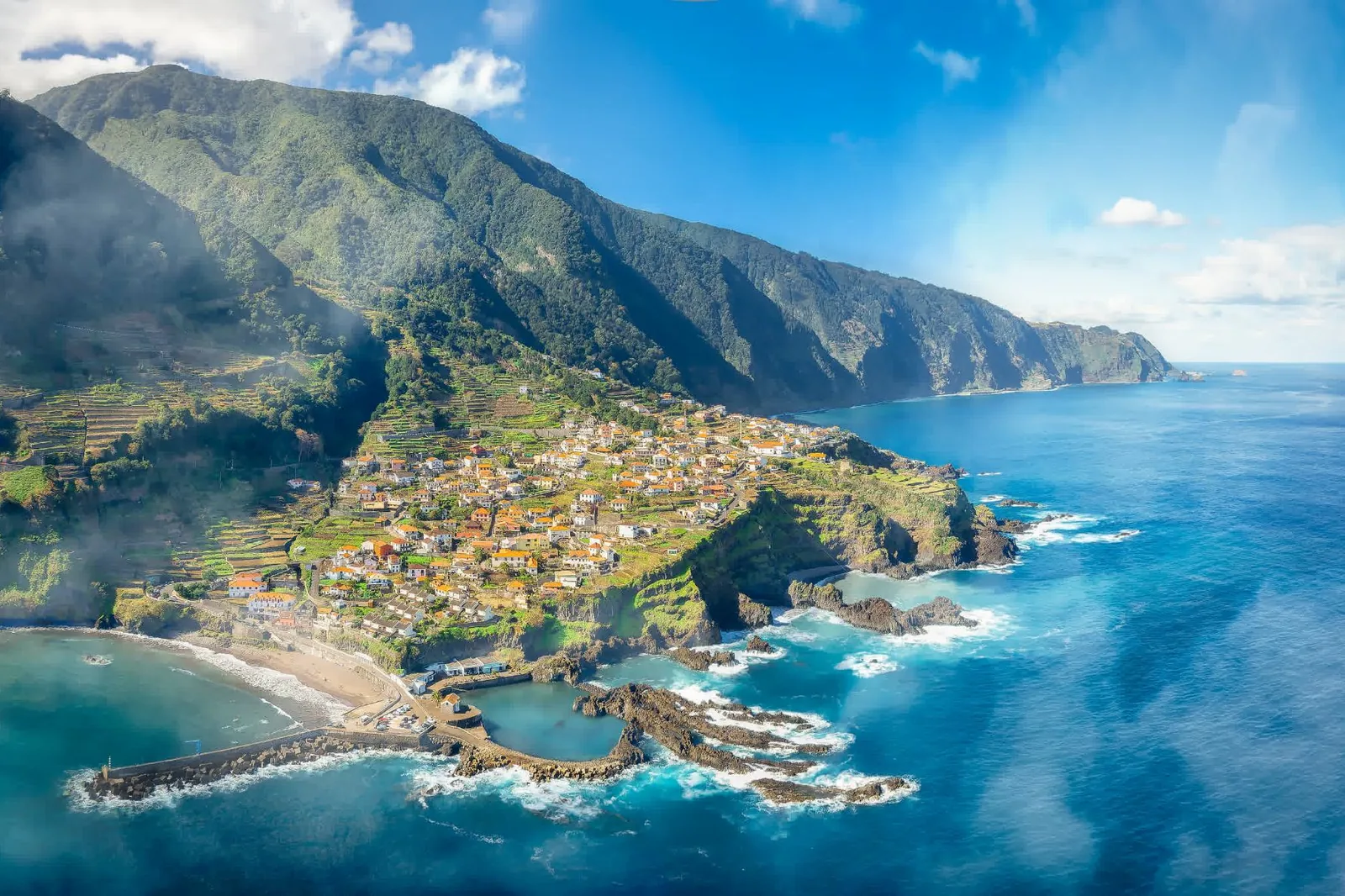
February in Funchal is mild rather than warm. On a calm afternoon the sun on the promenade is enough for a shirt; by six in the evening, with the light going, a jacket is welcome, and a breeze off the water makes 15°C feel cooler than it reads. The averages are almost identical to January, which makes these two the coolest months of the Funchal year, though March is only about half a degree warmer.
The rain is moderate on the south coast. The official normals give Funchal 72.4 millimetres in February, spread over 5.5 days with at least a millimetre, and only about two days with ten millimetres or more. With rain on only five or six days, long spells of steady rain are the exception on the south coast. February is noticeably drier than December, when the same station records almost 95 millimetres; our guide to Madeira in December describes that wetter month.
The island is not one climate, and February shows it clearly. Santana, on the north coast, runs about three or four degrees cooler than Funchal and receives close to twice the rain, around 129 millimetres in a normal February according to figures derived from the IPMA monthly bulletin. At Chão do Areeiro, about 1,600 metres up, the February mean works out at about 5.6°C from the same bulletin and the rain is more than three times that of Funchal. A single day can take you from 20°C on the seafront to a few degrees above freezing at the top of the island, an hour's drive away.
The sea is around 18°C, give or take a degree, according to satellite averages for the Funchal coast. That is cool for a long swim, though many visitors still take a quick one at the lidos on a sunny afternoon. Daylight is the other change you notice: on 1 February the sun rises at 8:02 and sets at 18:40; by 28 February it rises at 7:36 and sets just after 19:00, according to timeanddate. Madeira keeps winter time, the same as London, until the last Sunday of March.
Individual years vary more than the averages suggest. February 2026 was warmer and much drier than normal in Funchal, with less than half the usual rain, while other Februaries have brought a run of wet days. The normals tell you what to plan for; the forecast in the week before you travel tells you what to pack.
March is only a little warmer and drier; our guide to Madeira in March covers the month after, with Easter 2027 and the change of the clocks.
Wind, the airport and the mountains in winter
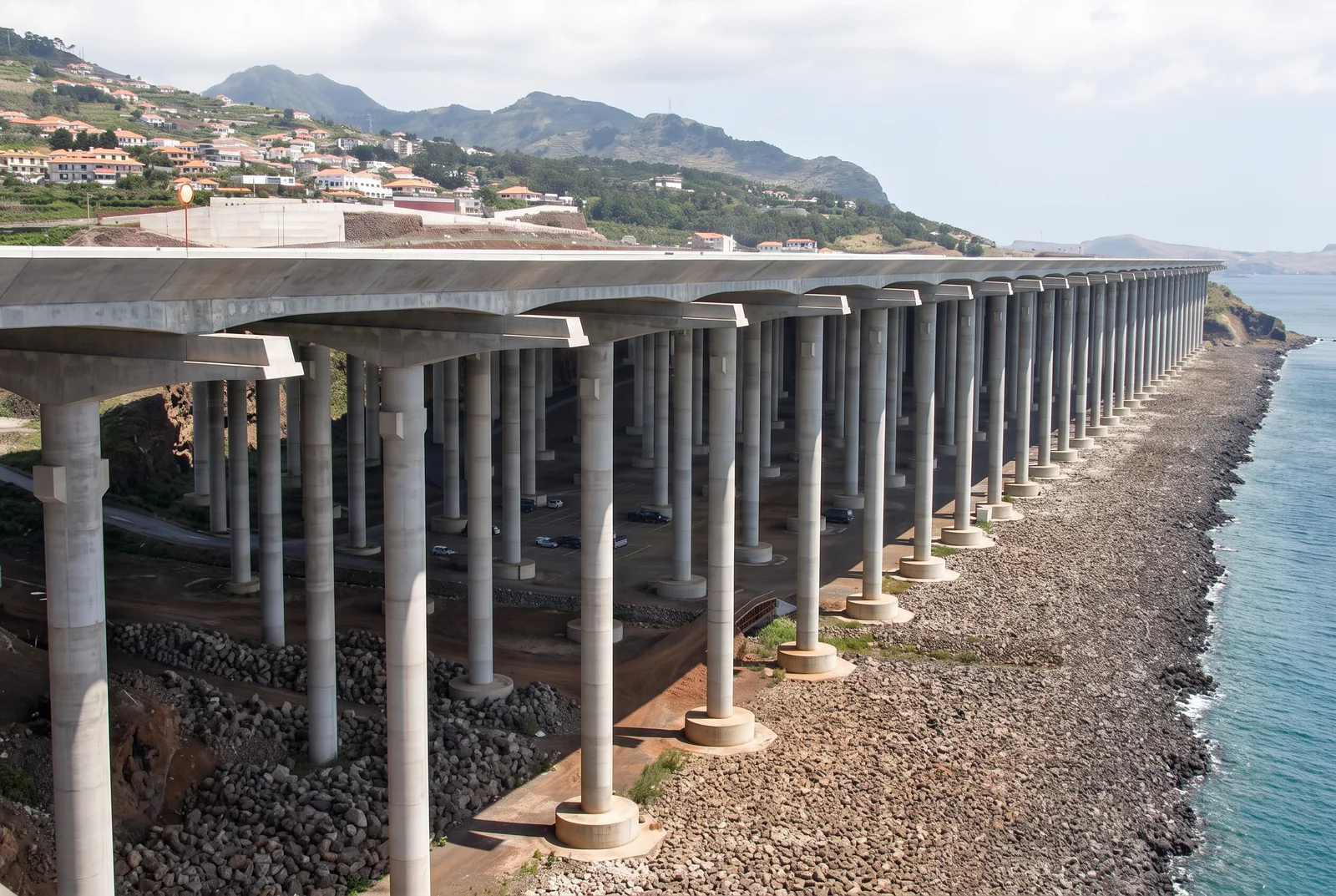
Two things can disrupt a February trip, and neither is the temperature. The first is wind at the airport. Madeira's runway sits on the east coast, and strong crosswinds can stop landings for hours at a time. On 27 February 2026 at least 45 flights were cancelled in a single day, and on 2 March 2026 another 50, with gusts forecast at up to 80 kilometres an hour on the coast. These episodes are not frequent, and they can happen even when the weather in Funchal looks calm. On travel days, the airport's live departures page is the source to check, and it is wise not to book a tight connection on the day you fly home.
The second is the mountains. Snow and ice are possible above about 1,500 metres in late winter, and when they arrive the regional government closes the road to Pico do Arieiro as a precaution, as it did on 4 March 2025 and again on 3 March 2026. When the weather turns, the Institute of Forests and Nature Conservation (IFCN) can close classified walking trails, sometimes all of them at once, and a closed trail must not be walked. The official IFCN trail list shows the status of each trail and is updated as conditions change.
None of this should put you off February. It simply means keeping one day of the trip flexible, putting the high walks early in the stay so they can move if the weather turns, and checking the IPMA warnings page the evening before a mountain day.
Madeira Carnival 2027: dates and programme
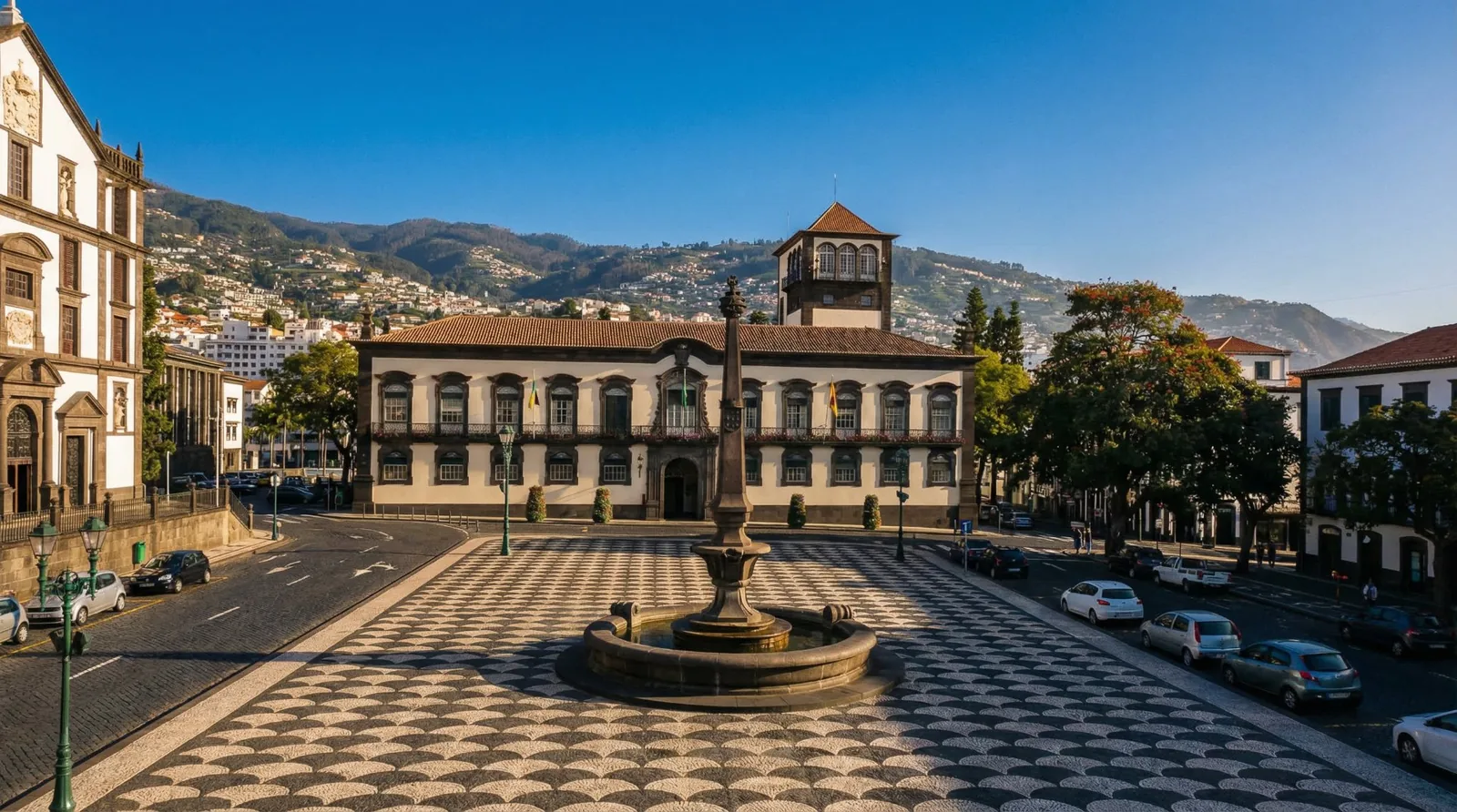
The Carnival is the reason many people choose February, and in 2027 it falls early in the month. Easter is on 28 March 2027, so Ash Wednesday is 10 February and Carnival Tuesday is 9 February. The festivities in Funchal run from Wednesday 3 to Sunday 14 February, according to the regional events programme.
The big change for 2027 is the allegorical parade, the Grande Cortejo Alegórico. Until 2026 it filled a single Saturday night and lasted around three hours, which the regional government judged too long. In 2027 it runs on two consecutive nights for the first time, Friday 5 and Saturday 6 February, both starting at 20:00, with more than a thousand performers and around a dozen floats spread across the two parades, according to the official parade page. Which troupes parade on which night had not been announced in November 2026, so there is no reason yet to prefer one night over the other.
The rest of the programme follows the pattern of recent years:
- Wednesday 3 February: the festivities open in the centre of Funchal, with the Carnival market and street entertainment.
- Thursday 4 February: the children's parade, with around a thousand pupils from Funchal schools, and the solidarity parade, both on Avenida Arriaga.
- Friday 5 and Saturday 6 February: the allegorical parade, 20:00, along the seafront.
- Sunday 7 February: left free for the parades of the other municipalities, such as Machico and Santa Cruz.
- Tuesday 9 February: the Trapalhão, the satirical parade, in the afternoon; it started at 16:00 in 2025 and 2026.
- Sunday 14 February: the last day of the programme.
The official calendar is published as subject to change, and the detailed programme with times usually appears only a few days before the opening, so it is worth checking the dates again in January.
Watching the allegorical parade: where to stand and how to get home
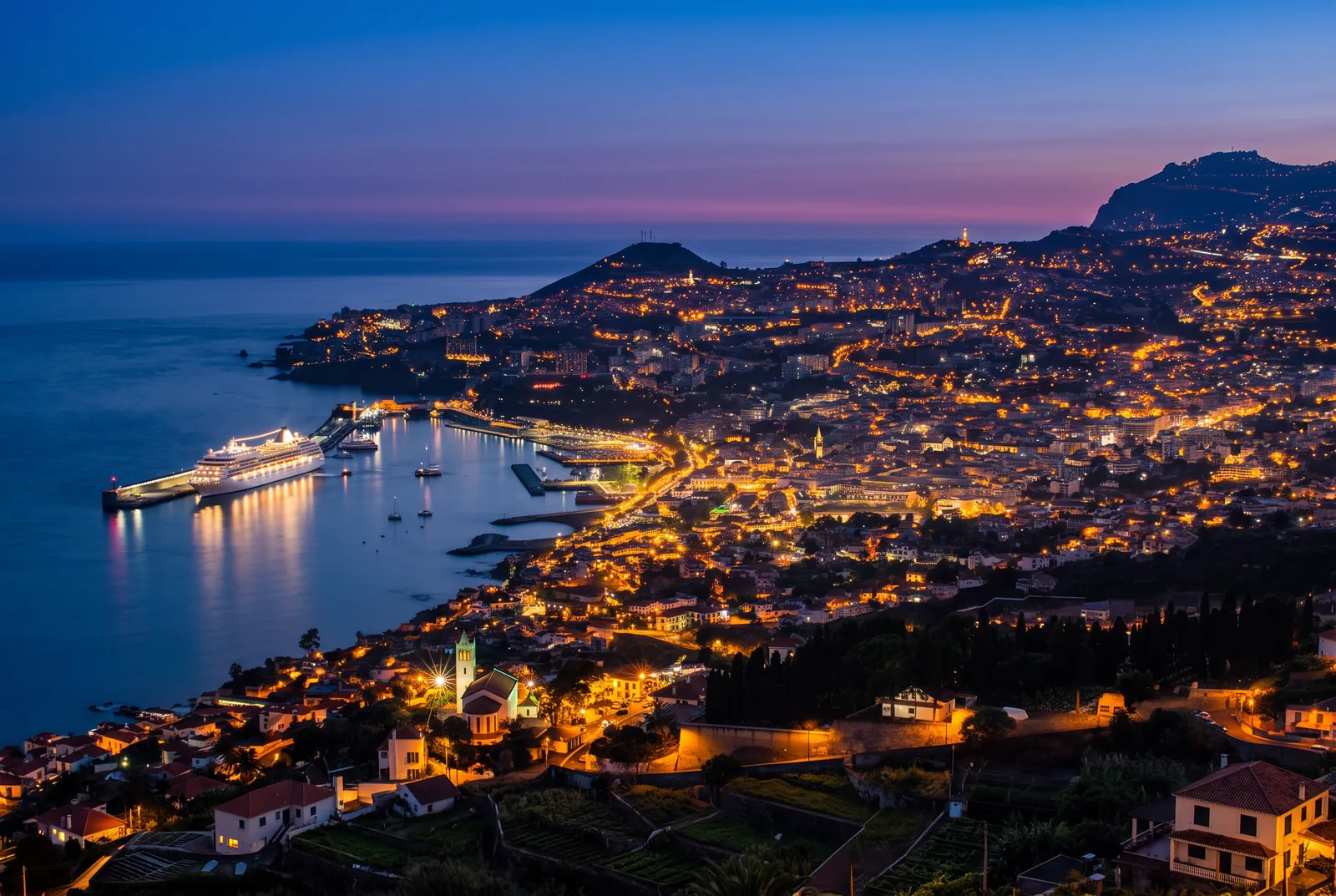
The route was the same in 2025 and 2026 and is repeated on the official 2027 page. The parade forms on Avenida Francisco Sá Carneiro, near the roundabout by the Pestana CR7 hotel, and moves east along the south lane of Avenida do Mar, past the marina, to Praça da Autonomia at the edge of the old town, a distance of a little over a kilometre. Avenida Arriaga, where the market and the children's parade take place, is not on the route of the night parades.
Standing along the route is free. The parade moves slowly, so every stretch sees the same show; what changes is the crowd. Local guides advise arriving around 18:30 for a place at the front barriers on Avenida do Mar, and the western end near the start, which the parade reaches first, is easier with small children. For a seat, there are paid grandstands along the avenue. In recent years they have not been sold through a single official website: the troupes and the tourist office sell them, and one troupe offered seats at €20 for the 2026 parade. Prices and sales points for 2027 had not been announced in November 2026.
Getting there matters more than where to stand. In 2026, Avenida do Mar closed to traffic from 18:00 on parade night until 03:00, and the buses from Machico, Santa Cruz, Caniço, Camacha and Santana, as well as the airport bus, used alternative stops in the centre, according to the bus operators' notice. In 2025, nearby car parks and taxi ranks were also closed and cars parked along the route were towed. With two parade nights in 2027, it is reasonable to expect the same closures on both the Friday and the Saturday. The simplest plan is to leave the car behind and walk.
From the Downtown villa, on Rua Ivens facing the Municipal Gardens, the marina on the parade route is about eight minutes on foot, so the evening can begin with dinner in the centre and end with a short walk home. From the Beachfront penthouse, in the Lido area, the centre is about 20 minutes by bus on lines 1, 2 and 4 or 12 minutes by car; on parade nights it is wiser to go in early by bus and to allow time for the return, because taxis are scarce once the parade ends.
Bring a warm layer. The parade runs into the night, the seafront is exposed to the breeze, and by ten o'clock the temperature is heading towards the night-time low of about 14°C. Rain can also move the programme: in 2019 the Trapalhão was postponed because of a forecast of rain and wind.
The Trapalhão and the Carnival table
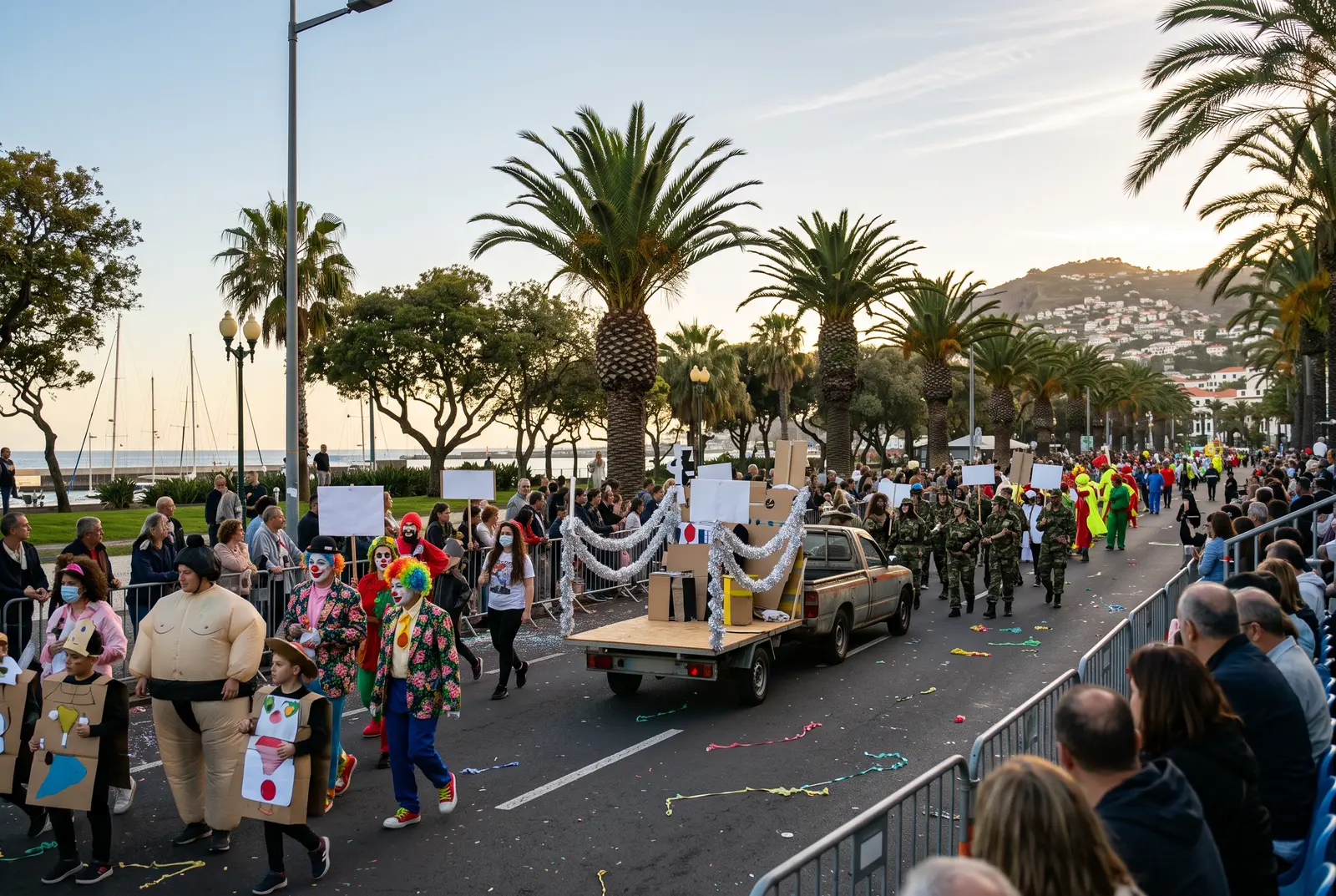
If the allegorical parade is the spectacle, the Trapalhão is the conversation. On the afternoon of Carnival Tuesday, the same route fills with homemade costumes, improvised floats and satire of whatever the island has talked about all year, from politics to the price of things. It draws on the island's tradition of satirical street masquerade, and it is open to anyone, residents and visitors alike, alone or in a group. In 2026, participants registered on the day between 14:00 and 15:30, and prizes were awarded at 18:00. It is looser and more irreverent than the allegorical parade, and in a costume you are part of it rather than a spectator.
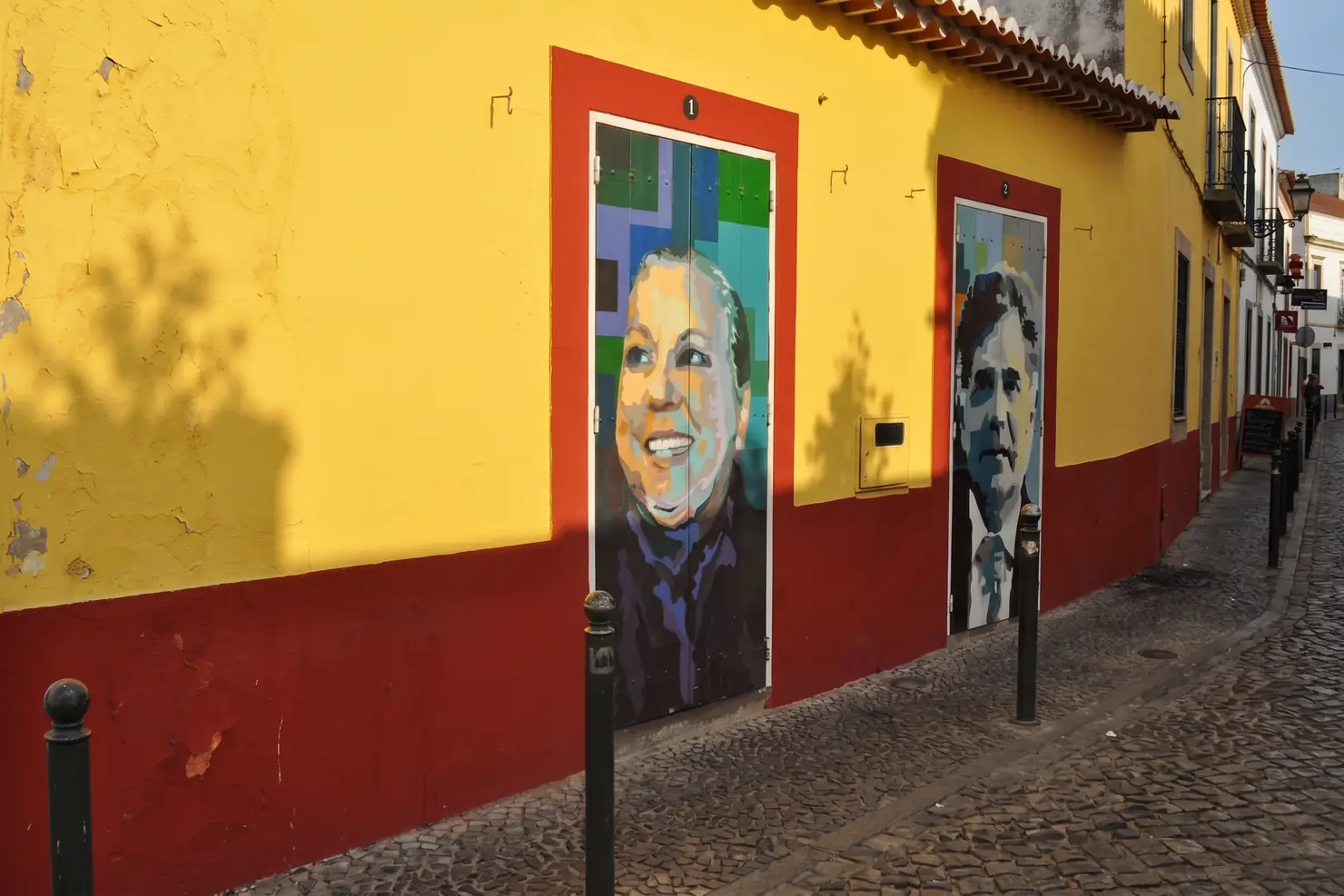
Carnival in Madeira also has its own table. On Carnival Tuesday, Terça-feira Gorda, the island eats malasadas, rounds of fried dough rolled in sugar, made to use up fat and sugar before Lent; Portuguese emigrants from Madeira and the Azores took the custom to Hawaii, where Carnival Tuesday became Malasada Day. Sonhos, lighter fritters served with sugarcane honey, are the other sweet of the season. The Carnival market in the centre sells both, together with Madeira wine and other island produce, and in recent editions the organisers have run free cooking workshops for bolo do caco, malasadas and sonhos.
The season also stretches beyond Funchal. In Santana, on the north coast, the Festa dos Compadres opens the Carnival with giant figures and the mock trial and burning of the "compadre" and the "comadre", a satirical tradition more than fifty years old; the official programme lists events from 28 January 2027. In several villages the Carnival ends with the Enterro do Osso, the burial of the bone, on the last weekend. Programmes for these smaller celebrations are usually confirmed only a few days ahead.
Walking in February: levadas and the peaks
February is a good month to walk in Madeira, as long as the plan bends with the weather. The levadas are full after the winter rains, the waterfalls of Rabaçal run full, and the trails are quieter than in spring. The trade-off is mud, wet rock and tunnels that drip, so good shoes with grip and a head torch matter more than in summer. Our guide to the best levada walks describes the routes one by one.
In 2026, walking the classified trails cost €4.50 per trail and per person, according to the IFCN fee page. The full PR1 from Pico do Arieiro to Pico Ruivo costs €10.50, and there are passes for several trails: €9 for a day, €22.50 for three days and €52.50 for seven, with the PR1 excluded. Payment is online only, through the regional Simplifica portal, with a timed entry slot. The fee is refunded only when the IFCN itself closes the trail, and the claim must be made within ten working days, so in February it pays to book the slot only once the forecast is clear.
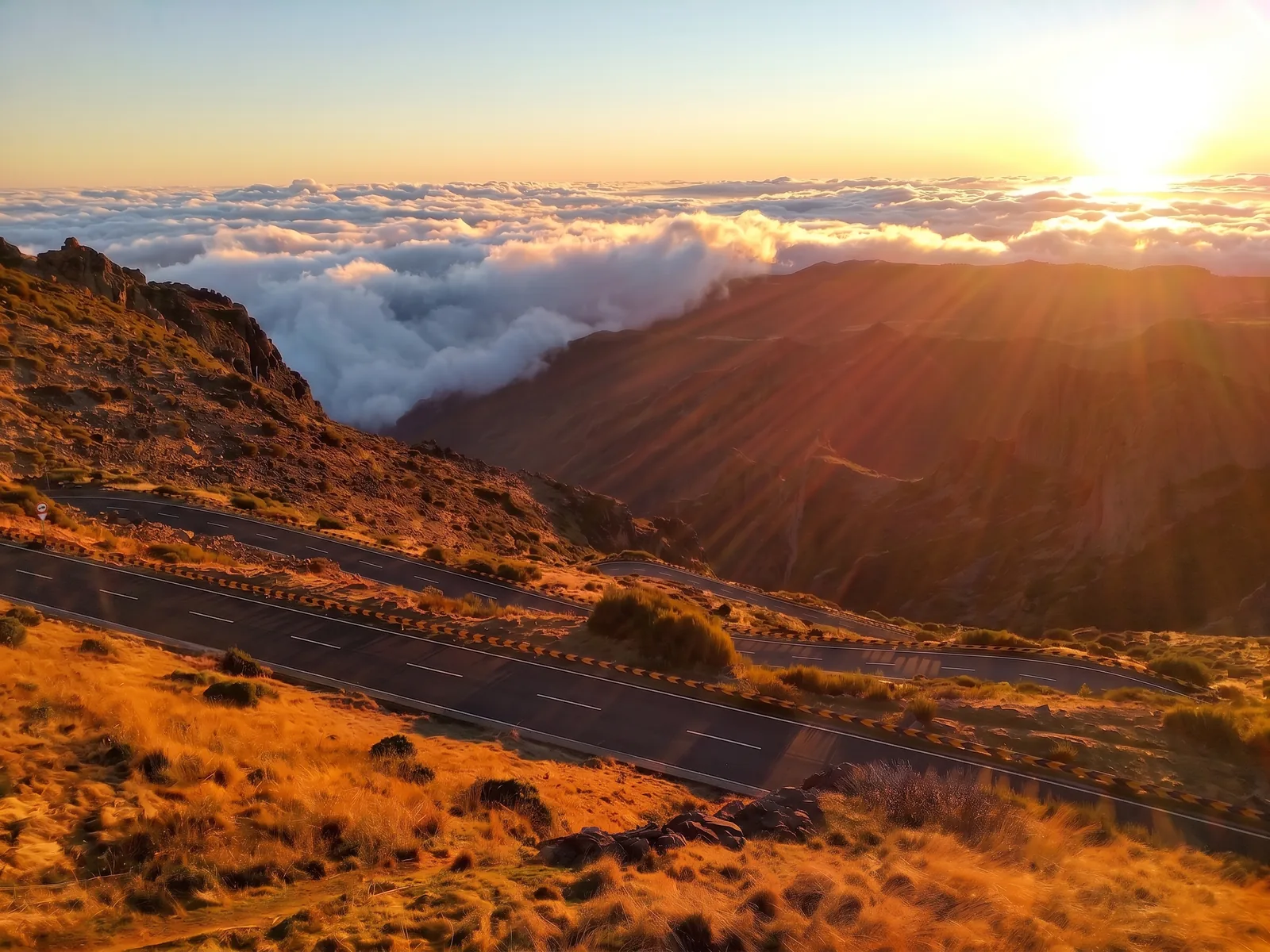
The sunrise at Pico do Arieiro is a February classic, partly because it comes so late: around 8:00 at the start of the month and around 7:36 at the end. At 1,818 metres the dawn is cold, usually between 0 and 5°C before the wind, and the summit recorded −1.3°C on 28 February 2026. The viewpoint itself is free and open at all hours. The upper car park charges by the hour after the first 30 free minutes, €4 in 2026 and €4.25 in 2027 under the official tariff, and in winter a public bus leaves Funchal at 06:00 for €3, booked by phone a few days ahead. A sea of clouds below the summit is possible but never guaranteed, and on days of snow or ice the road is closed.
The PR1 itself reopened on 1 May 2026, after the 2024 wildfire closure, but as of November 2026 the IFCN listed it as closed beyond the Pedra Rija viewpoint, with only the stretch from Pico do Arieiro to Pedra Rija open, in both directions. It is one of the most exposed walks on the island and among the first to close in bad weather, so it is best never made the only plan of a short trip. Lower and drier walks, such as the Ponta de São Lourenço in the east, are a sensible alternative on a cloudy day, though it is open to the wind.
As of mid-November 2026, the road between Poiso and Pico do Arieiro was closed and the public bus to the summit was suspended until it reopens, according to the bus operator Horários do Funchal; it is worth checking before planning a sunrise there.
Gardens and flowers in late winter
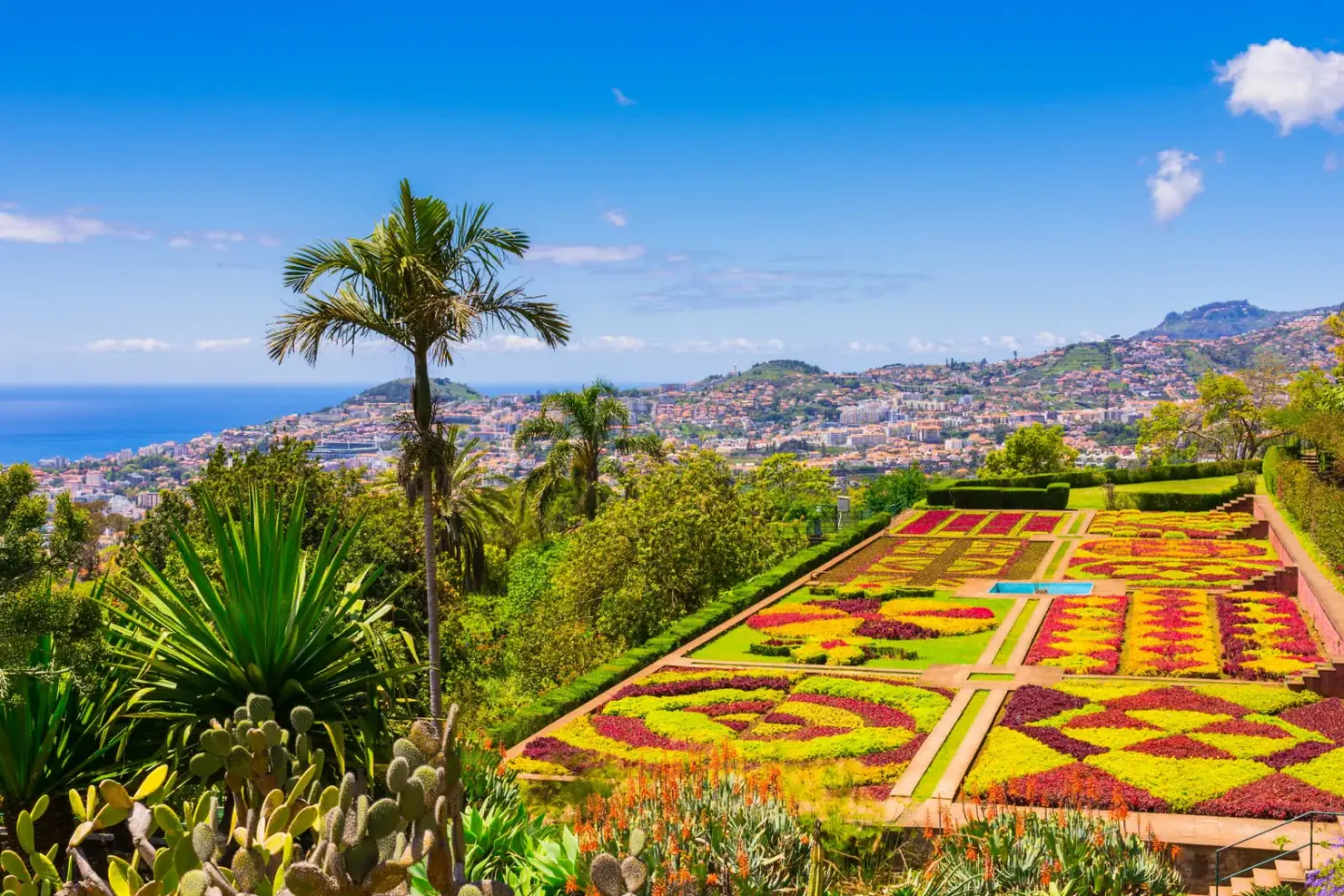
The great flower festival of Madeira is in April and May, but February has its own blooms, quieter and earlier. At the Palheiro Gardens, the camellias that began flowering in the autumn are still out, the daffodils of January are out, and the magnolias are at their best against the blue February sky. The strelitzia, the bird of paradise flower that has become a symbol of the island, flowers in the gardens and along the streets through the winter.
Three gardens are worth a morning each, and the morning matters, because they close early in winter and the light goes soon after:
- Palheiro Gardens: 09:00 to 17:00, last entry at 16:00, closed on 25 December and 1 January; adults €11. About 15 minutes by car from the centre of Funchal.
- Madeira Botanical Garden: 09:00 to 18:00, last ticket at 17:30; adults €10, including the small natural history museum, according to the IFCN visitor page.
- Monte Palace Tropical Garden: 09:00 to 18:00 from October to March, last entry at 17:15; adults €18, according to the garden's own site. The cable car from the seafront arrives near the entrance, and our guide to Monte explains how to combine it with the toboggan ride down.
Prices are those published for 2026 and may change.
Whales, the lidos and rainy days in Funchal
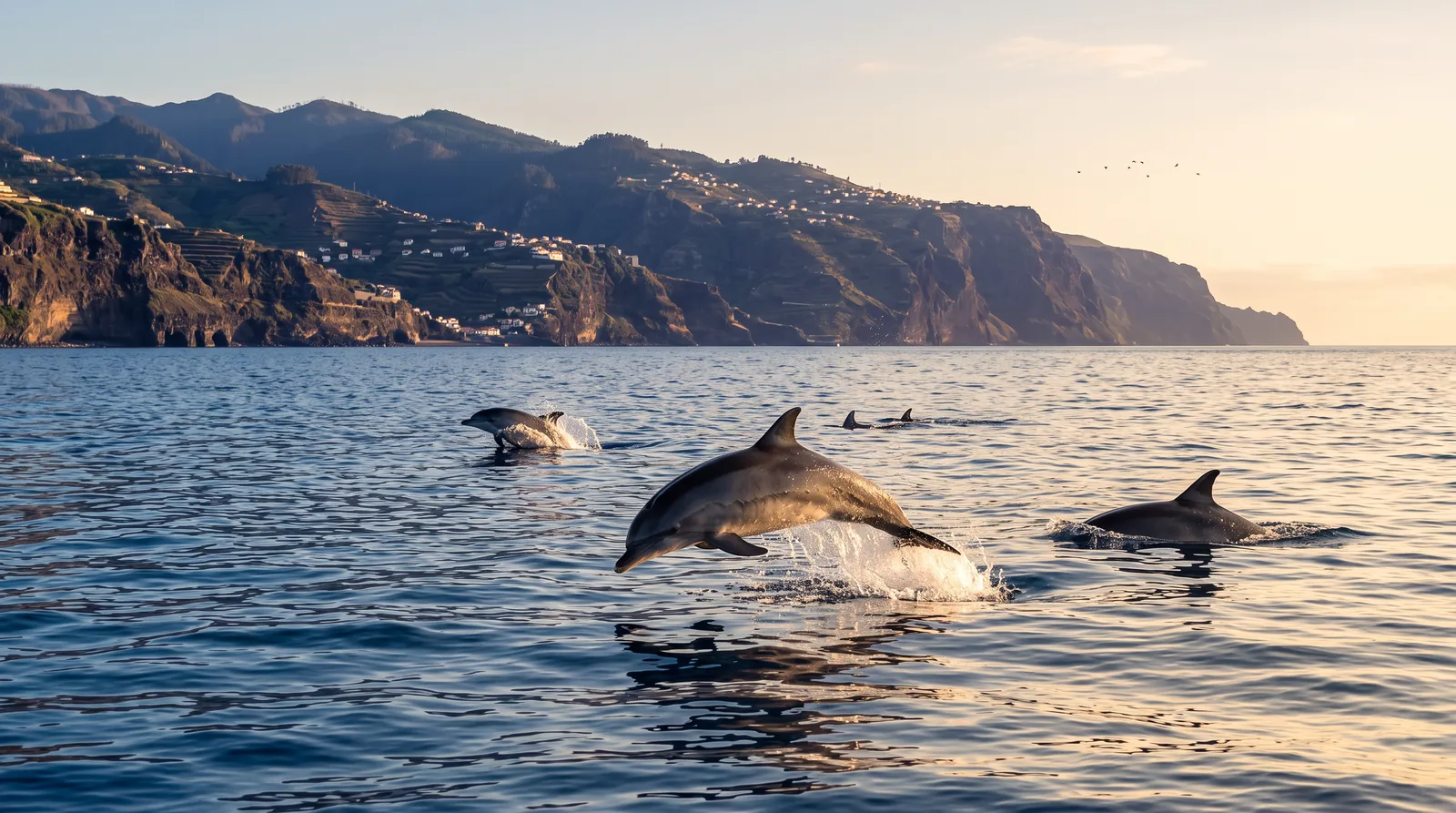
Whale and dolphin watching runs all year from the Funchal marina, and February has its own visitors. Bottlenose dolphins and short-finned pilot whales live around the island all year, while common dolphins and fin whales are seen more often in winter and spring, according to the whale watching handbook of the International Whaling Commission. Trips usually last about three hours. Winter seas are rougher, and more departures are cancelled for sea conditions, so it is wise to book in the first days of the stay, when there is still time to move it.
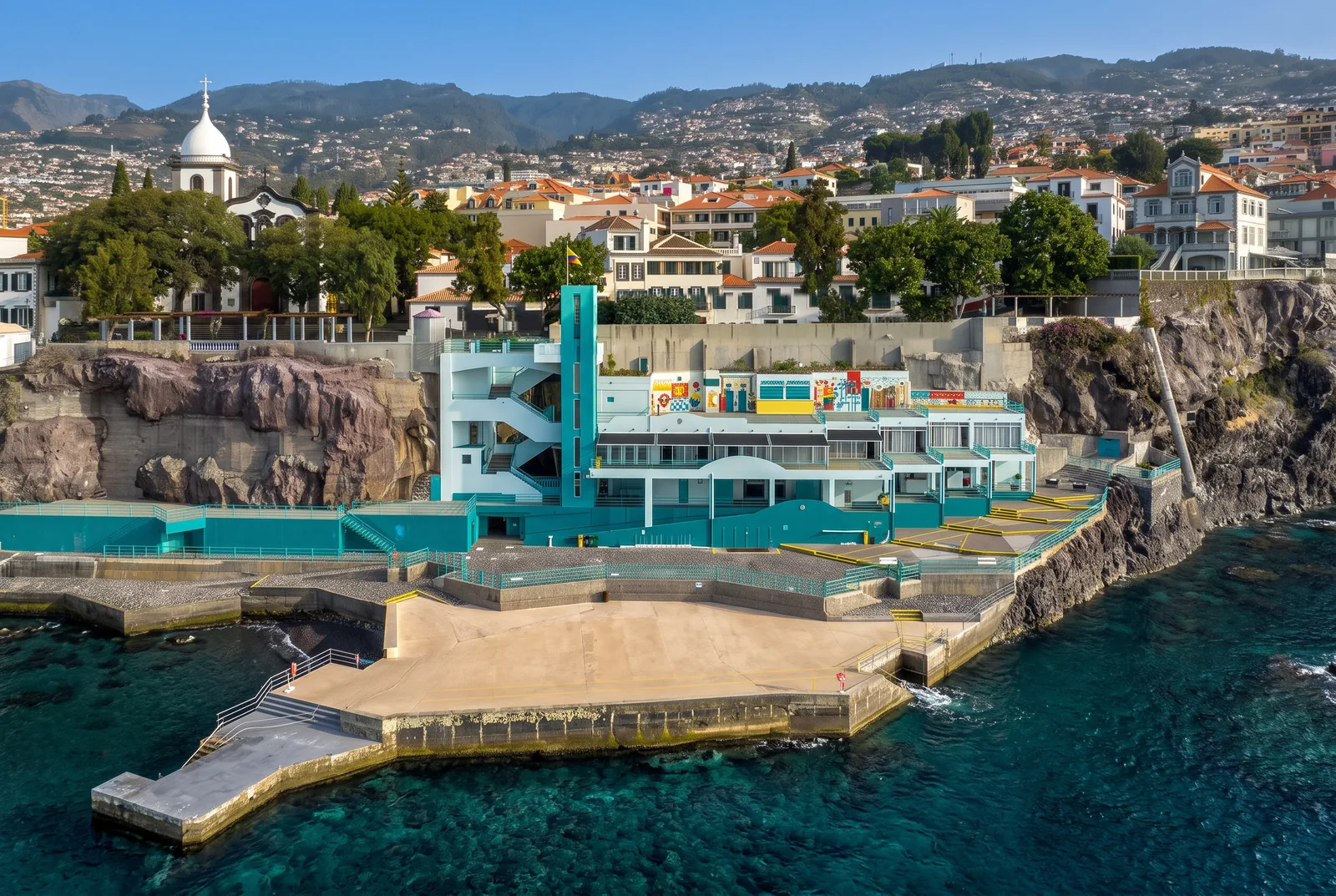
The seawater lidos of Funchal stay open in winter, with shorter hours. For the 2026 to 2027 season the municipal operator, Frente MarFunchal, opens the Lido from 09:00 to 18:00, Ponta Gorda and Barreirinha from 09:30 to 17:30, and Doca do Cavacas from 10:00 to 18:00, until 31 March 2027. The Ponta Gorda complex and the promenade are about five minutes on foot from the Beachfront penthouse, and the Lido complex about fifteen. Our guide to the Lido and Estrada Monumental describes the area in more detail.
On a wet day, Funchal has enough indoors for a long morning:
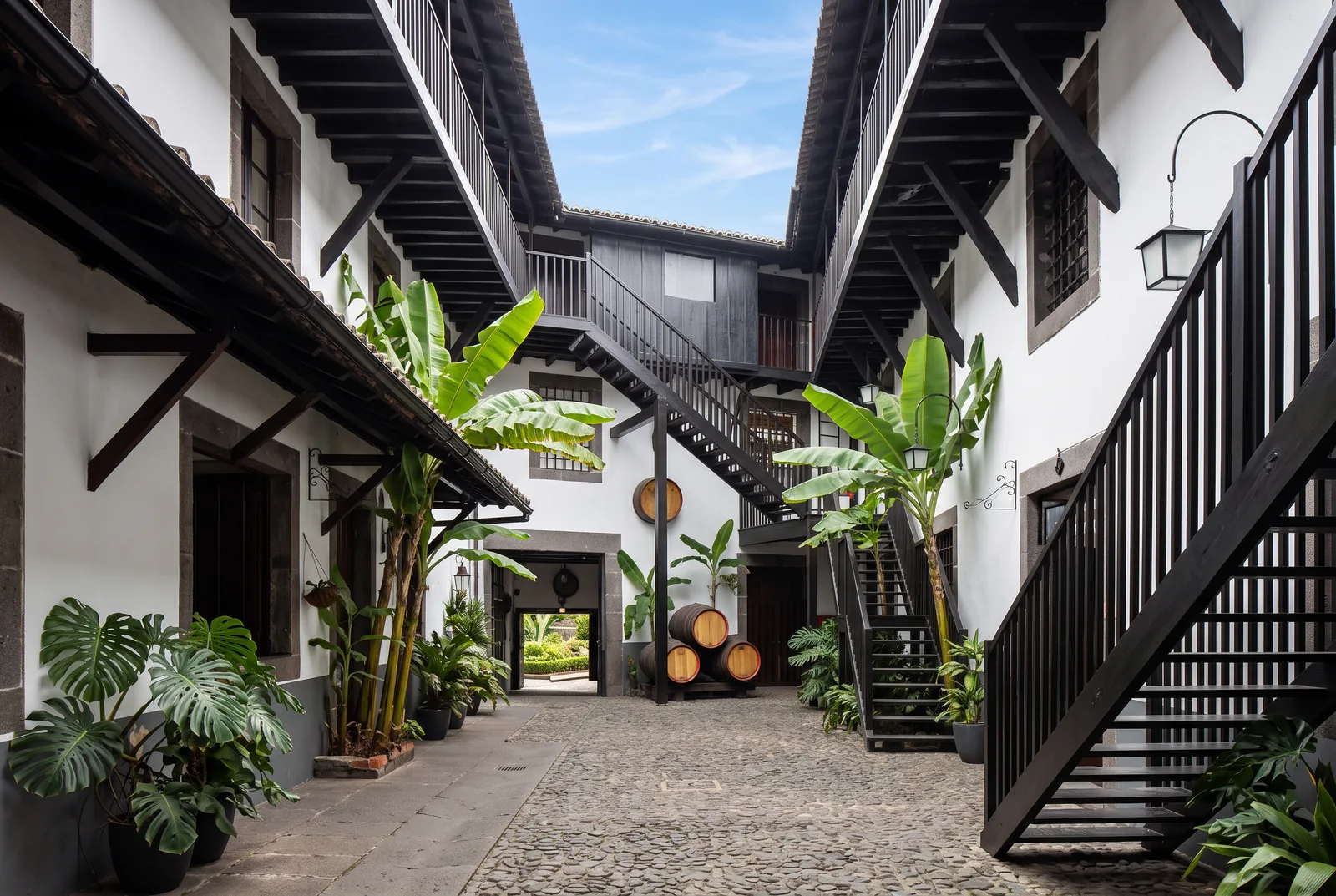
- Blandy's Wine Lodge: on Avenida Arriaga, two or three minutes on foot from the Downtown villa; the 30-minute lodge tour costs €17 and the 45-minute premium tour €23, according to the lodge's tour page. Booking ahead is advised.
- Madeira Story Centre: the island's history in about 45 minutes, open every day from 09:00 to 19:00; adults €5.
- Museum of Sacred Art: Flemish paintings bought with sugar money, Monday to Friday 10:00 to 17:30 and Saturday morning; closed on Sundays; adults €10.
- Mercado dos Lavradores: the market is busiest in the morning and on Friday; it is closed on Sundays.
Sunday is the quiet day in the centre, with the market and several museums closed, so it is the natural day for a garden or a drive. Our Funchal food guide covers where to eat once the rain has passed.
Crowds, prices and when to book
February is a shoulder month in Madeira, busier than December and well below the summer. According to the regional statistics office, DREM, bed occupancy in February 2026 was 61.1%, against 73.5% in August 2026, and the average price of a room per night was €109.58, below the average of €125.11 for the year 2025. The United Kingdom and Germany accounted for almost equal shares of February overnight stays, close to a fifth each.
The month is not even, though. The Carnival weekend is the busiest point, with regional hotel occupancy forecast at around 88% for the 2025 and 2026 editions, and in 2027 the two parade nights on 5 and 6 February are likely to fill Funchal first. For those dates, it is worth booking several months ahead. The second half of the month, after Carnival Tuesday, is usually calmer, with the same weather and longer days.
What to pack for Madeira in February

Packing for February is packing for three climates. The coast asks for spring clothes, the north coast for a raincoat, and the mountains for winter layers.
- For Funchal: light layers, a sweater or light jacket for the evenings, and comfortable shoes for the steep streets.
- For the rain: a light waterproof jacket, more useful than an umbrella on the windy seafront.
- For the levadas: walking shoes with good grip, a head torch for the tunnels and a dry layer in the backpack.
- For Pico do Arieiro at dawn: a warm jacket, a hat and gloves, because the summit is close to freezing before sunrise.
- For the Carnival nights: something warm to stand outside in for two or three hours, and shoes for the walk home.
- For the lidos: swimwear and a towel, for a short swim on a sunny afternoon.
Five days in Madeira from the parade to the Trapalhão
The Carnival dates give February 2027 a natural shape: five days from the first parade night to Carnival Tuesday. The plan below puts the fixed events in place and leaves the mountain day movable.
Day 1, Friday 5 February: arrival and the first parade
Arrive, settle in and walk the centre in the afternoon, with a stop at the Carnival market. Have an early dinner near the seafront and find a place on Avenida do Mar by 18:30 for the 20:00 parade.
Day 2, Saturday 6 February: gardens and an easy evening
Spend the morning at the Palheiro Gardens, while the magnolias are in flower, and the afternoon at Blandy's Wine Lodge. If you did not see the parade on Friday, the Saturday night offers the second chance; if you did, the old town is quieter for dinner than the seafront.
Day 3, Sunday 7 February: a walk in the east
Drive east for the Ponta de São Lourenço in the morning, a low, open walk on the drier eastern tip of the island. On the way back, the Carnival parades of Machico or Santa Cruz may be on that afternoon; their programmes appear a few days before.
Day 4, Monday 8 February: the mountain day
If the forecast is clear, take the 06:00 bus or drive to Pico do Arieiro for the sunrise, then return to Funchal for a late breakfast and a slow afternoon at the Lido or the Botanical Garden. If a warning is in force, swap this day with day 3 and keep to the coast.
Day 5, Tuesday 9 February: Carnival Tuesday
A whale watching trip in the morning, then malasadas and the Trapalhão in the afternoon. Bring a costume if you want to take part, and expect the centre to stay lively into the evening.
Frequently asked questions about Madeira in February
Is Madeira warm in February?
Mild rather than warm: about 20°C by day and 14°C at night on the Funchal coast, according to the IPMA normals. The north coast is three or four degrees cooler, and the mountain tops are close to freezing at night.
Does it rain a lot in Madeira in February?
Not on the south coast: Funchal averages about 72 millimetres over five or six days, with only two days of heavy rain. The north coast and the mountains are much wetter.
Can you swim in Madeira in February?
You can, but the sea is cool, at around 18°C. The Funchal lidos stay open in winter with shorter hours, and a short swim on a sunny afternoon is the usual approach.
When is the Madeira Carnival in 2027?
From 3 to 14 February 2027. The allegorical parade is on Friday 5 and Saturday 6 February at 20:00, and the Trapalhão on Carnival Tuesday, 9 February.
Is February a good time to visit Madeira?
Yes, for mild weather, quieter trails, flowering gardens and the Carnival. It is less suited to beach holidays or to a trip built only around the high peaks, which can close on bad days.
Where to stay in Funchal in February
In February the choice is between the Carnival and the sea. The Downtown villa faces the Municipal Gardens in the centre, two or three minutes on foot from Blandy's and about eight minutes from the marina on the parade route. The Beachfront penthouse sits in the Lido area, west of the centre, about five minutes on foot from the Ponta Gorda complex and the promenade, and about 20 minutes by bus from the centre. Our where to stay in Madeira guide compares the areas, the best time to visit Madeira sets February against the rest of the year, and the Madeira page brings it all together, or start from our homepage.