Madeira in November: weather, sea temperature and what still works
Catarina Gomes · 22 min read · Updated 27/Aug/2026
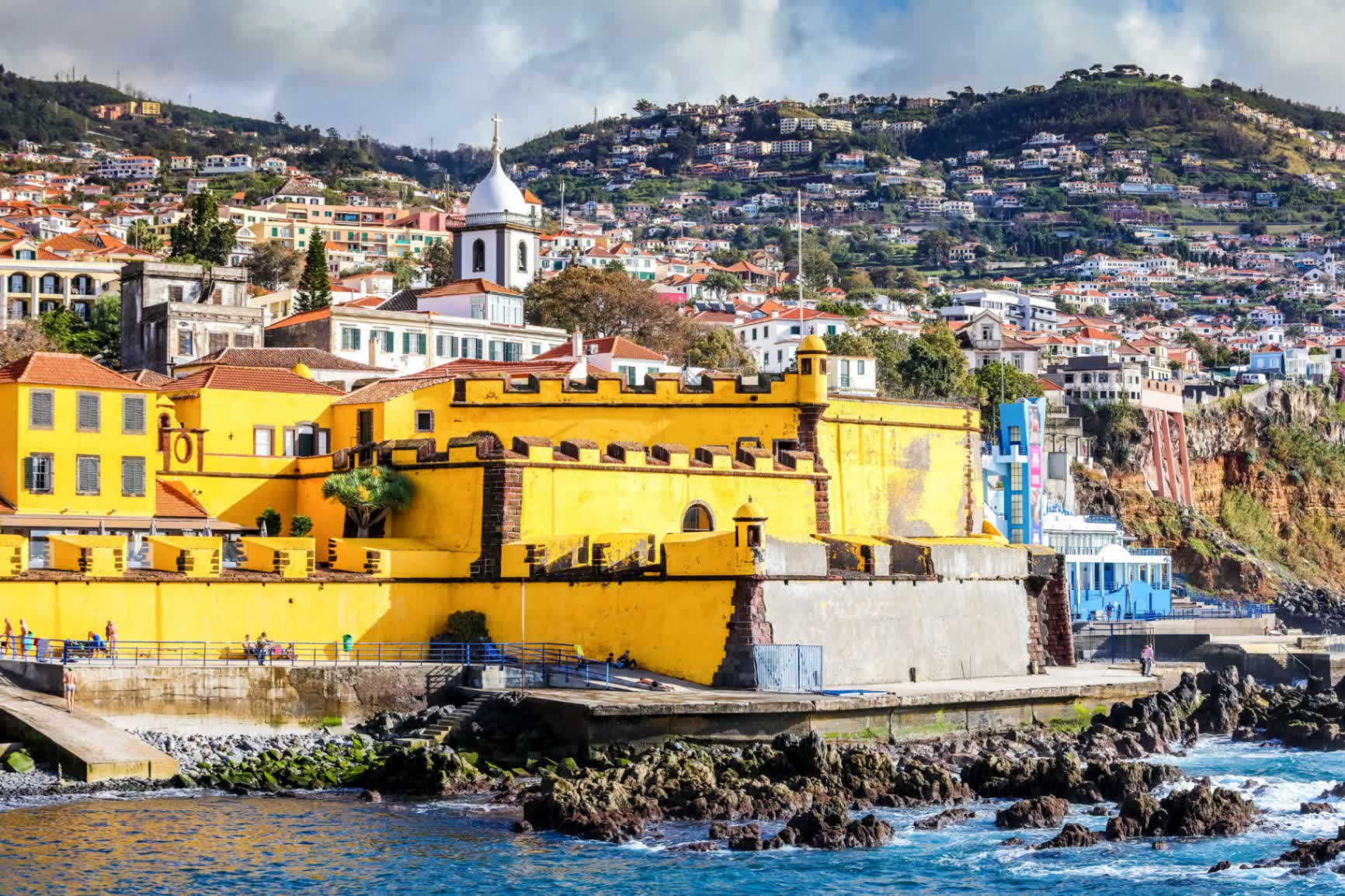
What Madeira is really like in November: honest weather numbers, sea temperature, what still works (almost everything), and why it beats staying in a European winter.
Madeira in November at a glance
While most of Europe turns dark and cold, Madeira in November stays mild, green and very much open. These are the honest numbers for Funchal.
- Daytime high: 22 to 23°C.
- Night low: 16 to 17°C.
- Sea temperature: around 22°C at the start of the month, closer to 21°C by the end.
- Rainy days: 7 to 9, mostly short showers, and the records disagree more than you would expect, anywhere from 7 to 10 days and 60 to 100 millimetres depending on the source, most of it falling on the north side and the peaks rather than on the Funchal seafront.
- Sunshine: about 5 hours a day.
- Daylight: about 10.5 hours, down to 10 hours 11 minutes on the 30th.
- Feels like: late summer in the first week, early winter in the last.
Those are Funchal climate averages, blended from long term records, so treat them as the centre of the range rather than a promise. As of mid 2026 the pattern holds. What follows breaks the month down week by week, lists what is open and what slows down, and finishes with a packing list and a five day itinerary you can lift as it is.
Madeira weather in November, honestly
November is the start of Madeira's greener season, and the island's microclimates matter more than the monthly averages. A typical November day in Funchal, where our apartments are, is t-shirt weather with a light jacket for the evening.
When rain comes, it usually arrives as showers that pass within the hour, not day long grey. The classic local move is to drive twenty minutes along the coast until you find the sun. What you should not expect is beach holiday certainty: November is a month for people who want warmth, walks and ocean, not guaranteed poolside days.
November week by week
No two Novembers are identical, but the climate records for Funchal slope clearly across the month, and it helps to know which end of it your trip lands on.
- Week 1, 1 to 7: the warmest stretch, with highs of 22 to 23°C, nights near 17°C and the ocean at roughly 22°C, warmer than many Mediterranean beaches manage in early summer. Daylight starts at almost 11 hours.
- Week 2, 8 to 14: still firmly t-shirt territory, with highs around 23°C. Shower chances edge up, though most fronts clear within a day and the south coast often misses them entirely.
- Week 3, 15 to 21: highs still near 22 to 23°C, nights dipping towards 16°C, and the island's autumn colour at its peak in the chestnut and laurel zones above 600 metres.
- Week 4, 22 to 30: highs of 22°C, sea around 21°C, and daylight down to 10 hours 11 minutes by the 30th. The Christmas lights start appearing around the island, and visitor numbers stay low until the December holidays.
Microclimates, or why the forecast lies
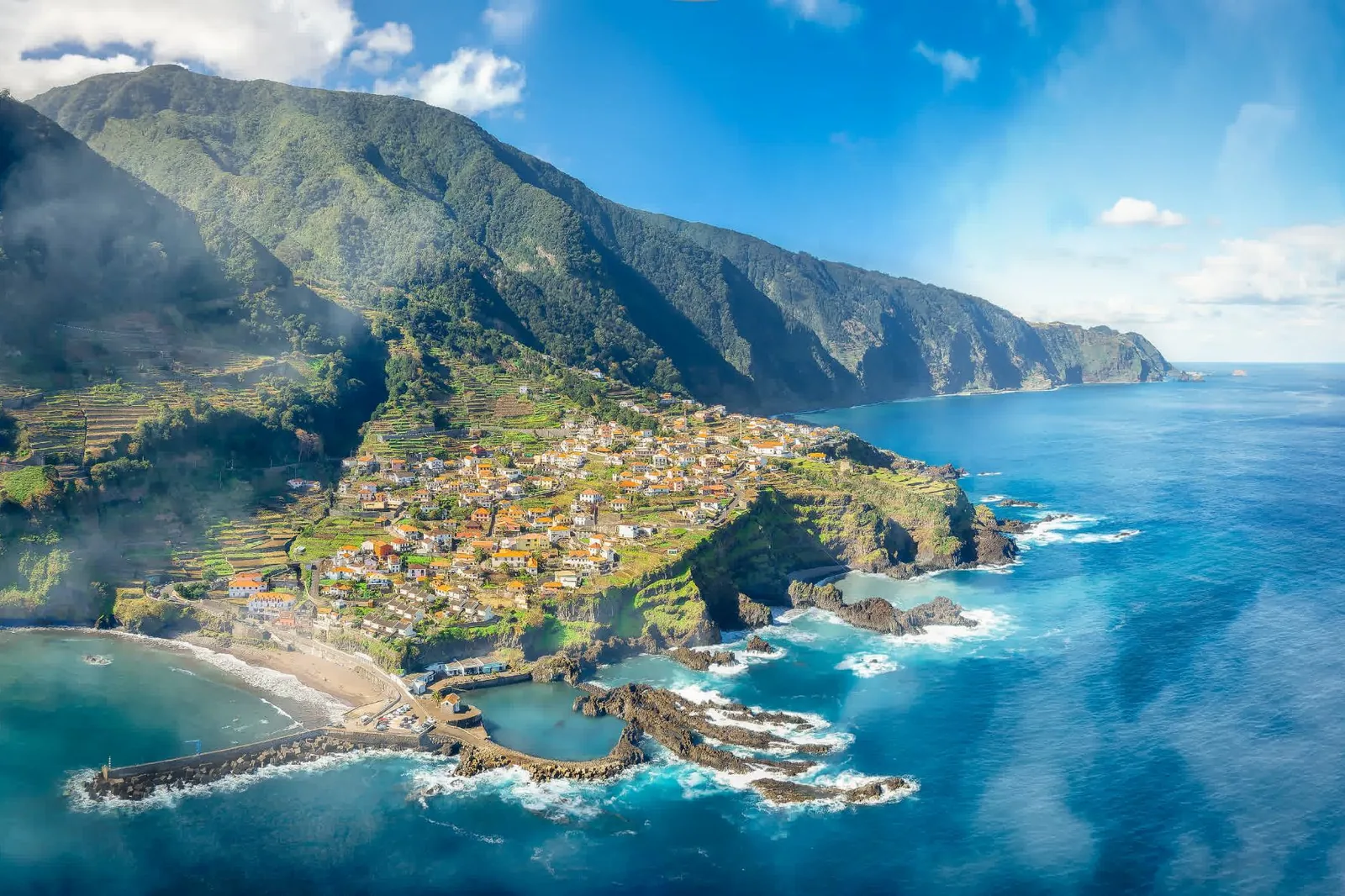
Madeira is a 1,862 metre mountain range dropped into the Atlantic, and in November the difference between its faces is at its most dramatic. The south coast from Funchal to Calheta sits in a rain shadow and collects the lion's share of the sunshine. The north coast around São Vicente and Santana catches the moist trade winds first and can be dripping while Funchal bakes. The high plateau, Pico do Areeiro and Paul da Serra, is a different climate altogether, often 8 to 10 degrees lower than the coast, with cloud that comes and goes in minutes.
Use that to your advantage. Look up at the mountains before committing to a plan: if the peaks are buried in cloud, make it a Funchal, coast or west day, and save the mountain walks for the clear morning that almost always follows a front. Locals plan around the island, not around the forecast. Our guide to Madeira's best viewpoints makes it easy to match miradouros to whichever side of the island has the sun.
November compared with October and December
- October: a degree or two warmer, with slightly better swimming odds, slightly higher prices, and levadas that have not yet refilled after summer.
- November: the sweet spot, with the sea still holding its summer warmth, the island green again, and both crowds and prices at their lowest point of the year outside deep winter.
- December: weather much like late November, plus the full Christmas spectacle and a jump in flight prices around the holidays.
If your priorities are walking, food and quiet, November arguably beats both of its neighbours.
What November is actually like
This is the month the island exhales. The summer crowds are gone, trailheads and miradouros are quiet, restaurants have tables, and the light turns soft and golden. The first rains bring the levada channels back to full flow and the laurel forest to its deepest green, and from late November Funchal switches on its famous Christmas illuminations, one of the best free shows in Portugal.
The chestnut festival in Curral das Freiras
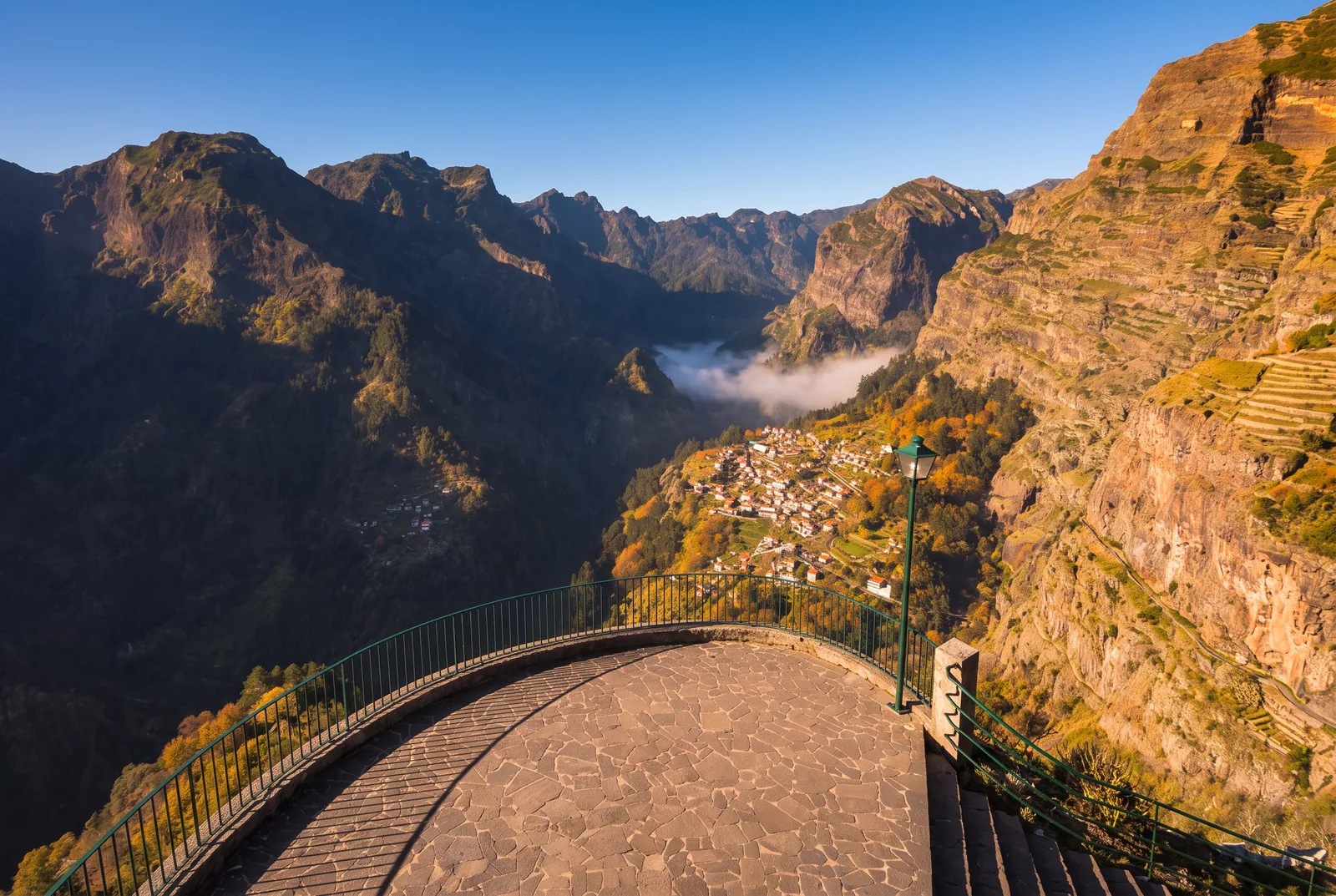
The Festa da Castanha is the November event locals actually go to. It takes place in Curral das Freiras, the village at the bottom of a vast volcanic cirque, with chestnuts roasting on open fires everywhere, stalls of chestnut cake, chestnut bread, chestnut soup and the village's sweet liqueur, folklore groups and a costumed parade through the streets. Chestnuts were once a survival staple in this isolated valley, so this is a genuine harvest celebration rather than a tourist invention. If your trip misses the festival weekend, the village restaurants serve their chestnut specialities all through November.
- When: the very start of the month, over the All Saints' holiday on 31 October and 1 November. The 41st edition ran on those dates in 2025, and the 2026 dates are usually confirmed in October.
- Where: Curral das Freiras, about 25 minutes' drive from Funchal through the tunnel.
- Cost: admission is free.
- Pair with: the Eira do Serrado viewpoint on the way in, perched at 1,095 metres, more than 600 metres above the village.
Whale and dolphin watching in November
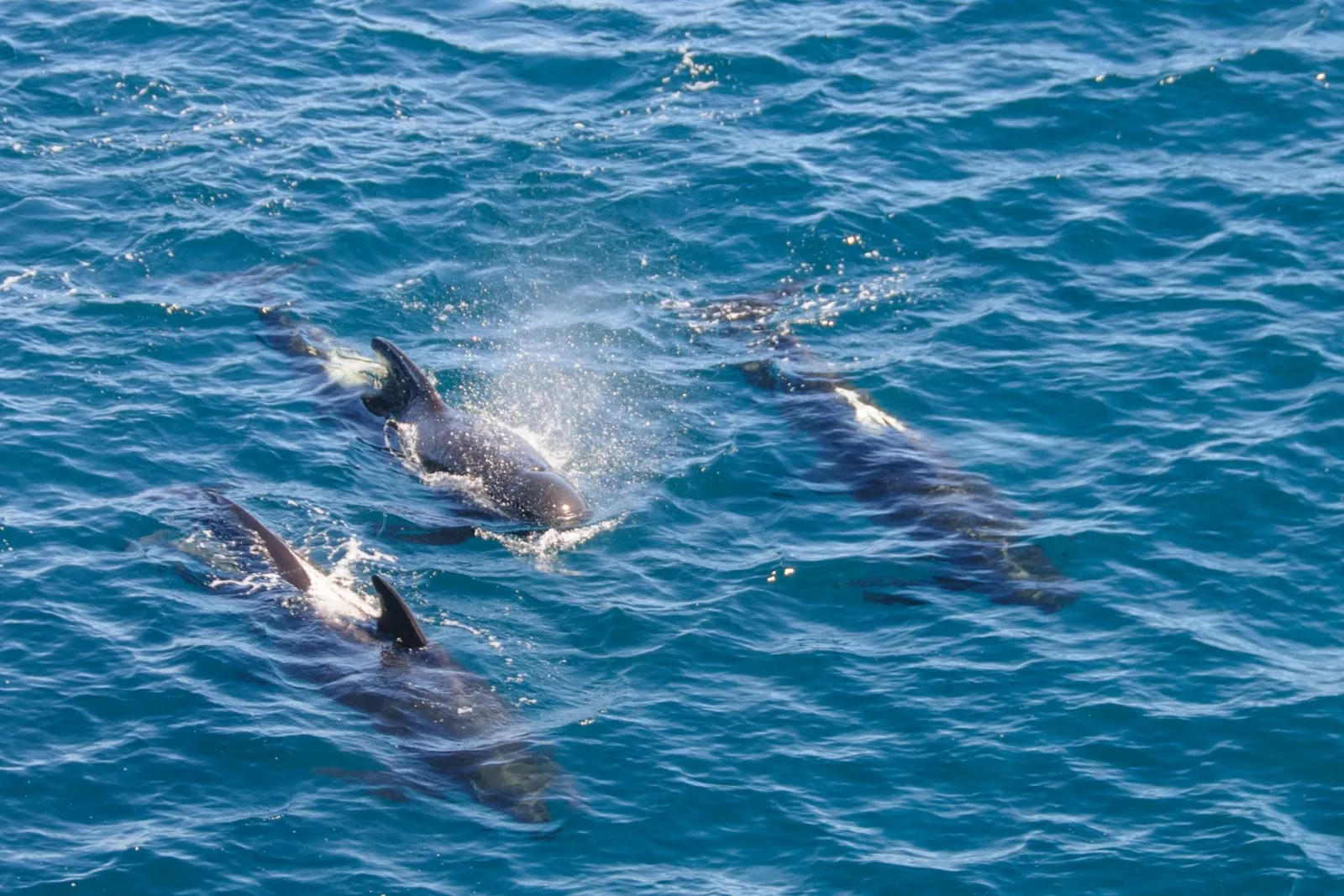
Boats run from Funchal marina all year, and November is a better month for them than most visitors assume. Madeira's deep water starts just offshore, which is why more than 20 species of whale and dolphin have been recorded here. Operators use land based lookouts with powerful binoculars to guide the boats, so trips rarely come back without a sighting.
- What you see: bottlenose and short beaked common dolphins are the winter regulars and Atlantic spotted dolphins are a possibility right at the start of the month, at the tail of their season, short finned pilot whales appear year round and are among the most frequent winter sightings, and sperm whales pass through in any month but are less predictable in late autumn.
- Price: roughly 40 to €50 per adult for a standard three hour catamaran trip, as of mid 2026.
- Best departure: the morning, when the seas are calmest.
- If cancelled: November swell does occasionally stop departures, so build in a spare day, and any serious operator will rebook or refund you.
Christmas lights and the festive run up
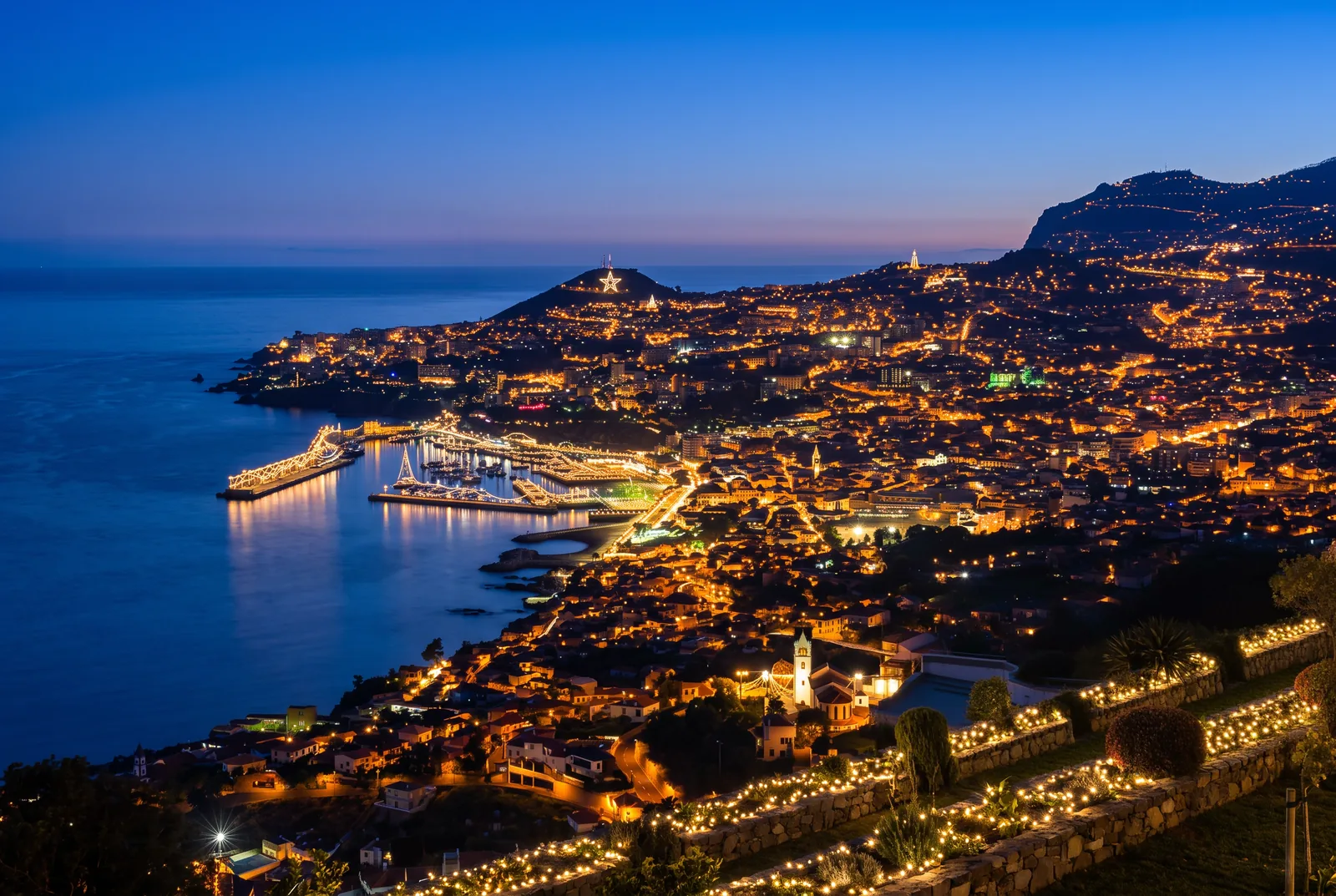
Madeira takes Christmas extremely seriously, and the build up starts well before December. Through November you will see crews stringing lights over Funchal's avenues, and the surrounding towns switch on first. A trip in the last week of the month catches the island easing into its festive best, and stretching your stay a day or two into December gets you the full show at low season prices.
- First to light up: Santa Cruz, on 22 November in 2025.
- Then: Ribeira Brava, on 29 November 2025.
- Funchal: the big switch on, in recent years on 1 December, with a ceremony and concert at Praça do Povo.
- After that: the lights glow nightly into January.
How the last few Novembers actually went
I have spent several stretches of November in Madeira over the last few years, and honestly it is a month I like a lot here. What strikes me most is that November does not really feel like winter, particularly on the south coast. I have had plenty of November days where lunch on a terrace was perfectly comfortable, where you could walk by the sea in short sleeves during the day, and where the pool or the ocean was still an option.
My experience in recent years has been fairly consistent: long spells of sun, pleasant daytime temperatures, and some rain that arrives and clears quickly. I would not count on a full week of blue sky, but I also would not come here in November expecting a week of rain. What surprises people arriving from mainland Portugal or northern Europe is exactly that gap: in Lisbon November can already feel firmly like autumn, while in Funchal there are days that still feel like a late summer.
There is, of course, an enormous difference between being in Funchal or the Lido and being at Pico do Arieiro or Paul da Serra. I have left home in sunshine at a very pleasant temperature and been in the mountains under fog and wind, reaching for a jacket, less than an hour later. That is probably the most important thing to understand about November here: there is no single "Madeira weather" on any given day. There are several microclimates at once. I have had rain in the north and a full day of sun in Funchal, and I have done the reverse, changing plans and driving to another part of the island because the webcams showed better conditions on the other side.
The other thing I like about November is that there is generally less pressure to arrive early everywhere. The famous spots still have visitors, but it feels quite different from the height of summer. If I had to describe the month to a friend: bring shorts, a swimsuit, a raincoat and a jacket, and expect to use all four in the same week.
The day that fell apart, and what we did instead
It happens, and I think it is close to inevitable if you spend enough time here. I remember one day in November 2024 when the plan was to go up to the Pico do Arieiro area in the morning and spend part of the day in the mountains. In Funchal the weather did not look particularly bad, but once we started checking conditions at altitude it was clear there was no point insisting: very low cloud, wind and poor visibility.
Instead of driving up simply because that was what the plan said, we changed the day completely. We went to Câmara de Lobos first, had a long lunch, and carried on along the coast towards Ponta do Sol and Calheta, where the weather was considerably better. It turned into an excellent day.
That is one of the more important lessons I have taken from spending time here: do not fight the island weather. I see visitors who booked Tuesday for Pico do Arieiro, Wednesday for Porto Moniz and Thursday for Ponta de São Lourenço, and then try to hold that programme regardless of conditions. I do exactly the opposite. If I wake up and the mountains are clear, I take the mountains. If they are covered, I go to the coast. If the north is bad, I look south. And if the rain is genuinely everywhere, I stay in Funchal, where there is plenty to do between showers: the Mercado dos Lavradores, museums, a wine lodge, a long lunch, cafés, shopping or simply the centre of town.
What I would not do is spend two hours in a car to reach a viewpoint and stare at a white wall of fog because that viewpoint was on the itinerary. So when someone asks whether rain can ruin a day in November, my answer is that it can ruin the original plan. It does not have to ruin the day.
November or March, if you are choosing between them
Between the two I would personally choose November, particularly if the main aim is to explore the island, walk, and still get some time by the sea.
That does not make March a bad time. Quite the opposite: spring starts to show, the island is very green, and it is an excellent period to visit. But in my experience November holds on to more of that late-summer feeling, mainly on the south coast, and the days are still a little longer than in the depth of winter, which I value on a trip spent largely outdoors. For anyone coming from northern Europe, November has a further advantage: it is exactly when the cold and the very short days begin at home, while here you can still sit on a terrace by the sea.
I would pick March above all for someone who values the green landscape, the flowers and the feeling of early spring more than the chance of days that still feel almost like summer. In either month, though, I would keep some flexibility in the itinerary. Neither November nor March guarantees seven days of blue sky, and I would be suspicious of any guide that suggested otherwise. If the priority were guaranteed beach and sun, I would choose neither and go in summer instead.
But if the question is whether you can have an excellent week here in November, walking, seeing the island, eating outdoors and perhaps even swimming, the answer is clearly yes. For some people November is a better month than August: less heat for walking, fewer people in many places, and that particularly pleasant feeling of being beside the Atlantic in mild temperatures while much of Europe has already gone into winter.
What is open in Madeira in November, and what slows down
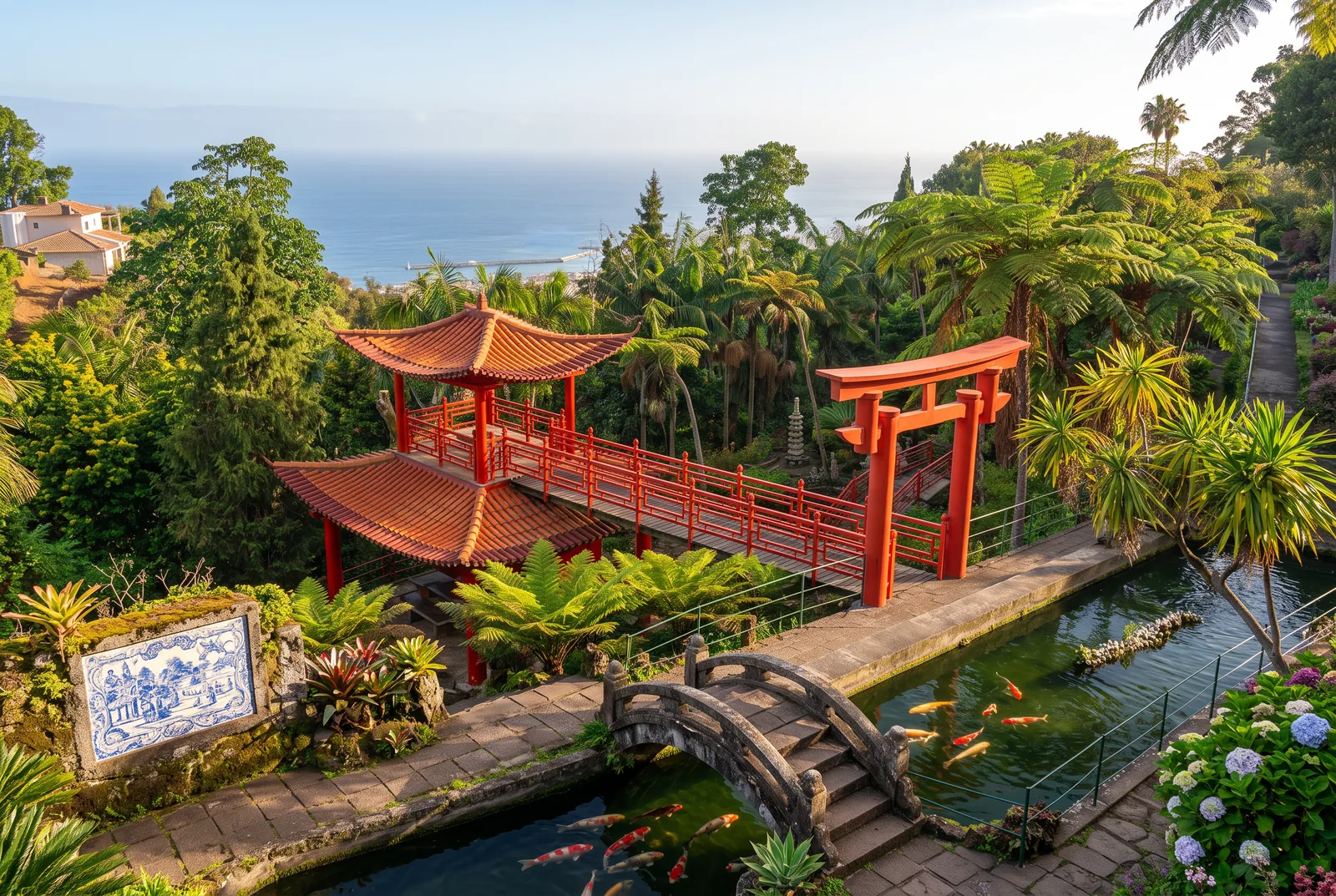
The short answer is almost everything, Madeira does not do a seasonal shutdown. As of 2026, all of the following run right through the month.
- Cable car: the Monte cable car runs every day except Christmas Day, 8:45 to 17:45, from Funchal's old town up to Monte, at €22 return for adults as of 2026, with mercifully short November queues.
- Toboggan: the famous wicker sledge run operates Monday to Saturday, 9:00 to 18:00, closed on Sundays and a handful of holidays, at €40 for two people as of 2026, 30 for one and 60 for three, bought on the spot with no advance booking.
- Lido complex: the pools, the sea access and the lifeguarded beach at the Lido bathing complex operate all year, though the published 8:30 to 20:00 timetable covers the June to September bathing season, so check the day's hours in November before you go. The water is warmer than you think.
- Gardens and museums: the Botanical Garden, Monte Palace and the city's museums are year round attractions, and November's soft light suits them beautifully.
- Market and restaurants: the Mercado dos Lavradores, the wine lodges and the restaurants do not pause for winter, this is a working city, not a resort.
- Boat trips: whale watching, coastal catamarans and fishing charters keep sailing, weather permitting.
The honest list of what slows down is much shorter.
- Beach kiosks: a few snack bars and seasonal kiosks on the south coast close or trim their hours once summer ends.
- North coast pools: the Porto Moniz lava pools stay open, but heavy swell can make them unusable, an argument for checking sea conditions before the long drive.
- Catamarans: companies reduce their timetables from several daily departures to fewer.
- Open air events: they thin out between the chestnut festival and the Christmas season.
- Mountain trails: they can close at short notice after storms, more on that below.
That is genuinely about it: Madeira's tourism runs twelve months a year, which is precisely why November works so well. For a fuller menu beyond the capital, our top sights of Madeira guide covers the island's essentials, and every one of them is doable in November.
Levada conditions after the autumn rains
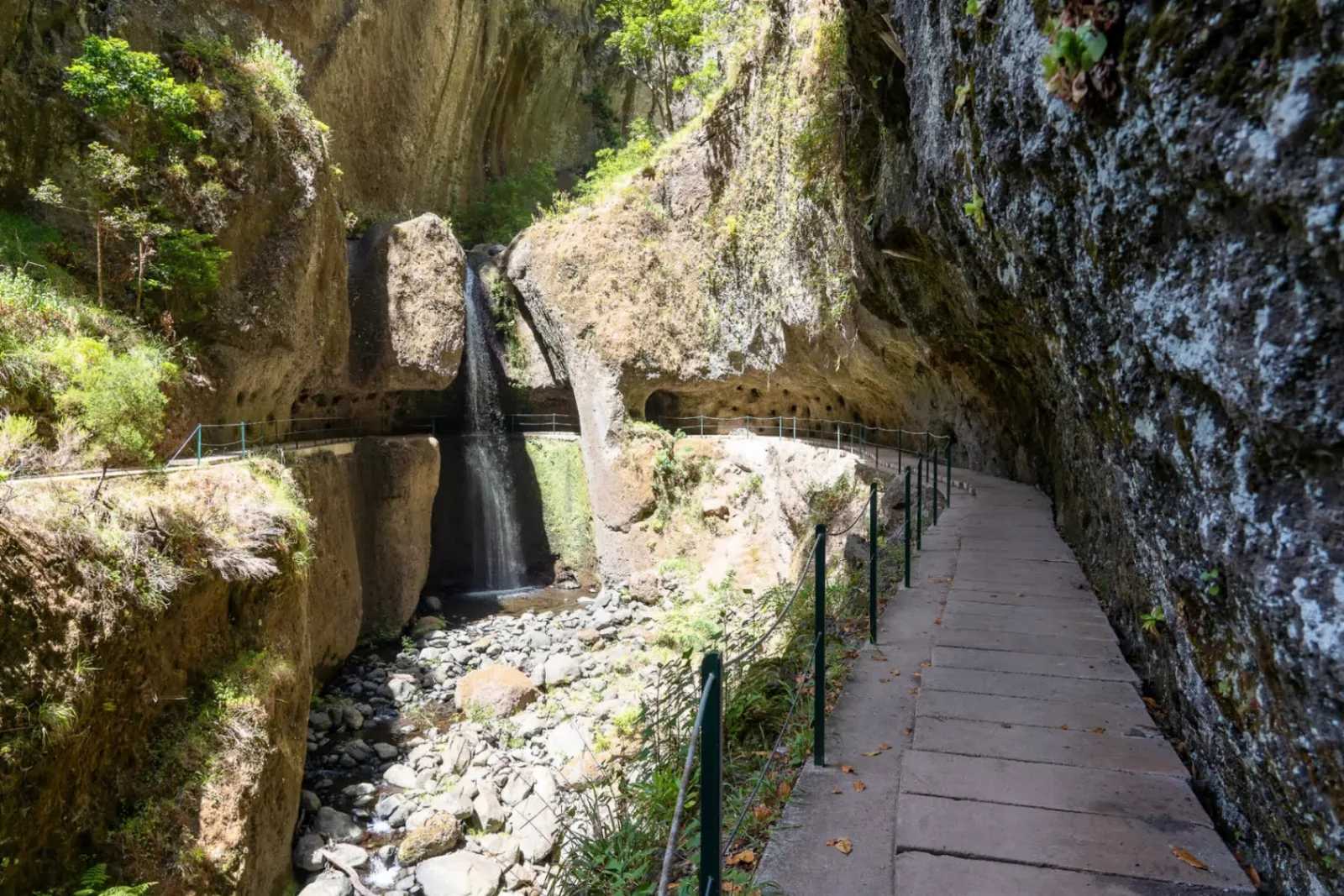
The first serious rains of autumn transform the levadas. Waterfalls that were a trickle in September thunder again, the channels run full, and the laurel forest turns a saturated green you do not see in July. November is arguably the best looking month on the trails, and midweek you will often have famous routes nearly to yourself. The trade off is that conditions change fast, so favour the south side and the lowland levadas in unsettled weather, keep the exposed mountain ridge routes for a confirmed clear day, and pick the walk itself from our complete levada guide, which has the difficulty table and the map.
- Trail status: the regional forest institute, IFCN, closes all classified walking routes whenever the national weather service issues a serious warning, and individual trails can stay shut for weeks after landslides, so check the evening before and never walk a closed trail, the closures exist because of real rockfall and flash flood risk.
- Fees 2026: generally €4.50 per person on the classified PR trails, and €10.50 for the rebuilt PR1 between Pico do Areeiro and Pico Ruivo, with Madeira residents exempt.
- Booking: compulsory and done in advance through the official Simplifica portal, where you can also confirm which routes are open.
- Plan B: a lowland walk on the sunny side of the island, chosen the evening before rather than at the trailhead.
- Kit: grip soles, a light rain shell even for the easy walks, and a headlamp, wet tunnel sections drip enthusiastically in November.
What to pack for Madeira in November
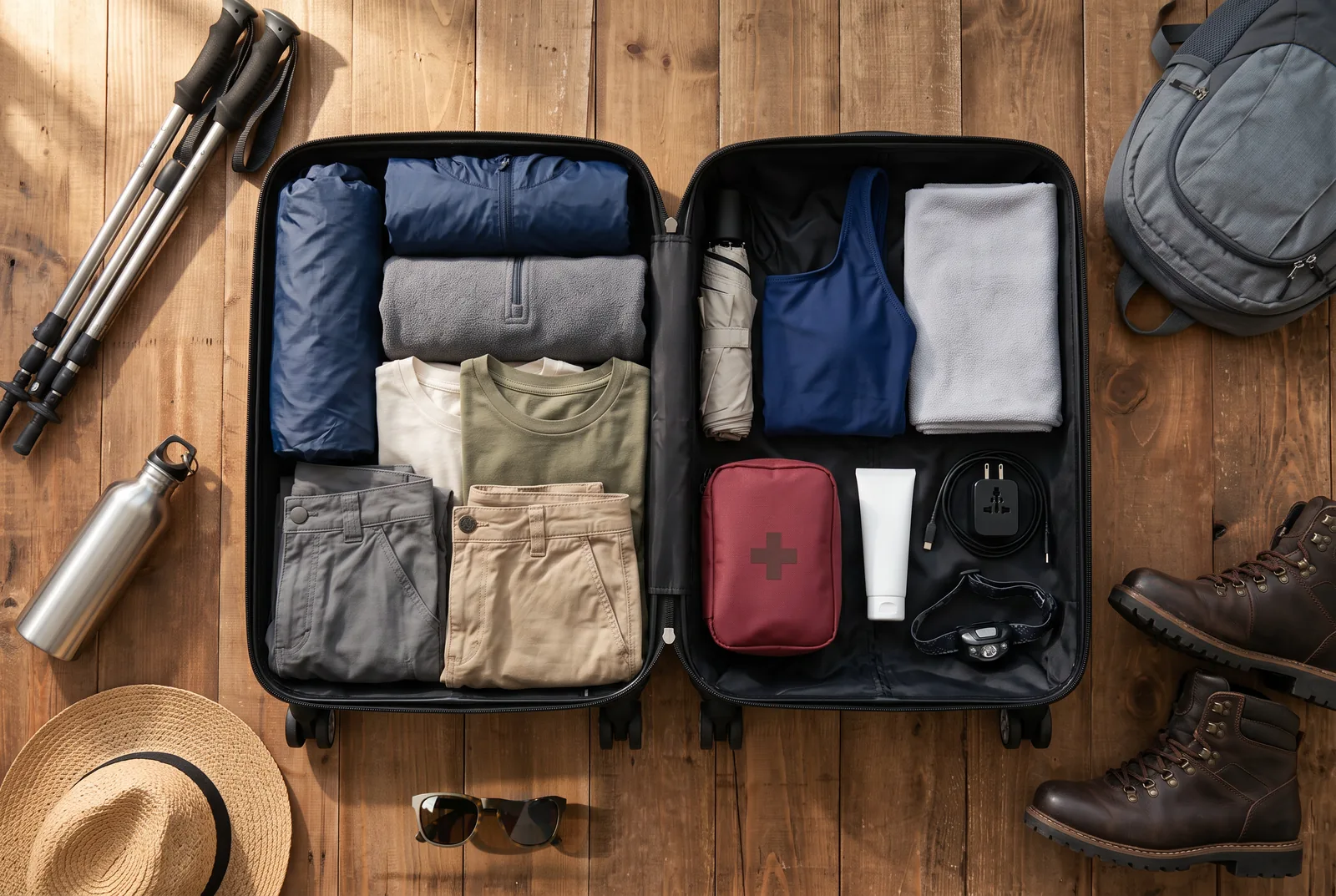
Layers, not a winter coat. Madeira in November punishes overpacking, and the only genuinely specialist items are for the levadas.
- Clothing: t-shirts or light tops for the day, one warm fleece or knit for evenings and the mountains, a light waterproof jacket, one smarter outfit for dinner, and both long trousers and shorts, you will likely wear each in the same week.
- Swimming: swimwear, a quick dry towel if the natural pools are on your list, and sunscreen, the November sun at Madeira's latitude still burns.
- Walking: shoes with real grip, trail runners or light hikers both work, walking socks, a small daypack, a refillable bottle and a headlamp for the levada tunnels.
- Extras: sunglasses, a cap, a universal adapter if you are coming from outside Europe, motion sickness tablets if you are prone and plan a boat trip, and a dry bag or zip lock for your phone on wet walks.
- Leave at home: the winter coat, the umbrella, Madeira's gusts turn umbrellas into comedy props, and the heels, Funchal's old town is cobbled and steep.
Flights and prices, the low season advantage
November sits in Madeira's low season, and shoulder season fares from European hubs are well below July and August, with midweek departures cheaper again. The main hubs keep their direct connections through winter, Lisbon, Porto, London, Amsterdam and Frankfurt among them, because airlines treat Madeira as a year round destination. A handful of smaller seasonal routes do stop for the winter, so check your own airport before assuming a direct flight.
The savings continue on the ground. Car hire, painfully priced in August, drops to its lowest rates of the year, and restaurants that need booking days ahead in summer take walk ins. Accommodation moves to winter pricing: this is the season of the long stay deal, when a month in the sun can cost less than a cold week at home, which is why November marks the start of Madeira's remote work season. Our own Funchal apartments switch to monthly winter rates from November.
A five day November itinerary
Five days is the sweet spot for a first November visit, long enough to ride out a showery day, short enough to keep the pace of a proper break. This plan assumes a Funchal base and a hire car for days three and five, and it keeps the weather dependent days flexible.
Day 1, Funchal on foot
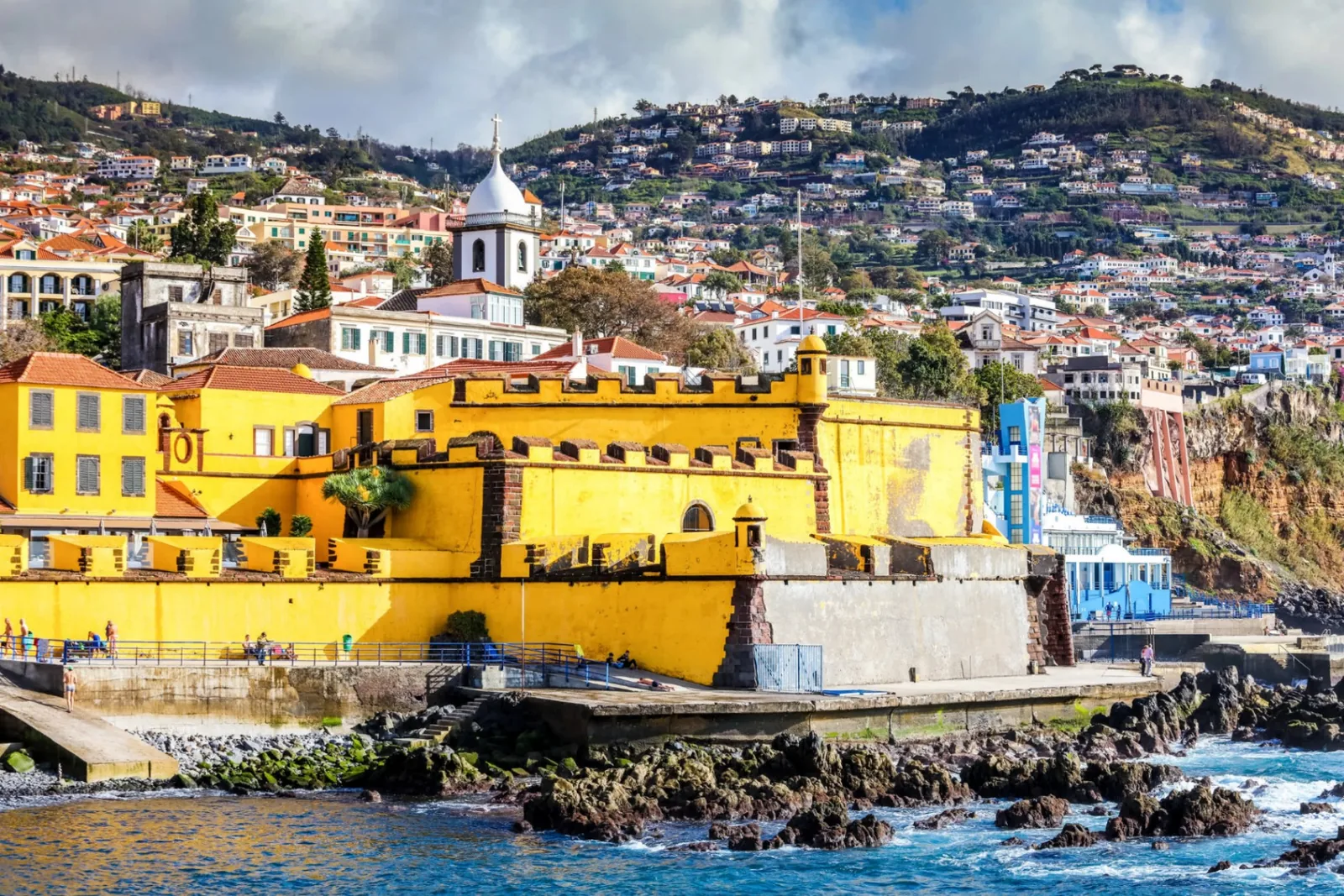
Start at the Mercado dos Lavradores when it opens, then wander the painted doors of Rua de Santa Maria in the old town. Take the cable car up to Monte for the gardens and the view, and come down the traditional way on the wicker toboggan, remembering it does not run on Sundays. Build the afternoon around a slow lunch and a first poncha, our Funchal food guide maps the classic dishes and the restaurants worth your evenings. November bonus: you will get a table almost anywhere.
Day 2, a levada walk
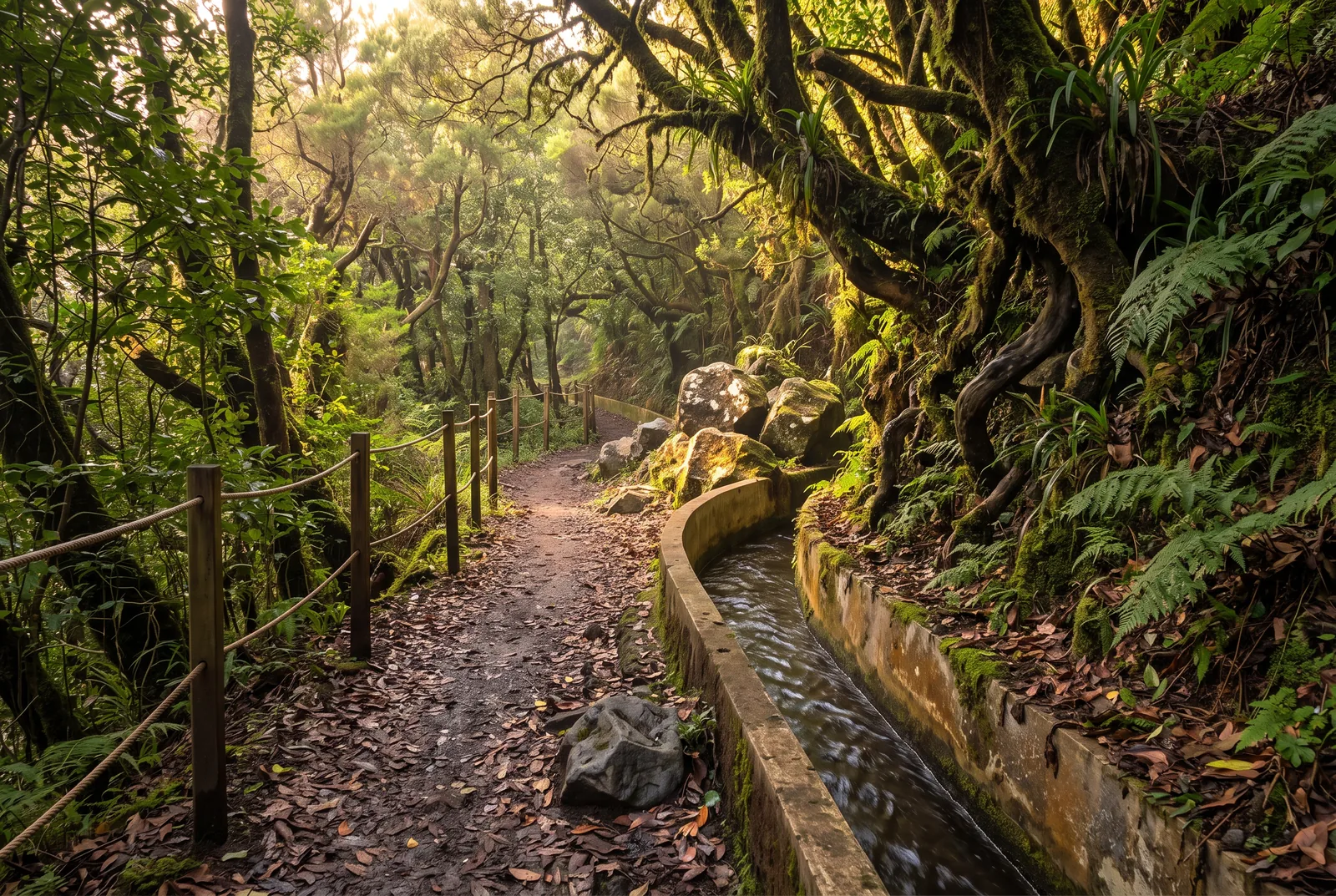
Pick your route the night before based on the official trail status and the forecast, and reserve it on Simplifica before you set off. In settled weather, the Caldeirão Verde or 25 Fontes routes show the November forest at its absolute best. If the mountains look moody, choose a lower southern levada instead. Pack the headlamp, the rain shell and a picnic, mountain cafés are sparse, and be walking by 9 in the morning, November light fades around 6 in the evening.
Day 3, the west by car
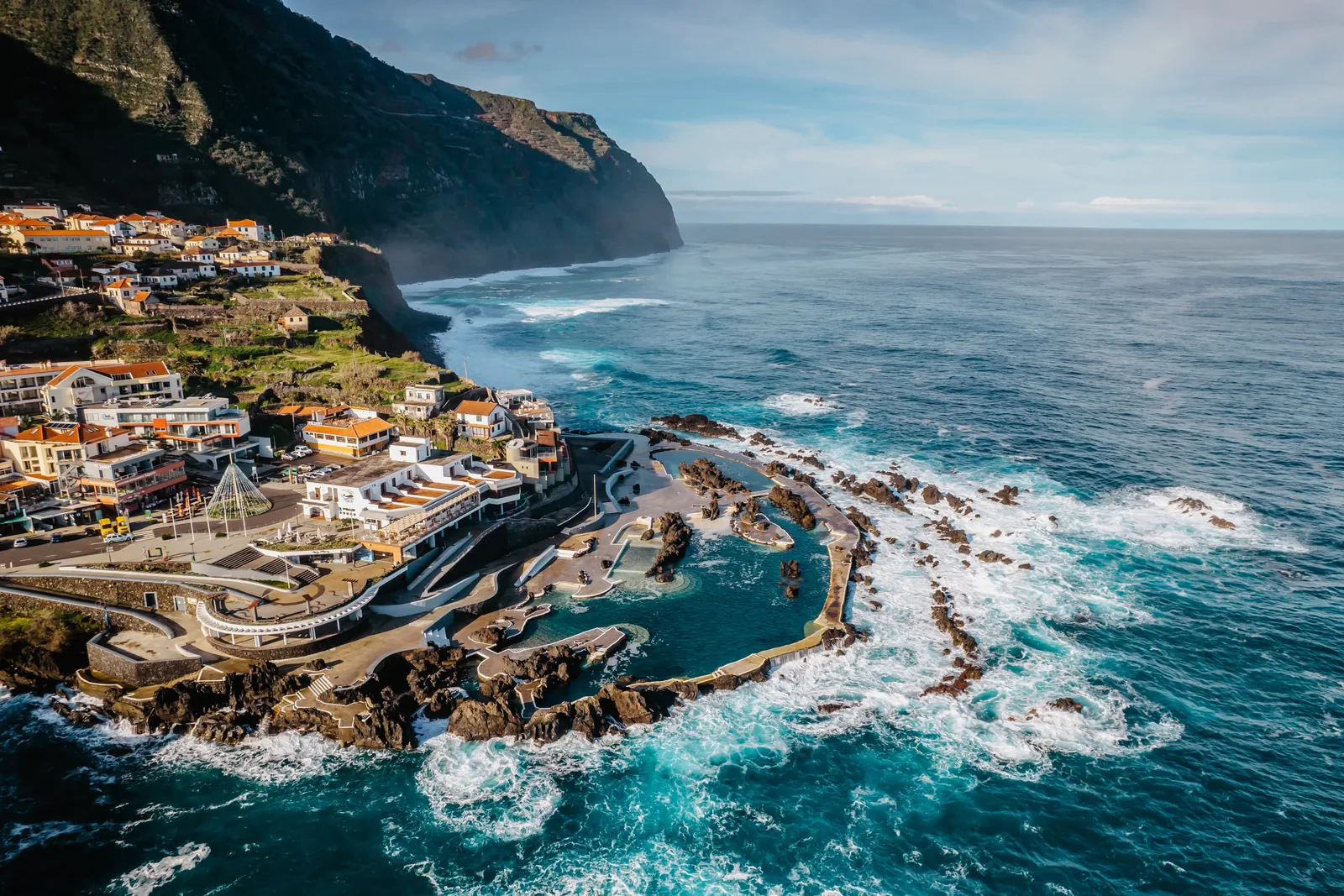
Drive west along the coast: Câmara de Lobos for the fishing harbour Churchill painted, the Cabo Girão skywalk, €5 per visitor as of 2026, free for children of 12 and under, then on to Porto Moniz for the lava pools, swell permitting, returning across the high moor of Paul da Serra if the sky is clear. This is the day the microclimates work for you, the west and the south coast hold the most November sun.
Day 4, the ocean day
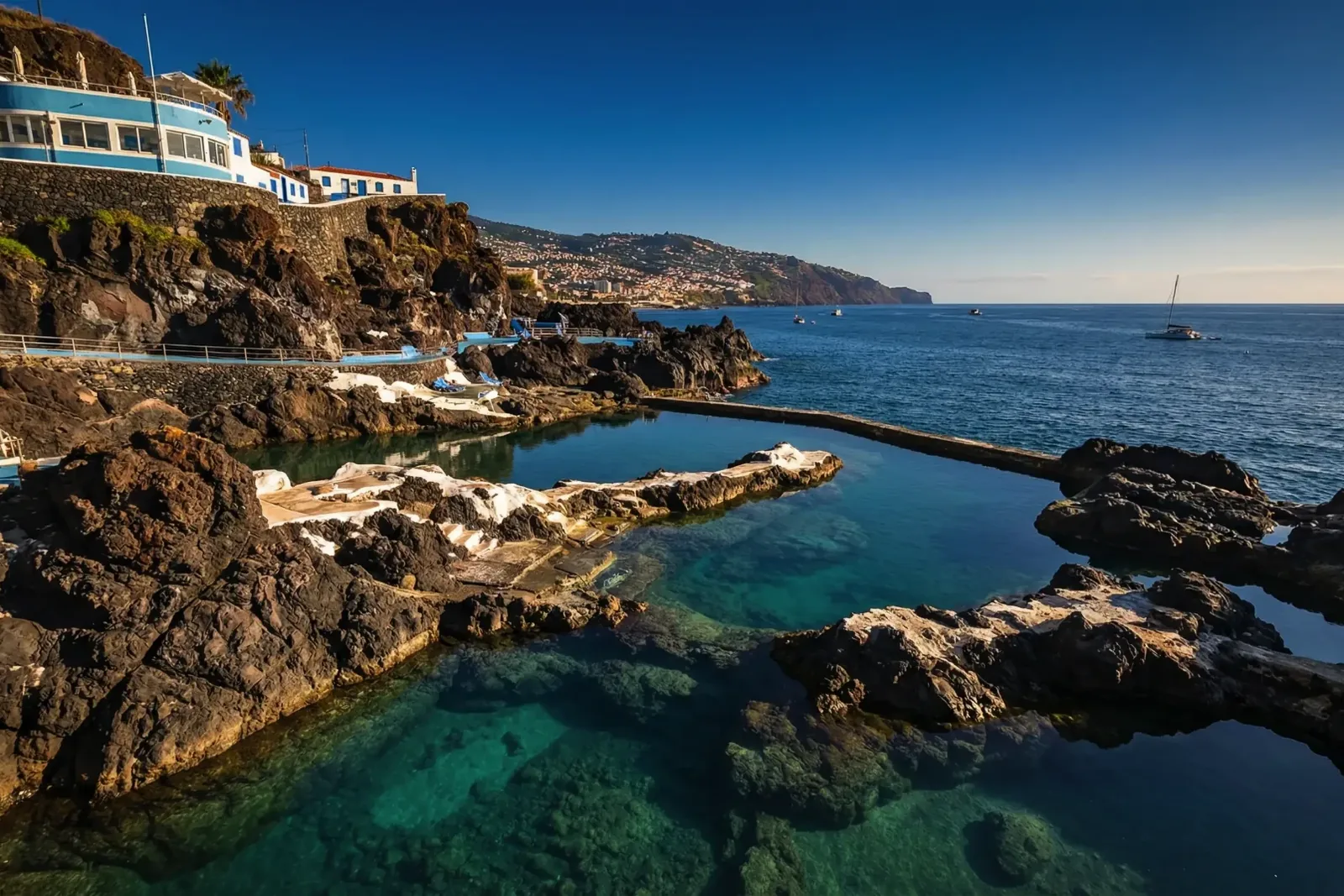
Book a morning whale and dolphin watching trip from Funchal marina, seas are usually calmest before noon. Spend the afternoon at the Lido oceanfront, swim in the sea pools while your friends at home scrape frost off their cars, then walk the seafront promenade towards Câmara de Lobos as the light turns golden. If the boat trip is blown out, swap this day with another.
Day 5, Curral das Freiras and the heights
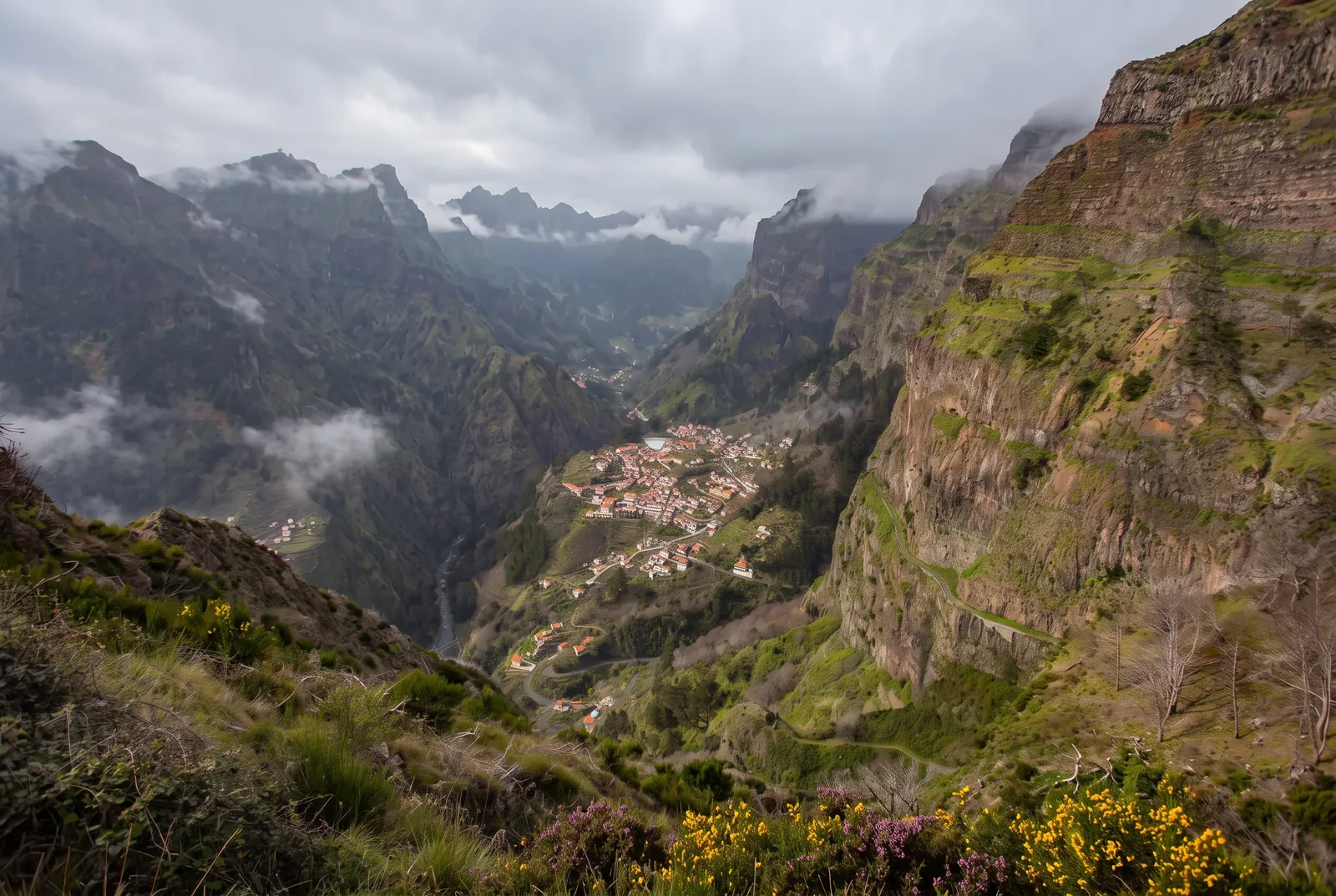
Drive up to Eira do Serrado for the cirque viewpoint, then drop into Curral das Freiras for roasted chestnuts, chestnut cake and the liqueur. If the peaks are clear, finish at Pico do Areeiro, where the car park viewpoint is free and the ridge trail beyond it is the ticketed PR1, and standing above the cloud sea up there is the best spectacle Madeira offers in November. Last evening: an old town dinner and the first Christmas lights, if your dates land late in the month.
Where to stay in November
November is when a well equipped base in the middle of town earns its keep: you want a real living space for the occasional showery afternoon, and somewhere you can walk home to after dinner. Our Downtown villa sits in Funchal's historic centre, a few minutes on foot from the Mercado dos Lavradores and the old town restaurants, and monthly winter rates are available on request from November to March, fast wifi included for remote work. Not sure which side of Funchal suits you? Our where to stay in Madeira guide compares the zones honestly.
Frequently asked questions about Madeira in November
Is Madeira warm in November?
Yes, mild rather than hot: 22 to 23°C by day in Funchal, 16 to 17°C at night, with the sea near 22°C early in the month and around 21°C by the end.
Does it rain a lot in November?
It rains more than in summer, typically 7 to 9 days in the month, mostly as passing showers. The south coast stays driest.
Can you swim in the sea in November?
Yes. The sea temperature is around 22°C early in the month and closer to 21°C by the end, still holding its late summer warmth, and the Funchal bathing complexes stay in use.
Is November good for levada walks?
One of the best months: full water channels, green forest and quiet trails. Check conditions after heavy rain before committing to the mountain routes, and remember that classified PR trails now need a paid reservation on Simplifica.
Is anything closed in November?
Very little. The cable car, the toboggan, gardens, museums, boat trips and the Lido pools all run year round, though the toboggan rests on Sundays and the cable car closes only on Christmas Day. A few beach kiosks close, catamarans run fewer departures, and mountain trails can shut temporarily after heavy rain.
Is November a cheap time to visit Madeira?
Yes, it is typically among the cheapest months of the year for flights as of mid 2026, and accommodation moves to low season and monthly winter rates. Prices stay low until the Christmas period begins in December.
Can you still go whale watching in November?
Yes, boats sail from Funchal marina all year. Dolphins are close to guaranteed, pilot whales are seen regularly in winter, and morning departures get the calmest seas. Allow a spare day in case swell cancels a trip.
What should I book ahead for a November trip?
Very little: flights and your accommodation, plus a whale watching slot if your dates are fixed and a Simplifica reservation for any classified levada trail. Restaurants and attractions are walk in territory. On the accommodation side, both our Funchal homes, the Beachfront penthouse by the Lido and the Downtown villa in the historic centre, offer winter rates for November stays.